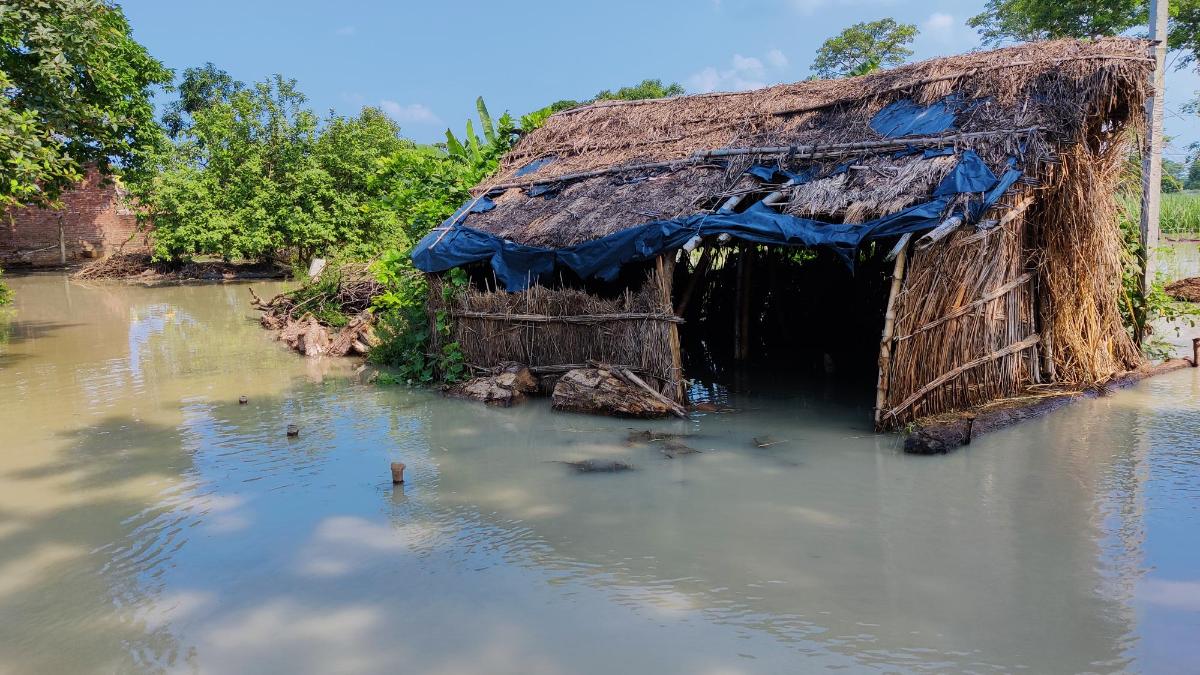
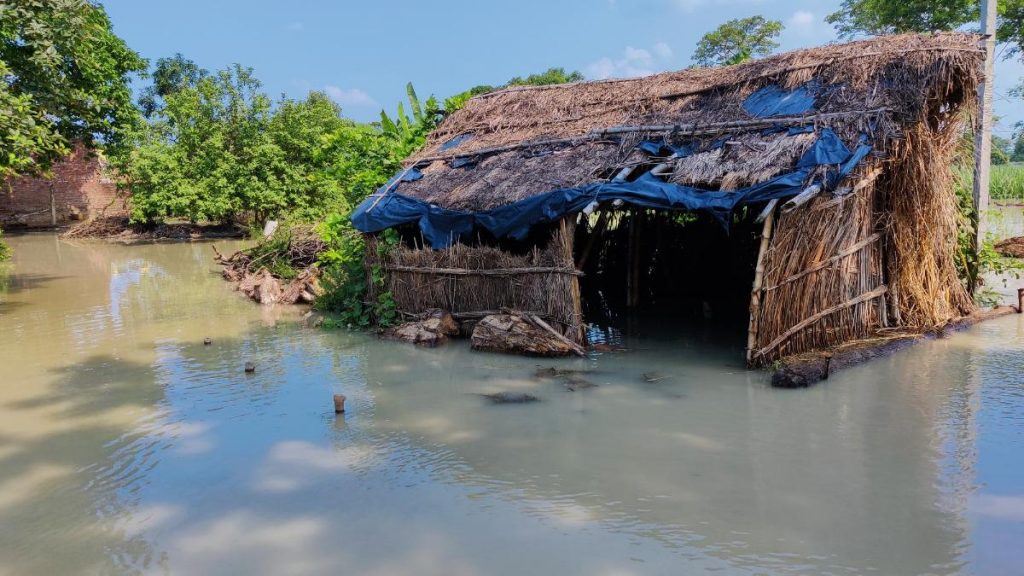
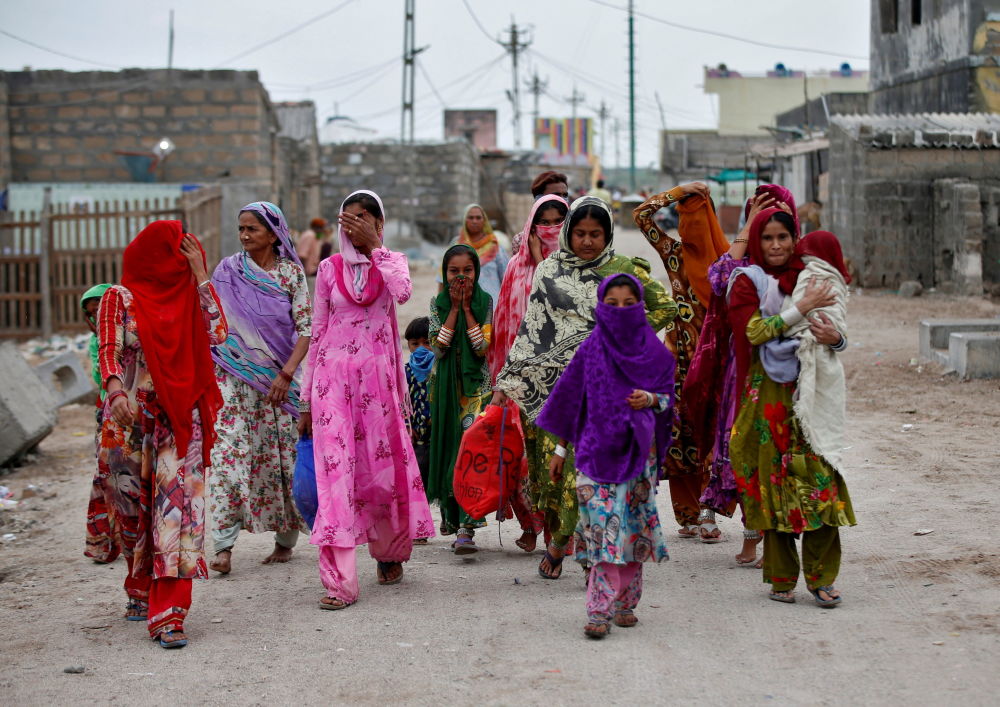
Floodwaters took over villages in Uttar Pradesh’s Lakhimpur Kheri after Sharda river overflowed due to heavy rains in Uttarakhand. With homes damaged, villagers huddled up in makeshift huts near river embankments.
Floodwaters damage the huts in the villages.
Many flood-hit villages in Uttar Pradesh’s Lakhimpur Kheri are reeling under darkness. As night descends on in the flood-hit areas, the villages become sheets of darkness.
journey to Lakhimpur Kheri’s Mangalipurva and Mehndi villages is like a journey back in time. Many flood-hit villagers are staying in makeshift huts on river embankments.
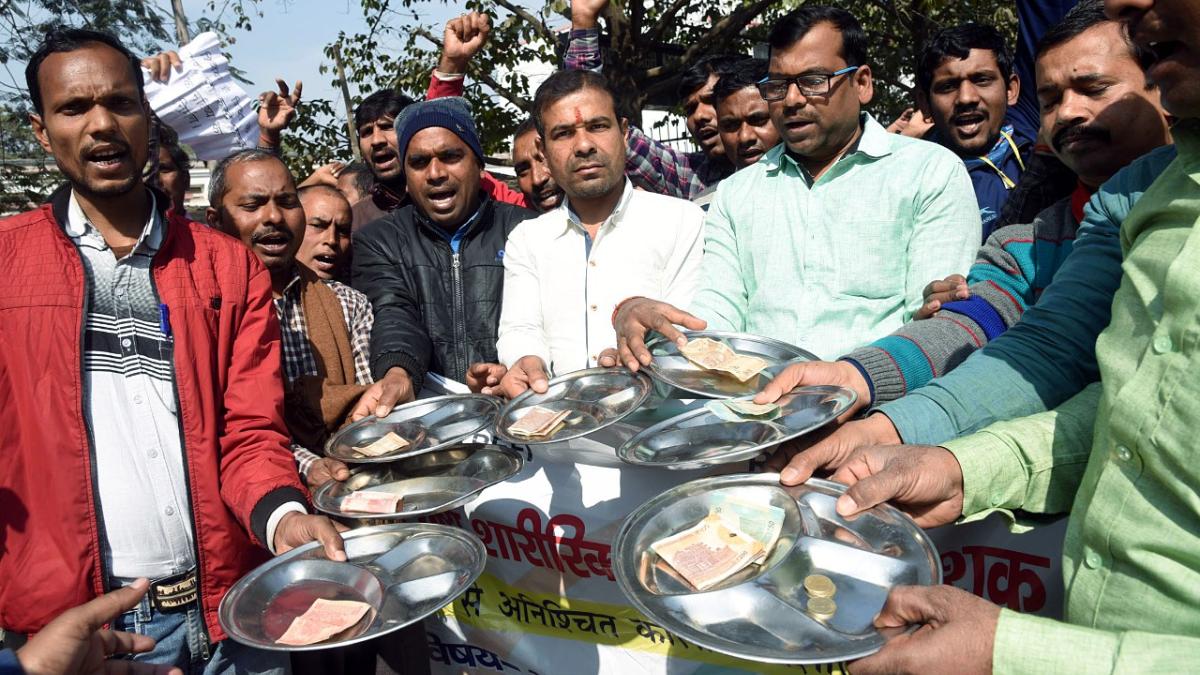
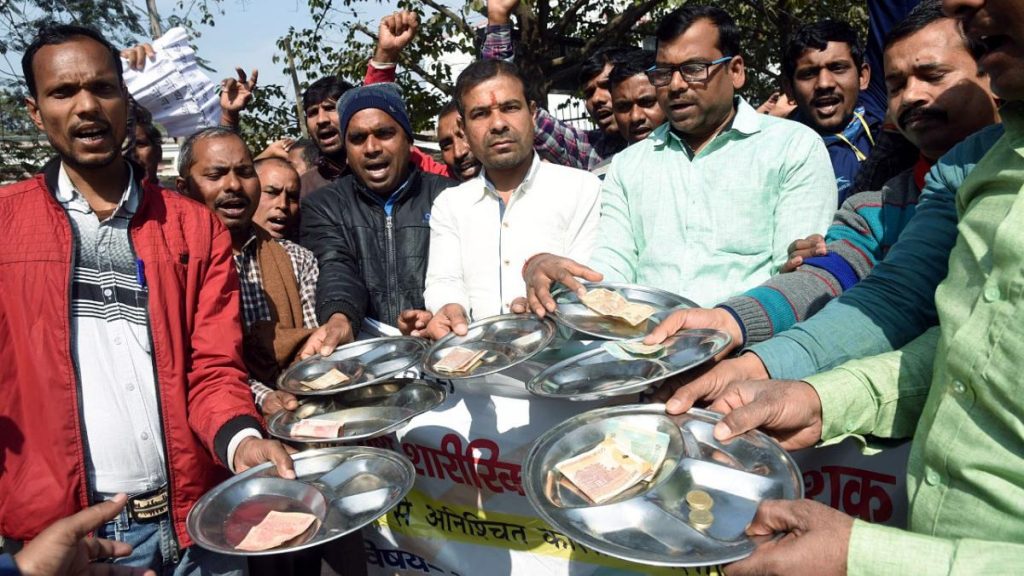
Secondary Teachers Eligibility Test (STET) qualified candidates begging during a protest for their permanent jobs, in Patna, on Feb. 3, 2021;
Asword of uncertainty hangs over 93,000 elementary school teachers in Bihar. This is because these teachers have—for almost five years—failed to submit their eligibility credentials for an ongoing verification by the State Vigilance Bureau. Nevertheless, they have continued to draw their salaries.
But, not anymore, it seems. The education department has set up a web portal and asked these teachers to upload scanned copies of their eligibility documents by July 20. The permissible documents include certificates of academic qualification and teacher training authentications, along with caste and domicile certificates. Teachers will face termination of job and recovery of salaries paid over the years if they fail to do so.
The issue pertains to the appointment of 352,818 assistant teachers in the state between 2006 and 2015 by panchayati raj institutions and urban municipal bodies. Teacher Appointment Committees of the respective rural bodies made these appointments by screening the academic and professional qualifications (like B.Ed) of applicants. The appointments, however, remained mired in controversy due to allegations of large-scale irregularities, including hiring on the basis of fake degrees.
In December 2015, hearing a PIL, the Patna High Court ordered the State Vigilance Bureau to verify the academic credentials and other eligibility certificates of the teachers. Following the court order, more than 1,000 teachers resigned in 2015, fearing action over possession of fake educational degrees.
Kabir Singh, a game-changer for Shahid Kapoor’s career, released two years ago on June 21. Today, on its second anniversary, the actor went live on Instagram to interact with his fans and answer some questions. From talking about how his wife Mira Rajput pushed him to do the film to revealing what he loved about his upcoming film Jersey, Shahid made quite a few revelations.
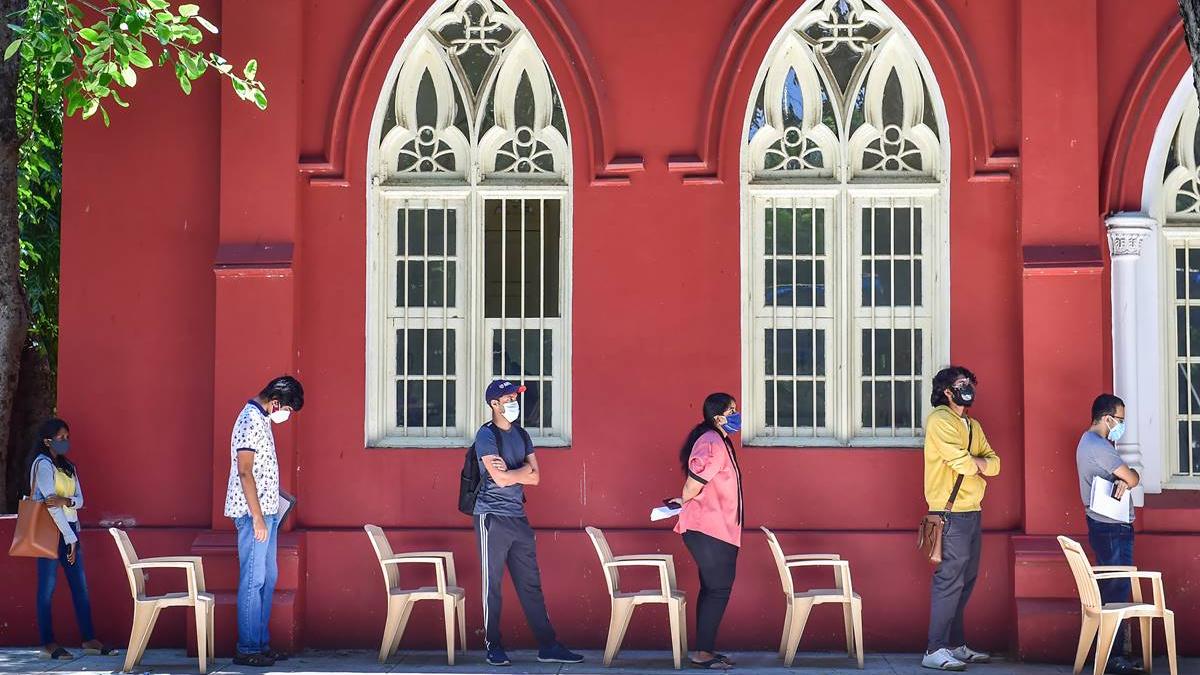
People wait for their turn to get Covid-19 vaccine at a vaccination centre.
India administered nearly 81 lakh doses of Covid-19 vaccines on Day 1 of the Centre’s new vaccination regime on Monday. Data on the government’s CoWin website showed a total of 8,096,492 vaccine jabs were administered till 9 pm on Monday. The number is expected to rise further.
In a tweet, Prime Minister Narendra Modi said, “Today’s record-breaking vaccination numbers are gladdening. The vaccine remains our strongest weapon to fight COVID-19. Congratulations to those who got vaccinated and kudos to all the front-line warriors working hard to ensure so many citizens got the vaccine. Well done India.”
Today’s record-breaking vaccination numbers are gladdening. The vaccine remains our strongest weapon to fight COVID-19. Congratulations to those who got vaccinated and kudos to all the front-line warriors working hard to ensure so many citizens got the vaccine.
Well done India! — Narendra Modi (@narendramodi) June 21, 2021
This is a new record for the highest Covid vaccines administered in a single day. The previous high was of over 48 lakh doses on April 1.
Under the new vaccination policy, the Centre will procure 75 per cent of vaccines from the manufacturers, leaving the rest 25 per cent to the private players. The Centre will also provide vaccines for all age groups to the states based on their requirement.
Earlier, the Centre used to supply free vaccines to only people aged 45 and above. It was the responsibility of state governments to procure and administer 50 per cent of the vaccines for citizens between the ages of 18 to 45.
In a statement, the government said that during the month of May, more than 7.9 crore vaccines were available for the nationwide Covid-19 vaccination exercise. These were ramped up to 11.78 crore in June. These include the free supply of vaccines to states and UTs from the Centre, those directly procured by the states and those directly procured by the private hospitals.
“States were provided advance visibility of the vaccine doses available to them in the month of June 2021 by the Union Ministry of Health and Family Welfare. This advance information enabled the States to prepare vaccine distribution plans district-wise and COVID Vaccination Centre (CVC) wise in an effective manner. This facilitated a massive ramping up of the vaccine administration across the country,” the statement read.
With third Covid wave fear looming, Centre cautions states as crowds return after easing of curbs The Centre on Saturday asked the states and Union Territories to open up activities in a “carefully calibrated” manner.
With third Covid wave fear looming, Centre cautions states as crowds return after easing of curbs
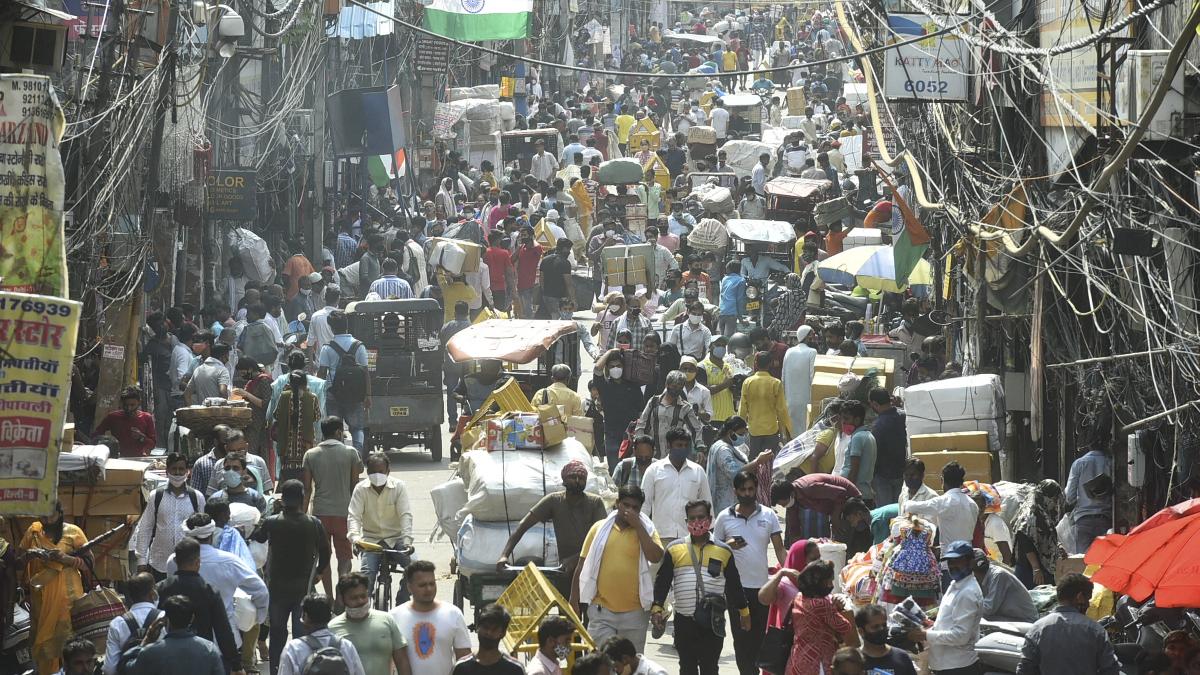
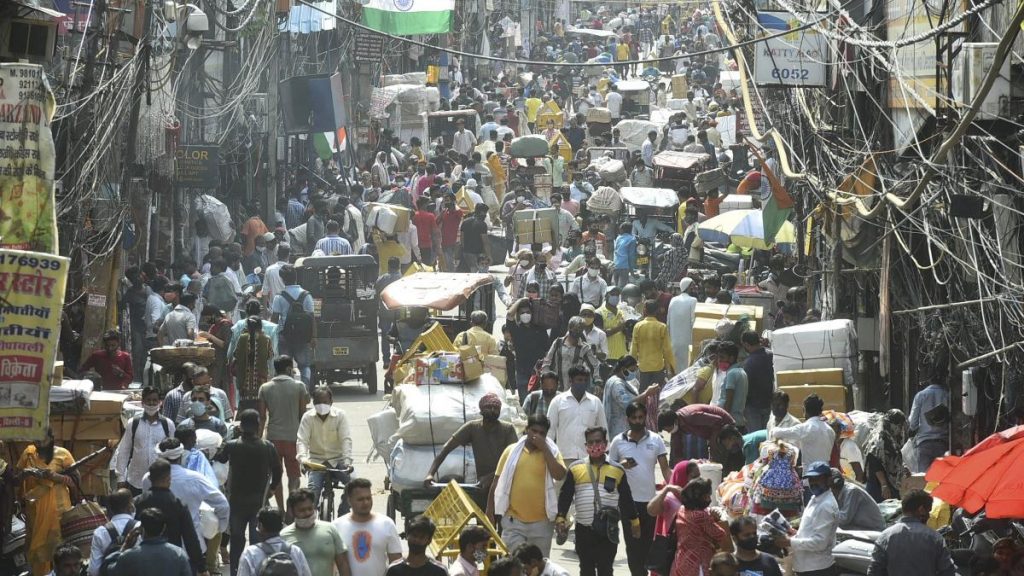
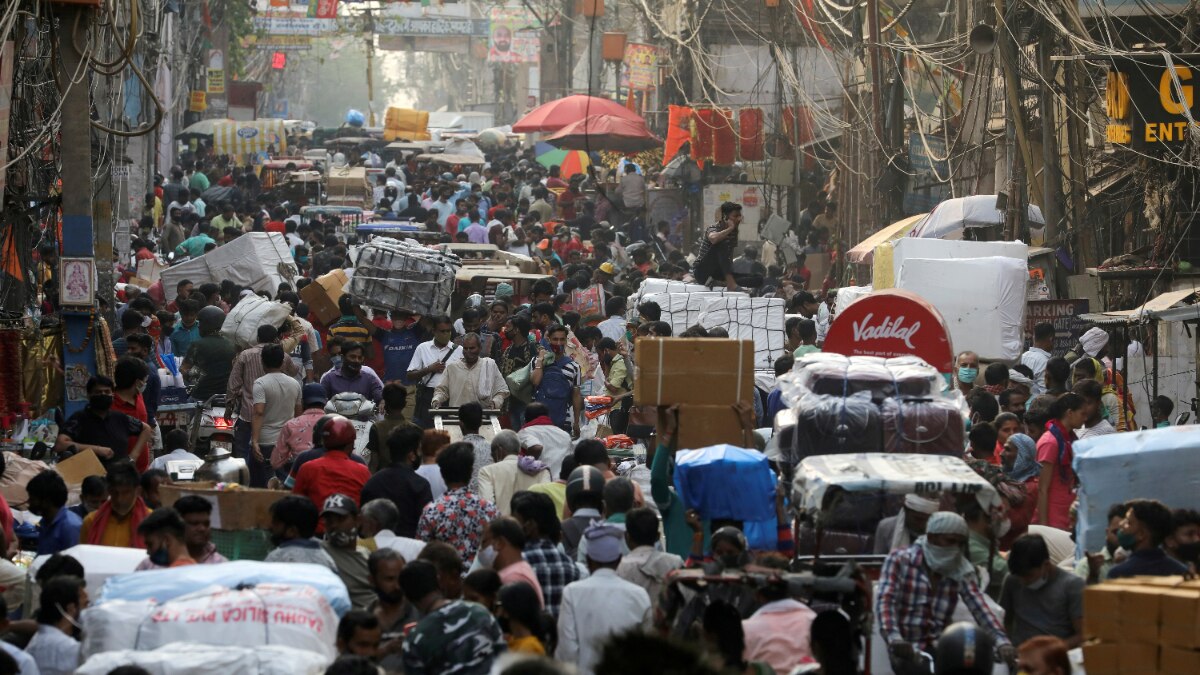
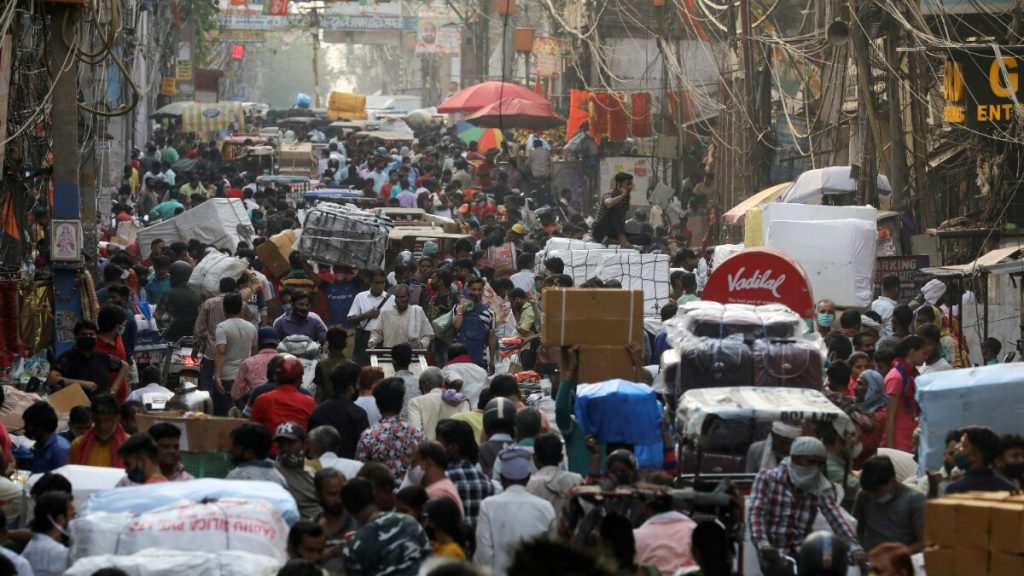
Crowded Sadar market that reopened after further ease in Covid-induced lockdown restrictions in Delhi on June 19.
With the easing of Covid-19 restrictions leading to the resumption of crowding in markets, the Centre on Saturday directed the states and Union Territories to open up activities in a “carefully calibrated” manner. It also urged them to ensure the “extremely important” five-fold strategy of Covid-appropriate behaviour, test-track-treat and vaccination to prevent the spread of the disease.
This comes after AIIMS director Randeep Guleria warned that India could see a third wave of coronavirus in six to eight weeks if Covid-appropriate behaviour is not followed and crowding is not prevented.
In a communication to all states and UTs, Union Home Secretary Ajay Bhalla also asked them to scale up the vaccination pace, to cover the maximum number of people in an expeditious manner, as inoculation, in the present scenario, is critical to breaking the chain of transmission.
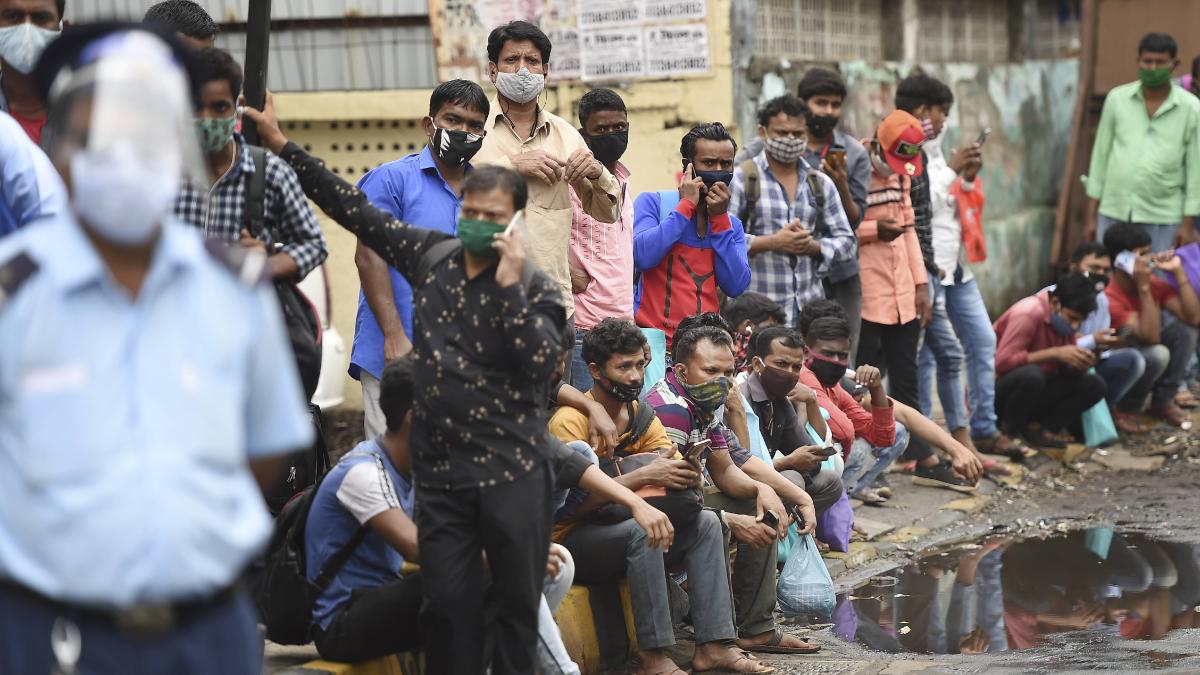
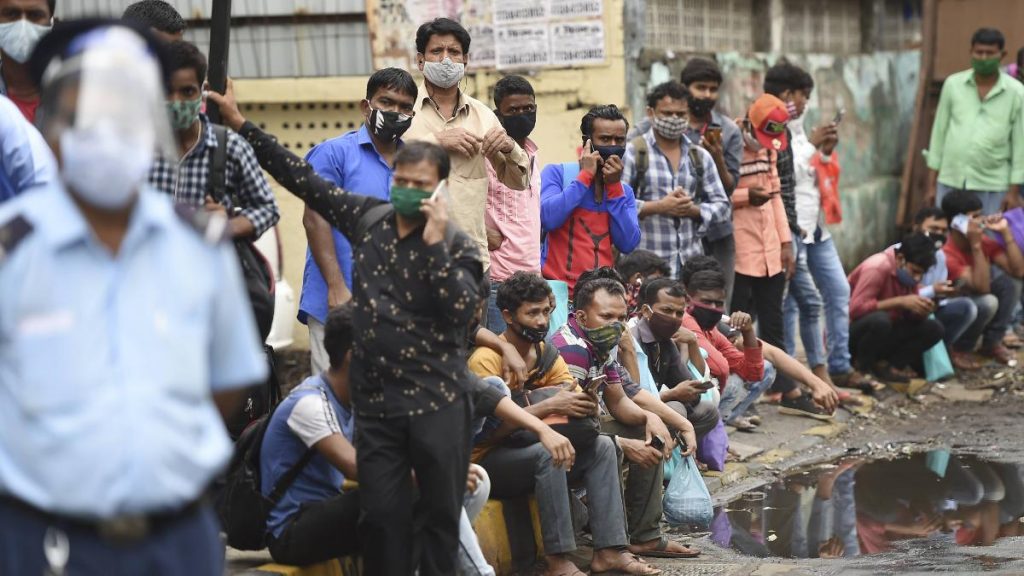
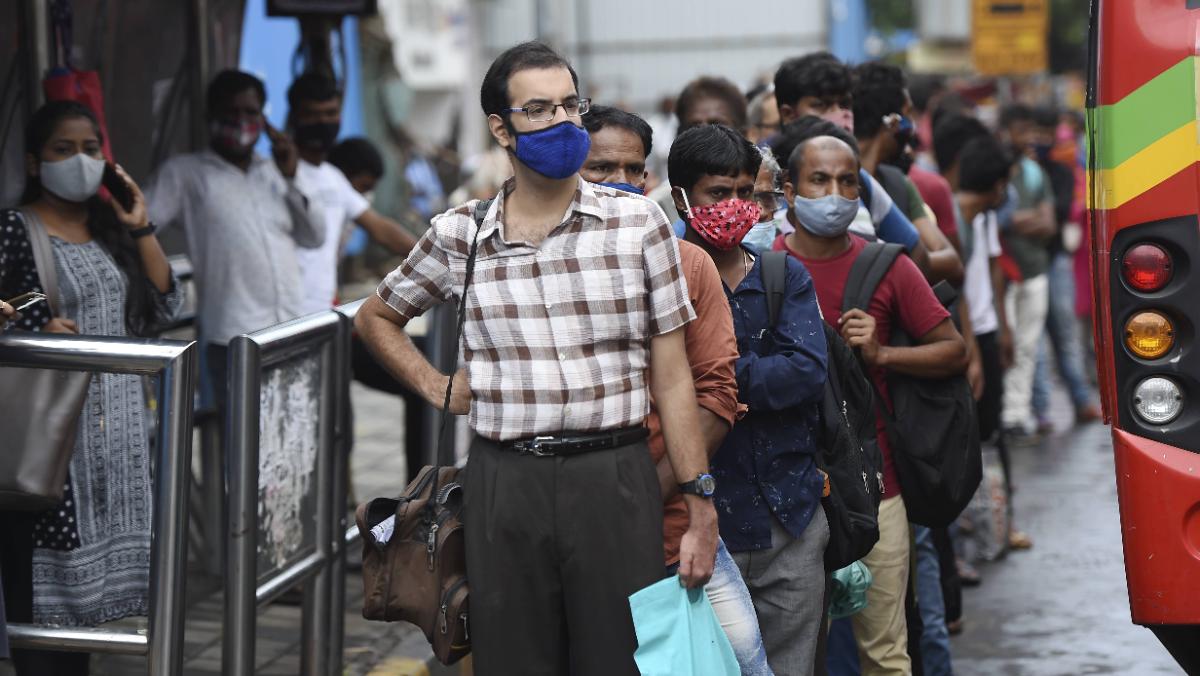
People wait in queue for bus in Mumbai as Covid-19 restrictions eased.
In an interview with Rajdeep Sardesai, Dr. Rahul Pandit, Member, Maharashtra Covid Task Force, said there is no alert for a third wave in the state in 2-4 weeks but we need to be prepared if it comes earlier than expected. Excerpts:
Q: Are you scaring people and telling them to stay at home by saying a third Covid wave could hit the state in 2 to 4 weeks? Or is this based on hard evidence? Are you being alarmist? Or is this a wake-up call?
I don’t think we’re being alarmist. Nor are we trying to scare people. Let me put this in the right perspective. The discussion was about the preparation for the third wave. The mathematical model predicts a 100-120 day time gap between two waves. But models are models, we need to look at real-life scenarios.
Countries like the US have had 14 to 15 weeks of gap between two waves. But the UK had a gap of less than eight weeks. We need to be prepared because we have the delta variant. At no point did we say the third wave will come in two weeks or four weeks. It’s very difficult to guess.
We have to go by some mathematical models and then look around the world and see what other waves have been like. And that’s how. The whole discussion was – let’s be prepared even if it comes a little early. We should not be caught off guard. Nothing beyond that.
Q: Markets, restraints in Mumbai are getting crowded and people are lowering their guard. Is that a warning?
There was no timeframe for the third wave. But we need to keep enforcing Covid-appropriate behaviour. I’m not saying that the economy should not open up. But people stepping out should double-mask themselves.
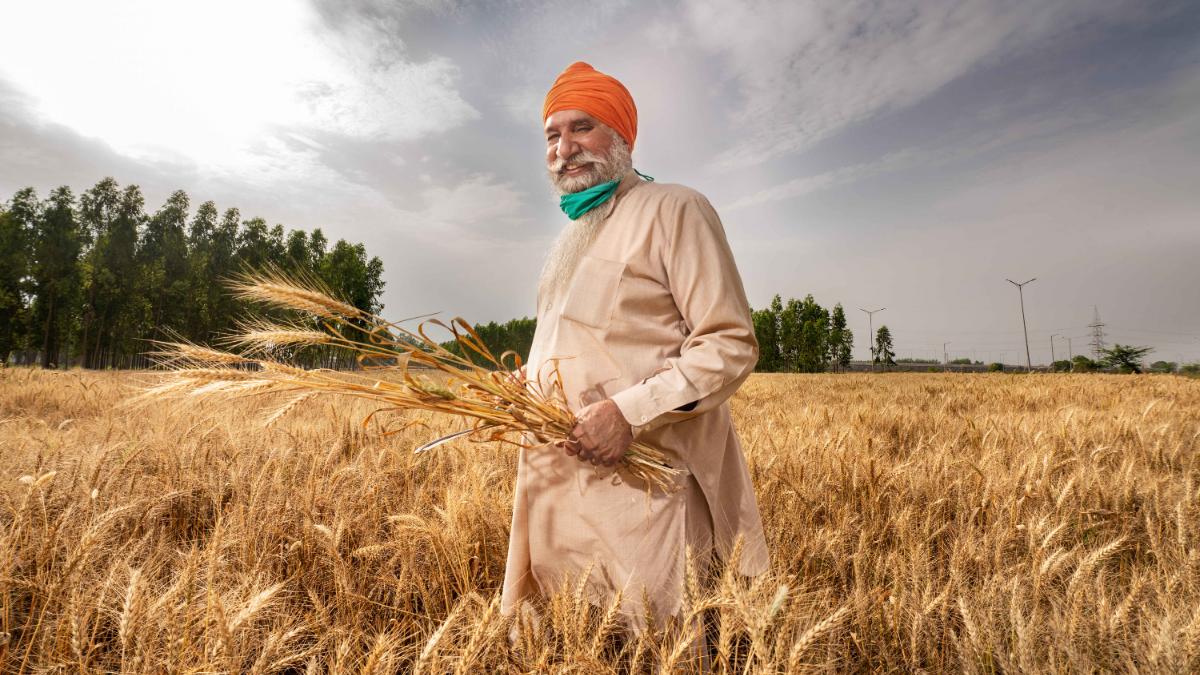
Jathedar Sardar Tara Singh Grewal, a farmer of village Rurka in district Mohali, Punjab, harvesting his wheat fields during the Covid lockdown
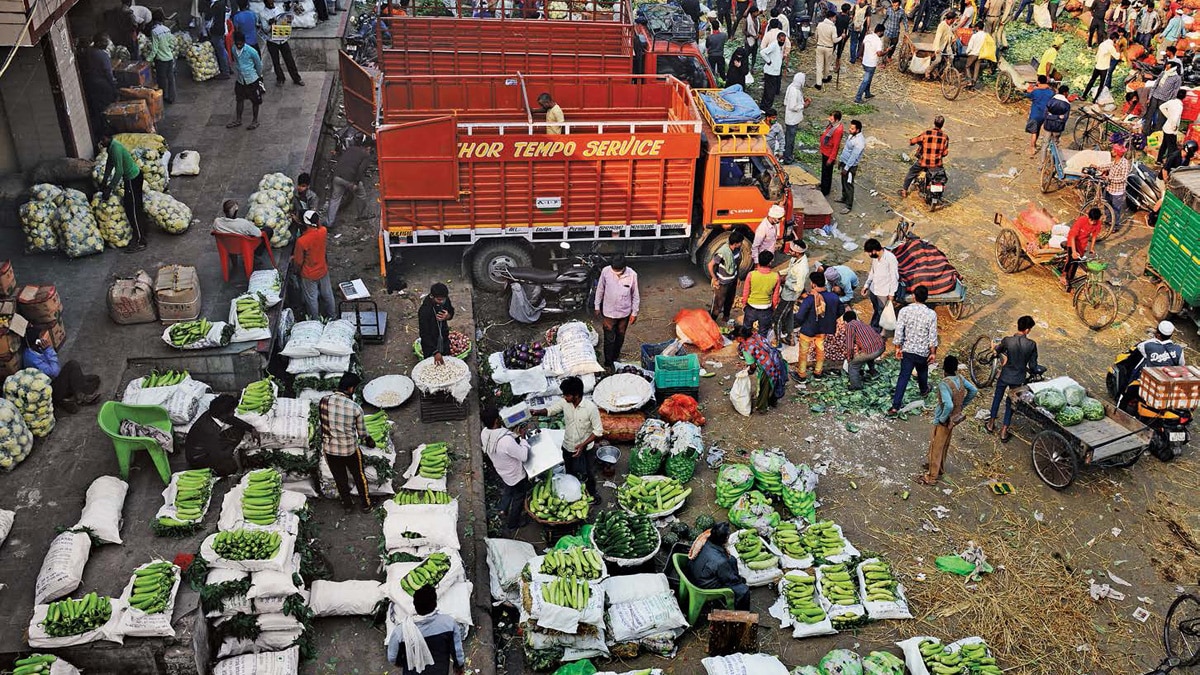
In the current procurement season (2021-22), Punjab purchased132.08 lakh tonnes of wheat from farmers while MP procured 128.16 lakh tonnes. In 2020-21, MP had procured 129 lakh tonnes of wheat while Punjab procured 127.6 lakh tonnes.
Even as Punjab reclaimed the top spot, MP has entered the club of biggest wheat procurers and would be looking to stay there. Moreover, if the present procurement policy continues, it is only a matter of a few years before MP permanently becomes the top procurer of wheat in the country. Here’s why:
At 3.92 lakh tonnes, the gap between Punjab and MP in wheat procurement in 2021-22 was small. While MP nearly reached its 2020-21 levels in procurement, Punjab claimed the top spot by increasing procurement by around 4.48 lakh tonnes.
Both figures, in percentage terms, are small and can be breached. More importantly, MP has way more excess wheat to sell compared to Punjab. Production of wheat in MP is estimated to be around 300 lakh tonnes a year while in Punjab, it is expected to be around 175 lakh tonnes. Of these, in MP, 128 lakh tonnes or 42 per cent of the production is sold to the government. The remaining is sold to private traders in mandis or is kept by farmers for seed purposes and consumption. In Punjab, 132 lakh tonnes of the estimated 175 lakh tonnes, or 75 per cent, of wheat is sold to the government. Perhaps this was also the reason for the anti-farm laws protests being shrill in Punjab compared to other states.
Productivity in MP is far less than in Punjab, suggesting scope for immense growth in production. In Punjab, wheat is cultivated over 35 lakh hectares while in MP, it is sown over 97 lakh hectares. The productivity in Punjab stands at 49 quintals per hectare while in MP it is 35 quintals per hectare. In other states, such as Uttar Pradesh, where wheat production is usually about 320 lakh tonnes a year, government procurement in 2021-22 is likely to be around 55 lakh tonnes.
“The pandemic (second wave) led to the closure of mandis in mid-April and more arrivals to the government centres. If the mandis had closed down earlier, MP would have procured more wheat than last year,” says Tarun Pithode, director, food and civil supplies, MP.
Compared to 2020, when 20.9 lakh tonnes of wheat were sold to private traders through mandis in April and May, the total trade through private traders in 2021 fell to 7.6 lakh tonnes in the same months.
The arrival of wheat for sale to the government would depend on the MSP (minimum support price) offered. Last year, the Union government announced a hike of Rs 50 per quintal in MSP of wheat (to Rs 1,975 per quintal), the smallest hike in many years. If the government plans to disincentivise wheat production, the small hikes in MSP are an indicator. But if it doesn’t, MP will emerge as the top contributor to India on a regular basis.
The Covid-19 situation in Maharashtra has improved. As a result, the relaxations on Covid curbs announced earlier will remain in place.
The Maharashtra government had earlier announced that if occupancy of oxygen beds in the state goes above 35,000, the ‘oxygen trigger’ will be activated and Level 1 and 2 relaxations on Covid curbs will cease to exist across the state irrespective of local parameters.
Similarly, if oxygen bed occupancy rises above 45,000, then the state will do away with Level 1, 2 and 3 relaxations and the entire state will be categories as Level 4 and 5.
On June 10, as per figures put out by the government, the total number of oxygen beds occupied across Maharashtra was 20,697. Since this number is less than 35,000, the state-level oxygen trigger has not been activated for the coming week.
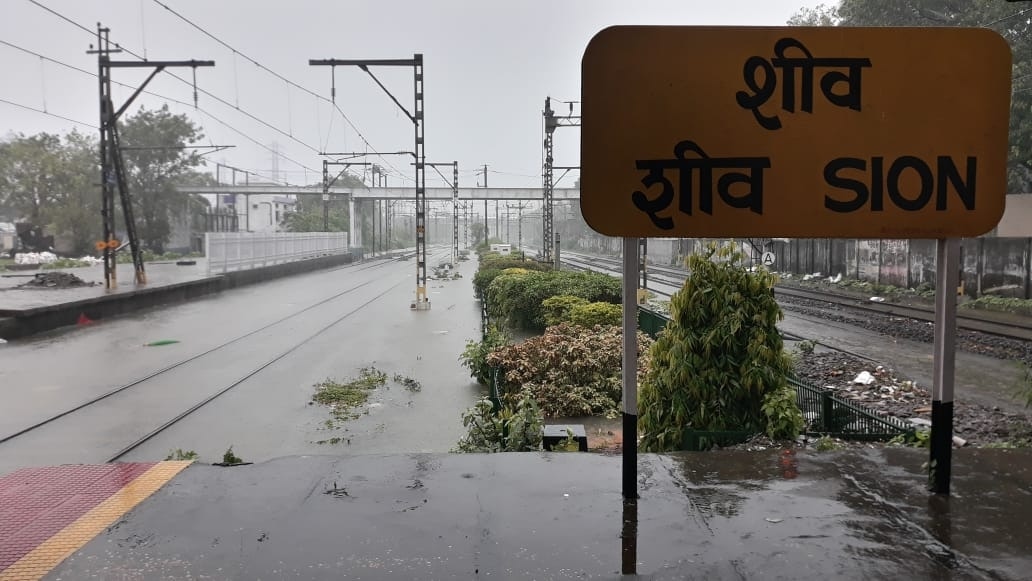
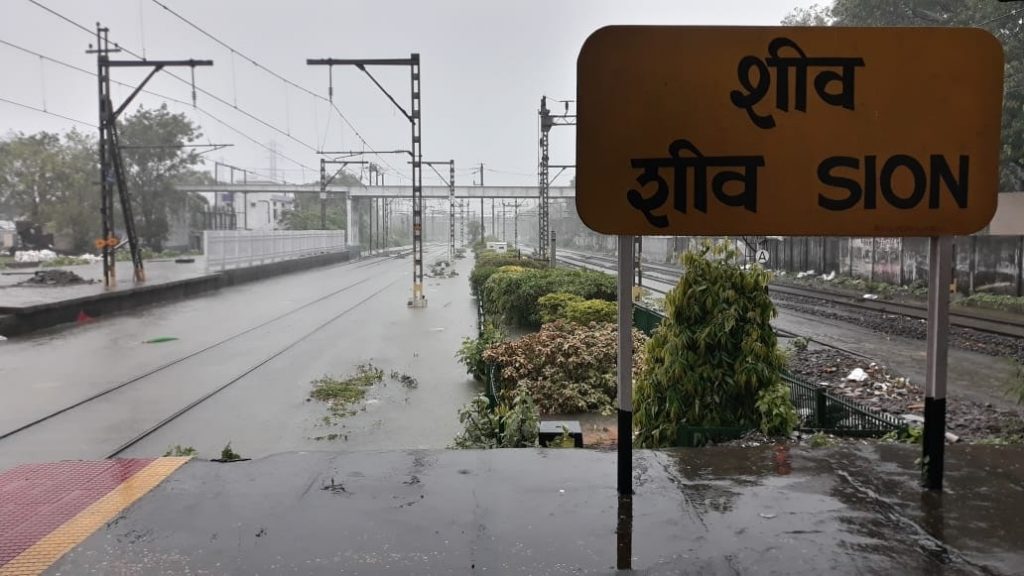
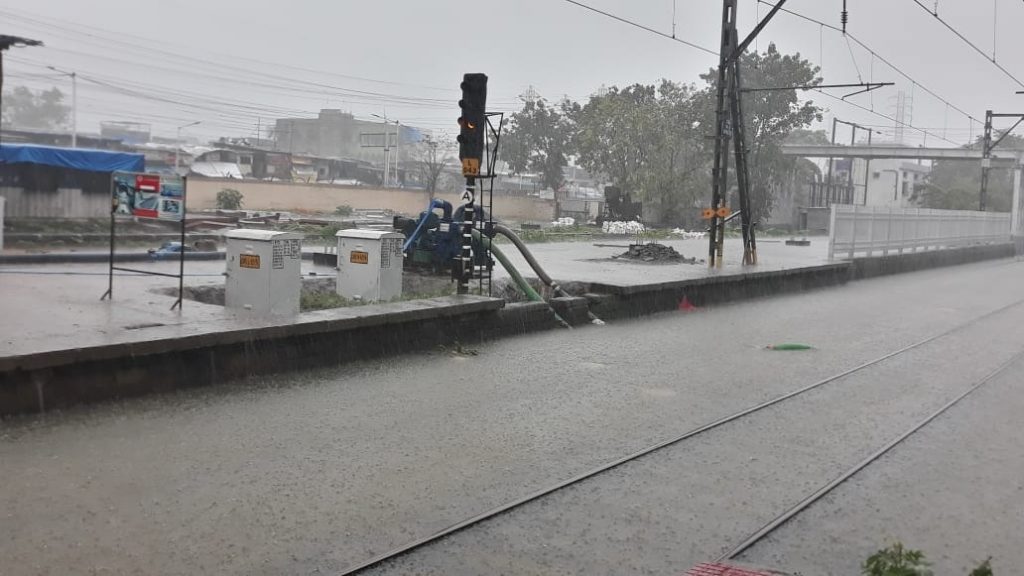
Waterlogging has been reported at several places in Mumbai after heavy rain lashed the city on Wednesday morning. Mumbai local train services between Kurla and CSMT have been halted as water submerged tracks between Kurla and Sion stations. Traffic was stopped at 9.50 am, as a precautionary measure to avoid any untoward incident. Traffic will resume as soon as water recedes, Central railway CPRO said.
Submerged railway tracks at Sion station in Mumbai.
“Due to heavy rains in Suburbs and waterlogging at Chunabatti and between Sion-Kurla section, as a precautionary measure, CSMT-Thane mainline services and CSMT-Vashi harbour line services have been suspended from 10.20am and the Trans-Harbour and BSU (Uran) services are running smoothly. Also, Shuttle services between Thane and Karjat/Kasara and Vashi-Panvel are running,” Central Railways said.
Visuals from Sion.
Several parts of the city and suburbs witnessed heavy rainfall along with thunder in the morning.
According to the IMD, the Colaba observatory (representative of south Mumbai) received 77.4 mm rainfall, while the Santacruz observatory (representative of the suburbs) recorded 59.6 mm downpour in the last 24 hours.
As per the BMC, the island city, eastern suburbs and western suburbs recorded 48.49 mm, 66.99 mm and 48.99 mm rain, respectively, in the 24-hour period ending at 8 am on Wednesday.
A high tide of 4.16 metres is expected at 11.43 am, a BMC official said.
The south-west monsoon arrived in Mumbai and its neighbouring areas on Wednesday, the IMD announced as heavy rains lashed the country’s financial capital and suburbs since early morning. The weather department has predicted a cloudy sky with moderate rain and thundershowers in the city and suburbs and a possibility of heavy to very heavy rainfall at isolated places.
“Southwest Monsoon is likely to advance into more parts of Maharashtra (including Mumbai) today the 09th June and likely to advanced into more parts of Telangana and Andhra Pradesh; some parts of Odisha and more parts of West Bengal during the next 2 days,” the IMD said.
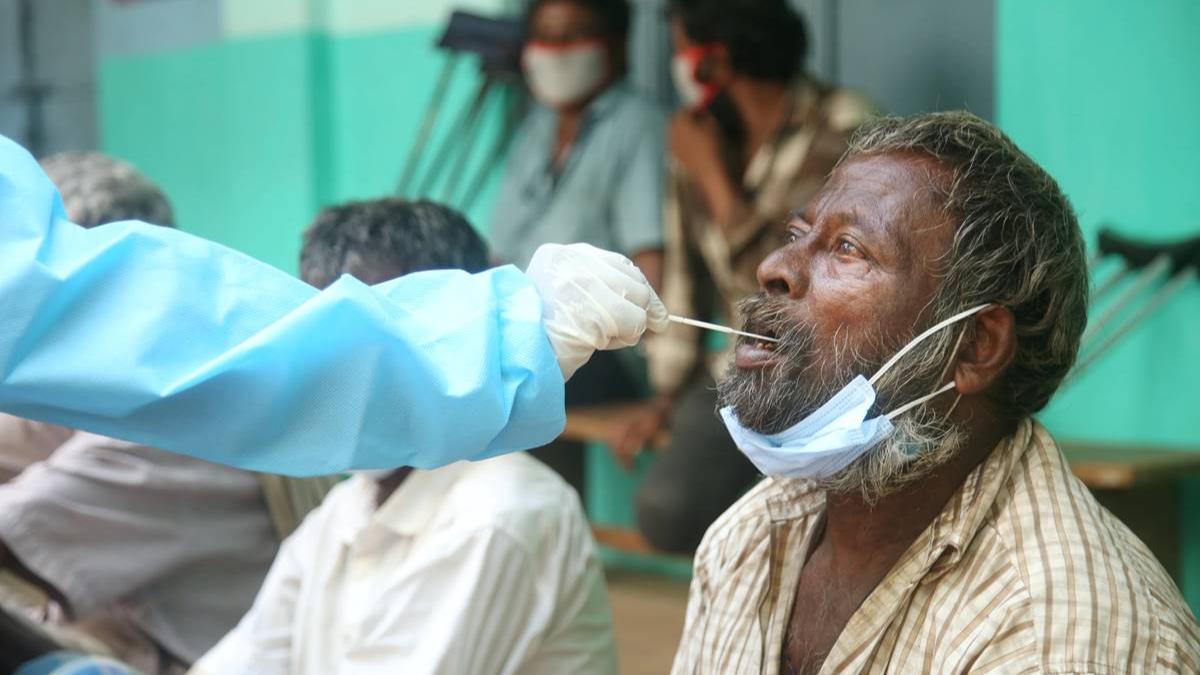
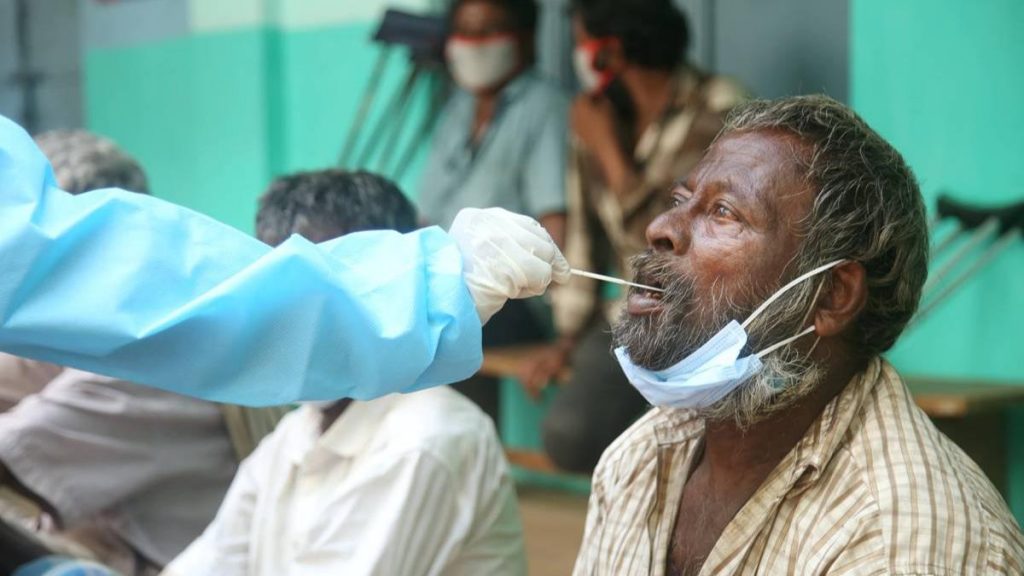
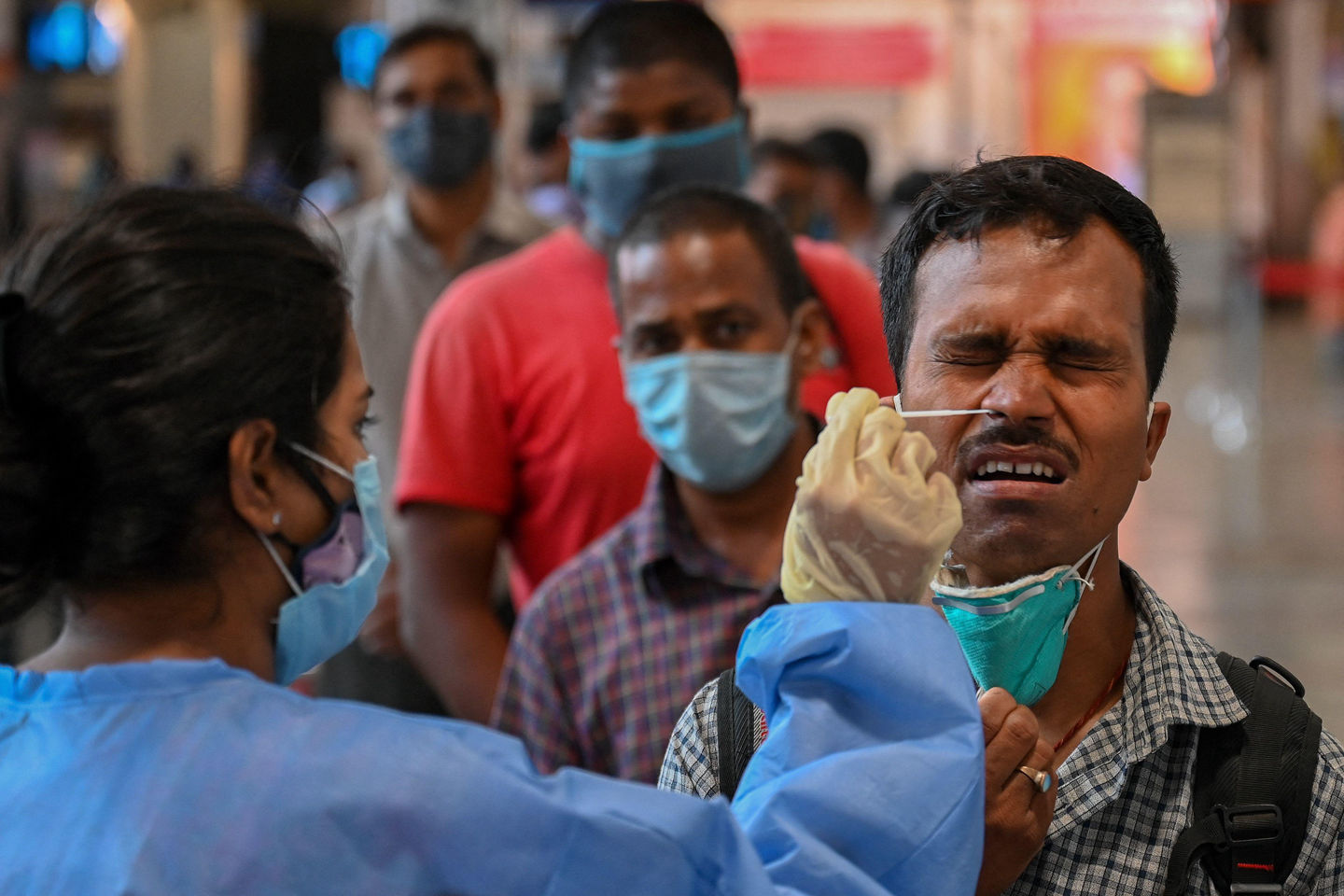
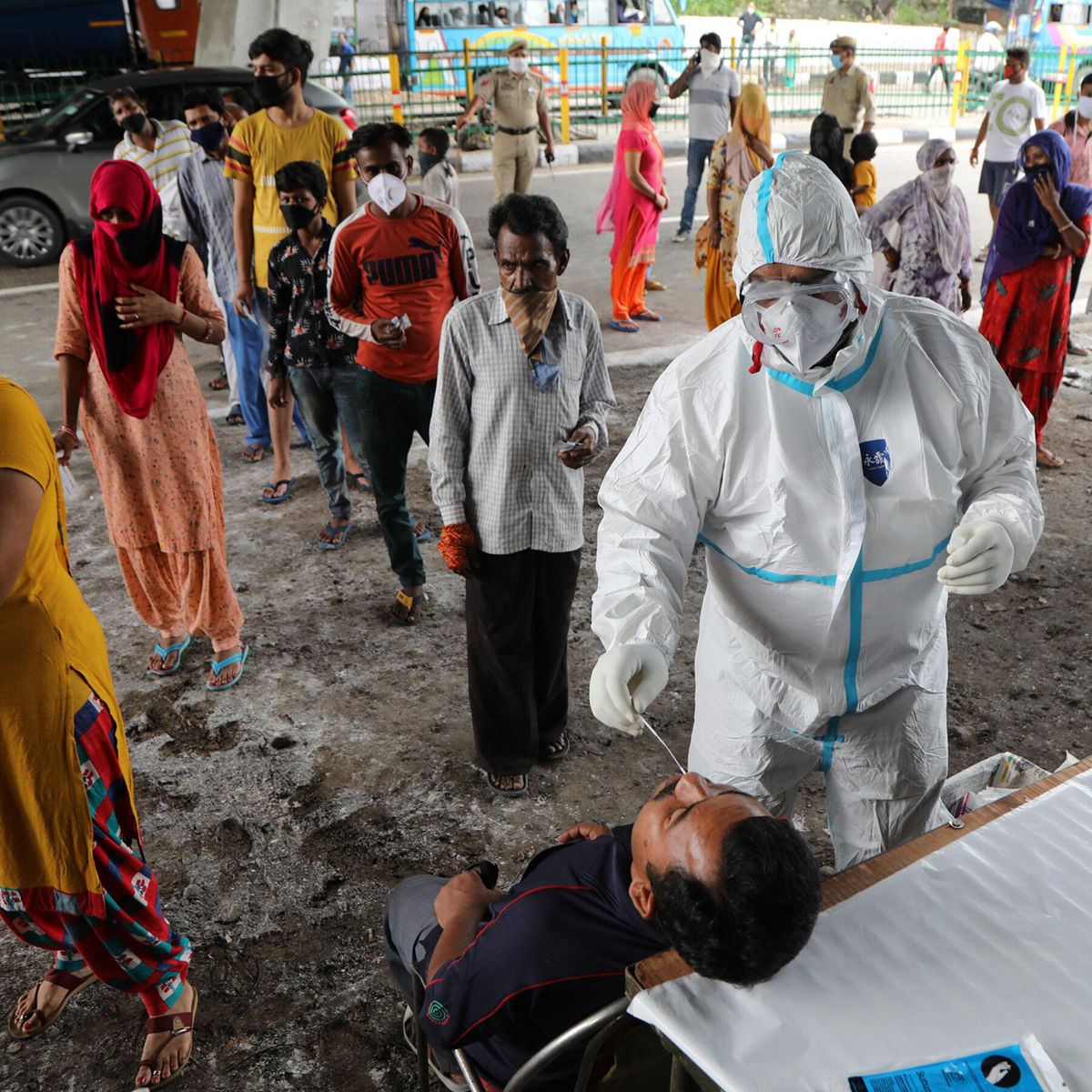
A health worker takes the swab sample of a person for Covid-19 testing.
India’s Covid-19 tally continued to show a downward trend as the country registered 1,20,529 lakh new virus cases on Saturday, its lowest in the last 58 days. The active caseload further decreased to 15,55,248, down by 80,745 cases in the last 24 hours.
On the recovery front, at least 2.67 crore people have recovered from the Covid-19 infection across the country so far, with 1,97,894 people recovering during the last 24 hours. Now, India has reported more daily recoveries than new cases for 23 consecutive days.
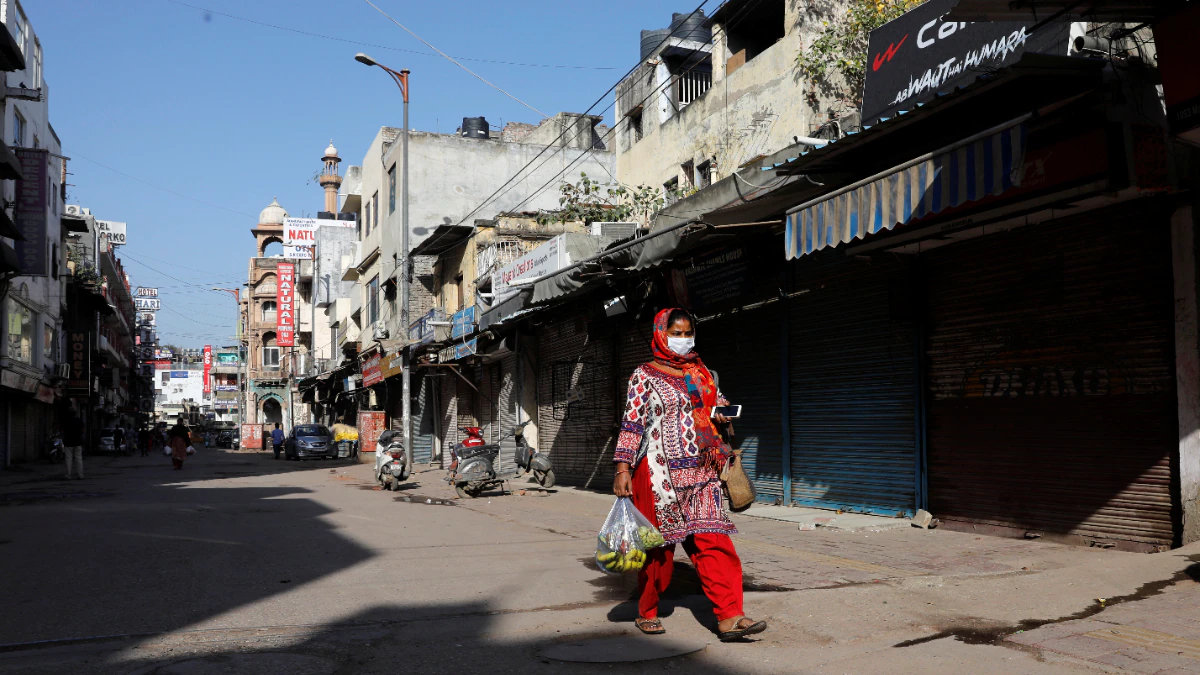
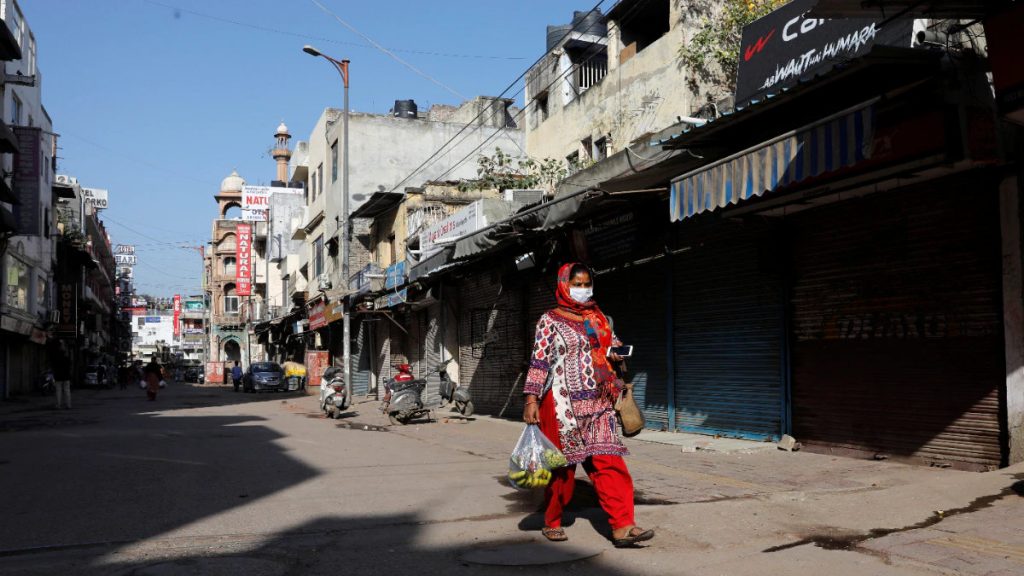
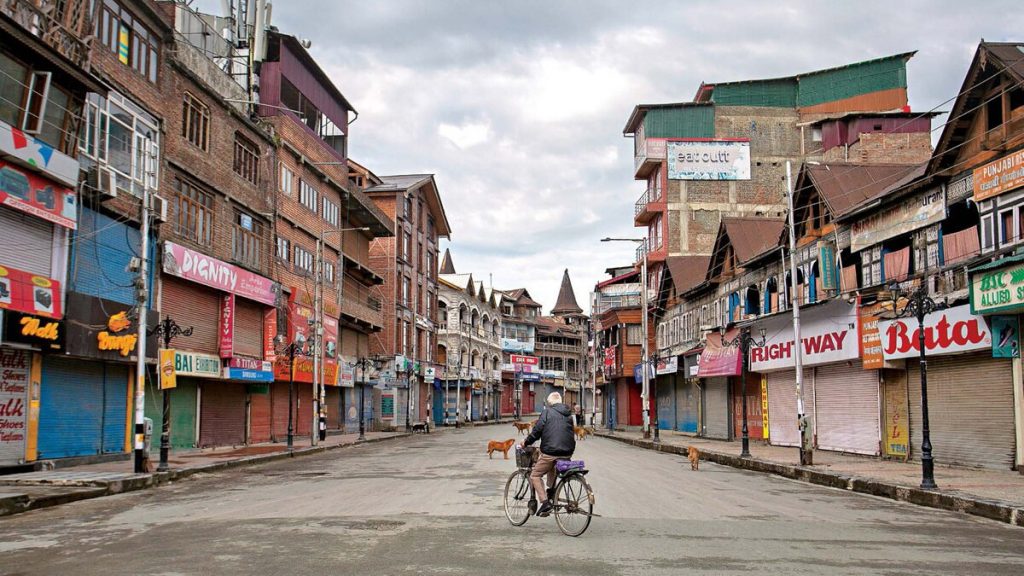
A woman walks along a near-empty street during a lockdown amid a coronavirus disease outbreak in New Delhi
Delhi Chief Minister Arvind Kejriwal is likely to announce further lockdown relaxations from the next week amid a dip in the city’s daily Covid-19 case count, officials said on Saturday.
Kejriwal, who is scheduled to address a press conference later in the day, is also expected to announce the steps to deal with the possible third wave of the coronavirus.
An official said the government may allow markets and other activities from June 7 as the Covid-19 situation has gradually been improving. Last week, the government had allowed manufacturing and construction activities in Delhi beginning phased unlock process. The lockdown was imposed in Delhi on April 19.
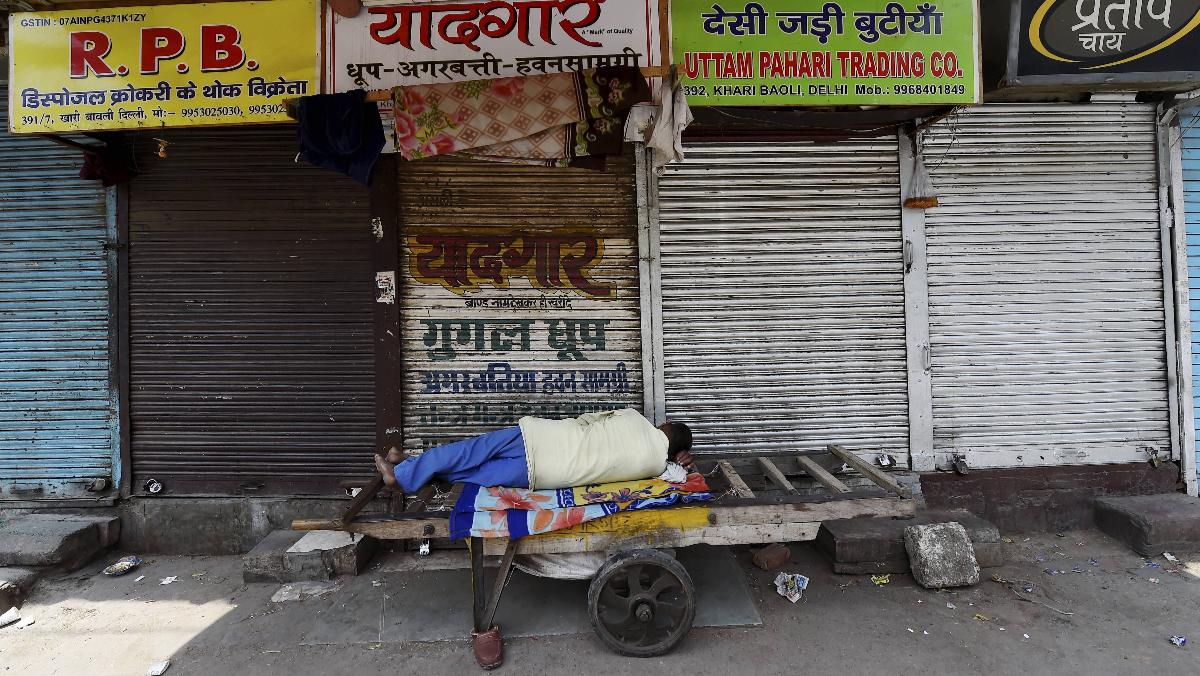
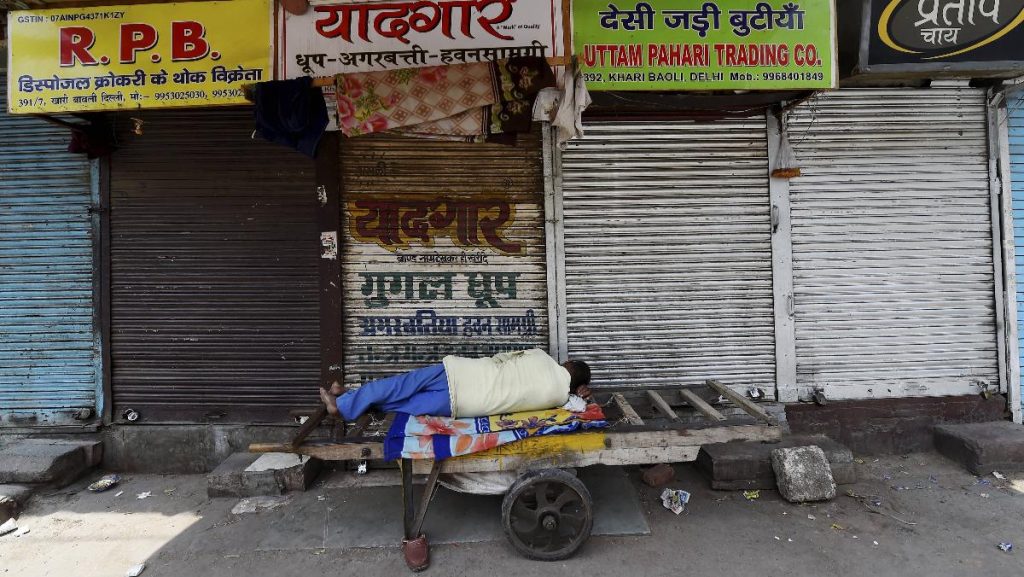
Local lockdowns during the second Covid-19 wave have hit the livelihoods of millions of poor families across the country.
When early signs of the second Covid-19 wave emerged in India a few months ago, many experts predicted that the economic damage would not be as bad as the first wave in 2020. There were two primary reasons behind the assertion — India had vaccines against the virus and no nationwide lockdown was imposed.
But almost three months after the first signs of the second wave emerged, India is struggling to vaccinate its vast population and strict lockdowns remain imposed in almost all parts of the country. As a result, the economic growth projections shared earlier have changed drastically. Even SBI, the country’s largest public lender, recently slashed its FY22 growth forecast.
Data on jobs, income, household income, consumer sentiment and demand show that the second wave has had a devastating impact on India’s economy, especially on poorer citizens and smaller businesses. Even rural areas that were a saving grace during the first wave have been deeply affected this time.
LESS THAN EXPECTED GDP GROWTH
Many ratings agencies and banks have lowered their FY22 GDP forecast for India in just a matter of months. While India’s March quarter (Q4FY21) GDP growth improved, economists believe that the gains have been eroded by the second wave of the pandemic.
On Tuesday, the State Bank of India (SBI) slashed the country FY22 growth forecast to 7.9 per cent from the earlier 10.4 per cent. Several international banks and ratings agencies have also slashed India’s growth for the current financial year in view of the devastation caused by the second Covid-19 wave.
The first wave has already taken a toll on India’s GDP in 2020-21. Official figures for full-year growth released this week indicated that India’s economy contracted 7.3 per cent in FY21 — the sharpest ever in the country’s history.
While India’s economy was earlier expected to rebound faster among all major economies in FY22, the first quarter growth has already been hit hard by the second wave. In contrast, developed economies like the US and China have witnessed a far better rebound. Even neighbouring Bangladesh has surpassed India in terms of per capita income.
The lower per capita income not only signals rising inequality among the rich and poor but also highlights how poverty is on the rise in India.
SBI Chief Economist Soumya Kanti Ghosh told news agency Reuters that GDP growth of less than 10 per cent in FY22 would “not be very beautiful” for the country.
RISING UNEMPLOYMENT HITS POORER HOUSEHOLDS
Rising unemployment has emerged as the biggest economic concern during the second Covid-19 wave as it has mostly affected the informal economy and poorer households. India Today TV has reported many accounts of families struggling to make ends meet during the second wave.
While no nationwide lockdown was announced this time, the local restrictions imposed across states have had an equally devastating impact on small businesses and their employees.
Data suggests that the pace of employment increased sharply in May as smaller firms trimmed jobs at the fastest rate since October last year.
Mumbai-based think tank Centre for Monitoring Indian Economy had earlier confirmed that one crore Indians have lost jobs during the second wave and the numbers are still rising. The second wave has also led to a sharp rise in spending towards healthcare and 97 per cent of households in the country have been left with lower savings.
Given the current situation, states may take some more time to completely unlock key economic activities. This could lead to further loss of employment and income among poorer households.
The first wave of the coronavirus pandemic had pushed many people below the poverty level and the second wave could make the situation worse, given the money people had to spend on healthcare.
WEAK CONSUMER SENTIMENT, FALLING DEMAND
Lack of demand and the dipping consumer sentiments during the second wave are two other factors that will significantly make India’s economic recovery harder.
The lack of demand could last longer during the second wave due to higher healthcare costs and prices of essential commodities such as edible oil. During the first wave, demand surge sharply as soon as the pandemic subsided, aided by the festive season in October 2020.
However, citizens are not in a mood to spend freely this time, given the health and financial emergencies that stunned households during the second wave. Multiple surveys have indicated that consumer sentiments have been hit hard during the second wave and people are scared of the uncertainties ahead.
The combination of slow demand growth and lack of consumer confidence could significantly derail the economy as people are likely to remain hesitant for a longer period before they start spending on discretionary items. The lack of vaccinations and fear of a third coronavirus wave has increased fear among citizens who are likely to save more to prepare for uncertainties.
The absence of a major relief package this time could also make matters worse. Last time, India announced a series of relief packages aimed at helping distressed citizens and sectors, but no such measures have announced this time.
The government, however, claims that many measures that were a part of the relief package during the first wave have been extended. But reports suggest that the relief has not reached the poorest population in the country.
The only notable relief measure during the second wave was announced by the Reserve Bank of India (RBI) a month ago. But the lack of demand and the inability of citizens to repay debts clearly shows that the measures are falling short at the moment.
DEFAULTS ON THE RISE
One major evidence of economic weakness is official data on rising loan defaults and cheque bounces. Banks have reported a rise in loan defaults and cheque bounces during the second wave. It signals that many citizens are struggling to clear debts.
Cheque bounces rate for loan repayments have doubled to over 20 per cent from the year-ago period while credit card defaults rose to 18 per cent, suggested a Reuters report, quoting data from fintech company Creditas Solutions.
Meanwhile, several banks have indicated that retail loan defaults are likely to rise in the coming months. HDFC Bank’s CEO Sashidhar Jagdishan recently stated during an investor call that the bank may not have a grip of what is happening for the first time in so many years.
All of these factors indicated that the second Covid-19 wave has hit the Indian economy hard and the effects of the battering are likely to become more visible as the year progresses.
Manoj Bajpayee and Samantha Akkineni in a poster of The Family Man 2.
“We are different. We are very different,” Bhaskaran (Mime Gopi) tells his friend and ally of over 30 years, Deepan (Azhagam Perumal), as they sit across each other in Normandy, France. Bhaskaran, the once-upon-a-time feared and revered leader of the Tamil Rebels, has forgotten what he was fighting for but hasn’t given up the fight. Deepan, his partner in the movement, and always the more diplomatic one, has found a way to further it even without a fight. “You are a politician, I am a soldier,” Bhaskaran concludes. And that right there is what it all boils down to.
Manoj Bajpayee’s Srikant Tiwari, the family man spy, has quit his job at the TASK force and settled for a 9-to-5 corporate job at an IT firm. He tries to fit in but fails, suffers from FOMO but continues to live in denial that he is happy. After all, he did it for his family. His family, much like the first season of this Amazon Prime hit, still remains disappointed, even after all his efforts. While this yet again provides some comic relief, the plot thickens in Chennai, where JK Talpade (Sharib Hashmi) is stuck in a hostage situation. The man they are trying to nab is Bhaskaran’s brother. The Sri Lankan government wants him, our Indian Prime Minister – Basu, a vaguely Mamata Banerjee resembling woman whose Bengali-infused Hindi lasts just the first episode – has agreed. Even at the risk of backlash in Tamil Nadu. Between politicians and soldiers, national security is at stake.
Enter Raji AKA Rajalaxmi, a ruthless fighter of the rebel force, capable of smashing the head of her molester with her bare hands. She lives undercover, a sleeper cell, waiting for orders. And orders have come. What’s the plan? Well, no spoilers here.
The Family Man has moved ahead from Season 1, yet not much has changed schematically. The plot makes Sameer (Darshan Kumar) and Pakistan our primary enemy once again. Interestingly, Dhriti (Ashlesha Thakur), Srikant’s daughter finds a prominent role in this season, all part of the thick, thick plot, and she does a good job. Priyamani still remains extremely underused. If there’s anyone who steals Manoj Bajpayee’s show, it is Samantha Akkineni and her Raji.
Samantha is sharp as a whip as Raji, both mentally and physically. Her fight scenes, and there are many, seem all so real. You feel it when she’s planting that punch. She brings out a sort of darkness through her eyes, it is ominous, and it grips you. There are moments when her gaze seems a little too intense and unnecessary, but we are willing to ignore that.
Manoj, once again is flawless. He carries Srikant’s humour on his sleeves along with his insecurities and helplessness. Hashmi, right beside him, complements him perfectly throughout.
In the writing department, Raj and DK keep it tight. While there’s not much guessing required, you know what’s happening, they still manage to keep it thrilling. Of course, they have great actors to shoulder et al.
The ending is predictable. Given how long the audience had to wait for The Family Man 2, it is a tab bit disappointing.
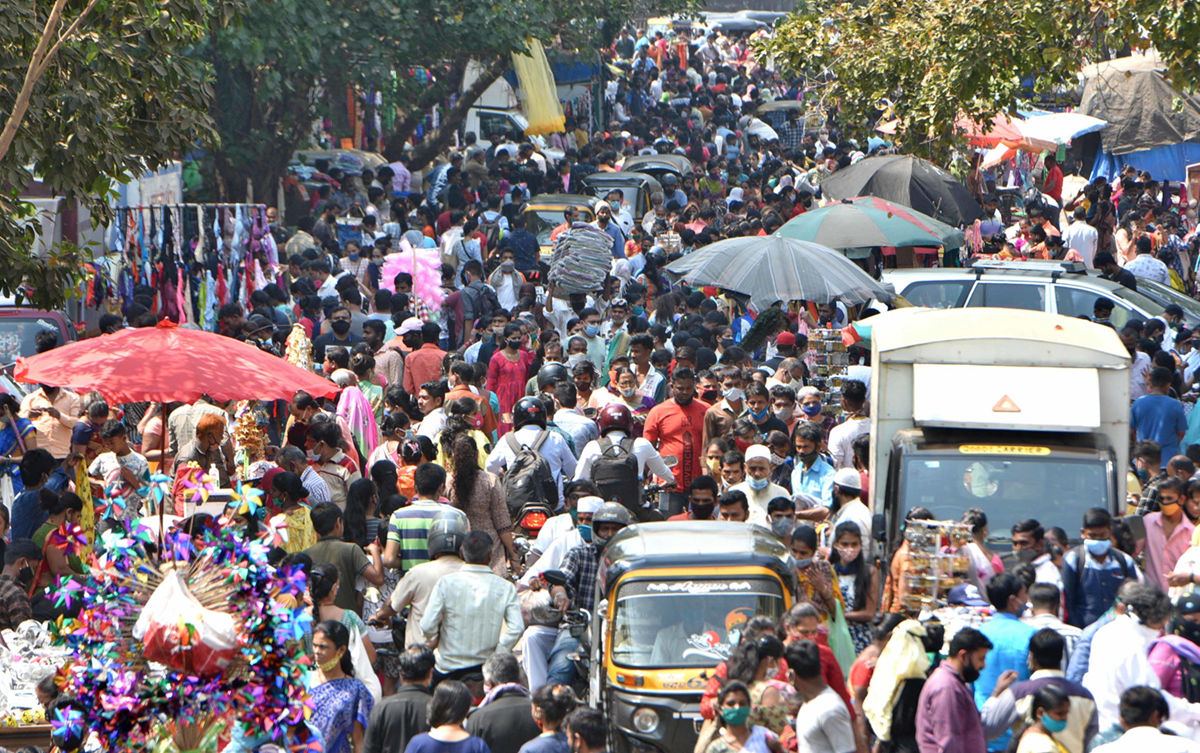
People walk at a crowded market amidst the spread of the coronavirus disease
India on Tuesday registered its lowest daily Covid cases in at least 54 days as the country logged 1.27 lakh infections in the past 24 hours, according to the Union health ministry, while the active cases have dropped below 20 lakh after 43 days.
Not only daily Covid-19 cases, India also saw its lowest number of deaths in five weeks as 2,795 patients succumbed to the virus. India’s active caseload has declined below 20 lakh after 43 days. There are 18,95,520 active cases in the country.
In a single day, 2,55,287 people were declared recovered, according to the health ministry.
The Delhi government on Saturday extended the lockdown till June 7 with some relaxations.
The Delhi government in an order issued on Saturday announced an extension of the Covid-induced lockdown till June 7. This has been done, even though the active Covid-19 cases and case positivity rate in the city are declining, because “the situation is still precarious”.
Essential activities and services will, of course, continue to be exempt. E-passes possessed by people for movement connected to essential goods and services will continue to be valid.
In addition, some previously prohibited activities will be permitted outside containment zones in the city from May 31 onwards.
A manufacturing unit or construction site that violates these rules is liable to be closed. Legal action may also be taken.
Workers and employees will be allowed to move only if they possess an e-pass (soft or hard copy) which can be obtained by the employers by submitting online applications with details of the workers on the website www.delhi.gov.in.
RANDOM TESTING, INSPECTIONS
The Delhi government has also instructed the district magistrates to ensure random Covid testing in sufficient numbers at manufacturing units and construction sites on a regular basis. These units are to be regularly inspected too to ensure Covid-appropriate behaviour is being followed.
Police authorities have been asked to ensure there is no unnecessary movement of people on roads. This will be done by putting adequate number of checking points.
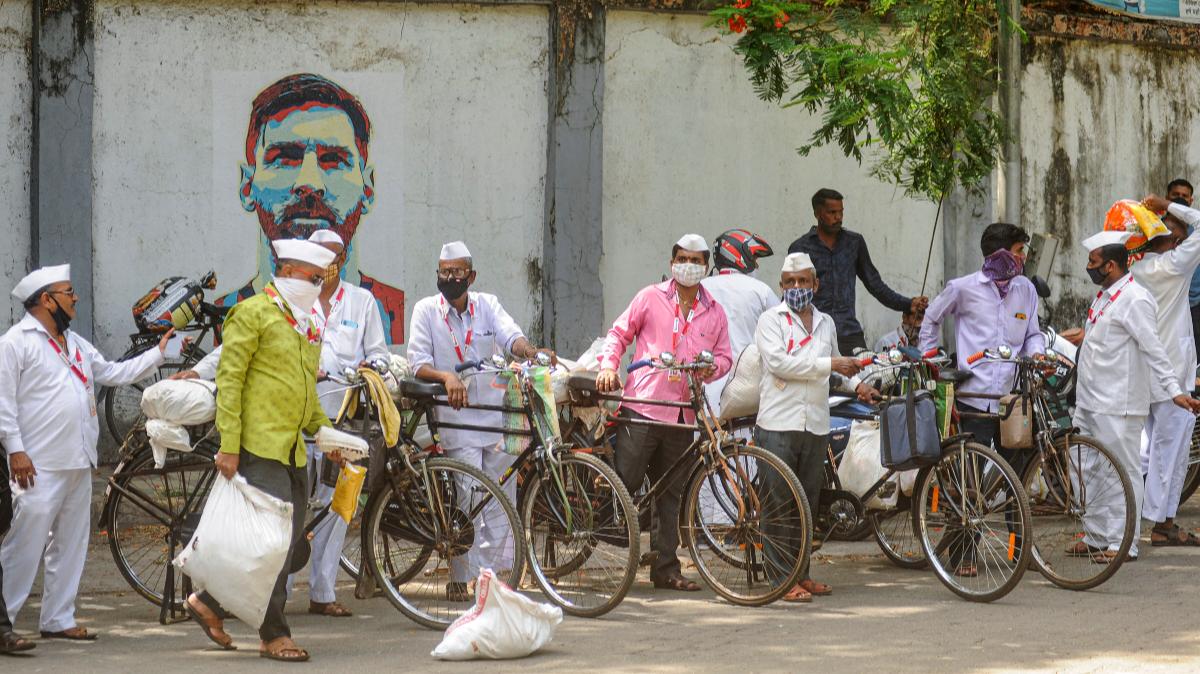
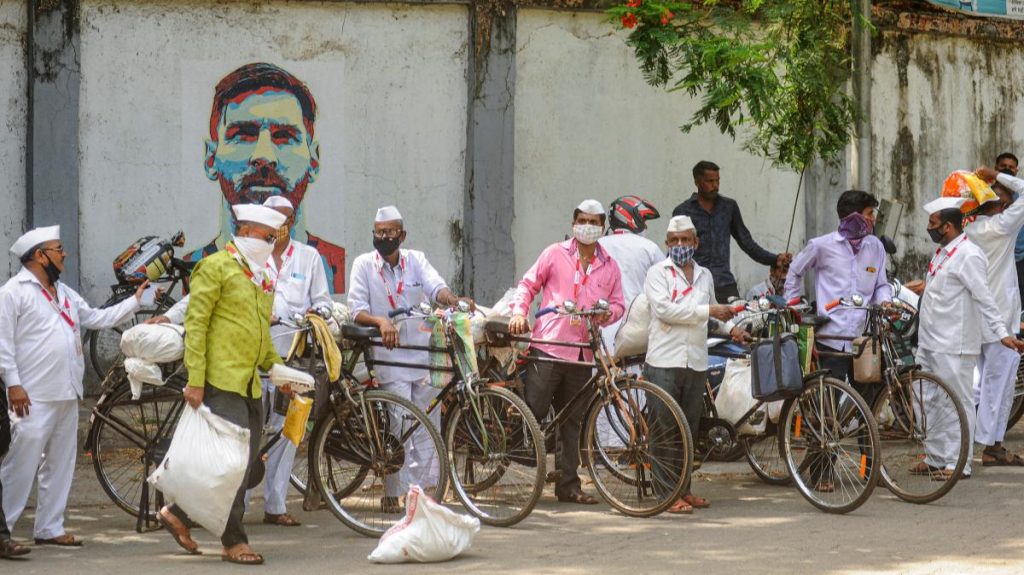
Mumbai ‘dabbawalas’ prepare to leave for work to distribute food during the Covid-induced lockdown in Mumbai, May 27.
Maintaining the declining trend in daily cases, India on Friday recorded 1.86 lakh new cases of Covid-19 — the lowest 24-hour rise in 44 days — pushing the overall tally to 2.75 crore.
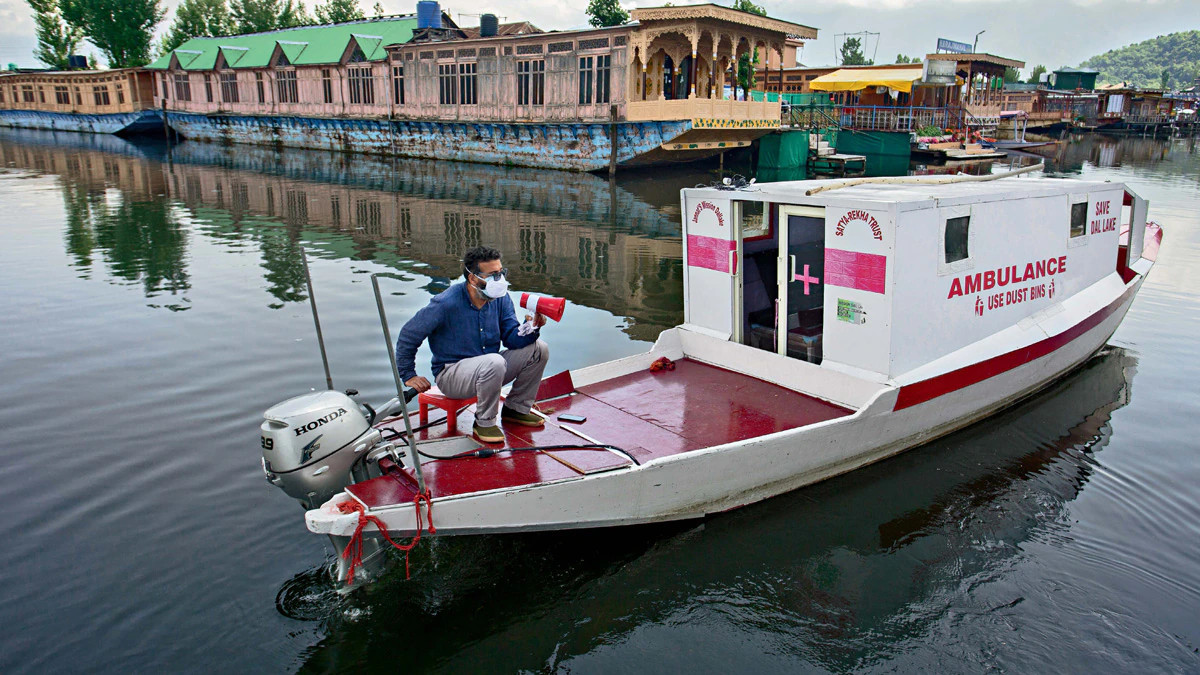
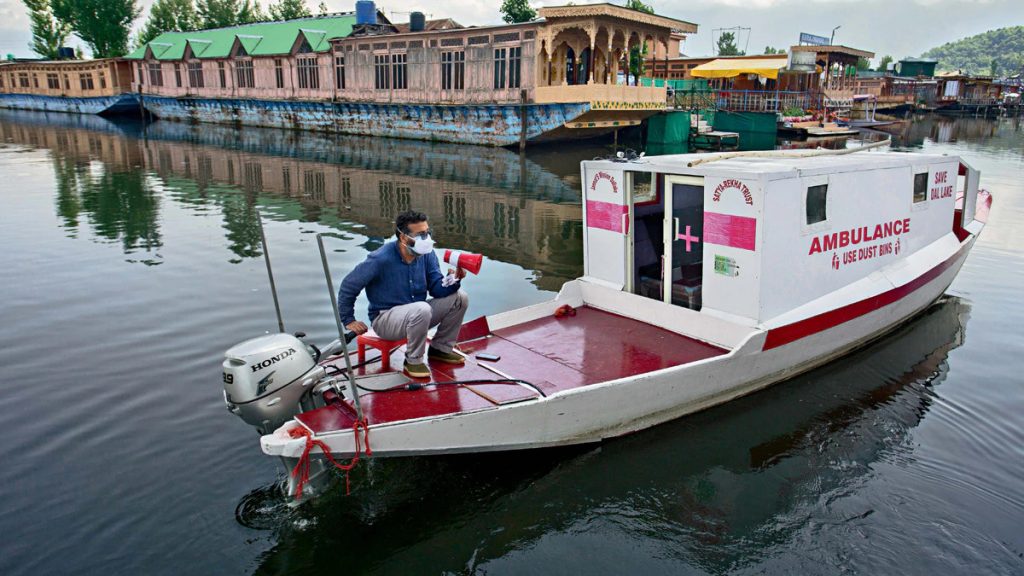
Last year in August, when Tariq Ahmad Patloo, a houseboat owner in Srinagar, was infected with Covid and needed a ride to Srinagar’s SMHS Hospital, his own community failed him. He was unable to find a shikara to take him across the lake. Even after his recovery, the memory of that apathy haunted him more than the virus. Upon regaining his strength, Patloo began looking into the idea of starting a water ambulance service to help those Covid patients who are unable to find support. However, at above Rs 20 lakh, the cost of a commercial water ambulance—a motorised boat equipped with materials and devices to provide life-saving, immediate medical intervention—proved to be unaffordable for Patloo. So, instead, he converted a traditional shikara into a make-shift ambulance with financial assistance from the Satya Rekha Trust.
A task force of paediatricians has been formed in Maharashtra amid fears of a third Covid wave.
Apaediatrician task force has been formed in Maharashtra to prevent children from contracting Covid-19 even as the fears of a third wave looms large. The task force of 14 paediatricians formed has been tasked with taking precautions in view of a third wave.
The special task force of paediatricians will provide guidance on preventive measures and treatment of Covid-19 infection among children in Maharashtra. The team has been formed under the chairmanship of Dr Suhas Prabhu.
Maharashtra has been reeling under the second wave of Covid. A possible third wave of genetic mutations in the coronavirus has thrown up the possibility of Covid infection among young children.
Superheroes of the pandemic who are going beyond the call of duty to help fellow citizens battle Covid and state apathy
Meet Gurpreet Singh Rummy. For a living, he works as a contractor supplying fuel pumps to petrol stations in the National Capital Region. But not during these troubled times. He and his friends are busy running an ‘Oxygen Langar’ 24×7 in a gurudwara in Ghaziabad. They set it up in the last week of April to help Covid-positive patients who needed medical oxygen desperately but were unable to get it, either from the market or in hospitals. With the state machinery overwhelmed by the crisis and unable to meet the needs of Covid patients in the NCR, Rummy and his band of do-gooders—who call themselves Khalsa Help International—stepped in to make a difference. Patients can choose between being admitted to the 25-bed makeshift hospital at the gurudwara or refilling oxygen cylinders for home treatment. Thousands have received succour but Rummy’s philosophy remains simple—“Our first priority is to save lives. We don’t say no to anyone.”
Governments—both at the Centre and in the states—would do well to heed the principles Rummy is guided by. The hallmark of a good government is to put care for human life and the happiness of its people above all. Yet despite having the might, the mandate, the machinery and the money, the Indian State has repeatedly failed its citizens in the past two months in their hour of dire need. Thousands have died for want of oxygen or hospital beds, because the State failed to make adequate arrangements. While the black market flourishes, there is a criminal shortage of vital drugs to treat Covid. There is a long waiting line even to cremate or bury the dead. Of course, none of this takes away from the tremendous service India’s overstressed medical personnel are rendering to save millions of lives against daunting odds.
Not since Partition have we experienced such grief, despair and a lack of faith and trust in the government’s ability to save lives. Currently, 4,000 people a day, or three people every minute, are dying of the disease in this country. As on May 18, 283,248 people had died of Covid, with the second wave accounting for more than half the number. The situation may be easing in cities like Mumbai and Delhi but is worsening in Bengaluru and Kolkata. Let’s not forget that at its peak the first wave had less than 100,000 new cases daily while in the second wave, despite talk of daily cases dipping, it still averages 250,000. Worse, there is a growing crisis in India’s rural interiors, where the virus has struck vast numbers down for the first time.
The government will find it difficult to explain away its apathy and follies by calling the pandemic a once-in-a-century calamity. Especially as the first wave had provided it ample opportunity to prepare for the worst. A government’s biggest failure is when it is of the people, by the people, but is not seen to be for the people. Even the higher judiciary has taken the government to task for its negligence. Hearing a slew of petitions on the subject on May 18, a bench of the Delhi High Court scathingly remarked, ‘Your officers are living in ivory towersdo they not see that so many deaths are taking place across the country it ( the pandemic) is raging like a fire but none of you are bothered. Every day you are castigated by each and every court in the land and you are still not awake.’
Thomas Hobbes, the founder of modern political philosophy, believed that a community needed to have a social contract for governance to prevent human life from becoming “solitary, poor, nasty, brutish and short”. Yet the opposite has happened in India during the second wave. Despite the Indian State failing, committed citizens have stepped up and prevented the nation from descending into a Hobbesian nightmare. All across the country, thousands of individuals and non-governmental organisations have come together to help. Unlike the government, these ordinary individuals have used adversity as an opportunity to make extraordinary contributions that go far beyond the call of duty. In the nation’s darkest hour, these angels of change have come together in the mission that Mahatma Gandhi wanted the Indian State to accomplish—‘To wipe every tear from every eye.’ These, then, are the heroes of the new Republic of Self-Help.
Abraham Lincoln, the 16th president of the United States, who united America, said, “I am a firm believer in the people. If given the truth, they can be depended on to meet any national crisis.” Truth may have been the first casualty in the pandemic, especially over the number of afflicted and dead, but that hasn’t dissuaded the self-help groups from discovering their inner strengths. What characterises their effort is not just their can-do spirit but also their innate humaneness. Many found the truth of what Saint Francis of Assisi once said, “Start by doing what’s necessary, then do what’s possible and suddenly you are doing the impossible.” For instance, Sravasti Ghosh, an artist living in Kolkata, was troubled by the continuous wail of sirens and wanted to do something to help. “I felt there was no time to waste as people were dying every hour,” she says. So she put up a post on Facebook, offering a few meals a day to Covid patients in home isolation. The response was instant, her phone kept buzzing and from her meagre savings she started supplying 15 homes with food daily. Soon, well-wishers chipped in with funds and she now supplies 100 people with meals daily with the help of her parents. “Every small step counts,” Ghosh says, with quiet conviction.
In the following pages, we profile 31 individuals and non-governmental organisations that represent the much larger pool of self-help activists who are putting their shoulder to the wheel for the nation. They are helping in both small and big ways, by providing ambulances to transport the sick, answering requests by patients for oxygen and drugs, setting up makeshift hospitals, giving food to the needy and even helping cremate the dead, things that the State should have taken care of but has mostly failed to. These people have risen above religion, caste, politics and station to serve the needy in the ancient Indian spirit of ‘vasudhaiva kutumbakam’—the world is one family. What makes their work even nobler is that it comes at a grave risk to their lives and that of their families, given how virulent the virus is in the second wave. Their sources of inspiration and motivations are many. Jitendra Shinde, an autorickshaw driver in Kolhapur, Maharashtra, for instance, was inspired by a dialogue from the 2014 Salman Khan starrer Jai Ho: “If everybody helped three people and they in turn helped three more and the process continued, India could survive any calamity.” Shinde has used his auto to transport over 1,000 Covid patients in the past one month.
As the pandemic begins to ravage the Indian countryside, the Modi government seems to have finally acknowledged the magnitude of the challenge before it and the need to involve the community in a big way. Given the poor healthcare services in rural India, among the measures being advocated is community mobilisation by involving all stakeholders, including NGO activists and self-help groups. “Strength,” Gandhi once said, “does not come from physical capacity. It comes from an indomitable will.” The government must show the will that these do-gooders have demonstrated to overcome arguably the worst crisis India has faced since Independence.
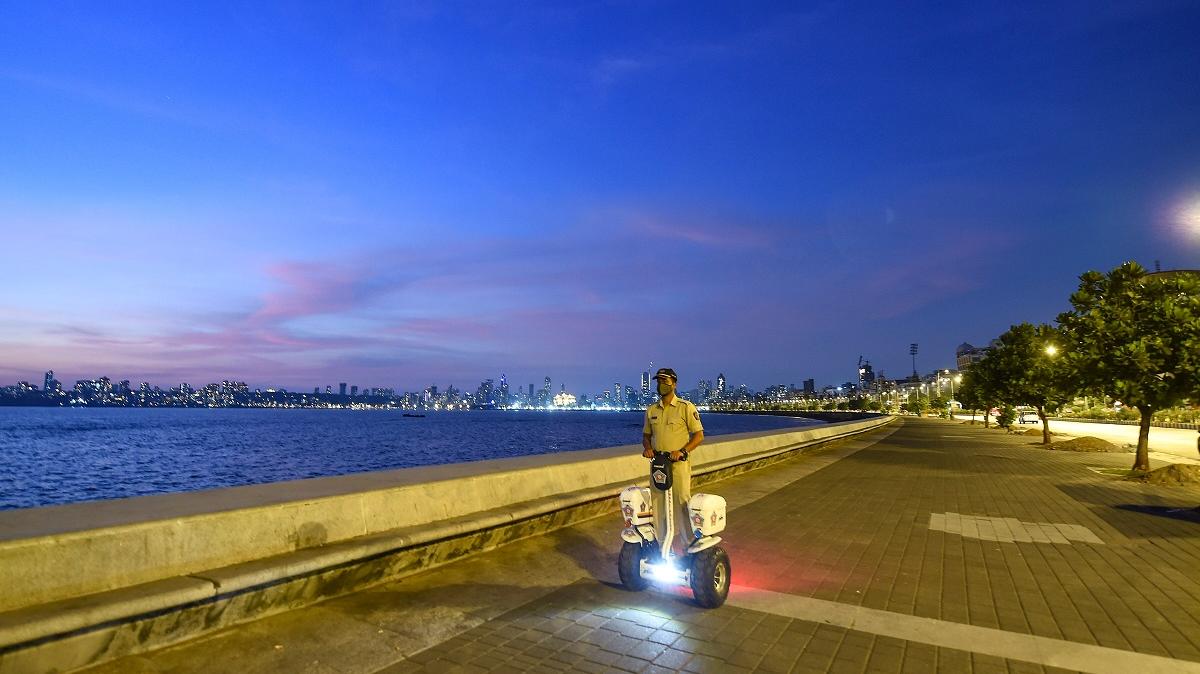
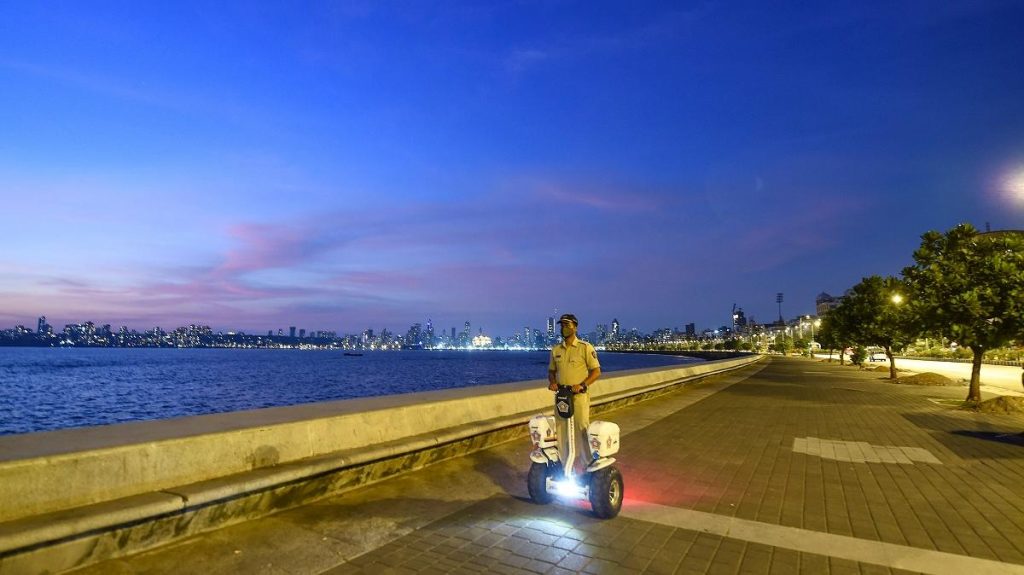
A policeman patrols the Marine Drive during lockdown in Mumbai.
As the second wave of Covid-19 recedes, the Maharashtra government is preparing to ease the state-wide lockdown in a phased manner owing to the decline in Covid cases and positivity rate in the state.
Health minister Rajesh Tope indicated the same, saying, “Let’s review the preparations. If all matters are positive, then only the chief minister and deputy chief minister, in consultation with the experts of the task force, can decide on the relaxation of the restrictions to some extent. Don’t be under the illusion that restrictions will be completely removed.”
It is learnt that planning to gradually lift the lockdown has begun and will be done by June 30. There is no clarity at this time as to when the easing will begin. Due to fears of a third wave in the state, restrictions will not be completely lifted, but there is scope to provide some relaxation.
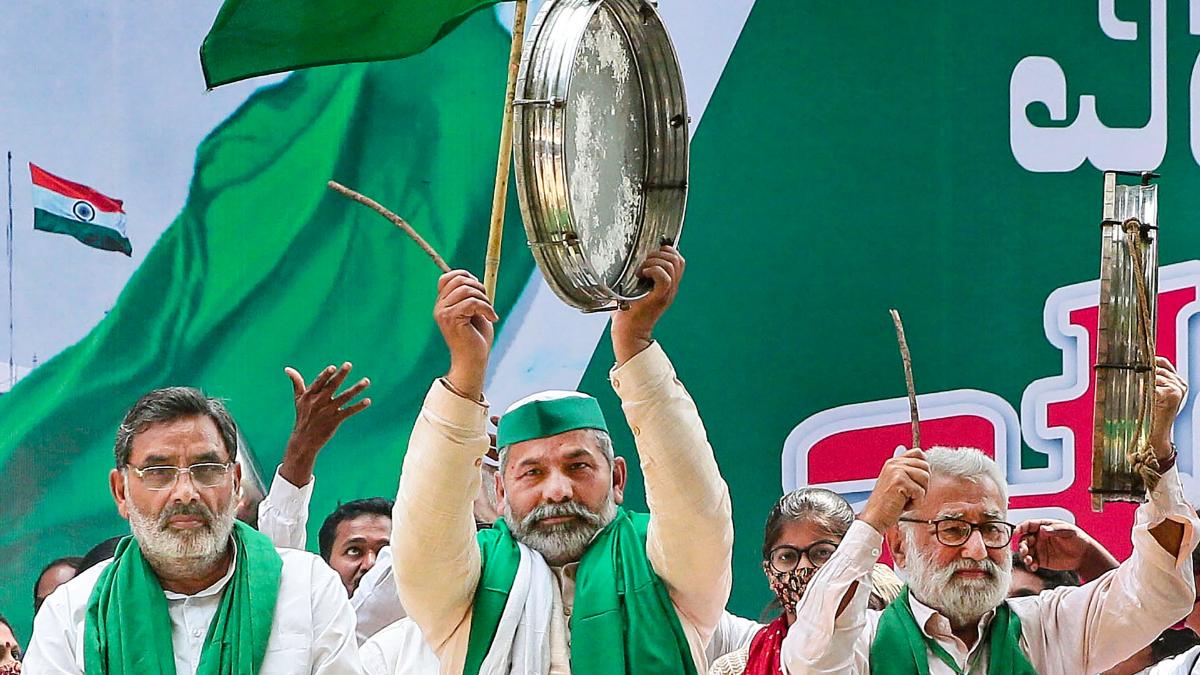
The SKM, a union of 40 farmers’ outfits, had issued a call for ‘black day’ to mark six months of the ongoing agitation against the Centre’s three farm laws.
“We extend our support to the call given by the Samyukta Kisan Morcha (SKM) to observe a countrywide protest day on May 26 marking the completion of six months of the heroic peaceful Kisan struggle,” said the joint statement by opposition parties.
Signatories of joint statement
The joint statement signed by Congress acting president Sonia Gandhi, former prime minister HD Deve Gowda, NCP chief Sharad Pawar, West Bengal CM Mamata Banerjee (TMC), Maharashtra CM Uddhav Thackeray (Shiv Sena), Tamil Nadu CM MK Stalin (DMK) and Jharkhand CM Hemant Soren (JMM).
Other signatories include former Jammu and Kashmir CM Farooq Abdullah (NC), former Uttar Pradesh CM Akhilesh Yadav (SP), Tejashwi Yadav of the RJD, D Raja of CPI and Sitaram Yechury of the CPI-M.
‘Repeal of farm laws, legal guarantee of MSP’
The joint statement demands the repeal of the three new farm laws. Citing a letter written by opposition leaders to Prime Minister Narendra Modi on May 12, the statement says the Centre must repeal farm laws to “protect lakhs of our annadatas becoming victims of the pandemic”.
In addition to the immediate repeal of the farm laws, the opposition leaders also demanded legal guarantees for MSP (minimum support price) of C2+50 per cent as recommended by the Swaminathan Commission.
“The Central Government must stop being obdurate and immediately resume talks with the SKM on these lines,” said the joint statement issued on Sunday.
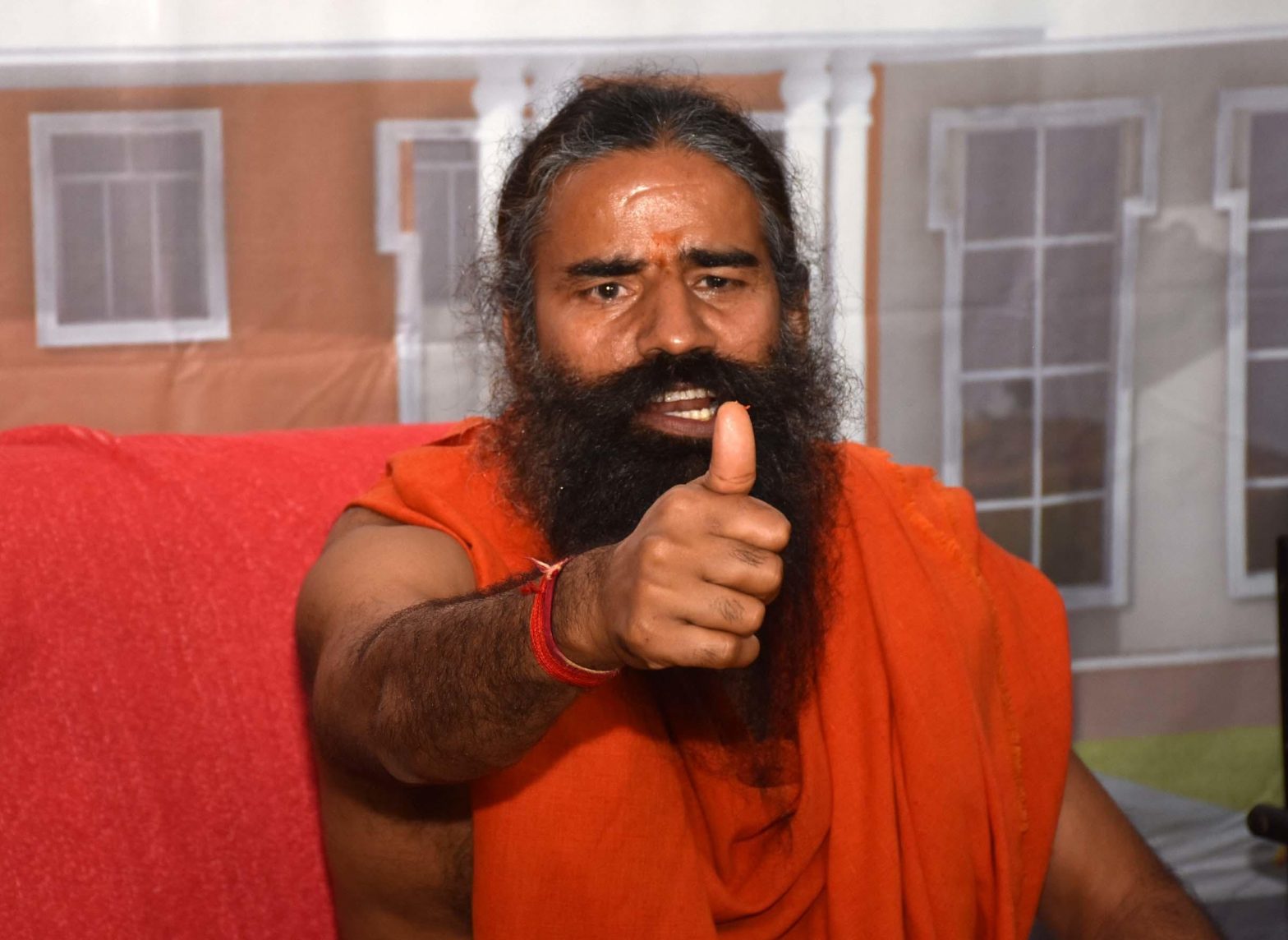
The Indian Medical Association (IMA) has launched a blistering attack against Yoga Guru and FMCG, Ayurveda businessman Baba Ramdev for comments he allegedly made against modern medicine.
The IMA in a statement urged Union Health Minister Dr Harsh Vardhan to either accept the accusation made by Ramdev and dissolve modern medical facilities or book and prosecute Yoga Guru under the Epidemic Diseases Act.
The development comes after a video of Ramdev saying that allopathy is stupid science.
What Ramdev said
In a video that has been going viral on the internet, Baba Ram Dev said, “it is shocking that Remdesvir failed, steroids failed and now plasma therapy has also been banned.”
He also said, “the medicines doctors are giving patients for getting the fever down such as Fabiflu is not doing any good to them.”
“We have lost lakhs of people due to allopathic medicines and not due to shortage of oxygen,” he went on to claim.
Alleging that Ramdev’s comments challenge the wisdom and integrity of the Drug Controller General of India (DGCI) and the Union Health Ministry, the IMA said if action is not taken against Ramdev then the medical body will take legal action against him.
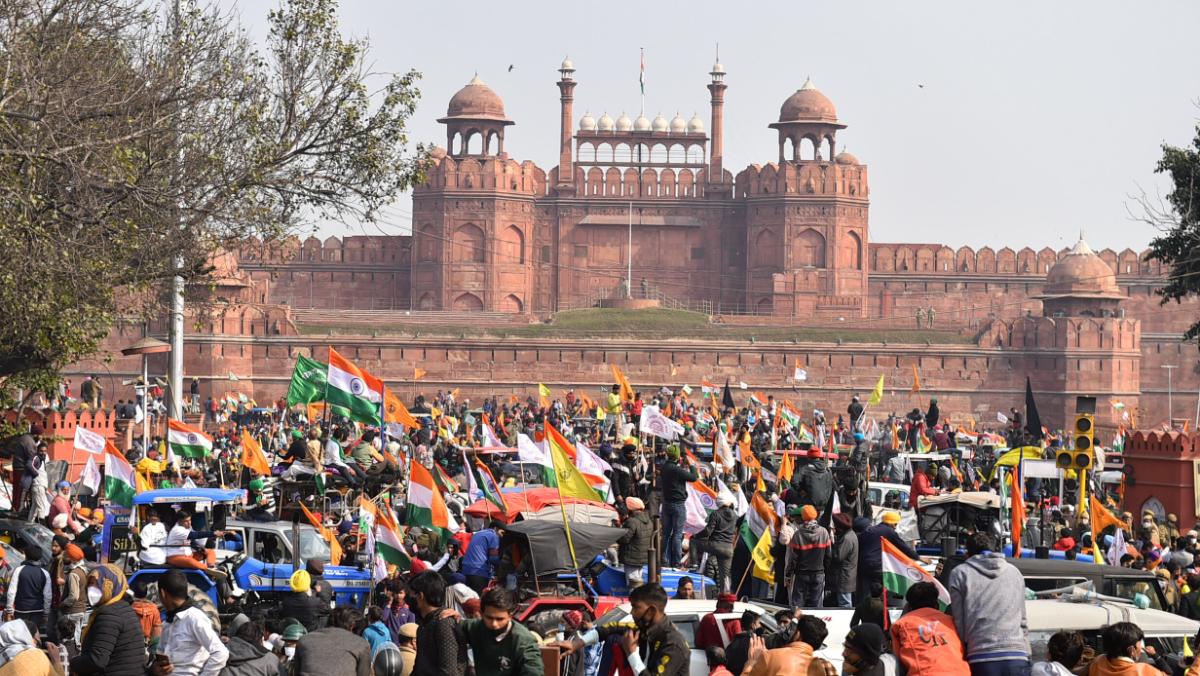
The Delhi police has filed a 3,224-page chargesheet in connection with the violence at Red Fort on Republic Day this year.
The Delhi Police has filed a 3,224-page chargesheet against actor Deep Sidhu and fifteen others in connection with the violence during the kisan (farmer) tractor rally at Red Fort on Republic Day this year. The chargesheet has been filed in Tis Hazari court.
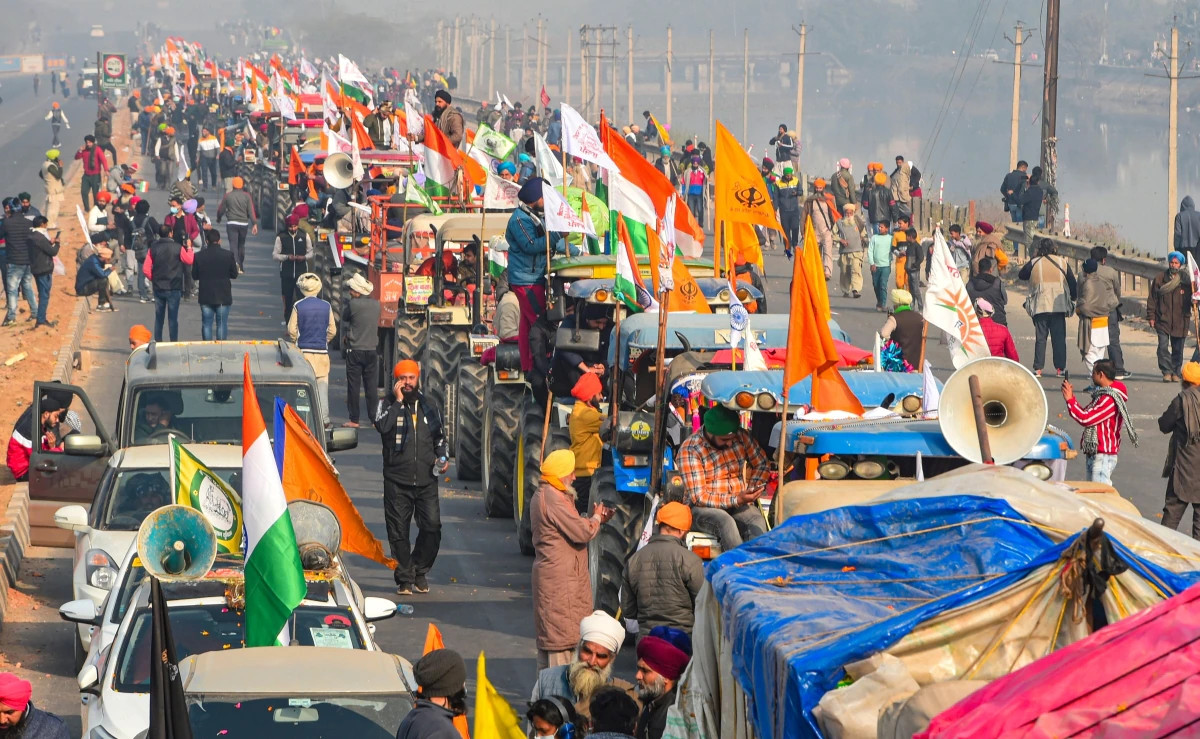
On January 26, the police clashed with protesting farmers during their tractor rally in protest against the Centre’s three controversial farm laws at Red Fort in Delhi. Scores of people were injured in the incident.
Of the 3,224 pages in the chargesheet, 250 detail how the entire ‘conspiracy’ was hatched and executed.
THE ACCUSED
Sources in the Delhi Police stated that Deep Sidhu and Lakha Sidhana have been named as the main conspirators in the case. The names of many prominent farmer leaders have also been included in the chargesheet.
According to police sources, six accused, including Lakha Sidhana, are still absconding. Three of them – Maninder Singh, Khempreet Singh and Jabarjang Singh – are in judicial custody.
THE CHARGES
The Crime Branch of Delhi Police has charged the accused under serious sections of the Indian Penal Code including sedition, rioting, attempt to murder and robbery.
The police also said they may file a supplementary chargesheet if they find additional evidence during the course of their investigation in the case.
The Chief Metropolitan Magistrate Gajendra Singh Nagar will hear the matter on May 28.
A total of 48 cases have been registered in connection with the incident. These cases were registered by the crime branch of Delhi Police, the Special Cell and the local police station. About 150 people were arrested in these cases.
Mental health in Covid times: Top doctors offer ways to deal with depression, anxiety
Top doctors offer ways to deal with depression and anxiety during the pandemic.
Q: Is anxiety common among Covid patients? How do you avoid negative feelings and come out of anxiety?
DR. SAMIR PARIKH, DIRECTOR, FORTIS NATIONAL MENTAL HEALTH PROGRAM, GURUGRAM:
Any problem, especially when so unprecedented and mammoth, will give you anxiety. It’s the most basic human reaction. Don’t label it. Don’t think it’s a mountain. It will pass once things settle. More importantly, support systems count. You reach out to them. Let them support you. It’s not about a disease. If you have anxiety because you have Covid or a family member has Covid, you don’t need to pop a pill; you don’t need counselling; you don’t need to go to an expert. You need to talk to a friend and take care of yourself. Be patient and let doctors do their job.
Q: Should Covid patients stay away from the news?
DR. ANJALI CHHABRIA, PSYCHIATRIST AND PSYCHOTHERAPIST, MUMBAI:
When you’re going through Covid, it’s better to stay away from negative news. You may want to be in touch with the world, but it takes 5-10 minutes to catch up with the news—no need to hear how many deaths have happened, where all oxygen wasn’t available. Since you’re alone, you might think that you will become those figures. Keep yourself relaxed because your immunity depends on your emotional health.
Q: How do I deal with grief? When someone thinks he could have done more to save his mother or father
DR. NIMESH DESAI, PROFESSOR, PSYCHIATRY, DELHI:
The trouble is that the grief is too acute. The usual ‘could I have done more? Did I do enough’ and survivor’s guilt these feelings are much more in this period due to the reality and the onslaught of negative reports. Deal with it as normally as you can. Depend on yourself, depend on friends and family, try to seek informal support, and seek professional help. We must walk that dual line. Consider depression and anxiety normal for most people and identify those who need professional help. And do so early.
Q: How do you cope with the feeling of having let down your loved ones by not being able to attend their funerals?
DR. SAMIR PARIKH: Grief is a much personalised experience. We can’t tell anyone what to do and what not to do. You should unmute your feelings and thoughts keep sharing. If you struggle, reach out for help.
Q: Someone says: I live alone. Give me actionable suggestions on how to deal with panic attacks.
DR. AMIT SEN, CHILD & ADOLESCENT PSYCHIATRIST, DELHI:
We need to first understand what is leading to panic attacks and anxiety in the first place. These are natural responses to the kind of catastrophe we see these days. It’s important to compartmentalise your day. I often suggest that you take two to three worry breaks and confront realities like what’s happening outside, your need to connect with family and see who is ill and who is not. But when that 45 minute-1hour period is over, shut it. Tell yourself you’re not going to confront it till the next break. What gives you happiness and joy? Bring back some meaning in your life. Create it. You might want to watch some old videos, read a book. Wonderful memories will come rushing back.
I play a very mysterious character in the series, so I cannot reveal much. All I can say is I was thrilled. I have never played a character like this before. Both the show’s concept and storyline are very unique. Also, I had watched director Amit Kumar’s Monsoon Shootout. I felt he thinks differently, so I wanted to work with him.
Q. Do you believe in the otherworld, or in ghosts, perhaps? Are you superstitious?
I’m not superstitious at all and I don’t believe in ghosts, but I do think there is some kind of energy. And there is, of course, good and bad energy. I don’t think we are just physical beings on Earth. There is something beyond this.
Q. You are known to be something of a prankster. Did you scare people on the sets?
I haven’t had time to play any pranks this time. It was very cold and we travelled a lot. We were freezing half the time [laughs]. There wasn’t any time for jokes. We just wanted to do the shot and go back to the fireplace or to a place where it was warm.
Q. What has been your favourite supernatural film or story?
I love watching supernatural films, horrors and thrillers. Even though it’s quite old, I recently watched The Shining. It’s a classic.
Q. You will also be seen in Netflix’s Mai this year. Will national audiences see more of you now?
Yes, I have been doing Hello! for Hoichoi, shows for Zee5 (Black Widows, Forbidden Love, etc) and other OTT platforms. So, yes, you will see a lot more of me. For now, though, I’m really looking forward to The Last Hour and Mai.
The west coast is seeing a return of cyclone-related devastation after four decades. Why we should worry
The 1976 Arabian Sea cyclone made landfall in Saurashtra on June 3. The coast was lashed by wind of up to 175 kmph, damaging 51 villages killing 70 persons and causing damage worth Rs 3 crore. That was the last major cyclone in over four decades. Since then, cyclones have returned to India’s west coast with a vengeance. Since 2019, India has recorded eight cyclones, five in the Arabian sea alone.
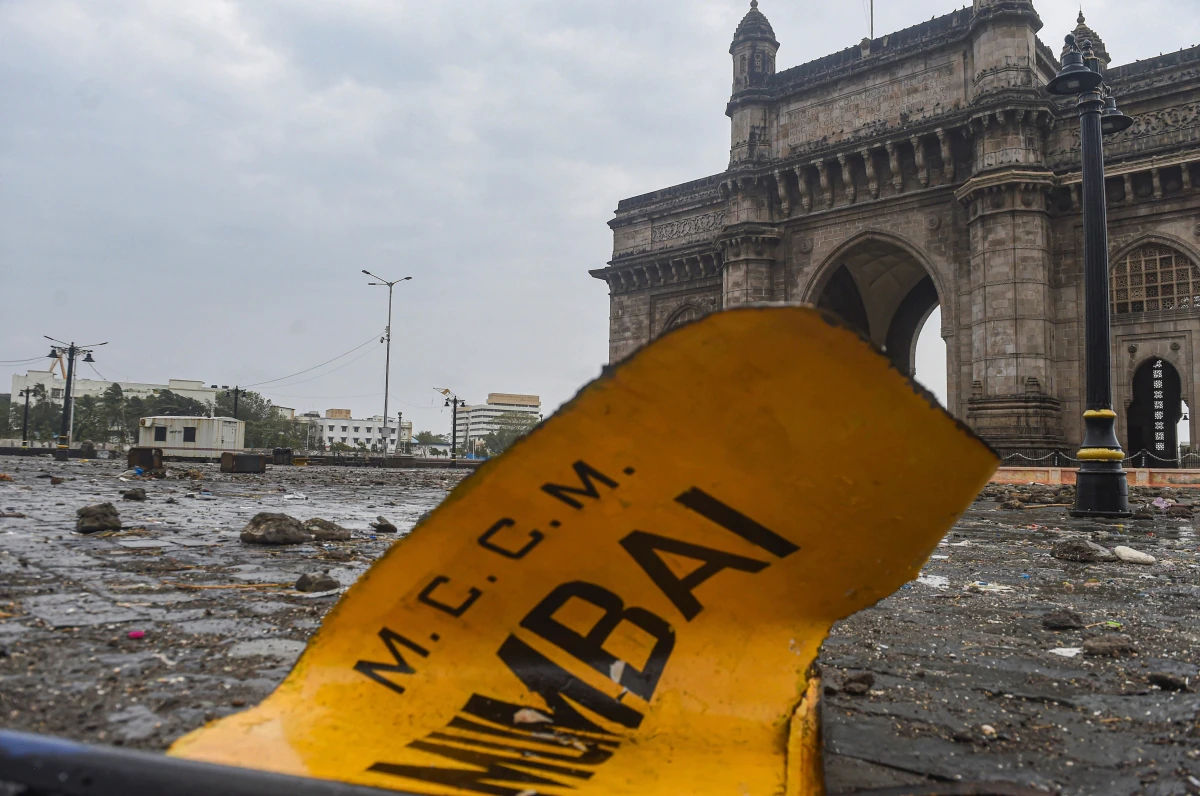
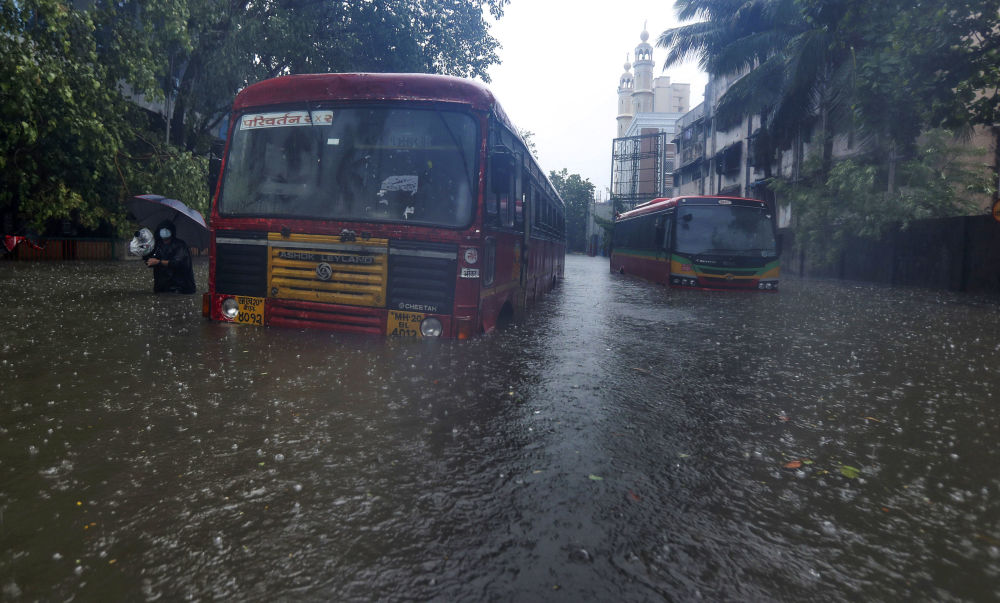
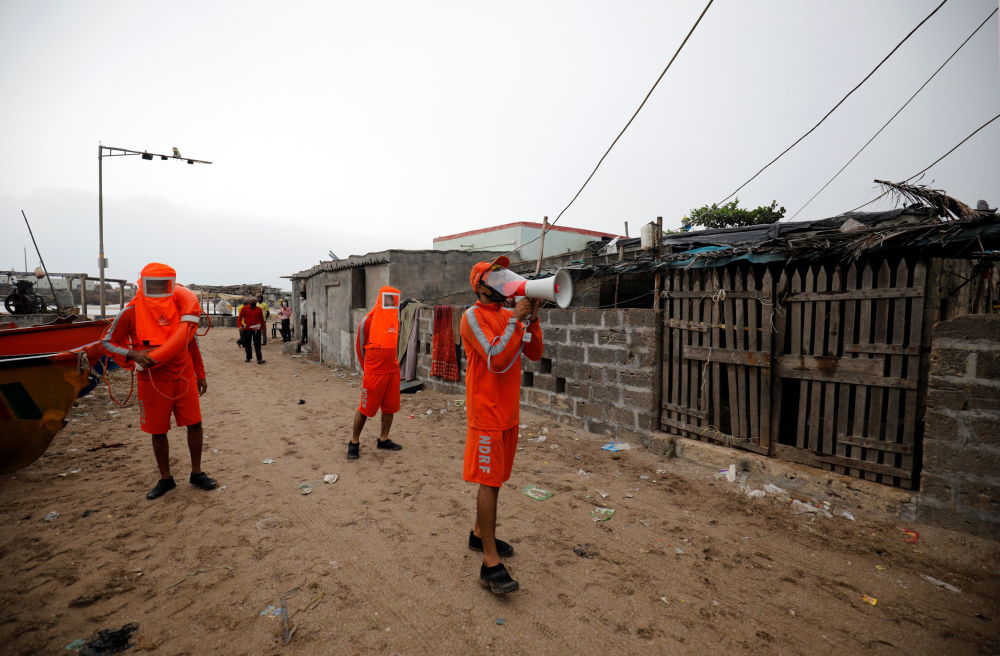
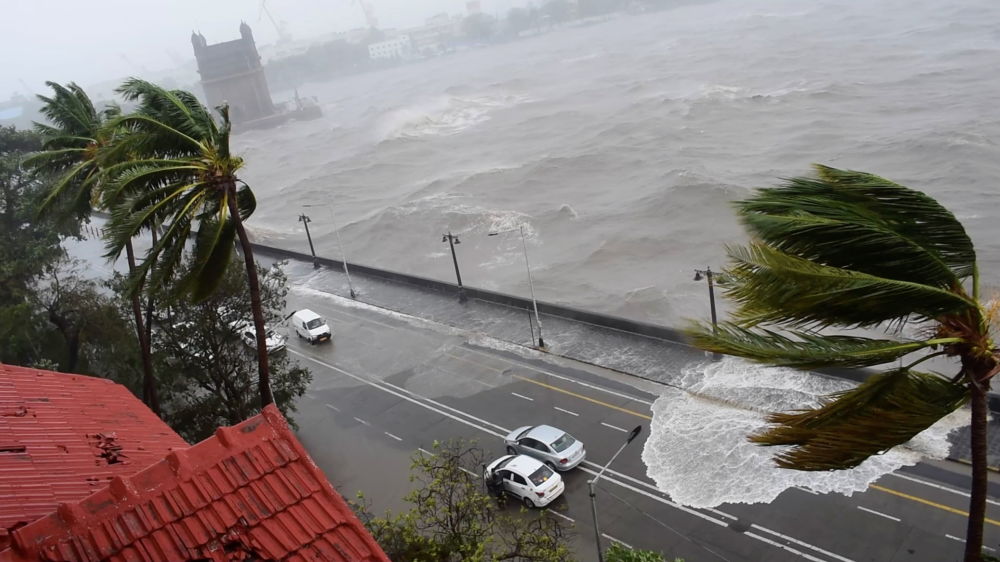
Cyclone Tauktae, which made landfall in Goa on May 13, in Maharashtra on May 15 and in Gujarat on May 17, has devastated these three coastal states. It is the third consecutive cyclone after Vayu in 2019 and Nisarga in 2020, and the most severe one the Arabian sea has recorded since 1902. At least 59 people lost their lives so far and around 50 are missing. Five lakh people have suffered financial losses in terms of damages to their houses and farm lands. An estimate of the losses is still being done, but it could run into hundreds of crores.
Cyclones have traditionally been a phenomenon reserved for the Bay of Bengal because of the low air pressure. The most devastating one in history, Bhola in 1970, killed over five lakh people in erstwhile East Pakistan and West Bengal. The most recent one, Nargis, which hit Myanmar in 2008, was the fifth deadliest cyclone in history.
Researchers at the Pune-based Indian Institute of Tropical Meteorology (IITM) say that the Arabian Sea, previously known as cyclone shy, is changing its nature because of the rising greenhouse gas emissions and warming water. The IITM has been analysing the west coast cyclone landfall data available since 1891.
Roxy Mathew Koll, a climate scientist with the IITM, says the Arabian Sea has registered the fastest warming rate among the tropical oceans. Its surface temperature has increased by 1.2-1.4 degrees Celsius between 1982 and 2018. Koll warns that there is a need for long-term vision to deal with the climate change. “We can’t wait for these forecasts to evacuate people every year. We can’t evacuate ecosystems, infrastructure, houses and cars. The Arabian Sea will continue to warm in the future, churning off more cyclones and floods along the west coast,” wrote Koll on Twitter.
Vineet Kumar Singh, another researcher at IITM, points out that it is for the first time after 1976 and only the second time since 1900 that a cyclone, which formed in May—pre-monsoon period—has hit the Gujarat coast with a wind speed greater than 65 kmph.
Tauktae led to one of the worst power outages in Goa—70 per cent of the state has been without power since May 17. Bardez, Siolim, Saligao and Porvorim are the worst-affected areas. It has affected the supply of water, food and medicines too. In many places, the housing societies have either asked their members to use water judiciously or staggered the released of water. While Goa has not reported any deaths due to the cyclone, properties worth Rs 1.15 crore have been damaged.
Loss in Maharashtra
Close to 2.20 lakh people in Maharashtra have been affected. While 16 people died in cyclone-related incidents, 30 have been injured. The crops and horticulture on 8,830 hectares of farm land in 3,571 locations have been destroyed. Sindhudurg, Ratnagiri and Raigad have been the worst-affected districts. These districts were yet to fully recover from the cyclone Nisarga, which had flattened countless palms of coconut and betel nut and damaged three lakh houses on June 5, 2020.
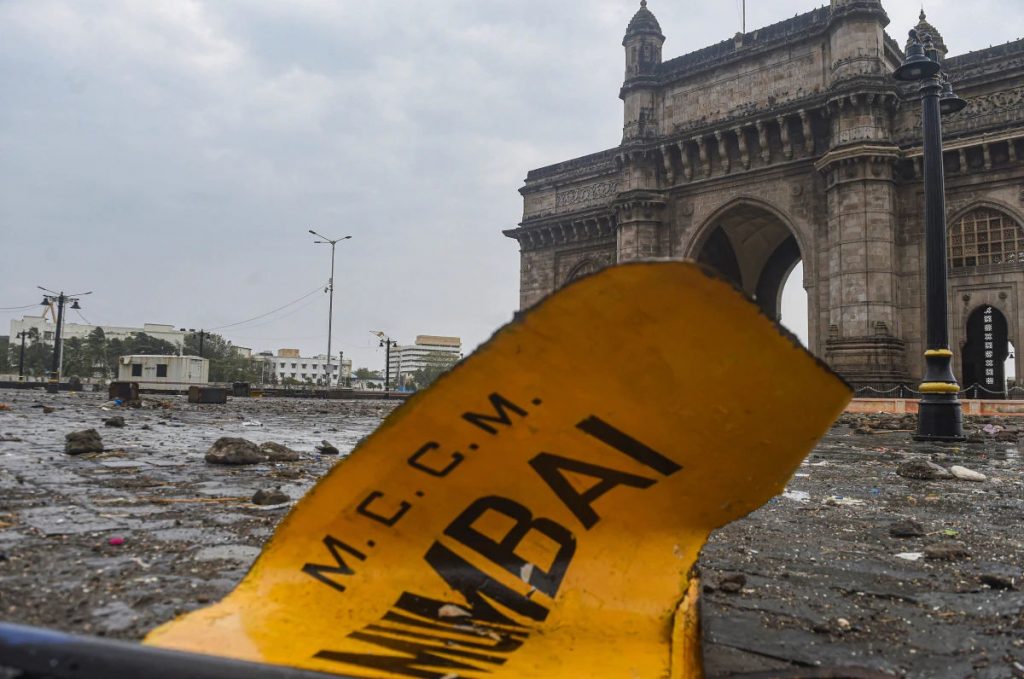
A signboard blown away by cyclone Tauktae near Gateway of India in Mumbai on May 18
This time, Tauktae has devastated mango crops in the last leg of the season. The mango producers have calculated their losses to being close to Rs 100 crore. The Alphonso growers had already suffered a loss as the season was delayed. “Normally, the last leg of the season is the time when the mango growers start earning profits. The cyclone has caused losses of around Rs 100 crore,” says Sanjay Pansare, director of Agriculture Produce Marketing Committee, Navi Mumbai. Tukaram Ghavali, president of Ratnagiri Amba Utpadak Sahakari Sanstha, a mango growers association, says mango trees have been uprooted in many places. The unpicked mango is completely destroyed. “The loss will have a bearing on the next year’s season too,” he says.
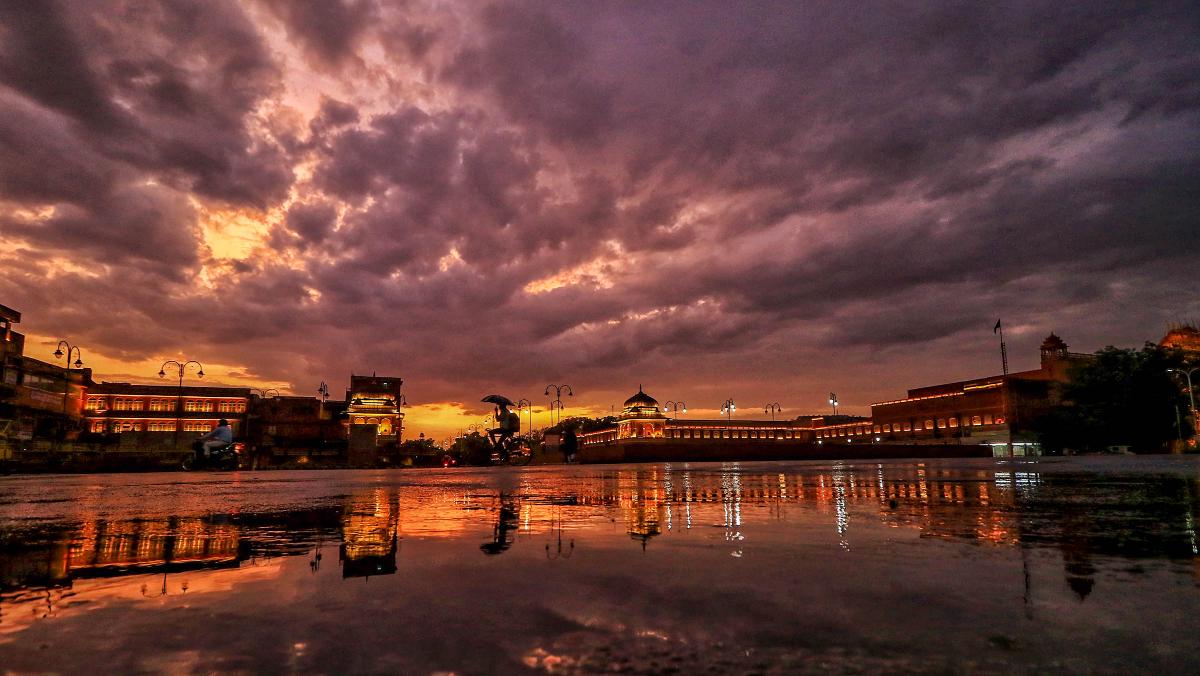
Seven districts of Rajasthan are likely to bear the brunt of Cyclone Tauktae and will likely see heavy rainfall on Wednesday. These districts are Jalore, Sirohi, Udaipur, Pali, Dungarpur, Chittorgarh and Rajsamand in the southern part of the state.
Rainfall is also expected in parts of the Jaipur division.
The cyclonic storm Tauktae could cause heavy rains in seven districts of Rajasthan on May 19, weather officials said on Tuesday.
The cyclone, expected to enter the state by late Tuesday night, will weaken by May 20, said Radhey Shyam Sharma, regional director of the meteorological department.
The seven districts likely to bear the brunt of it are Jalore, Sirohi, Udaipur, Pali, Dungarpur, Chittorgarh and Rajsamand in the southern part of the state.
Rainfall is also expected in parts of the Jaipur division, said Sharma.
The State Disaster Relief Force (SDRF) has been deployed in the southern and the western districts to contain the aftermath of the cyclone, Additional DGP (Law and Order) Saurabh Srivastava said.
The SDRF and Rajasthan police have asked the range Inspector Generals of Police (IGs) of Jodhpur and Udaipur to keep a close eye on areas like Sirohi, Dungarpur, Jalore and Banswara.
“Because the cyclone is rapidly changing its course, we have also sent our teams near Pali,” Srivastava said.
Apart from southern Rajasthan, additional teams drawn from different units of Rajasthan police have been deployed in areas, which may get affected, he said.
Rescue teams are stationed in Raniwara, Bhinmal, and Mount Abu, he added.
Meanwhile, on Tuesday, several places in Rajasthan recorded rainfall triggered by the Tauktae cyclone during the last 24 hours.
Bhilwara recorded a maximum of 50 mm of rain, followed by Chittorgarh, which recorded 25 mm rain.
Seven people who took a Covid-19 patient to a hospital in Bengal’s Alipurduar district were refused entry at their village.
The seven people then spent the night at a club in the neighbourhood without having any food.
Seven people, including a Trinamool Congress (TMC) panchayat member, were refused entry at their village after they took a Covid-19 patient to a hospital in Alipurduar district in West Bengal.
On Monday, a commotion broke out at Vivekananda 2 gram panchayat block in the district as the villagers did not allow the seven people to enter the village in fear of them spreading Covid-19. The seven people then spent the night at a club in the neighbourhood without having any food.
After hearing their plight, Alipurduar MLA and BJP leader Suman Kanjilal rushed to the spot immediately. He gave food to the seven people, who are currently in quarantine at a club house.
“I came to the spot as soon as I got the news. These young people are the actual Covid-19 warriors. I gave food to everyone. I spoke to the people of the area. Social boycott is a crime,” the MLA said.
On Monday, the seven people got information about a senior citizen who complained of breathlessness. The patient’s wife and his daughter had called them up. They took him to the district hospital, where it was found that the senior citizen had contracted Covid-19.
They then took the patient to a Covid-19 dedicated hospital from the district hospital and got the patient admitted. But he later succumbed to the virus.
When the seven people returned to their village, they faced protests from the villagers, who did not allow them to enter the village, as they feared that they would spread the virus in the hamlet.
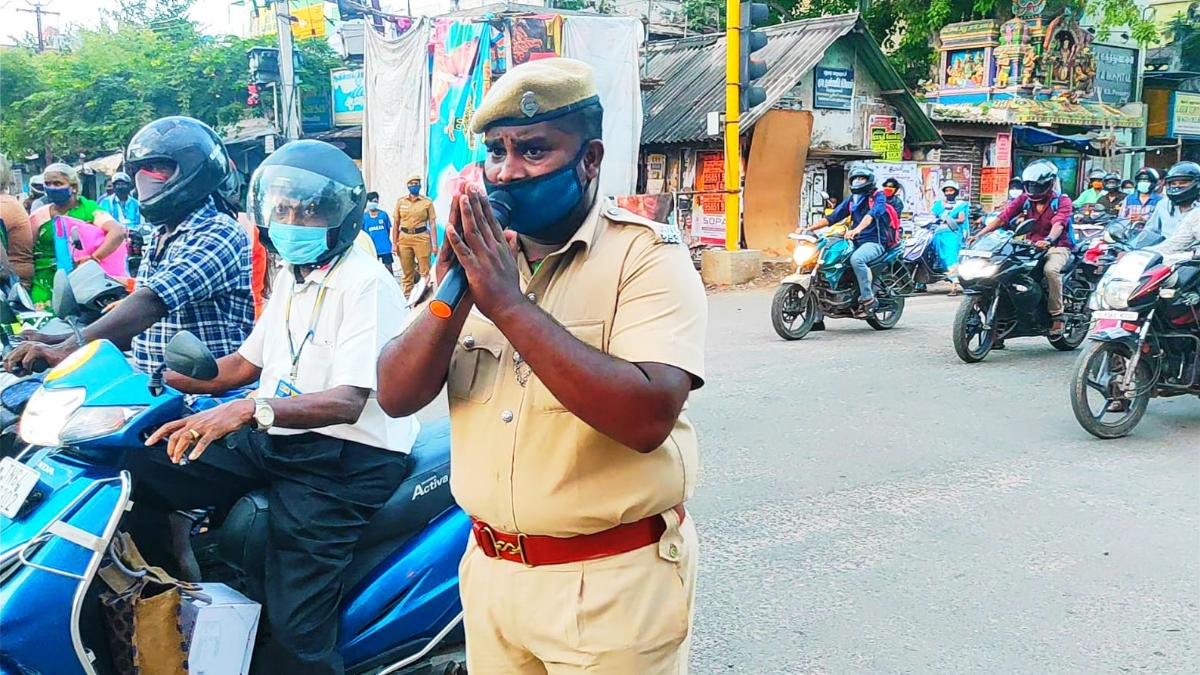
A video of police officer and folk singer, Mathichiyam Bala, singing a song to create awareness about Covid-19 among lockdown violators in Madurai and urging them to get vaccinated is doing rounds on social media.
Mathichiyam Bala from Madurai sings to create awareness about Covid-19
Avideo of a police officer and folk singer, Mathichiyam Bala from Madurai, singing a song to create awareness about the Covid-19 virus is making headlines. Bala shot to fame after he sang Makka Kalanguthappa in Vijay Sethupathi’s Dharma Durai.
In the videos that are now making rounds on social media, the police officials first stop violators of the lockdown, and Bala sings a song to make them aware about Covid-19.
MATHICHIYAM BALA SINGS A SONG ON COVID AWARENESS
The lyrics of Bala’s song urge people to remain in their homes as Covid-19 is spreading like poison across the country. Bala further appeals to the locals to stay at home and not venture out unnecessarily.
He also said that people who used to stand in queues for various reasons have now started to stand in a queue to cremate their loved ones. Calling this a terrible situation, Bala appealed to the people to get vaccinated. He said that the police fraternity had got vaccinated, and all of them were safe. “Please don’t be afraid. Get yourself vaccinated and let’s stay safe,” he said.
Across the state of Tamil Nadu, Covid-19 cases have been increasing day by day. On May 17, over 33,000 cases were reported in the state. In the district of Madurai, 1,288 new cases were recorded on May 17, taking the active cases including home treatment to 9,833. The district registered 17 deaths on May 17.
The state has a complete lockdown till May 24, but people have continued to venture out without taking the lockdown seriously. In different districts, officials are involved in taking various measures to stop violators from breaking lockdown rules.