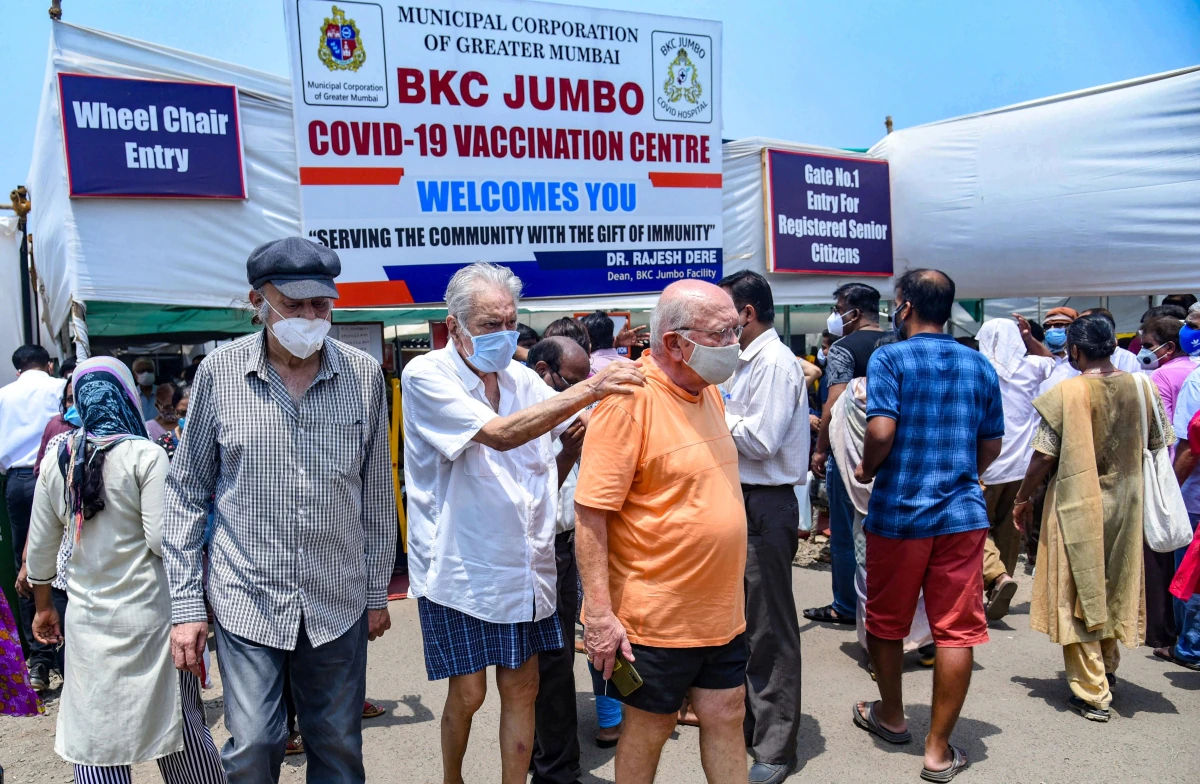
Elderly locals of Mumbai queue at the BKC vaccination centre to get vaccine jabs.
Facing shortage of Covid-19 vaccine, the BMC has stopped its vaccination drive in Mumbai. On Friday, BMC said, “Owing to non-availability of vaccine stock, no vaccination will be conducted at any government/BMC/private vaccination centre for the next three days (April 30 to May 2). All efforts are being made to make more stock available and resume the drive. We urge Mumbaikars to cooperate with BMC.”
With the final phase of the West Bengal assembly elections set to commence, it is yet to be seen what impact the raging Covid-19 pandemic will have on polling.
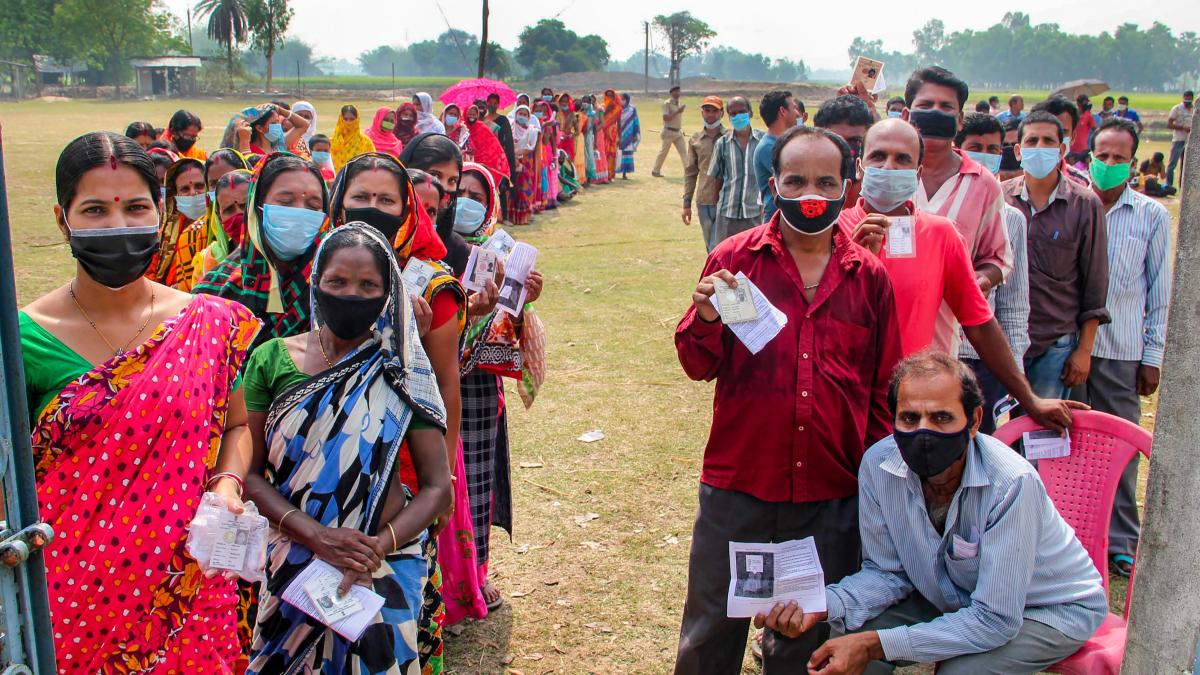
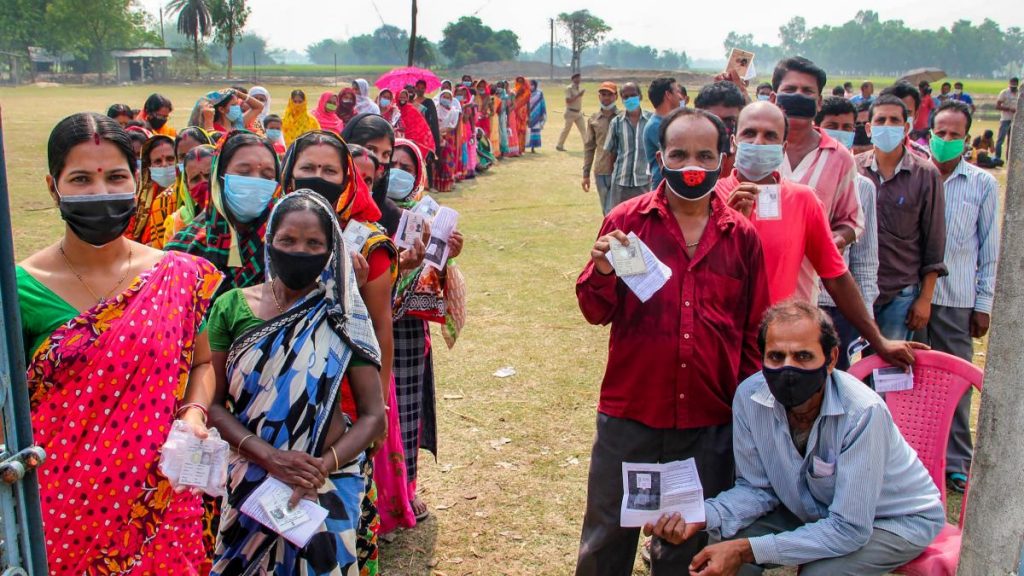
Voters wait in queues to cast votes at a polling station in Bengal’s South Dinajpur district on Monday
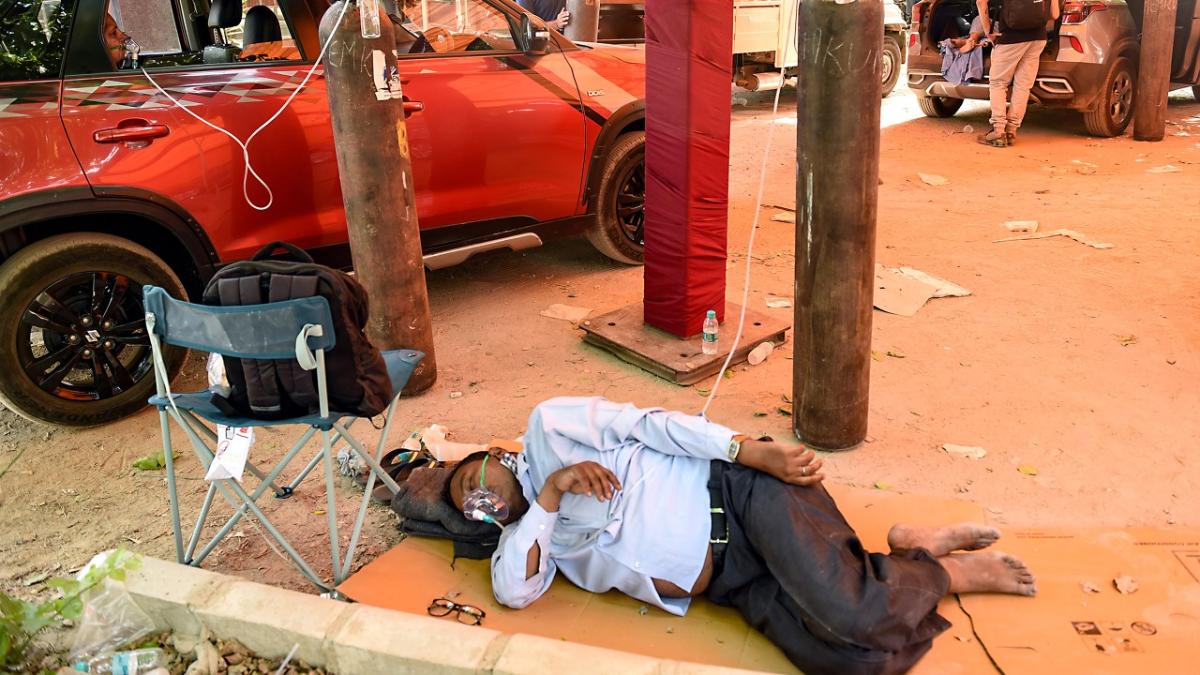
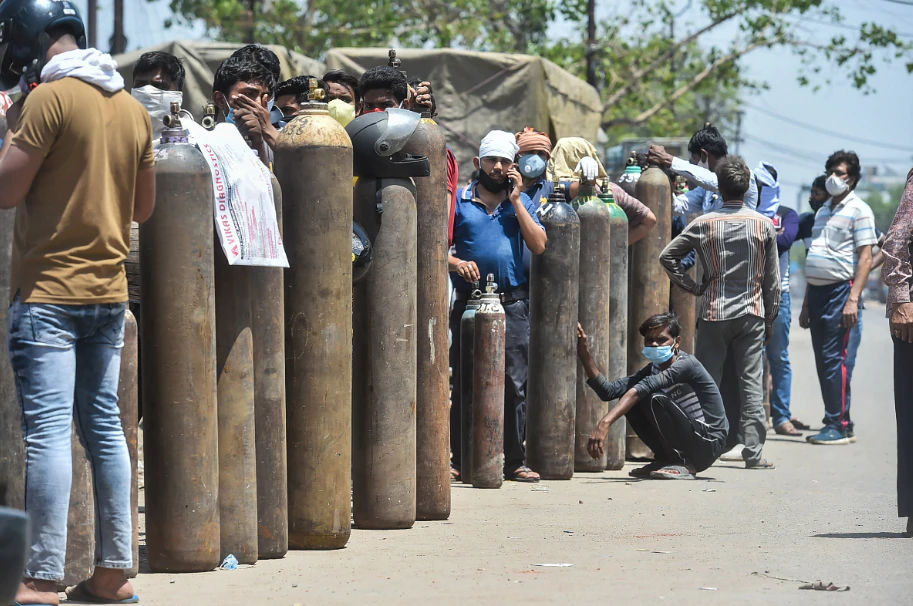
Shortage of medical oxygen, oxygen cylinders Social media is flooded with SOS calls from hospitals and doctors warning authorities of the acute shortage of medical oxygen for Covid-19 patients.
Family members of Covid-19 patients wait outside an oxygen refilling station in UP’s Kanpur
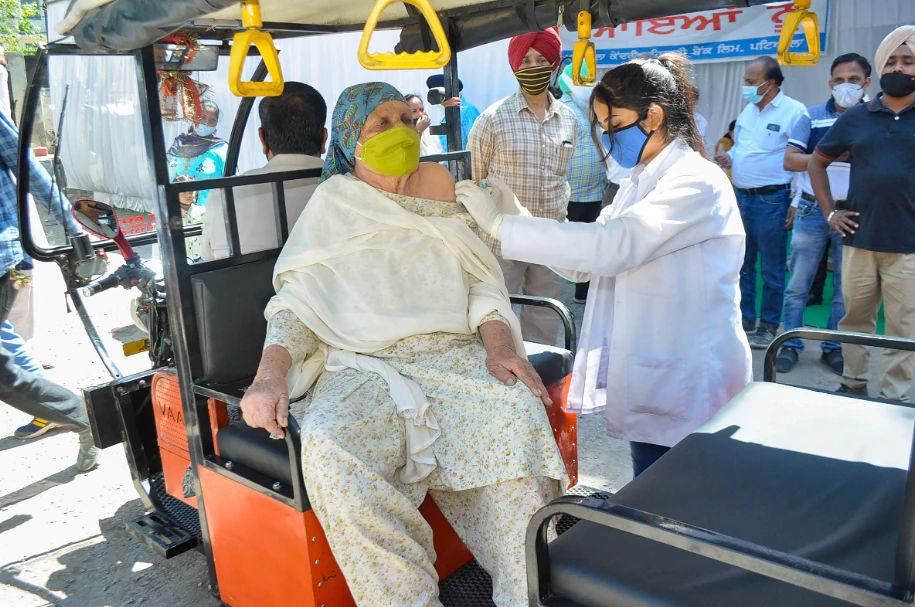
A healthcare worker administering Covid-19 vaccine to an elderly woman on an e-rickshaw during a special vaccination drive in Punjab’s Patiala on Saturday
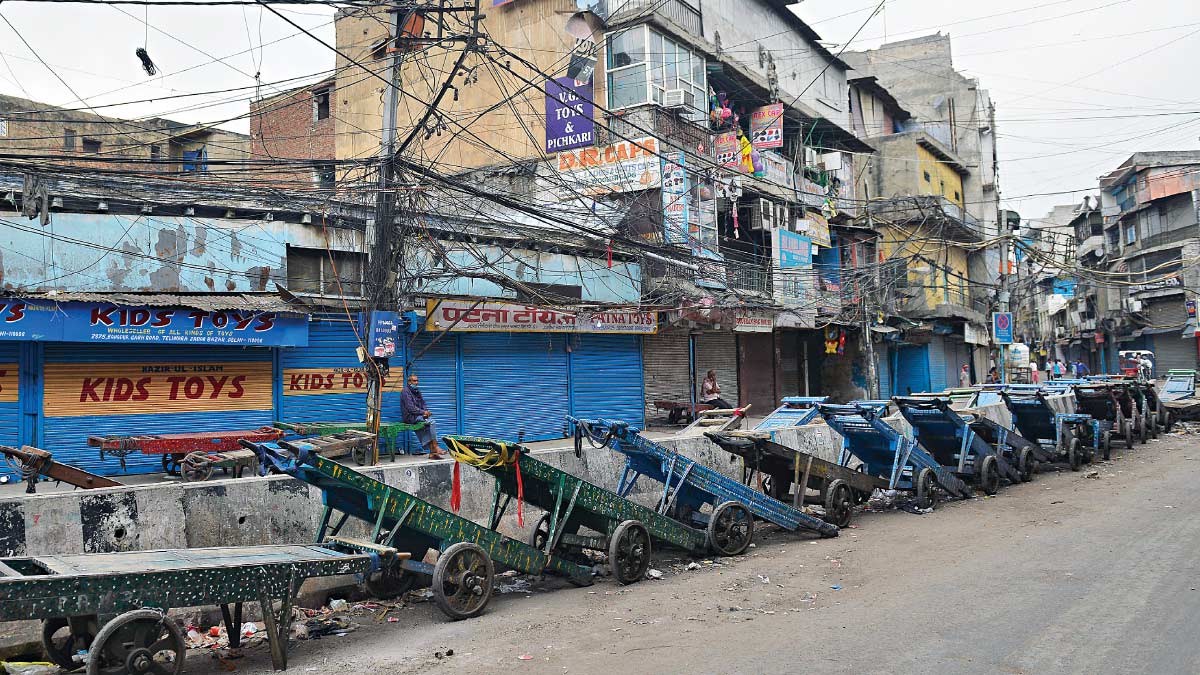
India now has over 25 lakh active cases of Covid-19 as a second wave of infections continues to put enormous pressure on the country’s fatigued healthcare infrastructure. All central and state governments are acting on war footing to tide over the resurgence of the novel coronavirus pandemic.
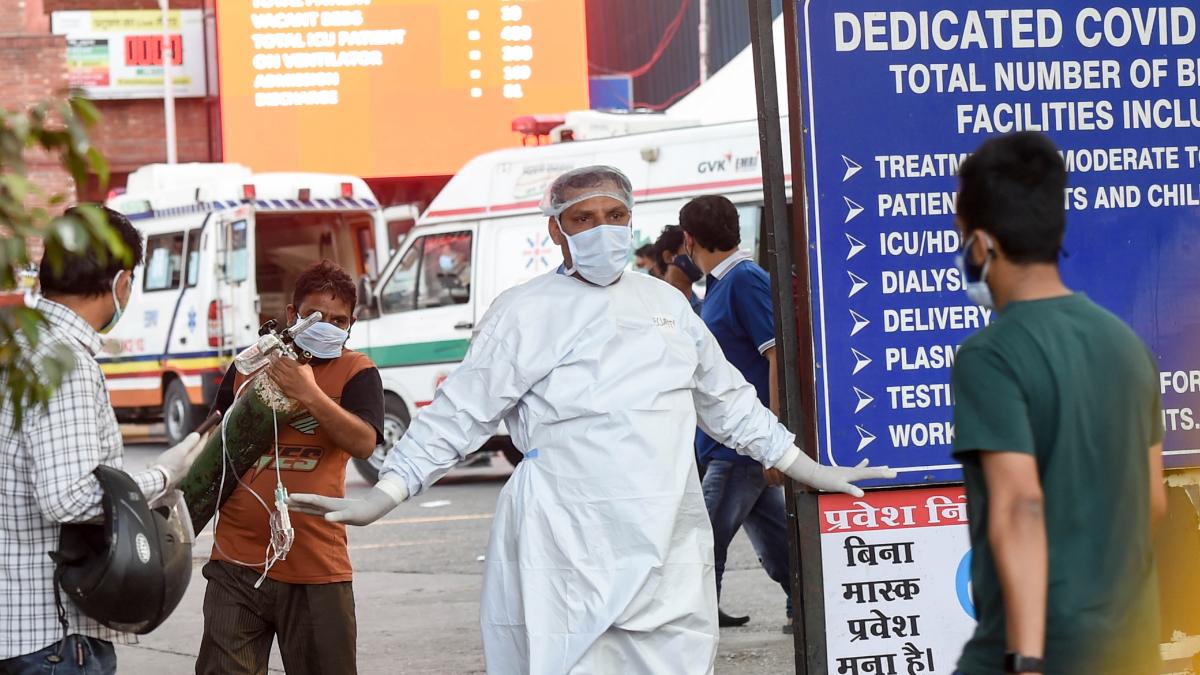
A security person stops people from entering LNJP hospital in Delhi on Saturday owing to non-availability of beds for Covid-19 patients
Last year, Kerala earned kudos for its effective Covid management strategies, but it’s been brought down by the second wave with community spread already happening in many districts. The situation is so bad the state government imposed night curfew (9 pm to 5 am) on April 20 to contain the spread. “We may have to impose more restrictions in the coming weeks. The government is watching the situation closely and will impose regulations in the districts where infections are rising,” a senior government official told.
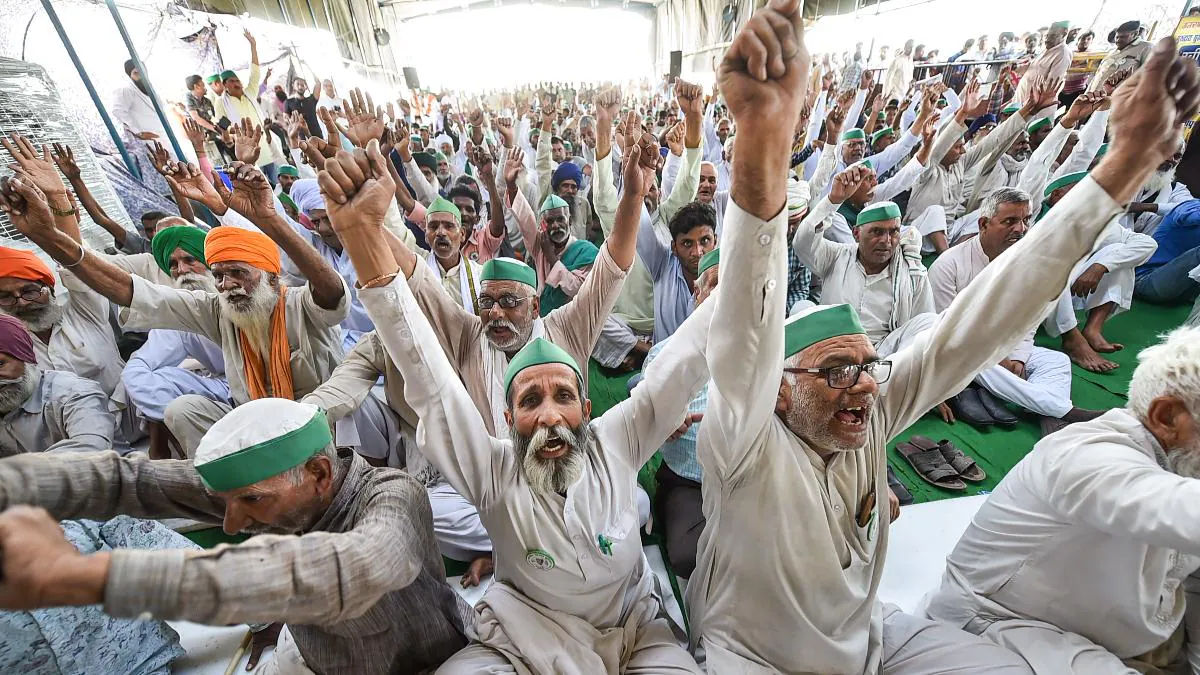
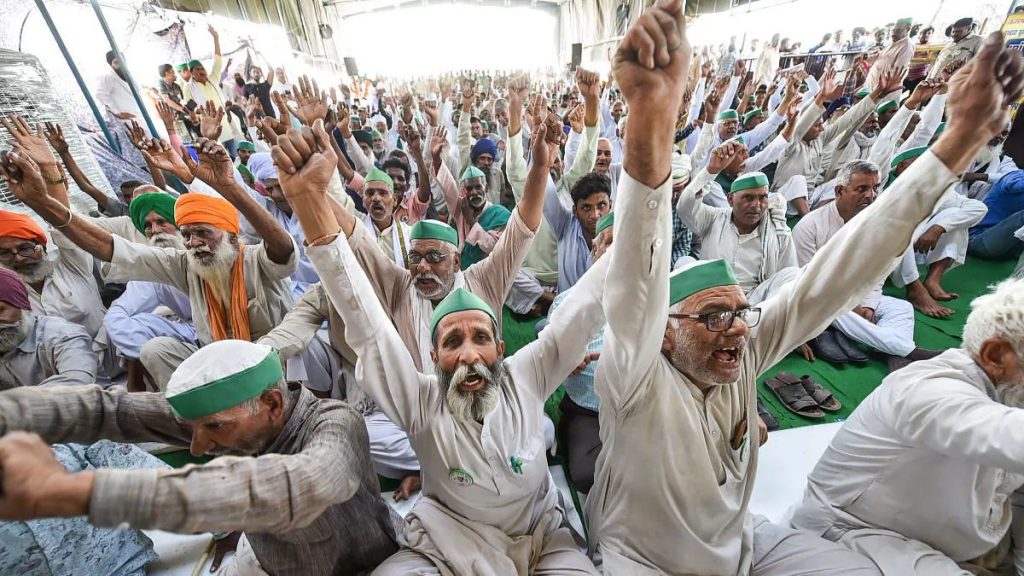
Farmers raise slogans during a panchayat on the National Highway-9, near Ghazipur in New Delhi.
The governments of Haryana and Uttar Pradesh have accelerated the pressure on farmer outfits to vacate the protest sites on Delhi’s borders–Tikri, Singhu and Ghazipur—after the second countrywide surge in Covid infections. The Amit Shah-led Union home ministry is working out a strategy with the two BJP-led state governments along with the Amarinder Singh-led Congress government in Punjab to talk to the farmer leaders and apprise them of the intensity of the surge.
The district administrations in Haryana and UP are taking stock of the situation. This includes aerial mapping, rapid testing among the protesting farmers, and informal survey of the sites (through the intelligence agencies). Since November 26 last year, thousands of farmers have been protesting at the three sites on Delhi’s borders as well as across Haryana, Punjab and western Uttar Pradesh against the new farm laws.
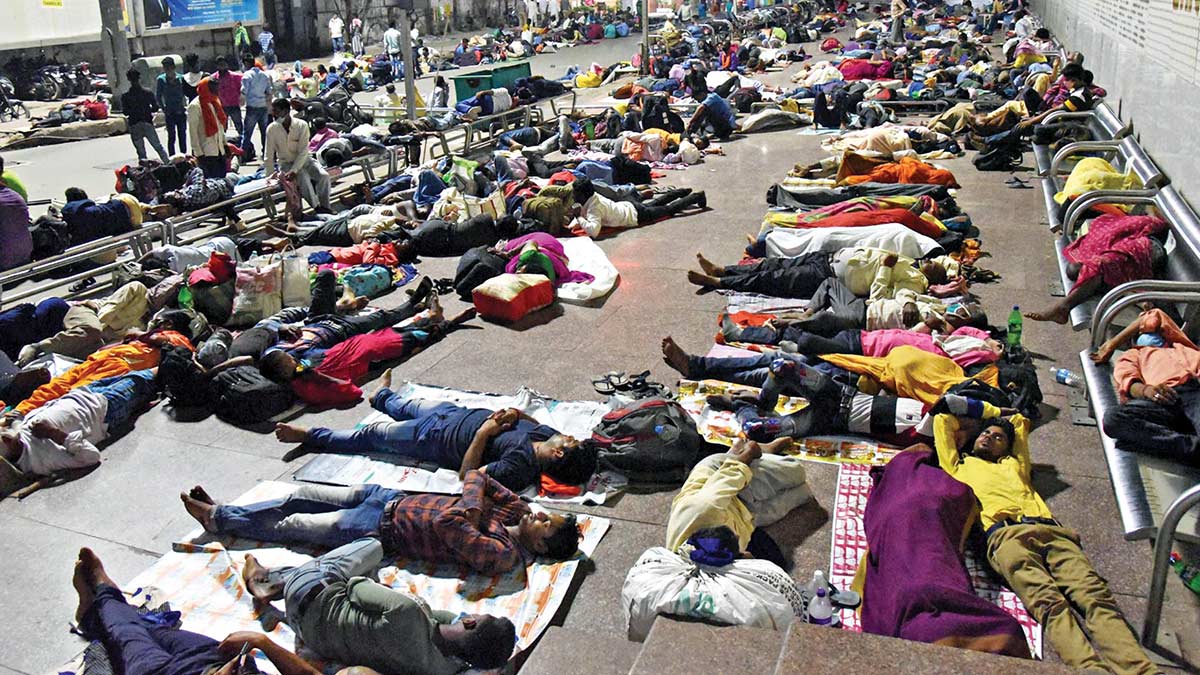
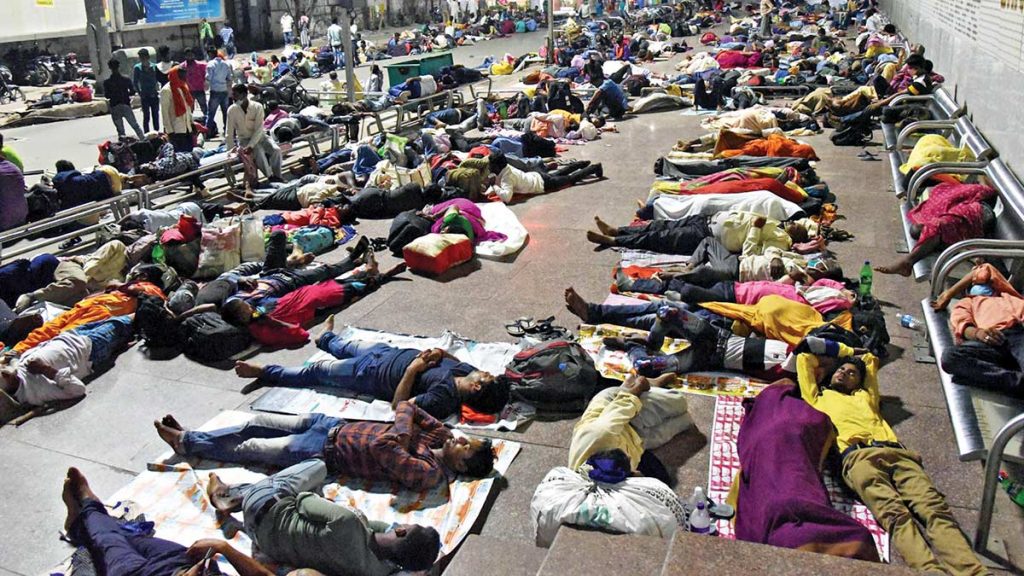
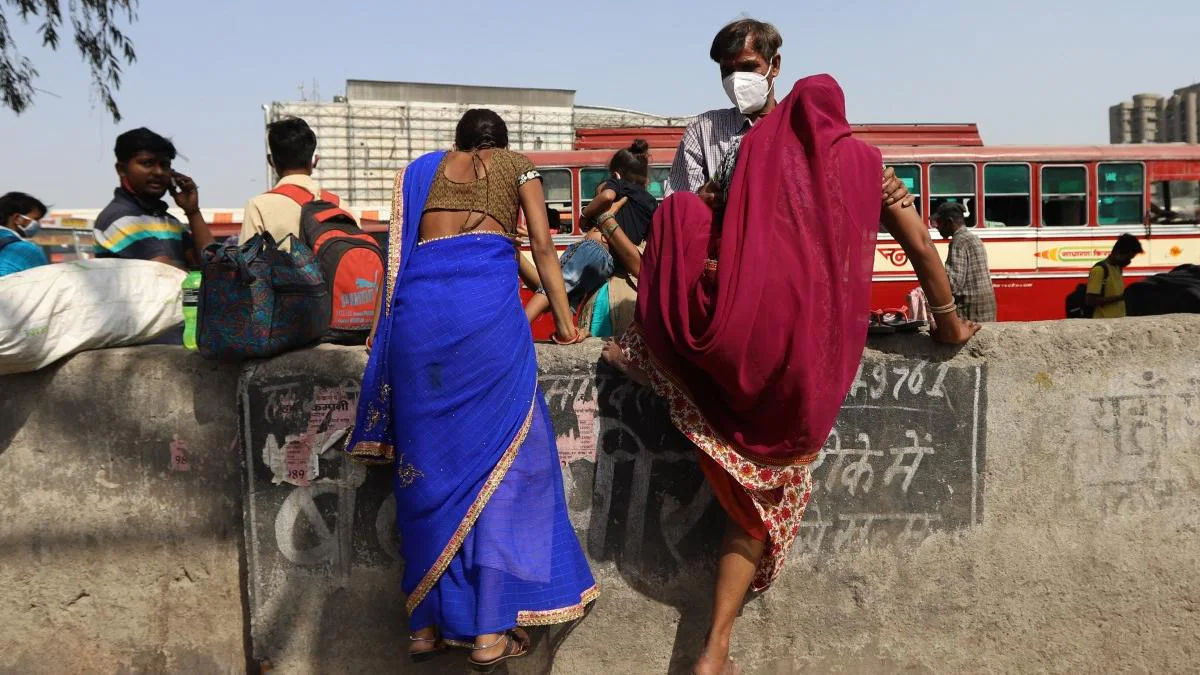
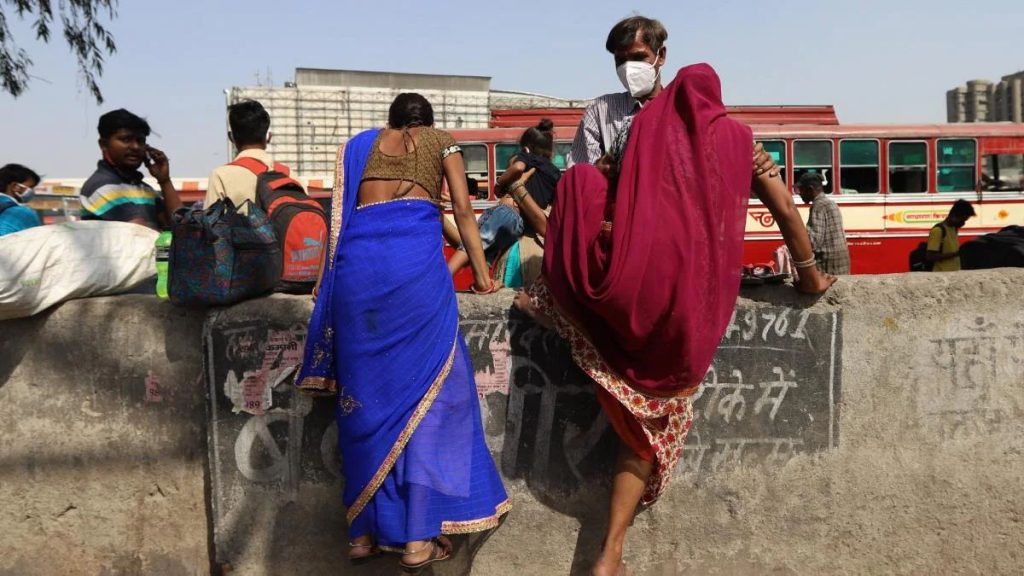
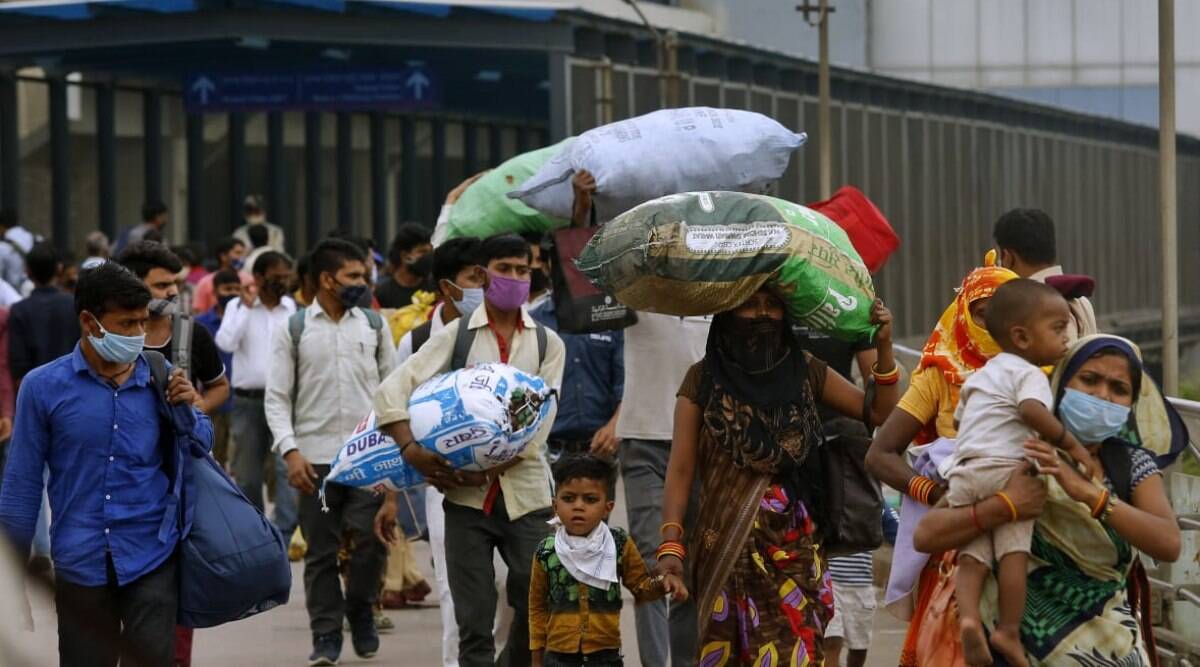
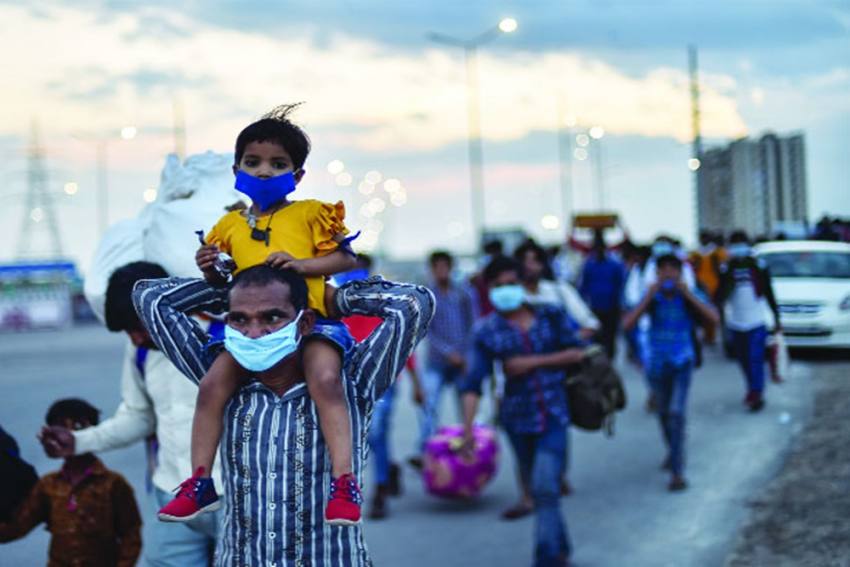
Migrant workers arrive at a bus station in Kaushambi, Uttar Pradesh, to travel back to their hometowns after a lockdown till April 26 was announced in the national capital in the wake of rising Covid cases
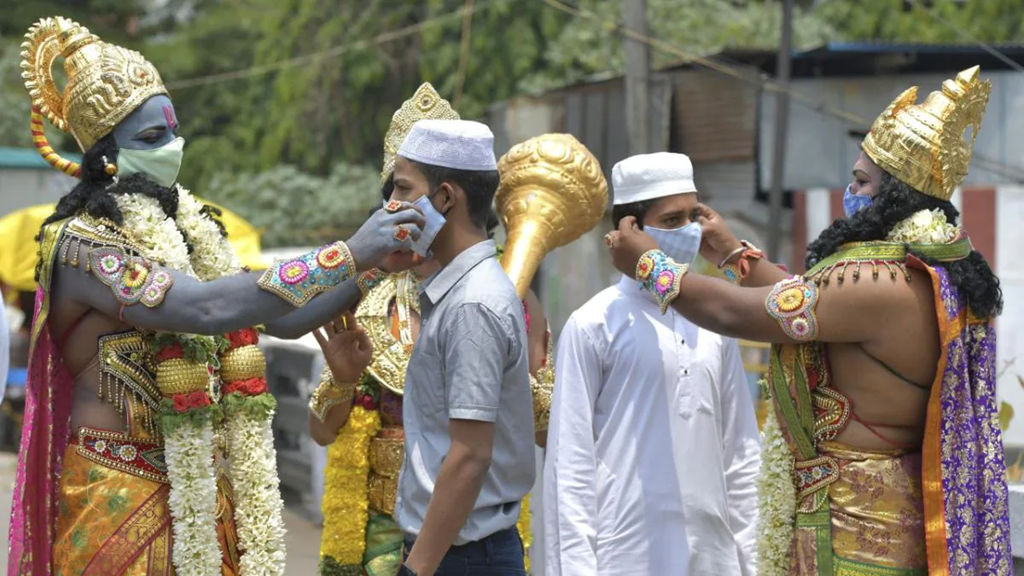
Actors dressed as deities from the Ramayana distribute face masks to members of the public at a Covid-19 awareness campaign on the occasion of Ram Navami, in Bengaluru, on April 21.
On Tuesday morning, Pinki (26) and her husband left their home in Delhi’s Jhilmil Colony, filled with anxiety. The couple worked at a printing press near their home but were told by their employer that they won’t be paid during the lockdown and should consider leaving the city and returning when work resumes. With no savings, they borrowed money from their neighbours and left with their three children in search of a bus that could take them to Sitapur in Uttar Pradesh.
Standing with her children at Anand Vihar ISBT while her husband looked for a bus, Pinki said: “We are afraid we won’t get a bus today. My husband and I don’t have any savings left because our landlord forced us to pay the rent this month and our employers haven’t paid us anything in the last 20 days. How will we survive here if there’s a longer lockdown? The printing press produces school books and election posters but our employers didn’t pay us now because books aren’t being printed these days. Every time I see an election poster, I feel cheated. Nobody has helped us.”
“It’s been more than three hours now, I am tired but there are no buses. We can’t afford a private AC bus. Not that I want to stay in Sitapur because we won’t get a permanent job there. I wish schools reopen soon so I can print books again,” she said.
Following the announcement of a six-day lockdown in Delhi, panic-stricken workers made a beeline for their passage home. The fears could not be allayed despite an appeal from Lieutenant Governor Anil Baijal, who assured government assistance.
Even Chief Minister Arvind Kejriwal assurance of “Main hoon na (I’m there for you)” while announcing a six-day lockdown could not hold them back.
“The flood of workers returning home is linked to their terrible experience last year in most places during the prolonged lockdown,” alleged Communist Party of India (Marxist) Politbureau member Brinda Karat.
“What started with a week’s lockdown continued for months. With no income, no place to stay, with no guaranteed food they had no alternative,” she added.
The Delhi government and the police have issued e-passes to exempted category people who need to go out during the curfew for necessary services and activities like vaccination, going to railway stations, airports, grocery and fruit and vegetable stalls.
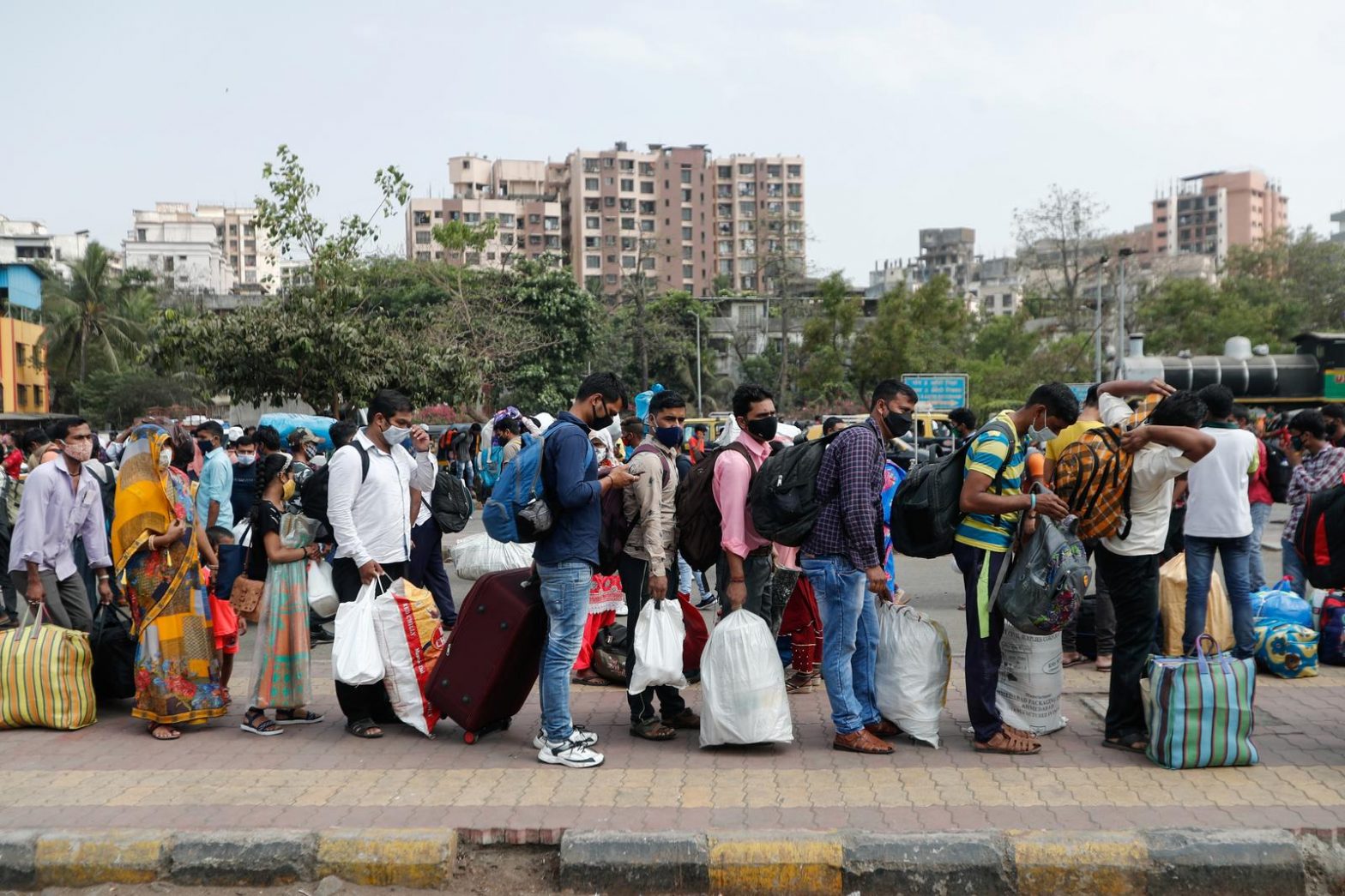
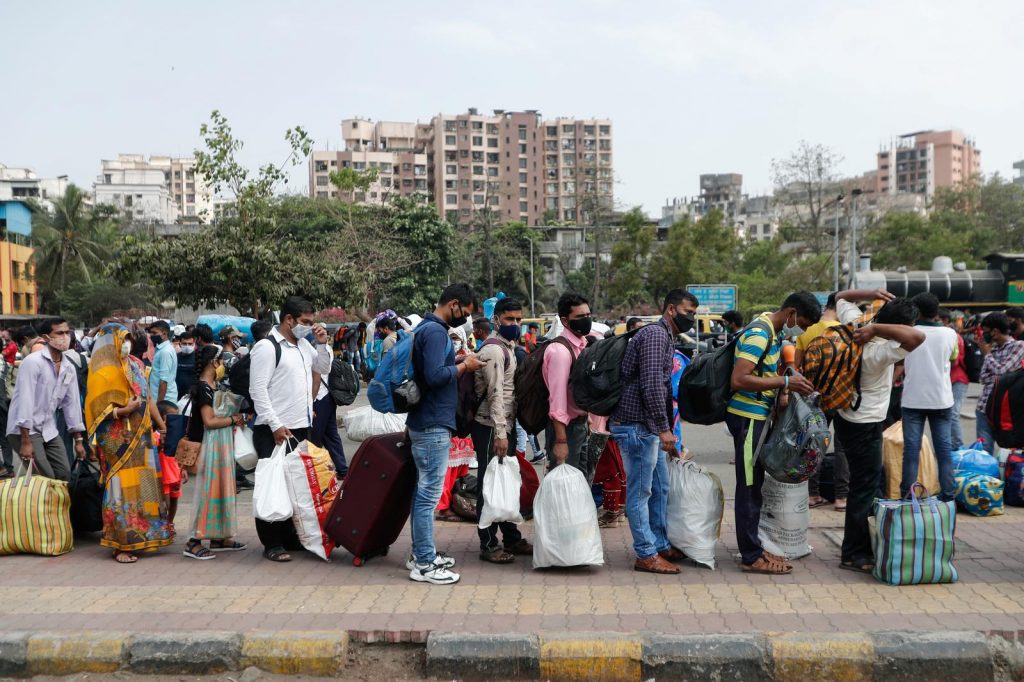
People wearing protective masks stand in line at a railway station amidst the spread of the coronavirus disease (COVID-19) in Mumbai, India, 9 April, 2021.
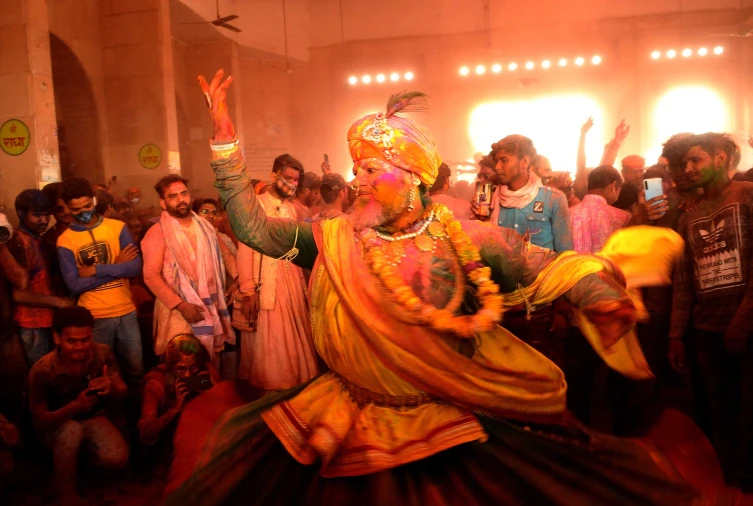
Celebrated a few days before Holi, Lathmar means playing with sticks. The menfolk try to smear women with colour, who traditionally protect themselves with lathis or sticks.
Women from Barsana village beat a villager from Nandgaon with wooden sticks as he teases them during Lathmar Holi celebrations.
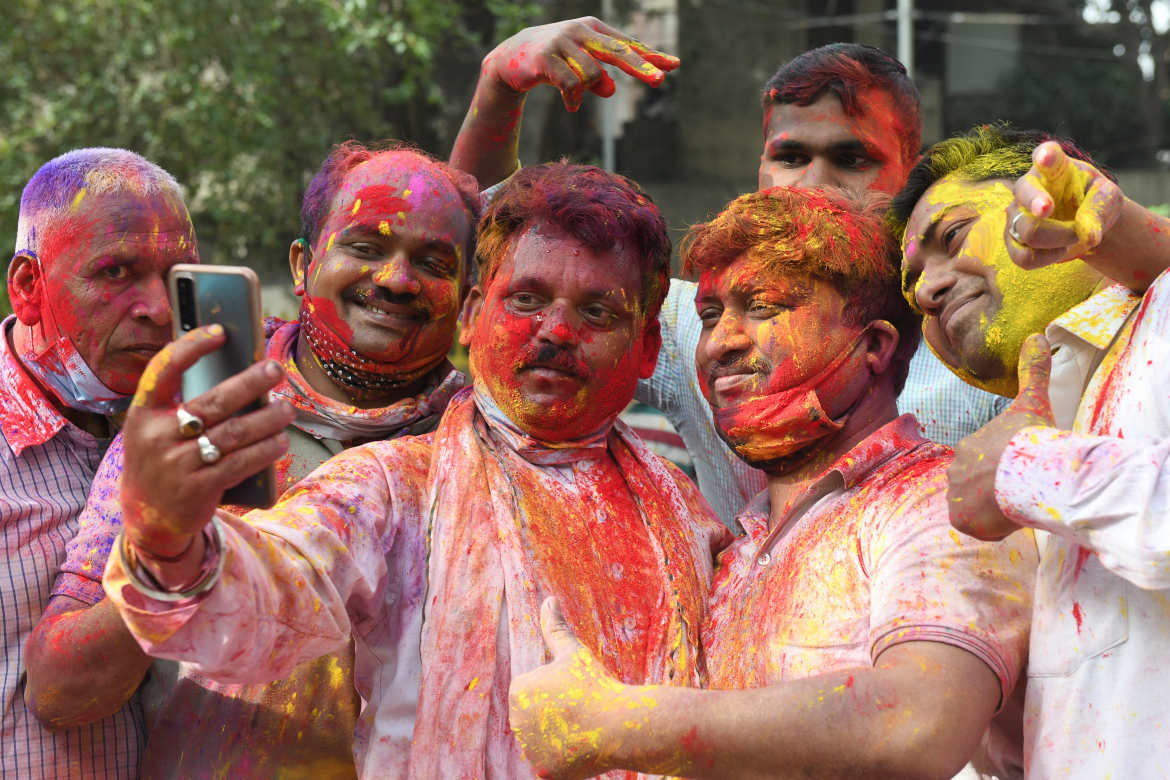
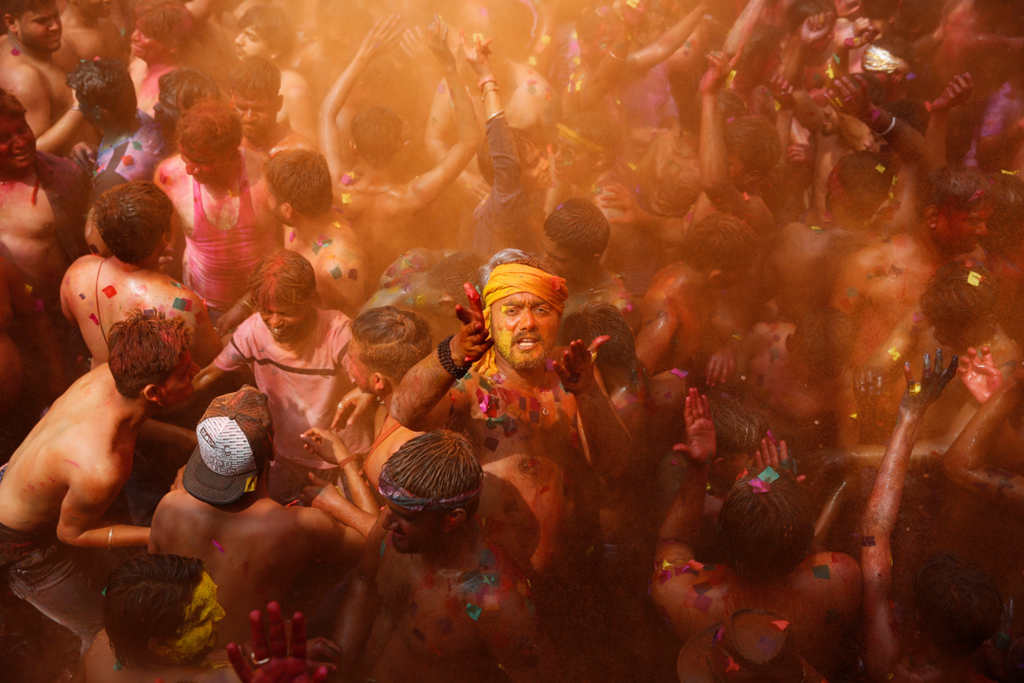
Indian revelers, faces smeared with colored powder, dance during celebrations to mark Holi, the Hindu festival of colors in Prayagraj, India, Wednesday, March 11, 2020. This exuberant festival originally held to celebrate the fertility of the land, is also associated with the immortal love of Hindu God Krishna and Radha. (AP Photo/Rajesh Kumar Singh)
‘Next 25 years important for Bengal’ The next 25 years are very important for the development of West Bengal, PM Modi said. He went on to add, “In 2047, when India will celebrate hundred years of independence, Bengal will lead the country once again. The development here in the next five years will lay the foundation for state’s development for the next 25 years.”
“I have come here to make you believe in ‘Asol Poribortan’. Belief in Bengal’s development, in change of Bengal’s situation, in increasing investment and industries in Bengal and in the reconstruction of Bengal,” the Prime Minister insisted.
The PM also said if voted to power in the state, the BJP will work hard for farmers, businessmen and the development of sisters and daughters. “We will live every moment to fulfill your dreams,” he added.
“The dream of ‘Sonar Bangla’ will be fulfilled. Today, I have come here today to assure you of Bengal’s development, to increase investment here, to protect Bengal’s culture and to bring change,” PM Modi said at the Brigade Ground rally in Kolkata on Sunday.
Half of the more than 4 crore Jan Dhan accounts in Bengal were opened by women, he said adding that women accounted for 75 per cent of the Centre’s Mudra Loans scheme.
The PM also touted the central government’s handling of the Covid-19 pandemic and various schemes related to housing and agriculture.
Didi does not have control over herself: PM Taking aim at the BJP’s political contenders in West Bengal, the Prime Minister said, “In this Assembly election, there is the TMC, Left and Congress, and their anti-Bengal attitude on one side. On the other side, there are the people of Bengal.”
“This Brigade Parade Ground has been witness to many great leaders and also witnessed those who have disrupted West Bengal’s progress. People of Bengal never left their hopes for change,” the PM remarked.
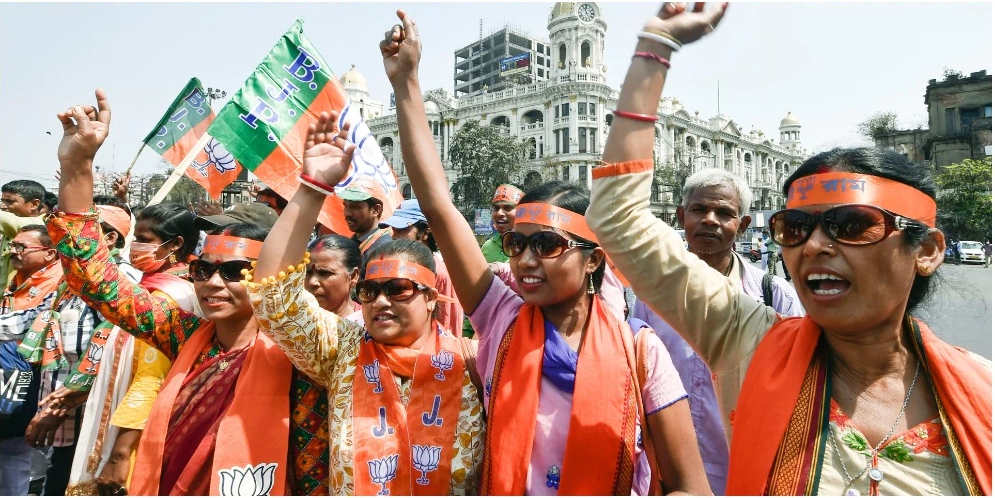
BJP workers, supporters at PM Modi’s election rally at Kolkata’s Brigade Ground on Sunday
Attacking CM Mamata Banerjee, the Prime Minister said, “I have known Didi for years. This is not the same Didi who fought against Left rule. Now, Didi does not have control over herself! Her remote control is somewhere else!”
“You have played with the lives and hard-earned money of people. You pulled the shutter on tea gardens and plunged the state into debt. You even snatched employment and wages from the youth. This game will not work anymore,” the PM asserted.
‘BJP has Bengal in its DNA’ Invoking Bharatiya Jana Sangh founder Syama Prasad Mukherjee, PM Modi said on Sunday that the “BJP has Bengal in its DNA”.
This was in response to Mamata Banerjee’s remarks that the BJP’s top leadership comprises “outsiders” who are disconnected from the ground realities of West Bengal and know little about the state’s cultural ethos.
You have seen them in the fields and cooking food for protesters at various protest sites in Delhi and elsewhere, now the women protesters of the farmers’ movement are on their way to the national capital for a show of strength on International Women’s Day on Monday.
Thousands of women protesters, some of them driving the tractors themselves, headed for Delhi from various districts of Punjab and Haryana to reach the national capital for a congregation at Delhi border protest sites to mark international women’s Day on Monday.
These women protesters will take the centre stage on international women’s Day at the protest sites. The farmer leaders said that elaborate arrangements have been made to celebrate International women’s Day to acknowledge the role of women in agriculture and life.
“Sanyukt Kisan Morcha has always given importance to the power of the women farmers during the agitation. Women will lead protests at all the sites — be it the toll barriers or the permanent protest sites. This is their day,” says Yogendra Yadav, president, Swaraj India.
Farmer unions have claimed that nearly 40,000 women from various parts of Punjab, Haryana and Uttar Pradesh will congregate at Delhi protest sites including Singhu, Tikri and Ghazipur borders.
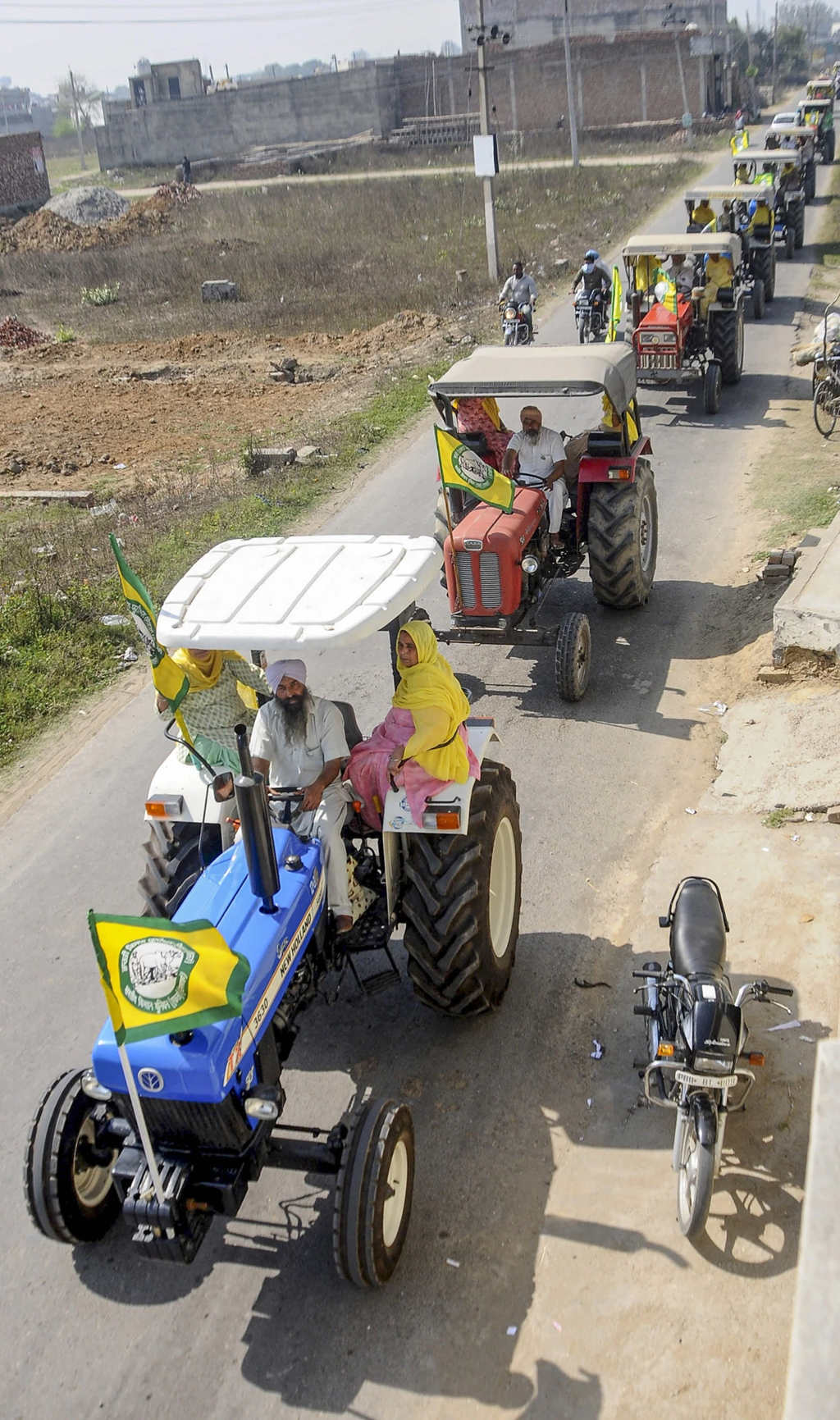
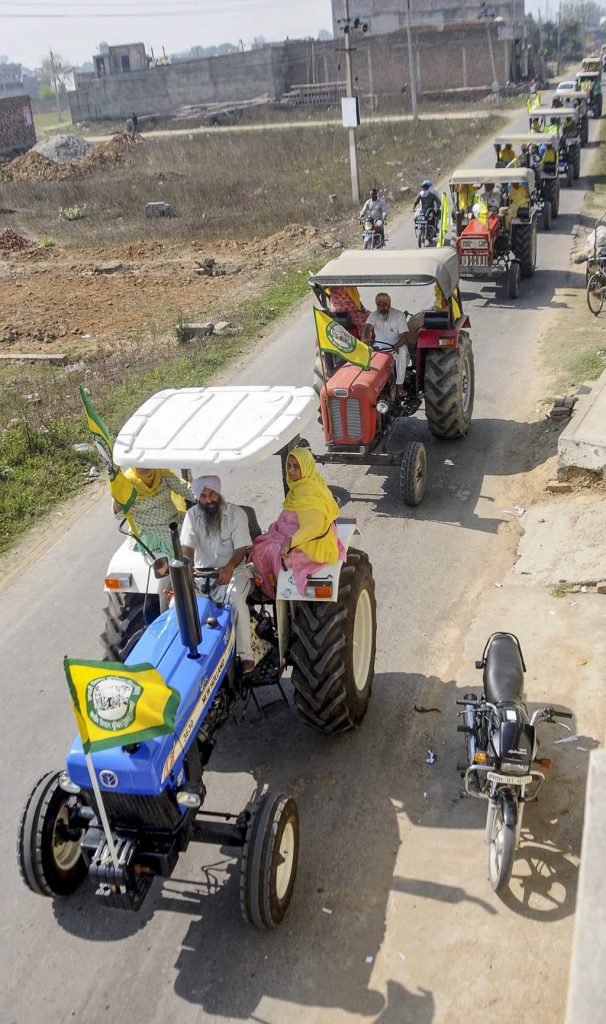
Women farmers travel in a tractor to reach Delhi, ahead of their planned Women’s Day celebration at the protest sites on the outskirts of the national capital.
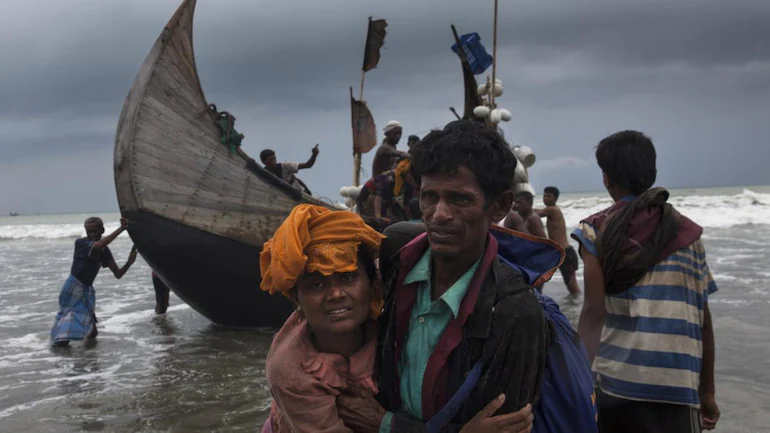
A group of Rohingya refugees, who left Bangladesh last month, were found adrift in the Andaman Sea by the Indian Coast Guard. Bangladesh has refused to take them back
Rohingya Crisis In Andaman Sea
These Rohingya refugees were floating in a boat that malfunctioned in the Adaman Sea where the Indian Coast Guard found the refugees exhausted out of hunger and thirst last month. The refugees had set sail from Bangladesh for Malaysia on February 11. The engine of their boat failed mid-journey leaving the occupants adrift in the Indian Ocean.
When they left the massive camp of Cox’s Bazar, Bangladesh’s district bordering Myanmar, there were 90 Rohingya refugees onboard — 56 women, 21 men, eight girls and five boys. Four days later, the boat’s engine failed.
At least eight persons died before the Indian Coast Guard found their fishing boat. They were hungry and thirsty and were suffering from extreme dehydration.
India is feeding the survivors and providing medical treatment to them but it is not planning, at least yet, to take them ashore. India has communicated informed Bangladesh about the Rohingya survivors.
But Bangladesh has refused to take them back. Its foreign minister AK Abdul Momen last week told news agencies that Bangladesh has “no obligation” to take Rohingya refugees back. India has kept the channel of communication with Bangladesh open for the return of Rohingya survivors.
Why Bangladesh refused to take back Rohingya survivors?
Rohingya are residents of the Rakhine province of Myanmar but during a military crackdown in and after 2017, thousands of them fled their homes. Rohingya had been fleeing Myanmar for several years but rioting and military crackdown in 2017-18 saw a sudden exodus in larger numbers.
Bangladesh has been a destination for Rohingya refugees for long. After the latest of spate of exodus, Bangladesh is estimated to have up to 5 lakh Rohingya refugees.
Bangladesh has set up a massive refugee camp in Cox’s Bazar, where the UN High Commissioner for Refugees (UNHCR) is involved in their management. The UNHCR has issued ID cards to Rohingya refugees so that their human rights abuse is minimised.
At the same time, Bangladesh is facing pressure from within to ease the Rohingya refugee situation. It has been trying to de-congest Cox’s Bazar camp. It recently moved thousands of Rohingya refugees to a new and remote island called Bhasan Char in the Bay of Bengal.
This explains Bangladesh’s reluctance in taking back the Rohingya survivors who left the country’s shores last month. On the other hand, India has been cautious about accepting Rohingya refugees due to its own domestic compulsions.
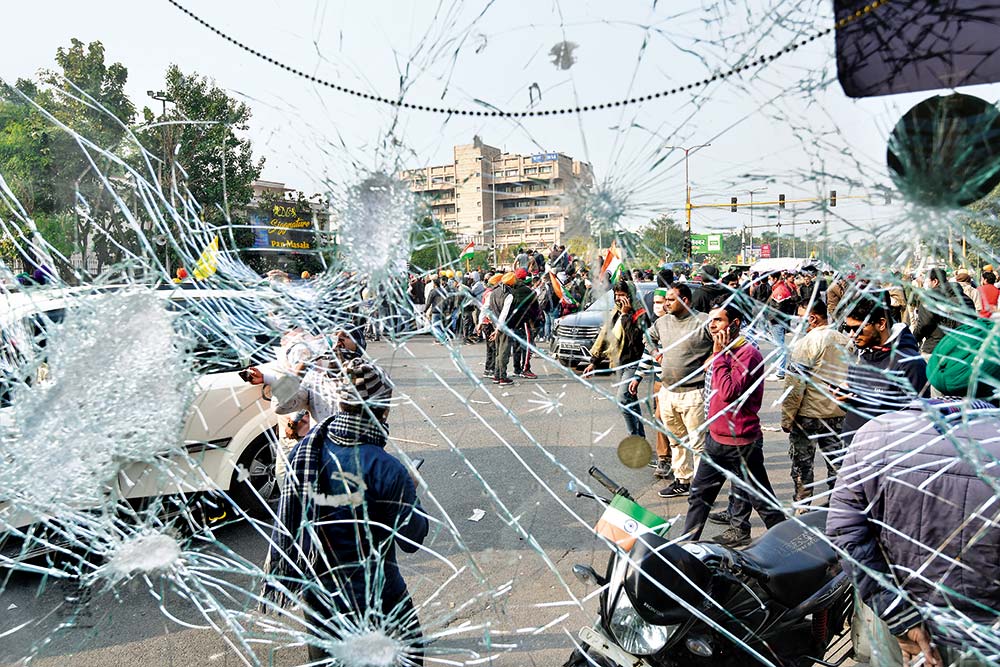
The chaos in Delhi’s ITO, seen through the cracked windshield of a damaged car
A senior BJP leader admits the farmers had popular support till January 26. That’s why the RSS intervened and nudged the government to find a “middle ground”—that’s how the offer to keep the laws in abeyance came about. “However, the violence has been a self-goal,” he says. Ashwani Mahajan, co-convener of Swadeshi Jagaran Manch (SJM), another Sangh outfit, says the anarchy witnessed on Republic Day is not healthy in a democracy. “The government was being reasonable and flexible. Bringing in lakhs of people in an agitating mode was absolutely uncalled for. The farmers should have accepted the offer of suspending the laws. They too have to be receptive and cannot insist on repeal of laws. They lost an opportunity to find solutions,” he tells Outlook.
It’s natural that the BJP, finding itself on the wrong side of a popular protest coming out of the heart of rural north India, is ambivalent about the core issues—even if the RSS shares some of the farmers’ concerns. But the government has a point, and has derived a moral advantage in a situation where it was scarce. “The onus now rests with the union leaders to convince the Supreme Court that they were not responsible for the violence in Delhi and that ‘outsiders’ had hijacked their peaceful rally,” says a senior government functionary. The farmer leaders too are aware they have lost an edge they had. Those spearheading the agitation are back at the drawing board, re-strategising, trying to keep a brave front.
Some unions are not keen to get into further confrontation. Sensing that the narrative could be going against it for the first time, the Samyukta Kisan Morcha (SKM), the umbrella organisation handling the protests, insists “the movement will continue peacefully, and further steps will be discussed and decided soon”. They are sticking to the “outsiders” theory and renewing their pledge to “peaceful” means. Yogendra Yadav, part of regular media briefings on behalf of the protesters and active on social media, was all chagrin as he rendered a heartfelt apology for what happened in Delhi. But both those keen to see the movement in a bad light and those on the other side, clearing themselves with conspiracy theories, miss a point. The leadership is actually being led. Just like the anti-CAA protests of a year ago, these are classic leaderless protests. There will be some bad apples and some rosy-cheeked ones who like to be on TV. But this is not about them. Not when the whole orchard is out there.
Every conflict contains within itself the seeds of its own resolution. To see those affirmative signs, one may only need to amend the framing narrative, and enable it to fulfil its own potential. In this case, it’s about the Republic of India and what it says to itself through symbols and metaphors. India is a country that overthrew the most systematic form of oppressive power known to history—colonialism—without war. By doing so, it took power away from an illegitimate holder and restored it to the people. People are not illegitimate. They are the cells and nerves of this body politic. They are the republic. Once we grant that, we will not be detained by saboteurs, by conspiracy theorists, by centrists or rightists or leftists, by media parakeets or sensation-mongers.
Did the Sikh flag known as Nishan Sahib go up at Red Fort on January 26? Yes. Who put it up? There are stories and stories. Whoever did, it came to have a meaning. Did they displace the Indian flag? No. Is it okay for a religious symbol to be fluttering at a site that has come to be adopted by the Indian state as a metaphor for nationhood, despite a complicated and disputed history? Not necessarily. Did India’s new Parliament building project get inaugurated with religious symbolism? Yes, just the other day. A debate over which was more legitimate (or not) is not what India needs. There are more vital issues at stake, to do with livelihood.
The tractor rally on Republic Day came at the end of a two-month-long farmers’ movement—a strikingly durable and cohesive affair, judging by the numerous and disparate actors who are part of it. An ‘actor’ called Deep Sidhu does not describe them. But he took the lead role in producing a situation that became an inflection point for the movement—indeed, for India’s democracy itself. At the end of the day, the Nishan Sahib, the religious flag of Sikhs, was fluttering alongside the Tricolor at Red Fort. The streets of Delhi saw some violence as the police and protesters—children of the same social universe—encountered each other in a drama over the formal procedures of permission or its absence. Unprecedented scenes were witnessed as tractors—the very symbol of India’s green revolution—moved past barricades, attacking police personnel who came in their way, as they moved towards the symbolic heart of New Delhi. Under strict orders not to open fire, over 300 policemen sustained injuries. Many of them got multiple fractures, jumping into the moat from the Red Fort ramparts to escape violent agitators. They put themselves at risk to maintain law and order—vulnerable, and visible, in a way they were not when violence raged in the Capital a year ago. Or visible only in less than flattering ways. That was at the end of the anti-CAA agitation, a remarkably similar episode of India’s citizenry speaking to its government. Being Muslim-led, that was more vulnerable to popular characterisations of ‘anti-nationalism’. An allegation slightly more difficult to sustain when protesters come from the heartland of western UP, Haryana and Punjab.
What is the future of your protests? Won’t it peter out with time? What do you plan to do next?
Time will not kill the struggle. The government wanted to break up the protests, it wanted to divide us. It could not and that time is past. Now we’ll go to Haryana, meet the people. We need to ensure the protests continue at all the sites. Those leading the sit-in at Tikri (at Delhi-Haryana) border need to continue, and not allow any efforts to break down the movement.
I can understand if the government has any compulsion. But let us sit down and discuss what that compulsion is. Let us find a way to overcome the constraints, if any. But they need to take us into confidence and share the compulsion and we can suggest the solution.
I do not want a wrong picture (of our country) to be painted before the world. I’ll never want a message to go out that the government has bowed. Both sides should respect each other and find a way where no one’s dignity is compromised.
There are reports of differences between you and your brother Naresh Tikait, who is the BKU president, but you have mostly prevailed. Even during the ongoing agitation, he announced that Ghazipur protest will be called off since he did not want a confrontation with the police and administration, but you stuck to it.
Why should we differ? It’s all part of a disinformation campaign, an effort to break the movement. First, they targeted those from Punjab, the Sikhs. Then they spread canards about farmers from Haryana, then it was the turn for those from western Uttar Pradesh. They called us Khalistani, they called us Pakistani…
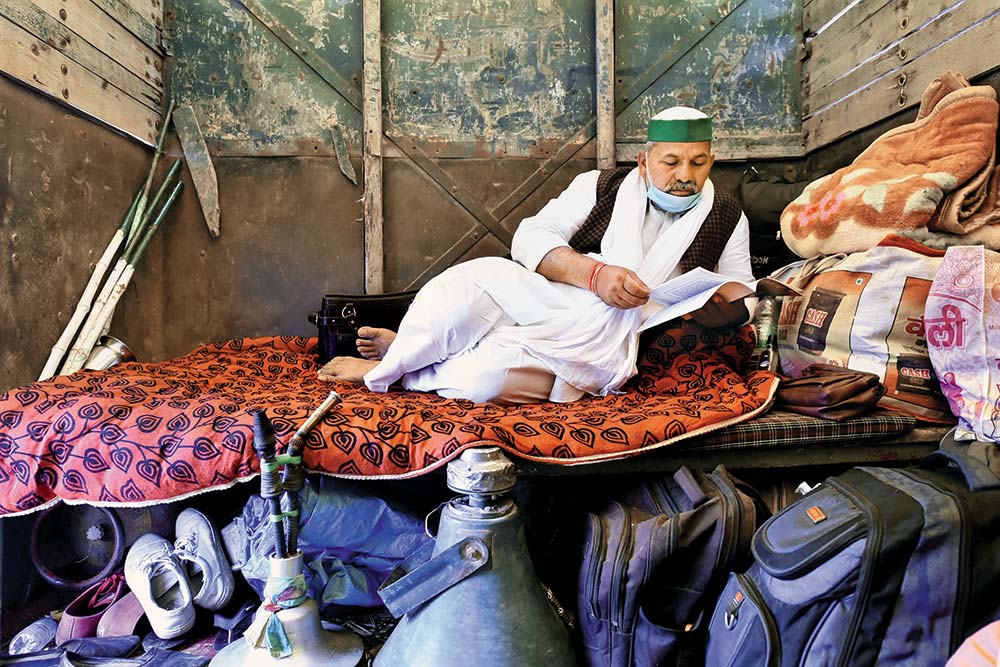
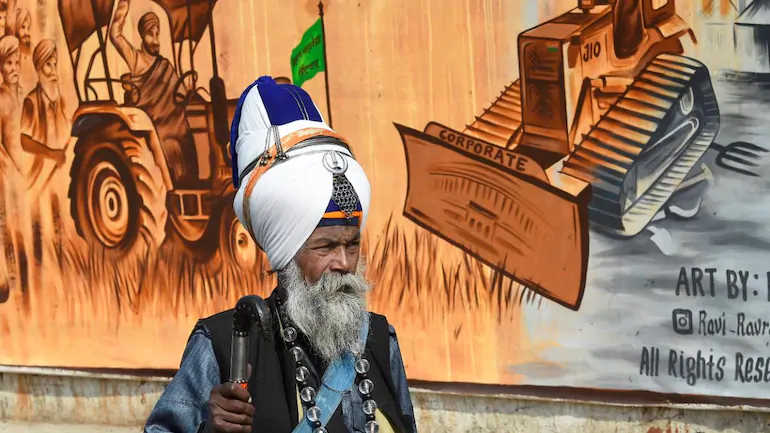
A farmer at Singhu border during the ongoing protest against Centre’s farm laws
The farmers’ agitation against Centre’s farm laws has gone international. Tweets by renowned
While Rihanna and Greta Thunberg’s tweets gave a boost of confidence to the farmers protesting at Delhi borders for over two months, they also provided fuel to the already sizzling fire between the Union government and the Opposition over the farm laws.
Congress leader Rahul Gandhi said India’s reputation in the international community has taken a “massive hit” but Union ministers and BJP leaders condemned the international figures for commenting on farmers’ protest without “proper understanding of the issue”.
Meanwhile, with Opposition members demanding a separate discussion on the contentious farm laws,
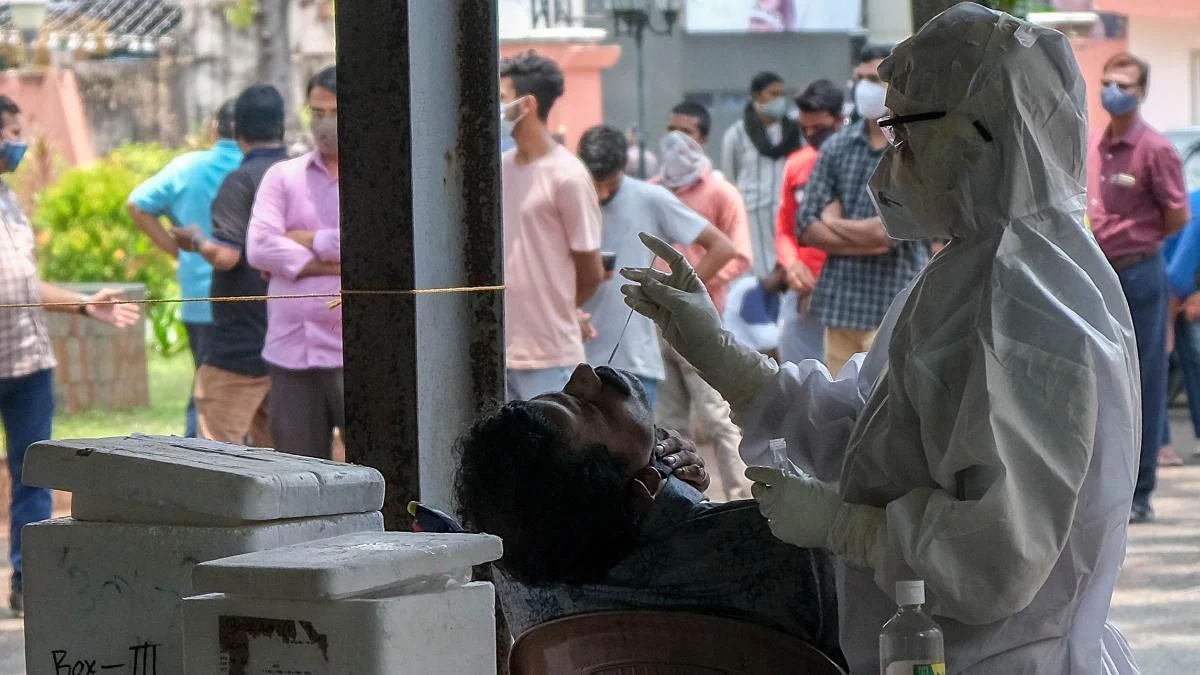
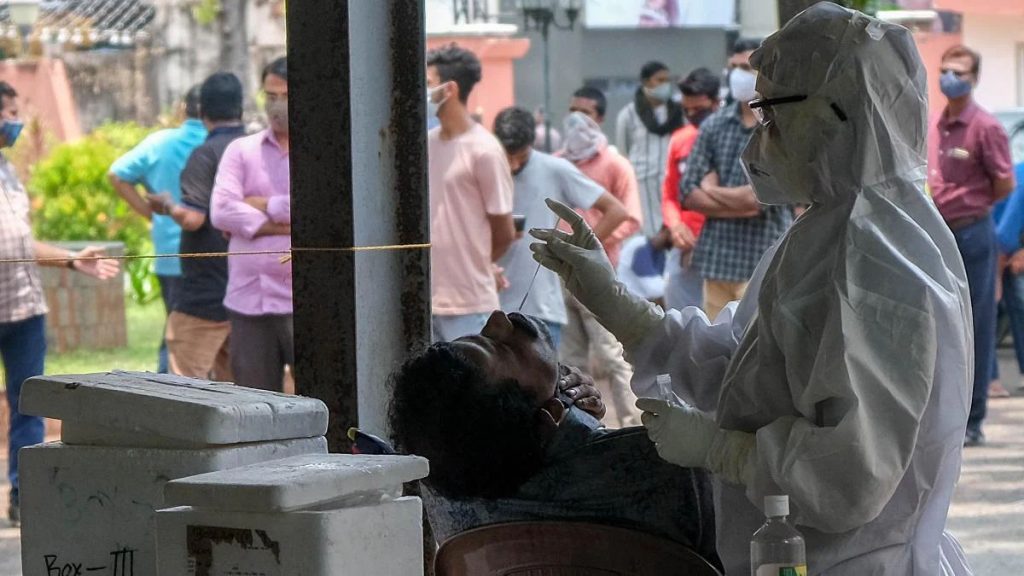
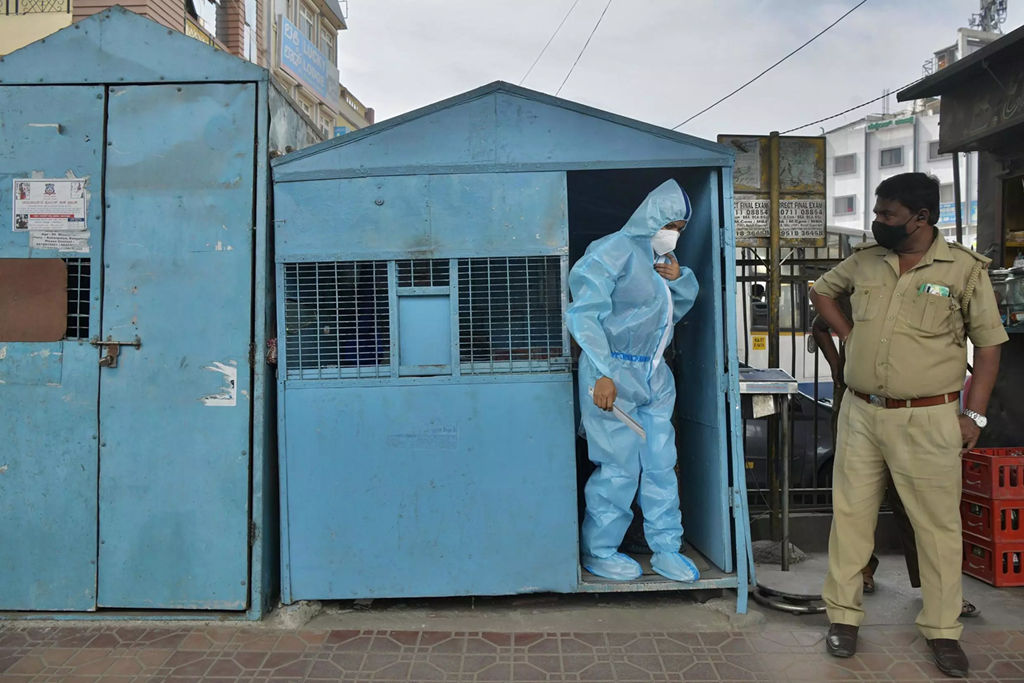
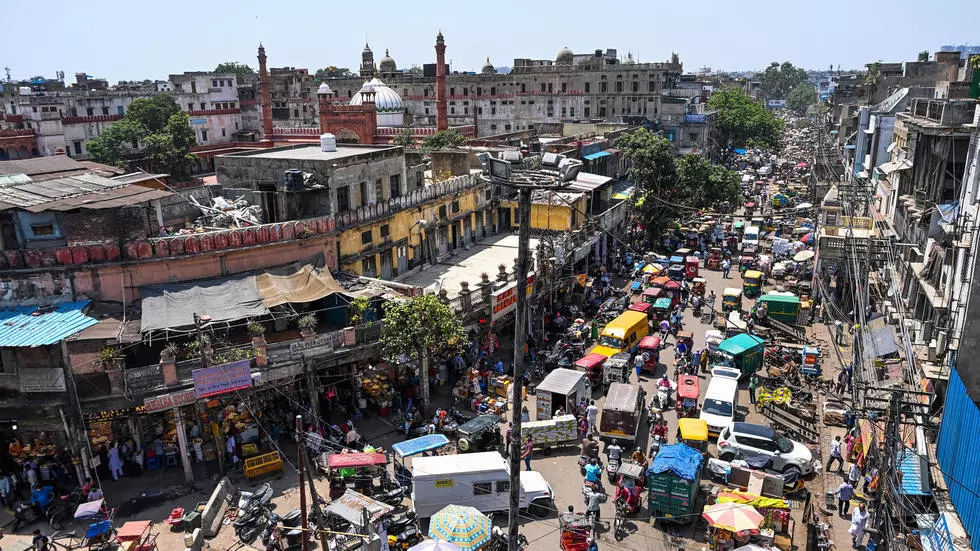
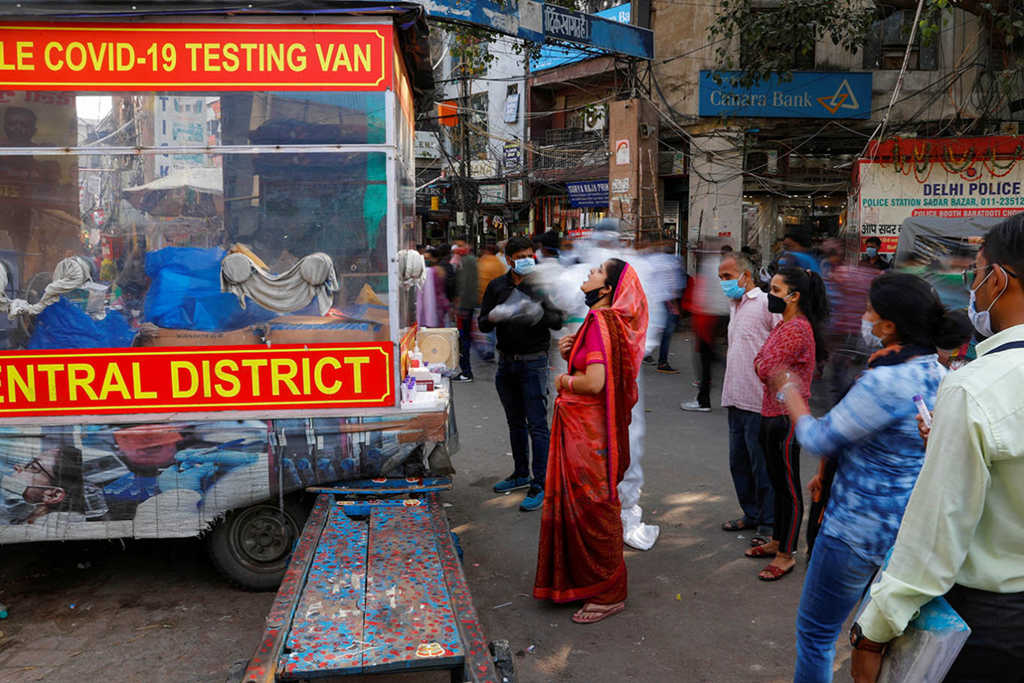
A healthcare worker wearing personal protective equipment (PPE) collects a swab sample from a woman amidst the spread of the coronavirus disease (COVID-19), at a wholesale market, in the old quarters of Delhi, India, November 17, 2020. Picture taken with slow shutter speed.
Similar tensions were witnessed in other parts of the national capital too.
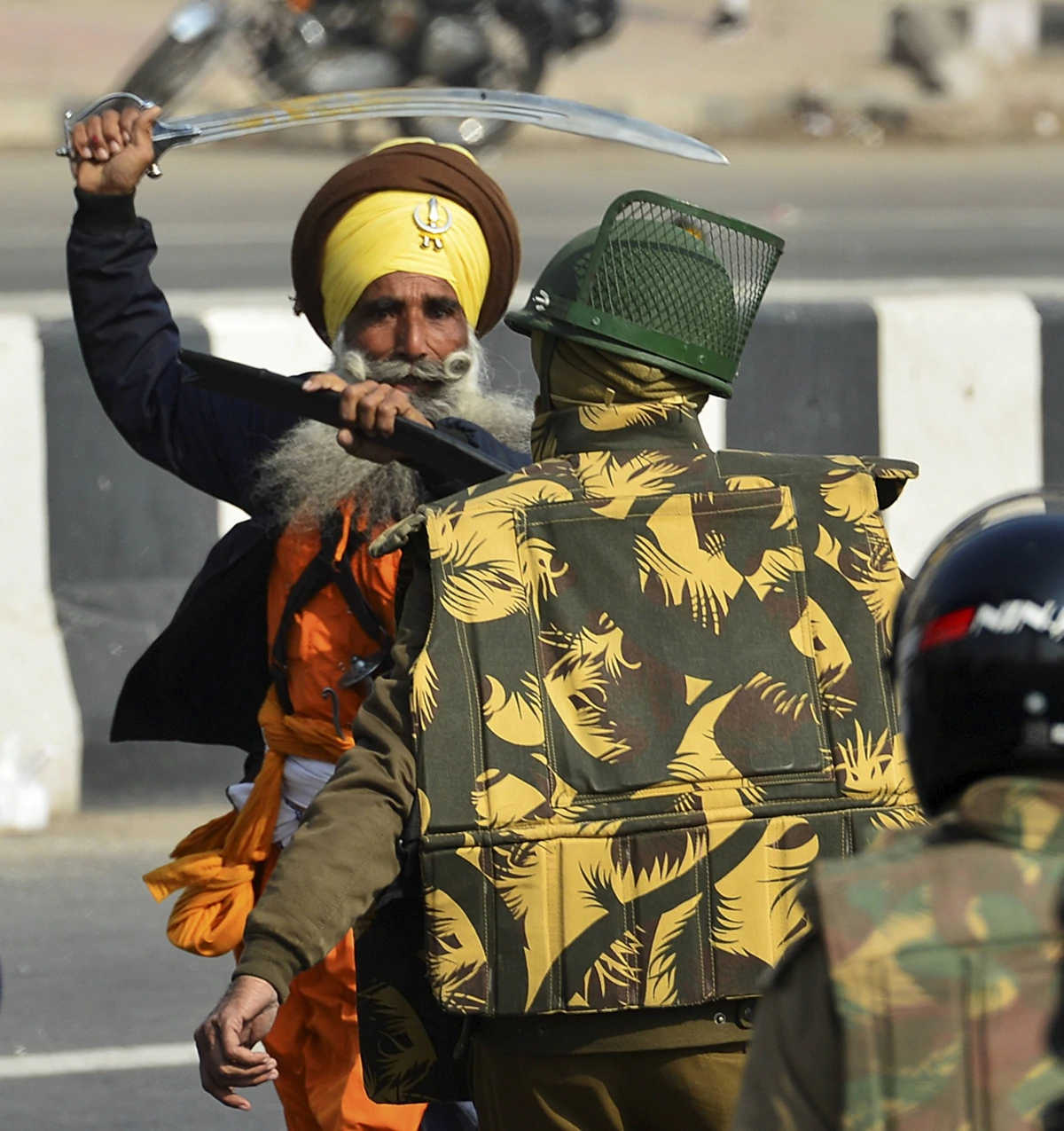
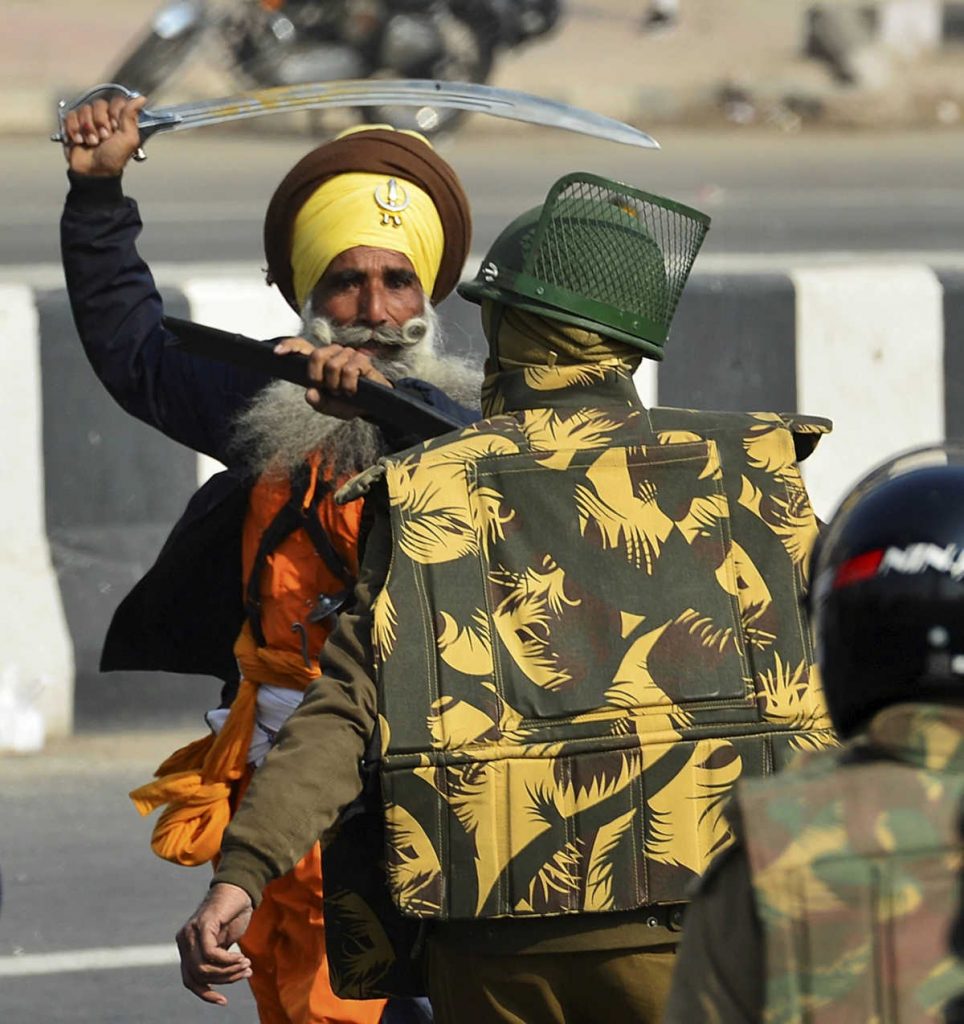
Police lathicharged farmers at Chintamani Chowk in Shahdara when they broke barricades and smashed windowpanes of cars. A group of ‘Nihangs’ (traditional Sikh warriors) clashed with security personnel near Akshardham Temple.
A Nihang protester brandishing a sword at a policeman.
At Nangloi Chowk in West Delhi and at Mukarba Chowk, farmers broke cemented barricades and police used tear gas to disperse them.
5) The situation worsened further as a section of protesters reached the Red Fort on their tractors and on foot, and stormed into its ramparts. Visuals from the spot showed uniformed security personnel looking on as people gathered in large numbers.
The protesters climbed on to the ramparts of the Red Fort and waved their flags. One of them climbed the flagpost where the Tricolour is hoisted by the Prime Minister of India on Independence Day and hoisted a religious flag there. Later, the police resorted to mild lathicharge and removed the people from the red Fort premises.