分类: bharat

  • India has now become the world’s seventh worst-hit country in terms of coronavirus cases with its tally of 1,82,143, according to the World Health Organization’s Covid-19 tracker

    On the last day of lockdown 4.0, India registered its highest single-day spike of Covid-19 cases with 8,380 new infections reported in the last 24 hours, taking the country’s tally to 1,82,143, while the death toll rose to 5,164, according to the Union Health Ministry’s Sunday morning tally.

    India has now become the world’s seventh worst-hit country in terms of coronavirus cases with its tally of 1,82,143, according to the World Health Organization’s (WHO) Covid-19 tracker.

    The number of active Covid-19 cases stood to 89,995, while 86,983 people have recovered and one patient has migrated.

    Several states released guidelines for the fifth phase of lockdown, or ‘Unlock 1.0’, starting Monday, June 1.

    After the Centre allowed lifting of restrictions on inter-state movement of people, states like Maharashtra and Tamil Nadu, which have reported the highest number of coronavirus cases, and those in the Northeast on Sunday decided to continue with the curbs after the end of the fourth phase of the lockdown.

    Others like Rajasthan and Telangana announced they are allowing inter-state movement as part of easing of restrictions under the Unlock 1.0, after such travel was banned for over two months due to the coronavirus lockdown.

    The UP government said there is no ban on interstate travel but left it to the district administrations of Ghaziabad and Noida to take a call on the movement of people from adjoining Delhi.

  • Lockdown 5.0 is Unlock 1.0: New MHA rules allow nearly all to reopen

    The Ministry of Home Affairs has issued new guidelines for the fifth phase of lockdown which is slated to begin from Monday, June 1.

    According to the new guidelines, all activities outside containment zones have been allowed to resume in a phased manner from June 1. The guidelines will come into effect from June 1 and will be effective till June 30.

    The current phase of re-opening, ‘Unlock 1’, will have an economic focus.

    All activities that were prohibited earlier will be opened up in areas outside containment zones in a phased manner, with the stipulation of following Standard Operating Procedures (SOPs), to be prescribed by the Health Ministry.

    In Phase I, religious places and places of worship for public, hotels, restaurants, other hospitality services, and shopping malls will be permitted to open from June 8.

    Health Ministry will issue SOPs for the above activities, in consultation with the Central ministries/departments concerned and other stakeholders, for ensuring social distancing and to contain the spread of Covid-19.

    In Phase II, schools, colleges, educational/training/coaching institutions etc, will be opened after consultations with States and Union Territories (UT).

    State Governments/UT administrations have been advised to hold consultations at the institution level with parents and other stakeholders. Based on the feedback, a decision on the re-opening of these institutions will be taken in the month of July. MoHFW will prepare SOPs for these institutions.

  • 印度在5月30日星期六宣布将进行大规模疫情解封,印度总理莫迪在一封公开信中表示,自从三月底因新冠病毒,经济停摆以来,许多人都遭受着巨大的痛苦

    印度在5月30日星期六宣布将进行大规模疫情解封,印度总理莫迪在一封公开信中表示,自从三月底因新冠病毒,经济停摆以来,许多人都遭受着巨大的痛苦。


    截至目前,印度已经有约17万5千人确诊感染新冠病毒,死亡人数直逼5千人。5月初,莫迪曾公布高达2660亿美元的经济拯救计划,这一数字相当于印度国内生产总值的十分之一。

    按照今天公布的解封方案,印度疫情放缓的地区将从6月8日起逐渐重新开放宗教朝拜场所,酒店,餐厅和购物中心,7月将决定学校何时复课。印度的国际空中客运,电影院,游泳馆,酒吧等仍然继续关闭,国内部分航班与铁路客运继续恢复,全国性的宵禁也将推迟两小时,从晚上9点开始。疫情重灾区的人员出入仍然保持总体关闭,同时继续强力的病毒追踪。

  • Maharashtra remains the worst affected state with 62,228 cases of COVID-19 of which 26,998 people have been cured or discharged and 2,098 have died due to the Coronavirus

    Maharashtra recorded 2,682 new coronavirus cases and 116 deaths on Friday, but in good news, 8,381 COVID-19 patients — highest in one day so far — were discharged from hospitals in the state.

    It took the total number of cases in the state to 62,228, death toll due to the pandemic so far to 2,098 while the number of recoverd patients jumped to 26,998, said a health official here.

    Coronavirus figures for Maharashtra: total number of cases 62,228, new cases 2,682, total number of deaths 2,098, number of discharged cases 26,998, active cases 33,133, number of samples tested 4,33,557. 

    India’s COVID-19 cases count crossed 1.65 lakh on Friday after a record 7,466 more cases were reported in the last 24 hours. The death toll due to the disease reached 4,706 with 175 people succumbing to the disease.

  • Prime Minister Narendra Modi on Saturday wrote a letter to the nation on the occasion of completion of one year in office. In the letter, he mentioned several firsts for India during his second consecutive term

    Upon completion of one year in office, Prime Minister Narendra Modi on Saturday wrote an open letter to the nation. In the letter, he mentioned the several achievements of his government.

    The PM also wrote at length about the challenges India continues to face amid the novel coronavirus outbreak and the global economic downturn this pandemic has prompted.

    “From 2014 to 2019, India’s stature rose significantly. The dignity of the poor was enhanced. The nation achieved financial inclusion, free gas and electricity connections, total sanitation coverage, and made progress towards ensuring housing for all,” PM Narendra Modi wrote in his letter.

    In addition, the Prime Minister also pointed at various posts initiated by his government such as the appointment of General Bipin Rawat as India’s first Chief of Defence Staff, the preparation for Mission Gaganyaan, and a campaign to vaccinate 50 crore livestock free of cost among others.

    Elaborating on the schemes of his government that have brought changes across India, PM Modi mentioned the disbursement of Rs 72,000 crore to as many as 9.5 lakh farmers under the PM Kisan Samman Nidhi. He also mentions the Jal Jeevan Mission that aims to ensure supply of potable drinking water through piped connections to over 15 crore rural households.

    “For the first time in our country’s history, farmers, farm labourers, small shopkeepers and workers in unorganised sector are assured the provision of regular monthly pension of Rs 3,000 after the age of 60 years,” the Prime Minister wrote in his letter to the nation.

  • On the first anniversary of Modi government 2.0, the prime minister has written a letter to citizens of India, recounting the achievements, the hurdles and the challenges faced by his government during the term

    Prime Minister Narendra Modi has written a letter to the citizens of India to mark the first anniversary of his second term in office. The PM Modi-led NDA government had first come to power on May 26, 2014. He was re-elected as PM with a landslide victory on May 23. he took an oath to the office again on May 30.

    In his letter, PM Modi has shared the various schemes launched by the Modi government during the first and second term and the monumental challenges faced by it.

    “This day last year began a golden chapter in the history of Indian democracy. It was after several decades that the people of the country voted back a full-term government with a full majority. Once again, I bow to the 130 crore people of India and the democratic ethos of our nation,” PM Modi said in the letter.

    He noted that during normal times, the celebrations for the first anniversary would have been different. “During normal times, I would have been in your midst. However, the present circumstances do not permit that. That is why I seek your blessings through this letter,” the PM said.

    PM Narendra Modi said that since 2014, the nation has witnessed some major transformations. “In the last five years, the nation saw how the administrative apparatus broke itself free of status quo and from the swamp of corruption as well as misgovernance,” the prime minister said.

    Counting the achievements of his first term, PM Modi said, “From 2014 to 2019, India’s stature rose significantly. The dignity of the poor was enhanced. The nation achieved financial inclusion, free gas and electricity connections, total sanitation coverage, and made progress towards ensuring ‘Housing for All’.”

  • At least a 100 died on their desperate journey back home. India’s rural economy will be tested when lockdown is lifted

    At least a 100 died on their desperate journey back home. India’s rural economy will be tested when lockdown is lifted

    The loss and the voiding will be evened in the fullness of time. For now, they, and their compatriots in suffering, have reached the villages where they feel safe, and protected, and as Egyptian writer Naguib Mahfouz noted, where all their attempts to escape cease. Out of four crore migrant labourers, 75 lakh have returned homes, we were informed last week. For those who have crossed the hump, questions of more earthly character loom large. What will they do in their villages and towns, the very places they left for reasons of want?

    They have the promise of an infinitely basic meal at home, but their needs will mutate. The lockdown might lift soon, at least partially, but will those scarred by this summer ever return? At the other end, the comfort and cushion of home might wear out soon too, and the limitations of the village economy might start gnawing at them. For some, it could be a question of if, but for most, it’s a question of when. They are merely waiting for an opening.

    Why? Avinash Kumar, assistant professor at JNU’s Centre for Informal Sector and Labour Studies, takes us back to the basic driver of migration: the local economy, deficient and unequally distributed, is unable to sustain its working population. “They are forced to go out and work. There’s also social mobility: better job, better education, better quality of life. So there’s forced mig­ration as well as that driven by a pull.” Mostly, he says, it’s the landless and small and marginal farmers who migrate to cities. “Within those classes, we see people from all castes moving. The more privileged castes, however, have a greater degree of choice in work because of their social capital. You won’t usually find a savarna carrying bricks at a construction site. You are more likely to find them working as security guards,” says the professor.

    Back in the village, one new variable is NREGA: the numbers opting for work under the social security scheme are quite telling. As a basic safety net, it guarantees 100 days of work and a daily maximum wage of Rs 220 to every person in a village. In 50 days beginning April 1, NREGA received applications from 35 lakh new workers across India. Compare with financial year 2019-20: in all its 365 days, there were only 15 lakh new applicants.

    The figures are, in a real sense, a statement on the terrible paucity of work options in rural India. It’s not only the returnees, even locals who are out of work because of the lockdown are opting for it. Two weeks ago, the Centre pumped in Rs 40,000 crore to strengthen NREGA, in addition to the exi­sting budget of Rs 61,000 crore. In the usual scheme of things, NREGA is often seen only as a means of supplementary income and a viable opt­ion for women who can’t go out of the village for work for a number of reasons. It didn’t stand up for contest as a primary option because a) the wages are considerably low as compared to city wages, and b) it gives only 100 days of work whereas cities offer plentiful, if irregular, work throughout the year. But in this Covid-bitten season, it has become an option of the last resort.

    Rajasthan has the highest number of NREGA workers at the moment: 40.3 lakh, as of May 26. In the first week of March, that stood at only 10 lakh, then fell further to 62,000 by mid-April. That was because guidelines weren’t clear on NREGA during the first lockdown (March 25-April 14), which res­ulted in low labour engagement.

  • Panic in Mumbai to alert in Delhi: Locusts ravage Rajasthan, more invasions predicted

    Already crippled by a dwindling economy besieged by the coronavirus pandemic, millions of swarming locusts ravaging their crops is the worst nightmare farmers in North India could have possibly had. But it has turned out to be true.

    Farmers in Rajasthan, Punjab, Madhya Pradesh, Gujarat and Maharashtra are in the midst of the worst locust attack in the last 27 years.

    The locusts, which arrived late last year into Rajasthan from Pakistan, have affected thousands of farmers in several states in northern and central India.

    Authorities in Delhi, Haryana, Himachal Pradesh, Telangana and Karnataka too sounded alerts Thursday to the possibility of locusts entering their territories while United Nation’s Food and Agriculture Organisation (FAO) has warned that the pests could reach as far east as Bihar and Odisha in the coming weeks.

    What is locust attack

    India is battling the worst desert locust outbreak in recent times. According to experts, broadly four species of locusts are found in India desert locust, migratory locust, Bombay locust and tree locust. The desert locust is considered the most destructive.

    It multiplies very rapidly and is capable of covering 150 kilometers in a day.

    This insect, a type of grasshopper, can eat more than its body weight. A one square kilometer of locust swarm containing around 40 million locusts can in a day eat as much food as 35,000 people.

    Experts blame the growing menace of desert locusts on climate change. They say breeding of locusts is directly related to soil moisture and food availability.

    States stung by locust attack


    Hundreds of millions of locusts, in what has been a fresh attack on Monday, flew over large swathes of land in Rajasthan from where they reached bordering regions of Madhya Pradesh, Punjab, Gujarat and Maharashtra.

    Locusts have already destroyed crops spread over at least 90,000 hectares of land, mostly in western and eastern Rajasthan. The districts adversely affected by the largescale attacks by locusts include Sri Ganganagar, Jaisalmer, Barmer, Bikaner, Jodhpur, Churu and Nagaur, Ajmer, Jaipur and Dausa. The dreaded locust attack has not spared Rajasthan’s capital as millions of locusts were seen swarming over Jaipur on Monday.

  • Kerala snake bite murder: Investigation team to extract DNA of animal as evidence

    In what has become the first instance in the history of the state, Kerala Police has conducted the postmortem of a snake carcass in connection with the death of a woman.

    25-year-old Uthra had died due to a snake bite on May 7. A detailed probe revealed that the death was, in fact, a murder plotted by her husband who had bought the snake.

    The investigation team probing matter reached the premises of Uthra’s house in Anchal where the snake carcass was buried.

    The team comprising forensic scientists, policemen and forest officials carried out the postmortem of the snake carcass. The DNA of the snake will be extracted and used for the investigation.

    Kerala DGP Loknath Behra said that the this is a peculiar case and investigation will be carried out in a scientific manner.

    “For the first time in a case, we are conducting a DNA test of a dead snake for the investigation. The test will be done outside the state most probably Chennai or Hyderabad. I have also directed the investigation team to file the chargesheet within 90 days”, Behra told media.

    Uthra was brought dead at a private hospital in Kerala on May 7. In the autopsy, it was revealed that she died due to snakebite.

    Later that day, a cobra was found inside Uthra and her husband Sooraj’s bedroom.

    The probe revealed that Uthra was earlier bitten by a snake in March this year while at her husband’s house.

    This raised quite a few eyebrows, leading the investigation team into probing the case thoroughly.

    Parents of the woman had approached the police saying there was something suspicious about the death of their daughter.

    Police said that money was the actual motive behind the crime. Though Sooraj received a huge amount of money and gold as dowry, he wasn’t satisfied with Uthra. He wanted to take the money and find a better partner.

    Police found digital evidence on the man’s mobile phone using which he had been watching snake-related videos on YouTube since the last three months, apparently to get trained in handling them.

    Police said Sooraj bought Russell’s viper from a snake-seller Suresh and on March 2 he attempted to kill his wife at their house in Adoor using the snake.

    Uthra was hospitalised and discharged on April 22 after which she had returned to her parent’s home in Anchal in Kollam district.

  • In its latest update, the Centre said the Covid-19 death toll has risen to 4,167 and the number of cases has climbed to 1,45,380 in the country

    In its latest update, the Centre said the Covid-19 death toll has risen to 4,167 and the number of cases has climbed to 1,45,380 in the country

    The nationwide tally of Covid-19 cases crossed 1.45 lakh on Tuesday with states like Bihar, West Bengal, Assam and Odisha reporting a significant rise in their numbers amid the large-scale return of migrant workers from other states.

    The numbers also rose further in the worst-hit states including Maharashtra, Gujarat and Tamil Nadu, while Delhi, Punjab, Madhya Pradesh, Chhattisgarh, Kerala, Karnataka and Andhra Pradesh, among other states and union territories, also reported more new cases.

    Indian Railways has ferried over 44 lakh migrant workers on board 3,276 ‘Shramik Special’ trains since May 1. According to Civil Aviation Minister Hardeep Puri, an additional 41,673 people had traveled to their home states via flights till 5 pm on Tuesday.

    To control the fresh spike in cases created by the mass movement, several states on Tuesday announced mandatory institutional quarantine on arrival for all.

    Meanwhile, the Supreme Court directed the central and state government to immediately provide adequate transport arrangements, food and shelters free of cost to migrant labourers stranded across the country due to the Covid-19 lockdown.

    Congress leader Rahul Gandhi said that the Modi government failed in controlling Covid-19 outbreak through the nationwide lockdown. The Congress leader asked the Centre to share it’s Plan B to contain the pandemic.

    Fresh spike in cases due to migrant movement

    Several states have been attributing the increase in their tallies to the arrival of people from outside in special trains, being run since May 1 to ferry migrant workers to their native places, and special international flights that began on May 1 to bring back stranded Indians and expatriates from abroad. Besides, domestic flights have also begun since Monday in a phased manner.

    During a review meeting on the Covid-19 situation in Odisha, which saw its tally rising to 1,517 with 79 new cases, CM Naveen Patnaik said a new strategy would be needed to deal with the pandemic.

    “With flight and train services having been restored, the next 15 to 30 days will be challenging, but I am sure we will be able to handle it all in a professional manner,” he said.

    Over 40 thousand passengers return home via flights

    Civil Aviation Minister Hardeep Puri said that at least 41,673 passengers had returned to their home states by 5 pm on Tuesday – day 2 of flight operations in India since the lockdown on March 25.

    Hardeep Puri said that airports in India handled 325 departures and 283 arrivals by Tuesday evening.

    Even as the minister claimed smooth operations on the airports, a case of Covid-19 among passengers on a flight to Coimbatore had set off the alarm bells. A doctor, who travelled on Chennai-Coimbatore Indigo flight Monday, later tested positive for novel coronavirus. The doctor has been shifted to ESI Hospital for treatment and flight staff has been grounded for 14 days, while the airlines is tracing everyone who was on the flight with the doctor.

    Rahul Gandhi terms lockdown failure

    Congress leader Rahul Gandhi said the four phases of the nationwide lockdown have “failed” and not given the results that Prime Minister Narendra Modi expected.

    Addressing an online press conference, he urged the Centre to spell out its strategy for “opening up” the country and expressed concern that India is the only country which is relaxing the lockdown when the virus is “exponentially rising”. 

    The ruling BJP, however, said the doubling rate of coronavirus infection has fallen to 13 days from three before the lockdown and called it a “success” of India.

    BJP leader and Union minister Prakash Javadekar said the Modi government’s decision to impose the lockdown has ensured that India suffered much less than countries like the US, France and Spain. He took a swipe at the Congress, saying it is doing politics at a time when the nation is fighting the Covid-19 pandemic.

  • Crashed Pakistani Plane’s Pilot Ignored 3 Warnings To Lower Altitude

    The pilot of the Pakistan International Airlines (PIA)’s crashed plane ignored three warnings from the air traffic controllers about the aircraft’s altitude and speed before the landing, saying he was satisfied and would handle the situation, according to a report on Monday.

    The national flag carrier’s PK-8303 tragedy on Friday, in which 97 people were killed and two miraculously survived, is one of the most catastrophic aviation disasters in the country’s history.

    The Airbus A-320 from Lahore to Karachi was 15 nautical miles from the Jinnah International Airport, flying at an altitude of 10,000 feet above the ground instead of 7,000 when the Air Traffic Control (ATC) issued its first warning to lower the plane’s altitude, Geo News quoted an ATC report as saying.

    Instead of lowering the altitude, the pilot responded by saying that he was satisfied. When only 10 nautical miles were left till the airport, the plane was at an altitude of 7,000 feet instead of 3,000 feet, it said.

    The ATC issued a second warning to the pilot to lower the plane’s altitude. However, the pilot responded again by stating that he was satisfied and would handle the situation, saying he was ready for landing, the report said.

    The report said that the plane had enough fuel to fly for two hours and 34 minutes, while its total flying time was recorded at one hour and 33 minutes.

    Pakistani investigators are trying to find out if the crash is attributable to a pilot error or a technical glitch.

    According to a report prepared by the country’s Civil Aviation Authority (CAA), the plane’s engines had scraped the runway thrice on the pilot’s first attempt to land, causing friction and sparks recorded by the experts.

    When the aircraft scraped the ground on the first failed attempt at landing, the engine’s oil tank and fuel pump may have been damaged and started to leak, preventing the pilot from achieving the required thrust and speed to raise the aircraft to safety, the report said.

    The pilot made a decision “on his own” to undertake a “go-around” after he failed to land the first time. It was only during the go-around that the ATC was informed that landing gear was not deploying, it said.

    “The pilot was directed by the air traffic controller to take the aircraft to 3,000 feet, but he managed only 1,800. When the cockpit was reminded to go for the 3,000 feet level, the first officer said ‘we are trying’,” the report said.

    Experts said that the failure to achieve the directed height indicates that the engines were not responding. The aircraft, thereafter, tilted and crashed suddenly.

    The flight crashed at the Jinnah Garden area near Model Colony in Malir on Friday afternoon, minutes before its landing in Karachi’s Jinnah International Airport. Eleven people on the ground were injured.

    The probe team, headed by Air Commodore Muhammad Usman Ghani, President of the Aircraft Accident and Investigation Board, is expected to submit a full report in about three months.

    According to the PIA’s engineering and maintenance department, the last check of the plane was done on March 21 this year and it had flown from Muscat to Lahore a day before the crash.

    In the wake of the COVID-19 pandemic, the Pakistan government had allowed the limited domestic flight operations from five major airports – Islamabad, Karachi, Lahore, Peshawar and Quetta – from May 16.

    After the plane tragedy, the PIA has called off its domestic operation. 

  • Balbir Singh Sr December 31, 1923 to May 25, 2020: In honour of a legend who redefined Indian hockey

    India woke up to the tragic news of the passing of Balbir Singh Dosanjh or Balbir Singh Sr, as he was popularly known as in the sporting community.

    A legend in field hockey, Balbir Singh Sr. was perhaps a name which not many would mention in their all-time greatest Indian athletes list but his name should actually be taken in the same vein as Major Major Dhyan Chand, Sachin Tendulkar, etc.

    Balbir Singh’s contribution to field hockey, especially for independent India, was unparalleled. Today’s generation might not be aware of this fact but Balbir Singh Sr. was a giant in his sport and the most decorated athlete in Indian sports history with Olympic medals in 1948, 1952 and 1956 Summer Games.

    His achievements go beyond the three Olympic medals because just his impact in field hockey, just like Dhyan Chand, was something that cannot be measured in mere words.

    Regarded as the greatest centre-forward in the sport, Balbir Singh Sr and sprint legend Milkha Singh were so popular that they never required an appointment to meet the Indian Prime Minister Jawaharlal Nehru. “It’s true. We could meet him at short notice. He loved hockey,” Balbir Singh Sr had once said.

    OLYMPIC RUN

    Balbir Singh Sr. played a key role in all three gold-medal winning performances in the Summer Games. His record for the most number of goals scored in an Olympic men’s hockey final stands to this day when he hammered 5 goals in India’s 6-1 victory over the Netherlands in the Gold medal match of the 1952 Helsinki Games.

    Under his Captaincy, India scored 38 goals and conceded none on its way to the Gold medal in 1956 Melbourne Olympics.

    Beating England 4-0 in their own backyard during the Final of the 1948 Olympic Games as an independent nation was Balbir Sr’s ‘greatest moment’.

    Balbir Singh Sr is also the only Asian male and only Indian among 16 athletes to be chosen as “Iconic Olympians” by the International Olympic Committee across the modern Olympics’ history. He was one of the 16 iconic Olympians chosen[19] whose example “tells of human strength and endeavour, of passion, determination, hard work and achievement and demonstrates the values of the Olympic Movement”

    He was also a member of the Indian hockey team that won the silver medal at the 1958 Asian Games.

  • Air travel resumes with hiccups, schools to open in July as India reports 10th highest Covid-19 cases in world

    The nationwide tally of Covid-19 cases neared 1.40 lakh on Monday after a record number of nearly 7,000 people tested positive for the deadly virus infection during the day.

    The count has quadrupled since May 1 when special trains began ferrying migrants back to their native places, followed within a week by special flights to bring back Indians and expatriates from abroad.

    India’s Covid-19 death toll has also crossed the 4,000-mark, marking an over three-fold increase since May 1, while the total number of active cases has more than tripled too in this time period. The number of recovered Covid-19 patients has also grown over six-fold since then to nearly 60,000 now.

    DOMESTIC FLIGHT SERVICES RESUME AFTER 2 MONTHS

    Domestic air travel resumed on Monday after two months even as a number of states were unenthusiastic about opening up their airports in view of rising Covid-19 cases causing around 630 flights to be cancelled.

    According to aviation industry sources, around 630 domestic flights of Monday were cancelled due to the Centre’s Sunday night announcement that there would be no flights in West Bengal and Andhra Pradesh, and limited operations at major airports such as Mumbai, Chennai and Hyderabad.

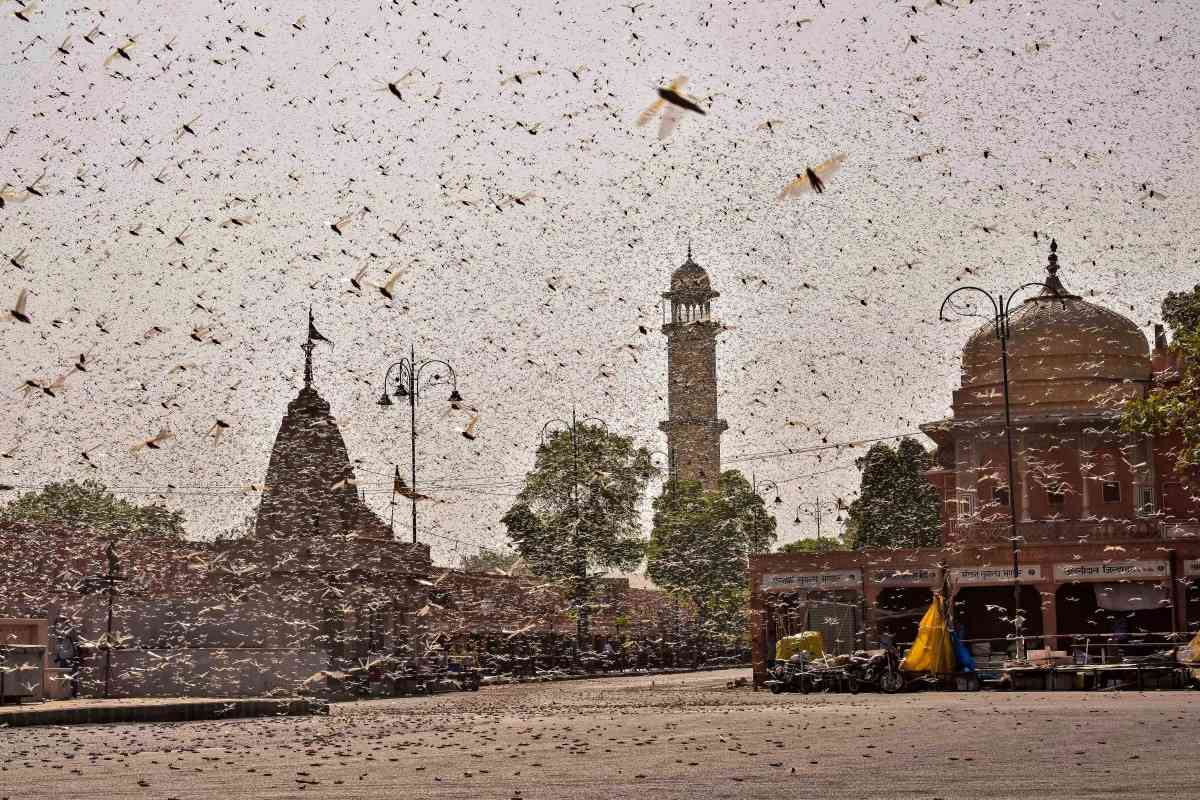
  • Swarm of locusts in Jaipur

    Swarm of locusts in Jaipur

    Swarm of locusts in Jaipur

    Swarms of the desert locust, which invaded India via Pakistan in April, have made their way to at least five states, leaving a trail of destruction in their wake. Desert locust move in large groups, called swarms, and can eat crops up to their own weight every day. When millions of locusts descend on a crop, they destroy everything.

    The desert locust is considered the most destructive migratory pest in the world and a single swarm covering one square kilometre can contain up to 80 million locusts. As per eyewitnesses, the swarm which entered India from Pakistan was about two to three kilometres long.

    In December 2019, when the parts of Gujarat were invaded by locust, they had destroyed crops spread over 25,000 hectares of land. This time, the attack is more widespread.

    Locust swarms entered India from Pakistan where they flew in from Iran last year. From Rajasthan, locusts entered Madhya Pradesh via Neemuch and have advanced to Ujjain and Dewas. The locust swarms have also made their way to Gujarat, Uttar Pradesh and Maharashtra. Due to the proximity with Pakistan as well as rest of the affected areas, Punjab has also put its farmers on alert.

    Here’s a look at how states are battling with Locust Attack

    Rajasthan

    The desert locust attack has wiped out crops spread over 5,00,000 hectares in Rajasthan. The state has been battling with the locust menace for over three months now.

    In Western Rajasthan’s Sri Ganganagar, Bikaner and Barmer districts, large groups of pink swarming locusts destroyed lush green fields laden with Rabi crops this year. Farmers in Jodhpur, Jhalawar, Karauli and Bundi have reported large infestations.

    Several officials have been involved in clearing the locusts across the state. However, the problem seems far from over. Ministry of Agriculture officials are now spraying chemicals to neutralise the large swarm of locusts before they cause more destruction.

    Farmers in various parts of the state have been using different tactics, including desperate measures — beating steel utensils during late afternoons and evenings, playing loud music at night, creating wood-fire and running the tractor inside their fields — to scare away the locusts.

    However, none of the methods helped reduce the effect of menacing locusts on crops.

    Jaskaran Singh, a farmer who owns 25 bighas of land in Anupgarh, told India Today TV earlier this year that he has been devastated due to the attack by the swarming locusts on his crops of wheat and peas.

    “Had taken a loan of Rs 9,00,000 in my mother Amarjeet Kaur’s name, but now that the crop has been destroyed. I have no idea how the debt will be paid off,” he said.

    Jaskaran, whose eyed teared up while speaking, requested the government to compensate him for the loss.

  • Delhi Riots: Police arrests 2 Pinjra Tod women activists for organising anti-CAA protest in Jaffrabad

    Two members of the ‘Pinjra Tod’, a women rights group in Delhi, have been arrested in connection with the North East Delhi riots that took place earlier this year over the Citizenship Amendment Act (CAA).

    The organisation is accused of organising a sit-in by women protesters at the Jaffrabad Metro Station, which was a precursor to the Delhi riots which killed more than 50 people.

    Delhi Police has arrested Natasha and Devangana, two women associated with Pinjra Tod. It was found that a sudden mob of women gathered during the anti-CAA protest at the Jaffrabad Metro Station in North East Delhi on, following which the communal violence took place on February 23 and 24.

    Both women have been arrested by the North East District Police and will be questioned by the Crime Branch SIT and Delhi Police Special Cell.

    Both of them are scheduled to appear in court on Sunday.

    The Pinjra Tod organisation consists of several students of the University of Delhi as well as other higher educational institutions in the national capital. The women’s collective aims at making regulations for hostel and paying guest (PG) accommodation less restrictive for women students.

    The Delhi Police has repeatedly accused the Pinjra Tod of stoking the Delhi violence.

    Earlier this week, Delhi Police arrested Jamia Millia Islamia University student Asif Iqbal Tanha in connection with the February Delhi violence.

  • COVID-19 Forced World To Adopt Masks, Why Then Niqaab Is Problematic?

    The coronavirus pandemic has upended our lives in unthinkable ways. Governments worldwide, whether democratic or authoritarian, are taking unprecedented decisions to manage the pandemic raising concerns of government overreach, abuse, inaction and even denial. The notion of an active and engaged citizenry is getting weakened as the survival instinct has mutated the civic ethos so as to empower governments to choose for us what we would have never chosen for ourselves under normal circumstances. Is this process new or have democracies presumed choices earlier as well?

    History tells us that choices are relative. They have never been made available universally and exhaustively to all. Race, gender, language, ethnicity based differentiations among others have been a global trend. Yet, democracy has retained its fascination as the principle on which political life is organized or ought to be organized. What lies at the heart of this appeal is the freedom to make choices.

    The laissez faire position based on individual dignity is premised on the conviction that: “to be able to choose is a good that is independent of the wisdom of what is chosen.” Freedom of choice is not simply a political nicety; it is liberating and empowering; it enhances self-esteem enabling us to make choices that sculpt our identities thus giving us a certain sense of control over our lives, whether real or imaginary. How do democracies determine what choices are worth pursuing and what are worth denying? Can governments deny a choice under ordinary circumstances on grounds that such choice is offensive, alien, chauvinistic, a security threat, rather a slur on choice itself and then endorse or enforce something fairly similar under circumstances such as the present coronavirus pandemic?

    An example would perhaps, simplify matters. If we think through the act of face-covering, there are by and large two ways of screening one’s face. One is with face masks now being worn by men and women worldwide to combat infection against COVID-19 and the other is the Islamic face veil or the ‘niqaab’ worn by Muslim women for religious reasons. After discouraging citizens from wearing masks during the initial stages of the pandemic, even countries with anti-face covering legislations are encouraging face-cover in public places. Face masks, although considered alien to western culture, have been made mandatory in the Czech Republic, Austria, Slovakia, Bosnia-Herzegovina; are being recommended in France, Italy, UK and the United States with citizens being encouraged to use either face masks, or scarves or bandanas in public places. In countries like China, Hong Kong, South Korea and Japan masks have had a ubiquitous presence.

    Unlike masks, which are slowly gaining acceptability to contain contagion, the face veil has had a rather chequered history. Seen as oppressive and discriminatory, the face veil has been an object of contempt, pity and bewilderment. Muslim women in the West, despite being ridiculed, fined, arrested and subjected to job losses for the act of covering their faces continue to do the same with educated and accomplished women taking such decisions even in the wake of controversial legislations imposing penalties for non-compliance.

    States such as Denmark, Bulgaria, Belgium and France among others have imposed bans on the face veil with several local bans elsewhere in the world. Despite prohibitions, what explains this choice? For most women the decision to veil is the outcome of a spiritual journey that has deepened their relationship with God sometimes even in the wake of family opposition. For some it is the most preferable act to please God and therefore a source of spiritual comfort. For still others, the face veil safeguards them from unwanted, malicious and unscrupulous gaze. Seen from these perspectives the choice is spiritually stimulating, psychologically empowering, socially liberating, enhancing mobility and the quality of their lives.

  • Coronavirus in India: Govt says lockdown helped prevent 54,000 deaths

    The central government on Friday said that the lockdown has helped avert 54,000 deaths and 20 lakh cases of Covid-19. The Centre’s statement, quoting a study, came on the day when India’s positive cases tally reached 1.18 lakh and toll climbed to 3,583.

    The government study said that the number of Covid-19 cases averted due to the lockdown is in the range of 14-29 lakh, while the number of lives saved is between 37,000 and 78,000. The government imposed the nationwide lockdown from March 25 to prevent the spread of the novel coronavirus and it is currently in its fourth phase.

    On Friday morning, the Union health ministry said that India registered 6,088 new cases and 148 deaths in the last 24 hours. Among the new positives were Congress leader Sanjay Kha, who confirmed the news of social media.

    The government has said that the cases of Covid-19 will peak between June 21-28. Meanwhile, 22 opposition parties came down on the Modi government for its alleged failure to protect the economy and lives during the pandemic.

    Over 6,000 new Covid cases in one day

    India recorded the highest single-day spike in the novel coronavirus cases on Friday morning, with more than 6,000 new cases of infections taking the country tally to 1.18 lakh.

    Registering an increase of 6,088 cases and 148 deaths in the last 24 hours, the total number of coronavirus cases in India stood at 1,18,447 on Friday morning.

    However, a tally of figures announced by different states and union territories, as of 9.20 PM, put the nationwide tally much higher at 1,22,656, the death toll at 3,634 and recoveries at more than 51,000.

  • Mumbai liquor shops to home deliver alcohol from today

    Liquor will now be delivered at the doorsteps of Mumbai’s residents starting Saturday. A final decision was made in this regard by the city’s civic body, the Brihanmumbai Municipal Corporation (BMC) that gave a green signal to home delivery of liquor except in containment zones.

    According to the order by BMC chief Iqbal Singh Chahal, only registered liquor outlets can partner with E-commerce websites to deliver alcohol. Earlier, a mechanism was put in place by the Maharashtra state excise department, wherein customers could go to the official website and get a token. The customer would then collect the order from a registered outlet as per the date and time mentioned on the token. This system is not valid for Mumbai.

    The new system will also see the participation of E-commerce platforms for the home delivery of liquor. In fact, Swiggy and Zomato have already started delivering liquor in the state of Jharkhand after securing all concerned permissions from the state government. The model is likely to be replicated in other states.

    However, the Maharashtra government has clearly stated that liquor will not be sold over the counter from any outlet anywhere in Mumbai.

    Other states that are working towards home delivery of liquor are Punjab, West Bengal, Chhattisgarh, Tamil Nadu and Kerala. The Delhi government is also considering the same.

    Liquor outlets were opened in Mumbai for one day earlier this month before the Maharashtra government retracted its permission in light of the rising number of new cases of the novel coronavirus in the city. Mumbai has emerged as the epicentre of the Covid-19 outbreak in Maharashtra, the state with the most confirmed cases in India.

  • Have lost engine: What Pakistan plane pilot told ATC moments before crash

    The pilot of the ill-fated Pakistan International Airlines flight that crashed today in Karachi indicated moments before the disaster that he was facing problems with the plane’s engines. The pilot communicated this to controllers at the Air Traffic Control at Karachi airport with whom he was in touch (an audio recording and a transcipt of the coversation can be found at the end of this story).

    The Lahore-Karachi Pakistan International Airlines Flight 8303 had around 100 people, including crew onboard. The plane, an Airbus A320, crashed in a residential area just outside the Karachi airport moments before landing on Friday afternoon. Several are feared killed but official word on casualties is awaited.

    According to snatches of pilot-ATC communication put out by Pakistani media, the plane reported some sort of engine trouble moments before the crash. The pilot told controllers at the Karachi airport ATC that he had “lost engine”.

    Hearing this, the ATC controllers asked the pilot to confirm if he’s carrying out a “belly landing”, i.e. landing without the landing gear extended. After some moments, the pilot is heard putting out a mayday call, which is the highest-level of distress call.

    The ATC responded to the pilot by saying “both” runways at the Karachi airport were available for him to land. How — if — the pilot responded is not heard in the reported audio clip of the conversation.

    However, PIA CEO Air Vice Marshal Arshad Malik said in a video message that the pilot had chosen to “go-around”, aviation parlance for aborting a landing the last moment and circling the runway for another attempt. Further investigation is underway, Air Vice Marashal Arshad Malik said.

  • 72 Dead In Cyclone Amphan In Bengal; CM Mamata Says ‘2 Districts Completely Devastated’

    Extremely severe cyclone ‘Amphan’ has killed at least 72 persons in West Bengal and ravaged Kolkata and several parts of the state as it left behind a trail of destruction by uprooting trees, destroying thousands of homes and swamping low-lying areas of the state.

    West Bengal Chief Minister Mamata Banerjee on Thursday confirmed that at least 72 people have been killed in the state so far due to Cyclone Amphan. She also announced Rs 2 lakh compensation for those killed in the Cyclone.

    “So far as per the reports we have received, 72 people have died in the state due to Cyclone Amphan. Two districts – North and South 24 Parganas are completely devastated. We have to rebuild those districts from scratch. I would urge the Central government to extend all help to the state,” Banerjee said after conducting a review meeting with officials.

    “I have never witnessed such a fierce cyclone and destruction in my life. I would request Prime Minister Narendra Modi to come and visit Cyclone Amphan-affected areas,” Banerjee added.

    Kolkata and several other parts of West Bengal wore a battered look on Thursday after the extremely severe cyclone ‘Amphan’ ripped through the state, leaving several dead and blowing up shanties, uprooting thousands of trees besides swamping low-lying areas.

  • DGCA Issues 7 Fare Bands For Air Travel, Ticket Prices Between Rs 2,000- Rs 18,600

    Hours after Civil Aviation Minister Hardeep Singh Puri announced a cap on domestic airfare, aviation regulator DGCA issued seven bands of ticket pricing with lower and upper fare limits.

    The first such band will consist of flights that are of less than 40 minutes duration.

    A DGCA order said the that the lower and the upper fare limits for the first band is Rs 2,000 and Rs 6,000, respectively.

    The subsequent bands would be for flights with durations of 40-60 minutes, 60-90 minutes, 90-120 minutes, 120-150 minutes, 150-180 minutes and 180-210 minutes.

    The lower and upper limits for these bands are: Rs 2,500-Rs 7,500; Rs 3,000-Rs 9,000; Rs 3,500-Rs 10,000; Rs 4,500-Rs 13,000; Rs 5,500-Rs 15,700 and Rs 6,500-Rs 18,600, respectively, the DGCA said.

  • PM Modi to visit Bengal, Odisha after Cyclone Amphan kills 84, ravages India & Bangladesh

    At least 84 people have died and several more injured in India and Bangladesh as Cyclone Amphan made landfall last evening and battered West Bengal and Bangladesh. Prime Minister Narendra Modi will arrive in Kolkata at 10 am on May 22 and will travel to Basirhat by chopper before visiting Bhubaneswar in Odisha.

    Widespread damage to property has been reported in several coastal villages, towns and cities, including Kolkata and Howrah. Amphan, the most powerful cyclone to hit West Bengal in over a decade, left a trail of destruction with devastated villages, uprooted trees and bridges washed away.

    Most deaths were caused by trees uprooted by winds that gusted up to 185 km per hour (115 mph), and a storm surge of around five metres that inundated low-lying coastal areas when the cyclone barrelled in from the Bay of Bengal on Wednesday.

    Prime Minister Narendra Modi on Thursday assured that his government will do everything possible to help the affected people. “(I) have been seeing visuals from West Bengal on the devastation caused by Cyclone Amphan. In this challenging hour, the entire nation stands in solidarity with West Bengal. Praying for the well-being of the people of the state. Efforts are on to ensure normalcy…No stone will be left unturned in helping the affected,” Modi said.

  • Coronavirus: With 41,642 cases, Maharashtra tops India’s Covid tally

    Covid-19 cases continued to rise across India at a very high rate as the nationwide tally reached beyond 1.12 lakh. However, the highest spike has been registered by Maharashtra, which alone accounts for nearly 35 per cent of Covid-19 cases and over 41 per cent deaths due to the virus.

    In its most recent update, the Union health ministry placed the total number of cases at 1,12,359 and the death toll at 3,435. The ministry said that 45,300 people have so far recovered from the infection.

    Mumbai, the financial capital of India, has over 25,000 cases of coronavirus. The city has registered nearly 900 deaths alone.

    However, the Centre has claimed that India has it under control. The Union health ministry has said that India’s mortality rate from the virus is half than that of the world. The ICMR has also claimed that the testing, as well as health care facilities, have been significantly ramped up in India.

    Despite the preparedness, there remains a danger of a fresh spike in cases due to Cyclone Amphan, which forced over 7 lakh people to abandon their homes and seek shelter in relief camps.

    Meanwhile, the civil aviation ministry has announced the SOP for airlines, setting fresh rules for passengers and capping prices of air routes.

  • Unjustified cartographic assertion: India reacts sharply to Nepal releasing new map including Lipulekh, Kalapani

    India on Wednesday protested Nepal’s revision of its political map that has incorporated areas that are part of Indian territory.

    Calling it a “unilateral” act, India urged Kathmandu to reconsider its decision. In a statement, Ministry of External Affairs spokesperson Anurag Srivastava said, “Nepal is well aware of India’s consistent position on this matter and we urge the Government of Nepal to refrain from such unjustified cartographic assertion and respect India’s sovereignty and territorial integrity. We hope that the Nepalese leadership will create a positive atmosphere for diplomatic dialogue to resolve the outstanding boundary issues.”

    Nepal Prime Minister KP Oli on Tuesday had announced in the Nepalese parliament that his government would be incorporating the areas of Lipulekh, Lympiyadhura and Kalapani into an updated political map.

    The decision came days after India’s Defence Minister Rajnath Singh launched a road link from India to China border that, according to Kathmandu, ran through disputed, unresolved territories between India and Nepal.

    The Lipulekh pass is a far western point near Kalapani, a disputed border area between Nepal and India. Both India and Nepal claim Kalapani as an integral part of their territory – India as part of Uttarakhand’s Pithoragarh district and Nepal as part of Dharchula district.

    Nepal officially launched its new political map on Wednesday. The announcement was made by Padma Kumari Aryal, Minister for Land Management, Cooperative & Poverty Alleviation endorsing the decision of the Nepal cabinet.

    During the virtual launch of the map, she said, “It is a historic moment of happiness for the people of Nepal. The government will not allow the erosion of self-esteem of our people, won’t compromise on the self-respect of Nepal. Nepal will publish the new map and make it part of the school textbooks,”

    The cartographic revision has led to increased tension between New Delhi and Kathmandu raising concerns over a diplomatic resolution to the problem

    Speaking to India Today TV, former Indian envoy to Nepal Ambassador Ranjit Rae said, “The launch of a new map showing new external boundaries of Nepal has complicated bilateral discussions and made the issue more intractable.”

    Hoping that the Nepalese leadership will create a “positive” atmosphere for “diplomatic dialogue” to resolve the outstanding boundary question, MEA spokesperson said, “The Government of Nepal has released a revised official map of Nepal today that includes parts of Indian territory. This unilateral action is not based on historical facts and evidence. It is contrary to the bilateral understanding to resolve the outstanding boundary issues through diplomatic dialogue. Such artificial enlargement of territorial claims will not be accepted by India.”

    The politics over this within Nepal is deep-seated in the fight for power between Prachanda and Prime Minister KP Oli. With Prachanda raising the issue in parliament, Oli’s government had to show assertiveness.

    “PM Oli has also been under a lot of pressure domestically from within his party. There are reports that China played an important role in saving his government. At times like this it is always convenient to divert attention from domestic problems by whipping up anti-India nationalism,” said Ambassador Ranjit Rae.

  • Cyclone Amphan tears through West Bengal-Odisha: over 10 dead, Kolkata ravaged

    An extremely severe cyclone Amphan packing winds of up to 190 kmph Wednesday rampaged through coastal Odisha and West Bengal, dumping heavy rain, swamping homes and farmland, and leaving at least 10 people dead, officials said.

    While a man and a woman were reported killed when trees came crashing down on them in North 24 Parganas district of West Bengal, a 13-year-old girl died in a similar incident in adjoining Howrah. CM Mamata Banerjee claimed that at least 7-8 deaths have been confirmed due to the cyclone and many more are expected to be dead.

    At least two people, including an infant, lost their lives as Cyclone Amphan ravaged through coastal Odisha.

    The first casualty of the storm was a 57-yr-old woman of Satbhaya in Kendrapara who reportedly stayed back at home instead of moving to the nearest shelter home. While a two-month-old baby boy died due to wall collapse in Kampada village in Tihidi block of Bhadrak district.

    FACED WAR-LIKE SITUATION: MAMATA BANERJEE

    West Bengal Chief Minister Mamata Banerjee, who is monitoring the situation from Nabanna, the state secretariat, however, claimed at least 10-12 people lost their lives.

    “Area after area has been ruined. I have experienced a war-like situation today. Such a devastating storm took place in 1737. I am sitting in the war room. My office in Nabanna is shaking,” she exclaimed.

    “At least 10-12 people have died. Nandigram, Ramnagar….the two districts of North and South 24 Parganas are destroyed. Patharpratima, Namkhana, Kakdwip, Kultali, Baruipur, Sonarpur all are pictures of the devastation. Rajarhat, Hasnabad, Sandeshkhali, Gosaba, Habra are all in danger,” she added.

  • Coronavirus in India: Air, train travel set to resume, Covid tally crosses 1.06 lakh

    India is inching closer to business as usual with announcements of resumption of air and train services within the country even as the number of Covid-19 cases reached 1,06,750 on Wednesday.

    The Centre said that with a recovery rate of 39.62 per cent and a mortality rate of 0.2 death per lakh population, India was ahead of the rest of the world in dealing with the Covid crisis. Health Minister Harsh Vardhan told the Non-Aligned Movement (NAM) Health Ministers’ meeting that the country’s policy of micro-identification, mass isolation and quick treatment helped prevent large scale deaths and spread of Covid-19.

    Businesses have started to reopen in various parts of the country. Delhi’s neighbouring Gautam Budhh Nagar on Wednesday announced that markets can reopen using the odd-even formula. Delhi has already allowed shops to open on alternative days. Gujarat resumed the state transport bus services, while Haryana decided not to run interstate services and limited its buses within the state.

    Movement of buses created a massive political flutter on the UP-Rajasthan border as UP CM Yogi Adityanath and Congress leader Priyanka Gandhi locked horns over the transportation of migrants. Around 500 buses full of migrants had to turn back from the state’s border as UP did not allow them entry.

    Meanwhile, the economic crisis due to Covid-19 pandemic once again became evident on Wednesday as taxi service Ola laid off 1400 employees. The company said that due to the lockdown its revenue has come down by 95 per cent in the last two months.

    Nationwide tally

    India saw a spike of 5,611 cases of Covid-19 infections and 140 deaths in 24 hours, ending Wednesday morning. The death toll climbed to 3,303 with as many as 140 fatalities.

    According to the data by Union Health Ministry, the total number of cases in India reached 1,06,750. These include 61,149 active cases, while 42,298 people recovered or discharged, the health ministry said.

    The total confirmed cases include foreign nationals too who were tested in India. India’s recovery rate stood at 39.6 per cent on Wednesday.

  • Two BSF Jawans Killed In Militant Attack In Kashmir

    Two BSF personnel were killed on Wednesday when militants fired upon them in Ganderbal district of Jammu and Kashmir.

    The two BSF jawans were part of a patrol and had gone to buy something from a nearby shop when two motorcycle-borne borne militants attacked them, said Vijay Kumar, IG Kashmir.

    While one of the jawans died on the spot, another succumbed to injuries at the hospital.

    The militants also snatched the guns of the two soldiers as they fled from the encounter site.

    The area has been cordoned off and search operation is on.

  • Cyclone Amphan: Heavy Rains, Strong Winds Pound Odisha; 3-Month-Old Killed After Wall Collapse

    A three-month old child was reportedly killed and his mother injured after a wall collapse in Bhadrak, Odisha as extremely severe cyclone ‘Amphan’ hurtled towards east coast on Wednesday, triggering heavy rains and strong winds in parts of Odisha and West Bengal. The cyclone is expected to cross Odisha coast at 4pm.

    More than 1.37 lakh people have so far been evacuated from low-lying coastal areas of Odisha, said Special Relief Commissioner (SRC) P K Jena.

    The extremely severe cyclonic storm lay about 150 km northeast of Paradip in Odisha, and 95 km away from Digha (West Bengal),  said H R Biswas, the Director of the Meteorological Centre, Bhubaneswar. The wind velocity reached a maximum of 106 kmph in Paradip.

    It is likely to move north-northeastwards across northwest Bay of Bengal and cross West Bengal  Bangladesh coasts between Digha (West Bengal) and Hatiya Islands (Bangladesh) close to Sunderbans during evening hours of Wednesday, with a maximum sustained wind speed of 155-165 kmph gusting to 185 kmph.

    IMD DG Mrutyunjay Mohapatra says 4-5-meter high tidal waves are expected in Sundarbans, and 2-3 meter high in Digha in West Bengal, but there is no threat to Odisha coast.

    Intense rainfall was recorded in several areas of Puri, Khurda, Jagatsinghpur, Cuttack, Kendrapara, Jajpur, Ganjam, Ganjam, Bhadrak, Mayurbhanj and Balasore districts since Tuesday.

    Jena said Paradip recorded 214 mm of rainfall since Tuesday, while it was 87 mm in Puri, 70.5 mm in Chandbali, 58.5 mm in Balasore and 50 mm in Bhubaneswar as heavy downpour battered many parts of coastal Odisha.

    Heavy rains and strong winds are likely to continue in Bhadrak and Balasore districts for the next two-three hours. 

    Heavy downpour accompanied by gusty wind also lashed Kendrapara where district administration has evacuated 38,000 people from vulnerable seaside pockets to the safety of multi-purpose cyclone shelter buildings.

    Many trees and electric poles have been uprooted in various parts of the coastal districts. However, there has been no damage to life and property so far.

    In Kendrapada district’s Mahakalapada, fire brigade personnel rescued a pregnant woman who was shifted to a hospital where she gave birth to a healthy baby.

  • Railways To Run 200 Non-AC Passenger Trains Daily From June 1

    Providing huge relief to people, specially in the country’s small towns and cities, the railways will run 200 special passenger trains from June 1, the national transporter said on Tuesday.

    These trains will have non-air conditioned second class coaches and will run daily.
    They will be plied in addition to the Shramik Special and the air-conditioned special trains which are currently being operated on the Rajdhani routes connecting 15 major cities to Delhi.

    All categories of passengers will be allowed to book tickets which will be available online.

    “Indian Railways will run 200 non-AC trains daily as per the time table from June 1, whose online booking will start soon,” tweeted Railway Minister Piyush Goyal.

    While the railways is yet to state which routes these trains will run on, officials said they could cater to the smaller towns and cities.

    Earlier, the railways had cancelled all its regular passenger services till June 30.

    Railways said the move to start these 200 trains would also be helpful for migrants who can avail these trains if they are unable to board the Shramik Special trains.

    “Efforts will be made such that they (migrants) will be able to board trains from Railway Station Head on mainline which is close to their existing location,” the railways said.

    The railways also said it has asked the state governments to identify and locate the migrants who are walking on roads to go to their home states and transport them to the nearest main line railway station after registering them the nearest district headquarters. It has also asked the states to give a list of these travellers to the Railway Authorities so that arrangements can be made for their further travel through Shramik specials.

  • India crosses 1-lakh coronavirus cases after 64 days, govt claims faring much better than others

    Hundreds of more people tested positive on Tuesday for the deadly coronavirus infection across India with a large number of them have returned from other states or from abroad, even as officials said India’s mortality rate has been very low and it has taken much longer here for the tally to hit the one-lakh mark than many other countries.

    In its morning 8 AM update, the Union Health Ministry said the total number of confirmed cases has reached 1,01,139 and the death toll has risen to 3,163. This marked an increase of nearly 5,000 cases and 134 fatalities in a 24-hour period.

    More than 39,000 patients have recovered too, still leaving over 59,000 active cases in the country — which is the seventh-largest globally after the US, Russia, Brazil, France, Italy and Peru.

    INDIA FARING BETTER THAN WORLD: GOVT

    The Health Ministry said that for every one lakh population, there are 7.1 coronavirus cases in India so far, as against 60 globally.

    Referring to data from the World Health Organisation, the ministry said 45,25,497 Covid-19 cases had been reported worldwide till Monday, which is about 60 cases per lakh population.

    Among the countries with a very high load of coronavirus cases, the US, with 14,09,452 instances of the infection so far, has around 431 cases per lakh population. In the UK, this ratio is 494 cases per lakh and for Italy, it is 372.

    TOOK 64 DAYS FOR CASES TO CROSS 1 LAKH

    Officials also cited data about India having taken 64 days for the count of confirmed cases to increase from 100 to one lakh, which was more than double the time taken by countries like the US and Spain. According to the data sourced from the health ministry and Worldometers, the coronavirus infection cases increased from 100 to 1,00,000 in the US in 25 days, while it took 30 days for the cases to reach the 1 lakh-mark in Spain.

    It took 35 days in Germany, 36 days in Italy, 39 days in France and 42 days in the United Kingdom for the coronavirus infection cases to rise from 100 to 1 lakh, respectively.

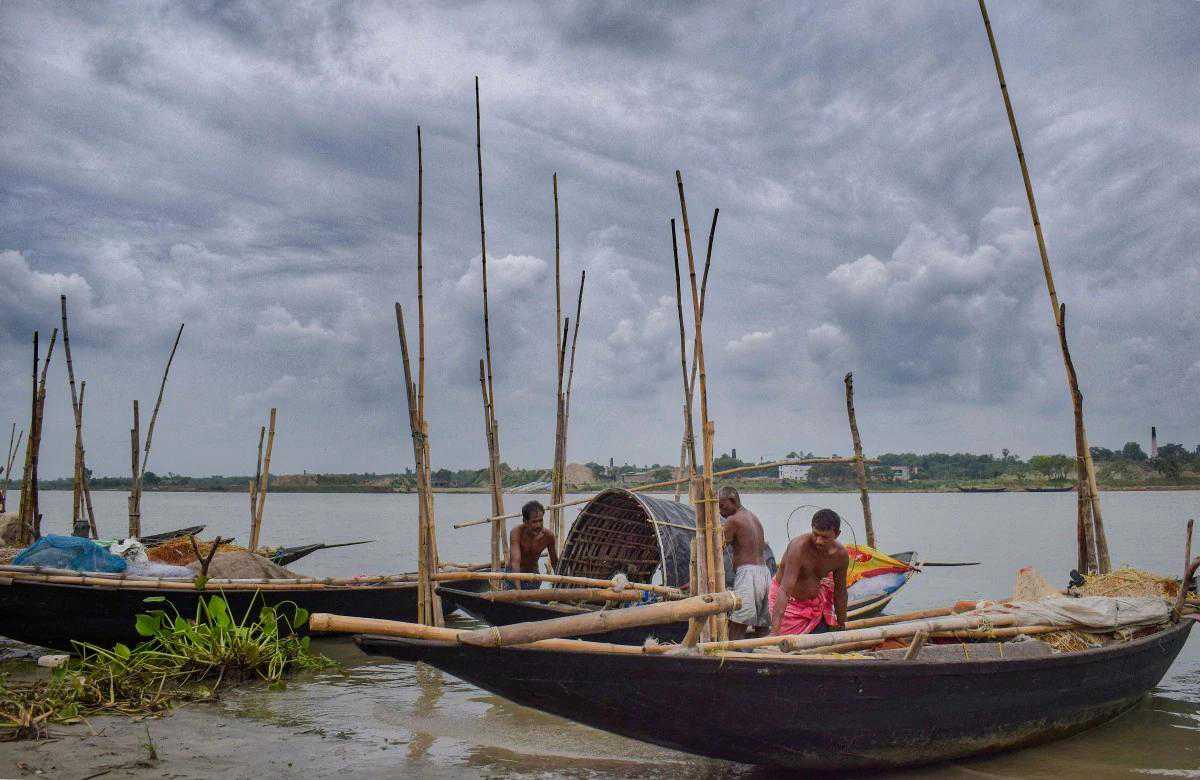
  • Fisherman anchoring their boats in Hooghly river in West Bengal ahead on Cyclone Amphan

    Fisherman anchoring their boats in Hooghly river in West Bengal ahead on Cyclone Amphan

    Fisherman anchoring their boats in Hooghly river in West Bengal ahead on Cyclone Amphan

    SUPER CYCLONE DOWNGRADED TO EXTREMELY SEVERE CYCLONIC STORM

    The Indian Metrological Department has said that Cyclone Amphan is likely to be the worst since 1999, in which over 9,000 people were killed in Odisha. But as the states embark on a massive evacuations drill, the cyclone has lost some of its strength.

    However, it still packs enough force to pulverise coastal districts of Odisha and West Bengal.

    The gale-force wind, blowing at a speed of 240 to 250 kmph and gusting to 275 kmph at one point, had lost intensity and was moving at a speed of 200 to 210 kmph, gusting to 230 kmph on Tuesday evening.

    The weather department has said the storm could destroy standing crops, damage mud and thatch houses, and disrupt power and communication lines in coastal districts of the two eastern states.

    The IMD has advised people to remain at home and warned against opening markets in and around affected districts on Wednesday.

    “Storm surge of 4 to 5 metres above astronomical tide is likely to inundate low lying areas of South and North 24 Parganas and about 3 to 4 metres over low lying areas of East Midnapore district of West Bengal during the time of landfall,” the weatherman has said. These districts had suffered the most during cyclone ‘Bulbul’ and ‘Fani’ last year.

    IMD Director-General Mrutyunjay Mohapatra said since the cyclone is gradually weakening, its impact is unlikely to be very severe in Odisha.

    However, coastal districts like Jagatsinghpur, Kendrapara, Bhadrak and Balasore are likely to be battered by heavy rains and high-velocity winds from Tuesday evening, he said.

    CYCLONE AMPHAN PROJECTED PATH AND LANDFALL

    Cyclone Amphan is expected to make landfall between Digha in West Bengal and Hatiya Island in Bangladesh on Wednesday, May 20. The cyclone will likely cross the coast in the afternoon or evening as ‘very severe cyclonic storm’ with a maximum wind speed of 185 kmph.

    Plotted using Google Maps below is the excepted path of Cyclone Amphan over the next two days. The path has been plotted based on information released by the India Meteorological Department on Tuesday afternoon. It’s a rough estimate of Cyclone Amphan’s expected progress. The various pins on the map below offer an idea of the location of Cyclone Amphan at a particular point; tap on the pins to know more.

  • India’s coronavirus toll crosses 1 lakh as states start easing curbs in Lockdown 4.0

    The nationwide tally of Covid-19 cases crossed one lakh on Monday with more people testing positive for the deadly virus in Maharashtra, Gujarat, Tamil Nadu and other states, even as a much-relaxed fourth phase of the lockdown began with restarting of market complexes, autos, taxis and inter-state buses in various parts of the country.

    The death toll due to Covid-19 crossed the 3,000-mark too.

    The nationwide count of confirmed infections incidentally crossed the crucial one-lakh mark on a day when the fourth phase of the nationwide lockdown kicked in with several relaxations for economic and public activities, barring in containment zones or areas identified as serious hotspots of the virus infection.

    LOCKDOWN 4.0 BEGINS WITH MORE RELAXATIONS

    With an aim to reboot numerous locked down economic activities, authorities across the country ordered reopening of markets, intra-state transport services and even of barbershops and salons in some states, barring in containment zones. However, schools, colleges, theatres, malls and religious gatherings are among those that would remain shut down, at least till May 31.

    India has been under lockdown since March 25, which was first supposed to be for 21 days or toll April 14, but was later extended till May 3, then further till May 17 and now for another two weeks till May 31.

    However, a number of relaxations have been given in the current fourth phase, while states and union territories have also been granted significant flexibility for deciding the red, orange or green zones in terms of the quantum and severity of the virus spread.

    INDIA CROSSES 1-LAKH CASES

    In its morning 8 AM update, the Union Health Ministry put the total number of confirmed Covid-19 cases 96,169 and the death toll at 3,029. It also said that 36,824 people have so far recovered from the infection.

    However, if we add the number of new cases that have been reported in major states today, the overall number of Covid-19 cases crosses the 1-lakh mark.

    Maharashtra topped the nationwide tally with over 35,000 confirmed cases and 1,249 deaths, followed by Tamil Nadu with 11,760 confirmed cases and 81 deaths. Gujarat has also reported 11,746 confirmed cases, while its death toll is higher than that of Tamil Nadu at 694.

    Delhi has also crossed the 10,000-mark in terms of the number of confirmed cases, while its death toll has now reached 160.

    Gujarat, during the day, recorded 366 new Covid-19 cases and 35 deaths, including 31 from the worst-hit Ahmedabad, taking the state”s case count to 11,746 and the number of fatalities to 694, a health department official said.

    Maharashtra reported 2,033 new cases, taking the tally to 35,058. This was the second consecutive day when the state has reported more than 2,000 Covid-19 cases.

    Mumbai alone reported 1,185 fresh cases and 23 more deaths, taking the total count of the city to 21,152 and the fatalities to 757. Of the 1,185 new cases, 300 samples were tested positive in private laboratories between May 12 and 16.

    Kerala also saw 29 new cases — all but one being returnees from overseas and other states — raising concerns about the state witnessing a possible third wave of the dreaded virus infection. The state was first to report the virus infection, but at least twice it has already been seen as having flattened the curve of the infection.

    Later in the night, Haryana, Himachal Pradesh and Telangana also reported new cases.

  • Restrictions on businesses and movement of people have been partially relaxed in Delhi under lockdown 4.0

    Delhi Chief Minister Arvind Kejriwal on Monday laid out a detailed plan of partially opening up economic and other activities as the country entered the fourth phase of lockdown ending on May 31.

    “We used the lockdown period to make arrangements to deal with COVID-19. We have to slowly move towards the opening of economy,” he said adding that 10,054 COVID-19 cases reported in Delhi so far.

    On the last day of lockdown 3.0 on Sunday, CM Kejriwal said the centre’s latest guidelines for the fourth phase of COVID-19-induced lockdown are largely in line with the proposal sent by the Delhi government.

    Here is a detailed list of what of which activities are allowed and which are not till May 31, as announced by the Delhi government.

    What is Allowed:

    – Government and private offices are allowed to resume operation.

    – Markets will be opened with staggered timings.

    – Four-wheelers with only two passengers are allowed. Two-wheelers will be allowed but without a pillion rider.

    – Taxis with two passengers, auto rickshaw and e-rickshaw with one passenger each, and buses with 20 passengers are allowed to ply. Passengers boarding buses will be screened.

    – Up to 50 people are allowed in marriage functions while 20 people can attend funerals.

    – Construction activities are allowed to resume.

    What is prohibited:

    – Metro trains, schools, colleges, shopping malls and swimming pools to remain closed.

    – No activity is allowed in containment zones in Delhi.

    – Religious gatherings not allowed.

    – Spas and saloons to remain closed.

    – Restaurants can open for home-delivery but dining facility is not allowed

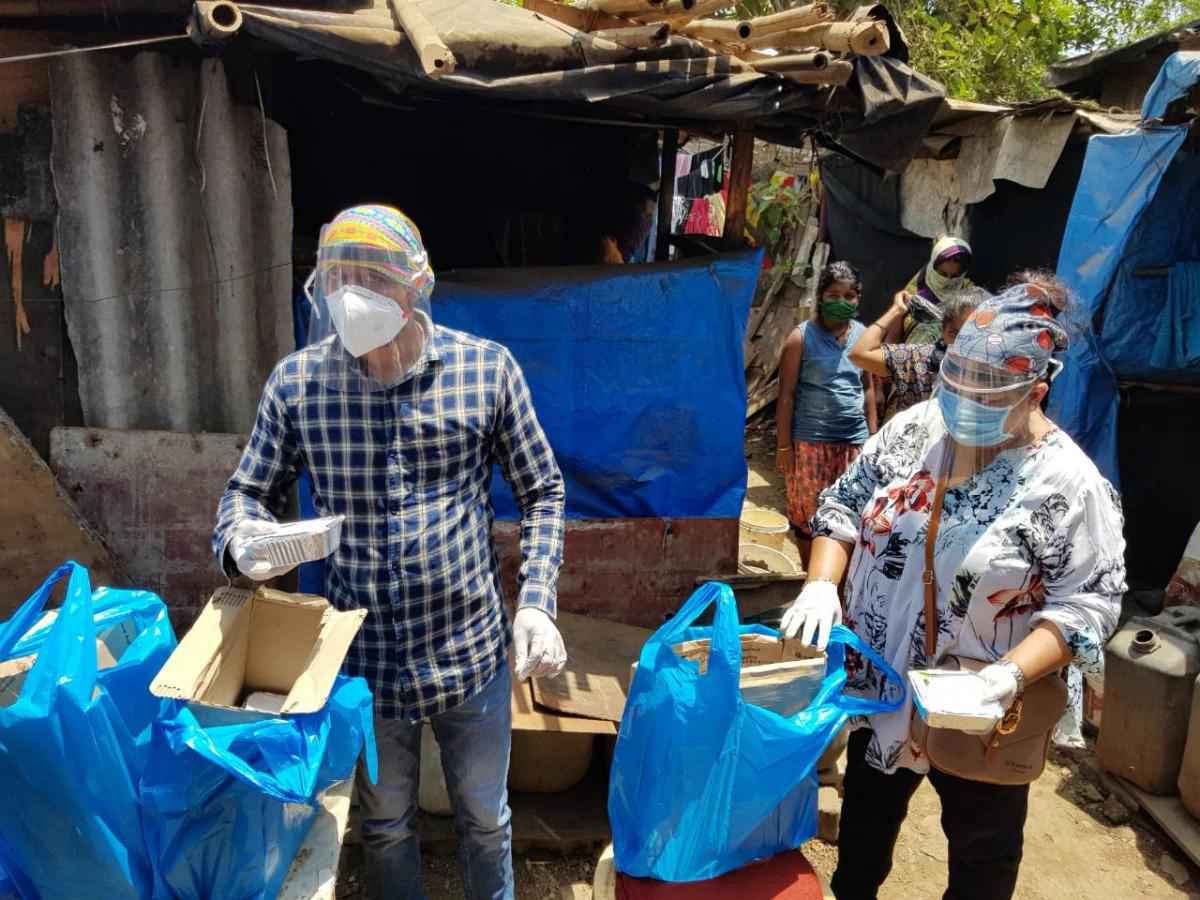
  • Cooked food is distributed to the needy by Food Ninjas or volunteers

    Cooked food is distributed to the needy by Food Ninjas or volunteers

    Cooked food is distributed to the needy by Food Ninjas or volunteers.

    Khaana Chahiye involves a network of kitchens with unused capacity. Co-founders Neeti Goyal and Pranav Rungta, who are restaurateurs, spoke to several restaurant kitchens, which provide food at minimal cost to the organisation.

    Cooked food is thereafter distributed to the needy by Food Ninjas or volunteers. “To bring the cost down, we bought pulses and rice from Sangli and sourced vegetables from farmers directly. We faced several challenges in the meantime as well. Sanitisation, for example. Also, we constantly motivate the staff, who stay in the restaurant. They cannot travel home and feel upset at times. But they really cooperated with us,” Neeti Goyal said. She owns five restaurants in Mumbai and their kitchens have been put to use for the Khaana Chahiye initiative as well.

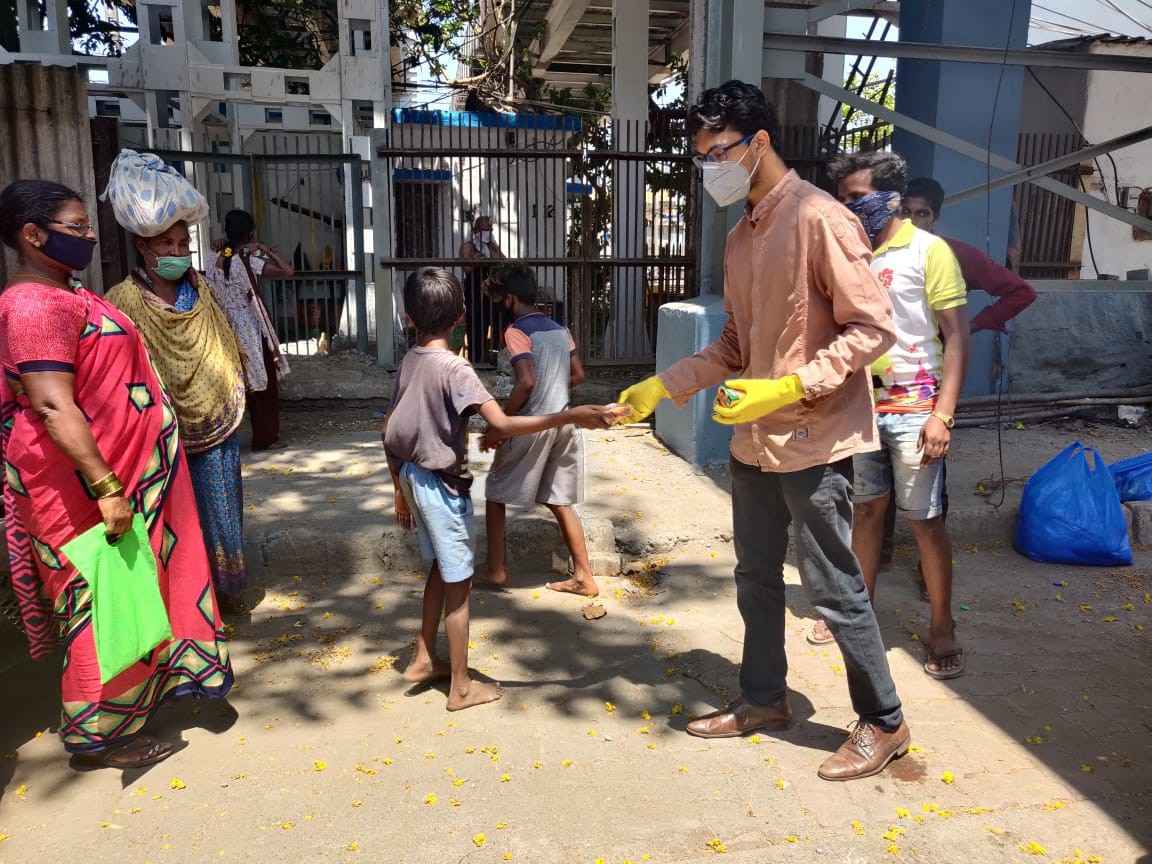
  • Team Khaana Chahiye has distributed 22 lakh meals to people across Mumbai

    Team Khaana Chahiye has distributed 22 lakh meals to people across Mumbai

    Team Khaana Chahiye has distributed 22 lakh meals to people across Mumbai.

    The hapless state of the poor and destitute in India in the wake of the novel coronavirus pandemic is a tragic story. People are dying of hunger. Migrant workers are walking across states to reach home. In short, it is a dismal sight as the nationwide lockdown, imposed to contain the spread of the new virus, has come at a heavy price.

    There is no doubt about the fact that the grim reality of the state of the country at the moment is disturbing. But, in the midst of such a catastrophe, Maharashtra has been blessed enough to find its messiah in a group of young volunteers, who are going from soup to nuts to ensure that the needy are catered to.

    This group of young volunteers in Mumbai launched an initiative called Khaana Chahiye on March 29 to serve food to the poor and needy amid the nationwide lockdown. Over the past 50 days, team Khaana Chahiye has distributed 22 lakh meals to people across the Maharashtra capital and will continue to do so till India is under lockdown irrespective of the continuous extensions.

    Ruben Mascarenhas, one of the co-founders of Khaana Chahiye, discussed the aim of the initiative during an interview.

    “When the lockdown was announced at first, we got a lot of information about people going hungry. Economic activities came to a grinding halt while the poor and the homeless were the worst affected due to the lockdown. So, we started off with 1200 meals on the Western Express Highway and expanded to other routes such as the Eastern Express Highway, Link Road and SV Road in Mumbai,” Ruben Mascarenhas told

  • Lockdown 4.0 and its guidelines will remain in force till May 31 with states/UTs and district authorities taking the call on classifying and mapping red, orange, green, containment and buffer zones.

    India’s tally of confirmed novel coronavirus cases passed the 90,000-mark on Sunday with the Ministry of Health and Family Welfare a total of 90,927 cases across the country. As many as 34,108 recoveries, 2,872 casualties and 53,946 active cases add up to this figure.

    With over 30,000 cases, Maharashtra continues to lead with the most number of infected patients followed by Gujarat (10,988), Tamil Nadu (10,585) and Delhi (9,333). The state of Maharashtra has also recorded the most casualties at 1,135, followed by Gujarat (625), Madhya Pradesh (243), and West Bengal (232).

    By means of an order issued under Section 6 (2) (i) of the Disaster Management Act, 2005, the National Disaster Management Authority (NDMA) on Sunday extended the nationwide lockdown till May 31. The order added that the extension is subject to change in guidelines to be issued by the Ministry of Home Affairs (MHA). Both the MHA and the MoFHW issued subsequent orders detailing the guidelines that will remain in force till the end of May.

    Lockdown 4.0

    By issue of an order, the MHA’s new guidelines will come into effect starting Monday. As per the order, all shops and markets with the exception of malls will be allowed to reopen for business (not in containment zones). Delivery of non-essentials by e-commerce websites is now allowed, except in containment zones.

    Inter-state and intra-state bus and train movement has also been given the green signal subject to consent by various state governments.

    Hotels and restaurants, schools and colleges, cinema halls, gyms, bars and other such public places will remain closed. Similar prohibitions will apply to air travel and metro rail services at least till May 31. The MHA has also reiterated that places of worship will not be open to the public as of yet and any other form of gathering will also remain suspended until further notice.


    Maharashtra decongests prisons

    Taking a cue from the Supreme Court’s suggestion and reports of Covid-19 coming to light from Mumbai’s Arthur Road jail and other prisons, officials in Maharashtra decided to release over 7,200 prisoners on Sunday. In a bid to contain overcrowding of jails, prison authorities in the state are likely to release another 10,000 prisoners soon.
    These inmates have been released either on temporary bail or parole. Maharashtra has 60 prison complexes.

    Covid-19 patient’s body found at bus stand

    Gujarat Chief Minister Vijay Rupani on Sunday ordered an inquiry into the death of a coronavirus patient who was found dead under mysterious circumstances. Aged 67, Chhagan Makwana was admitted to the Ahmedabad civil hospital after he had trouble breathing. He later tested positive for Covid-19.

    However, Makwana’s body was found by the Ahmedabad Police lying unclaimed at the BRTS bus stand in Danilimda on Saturday night. His family members said they were under the assumption that he was undergoing treatment at the civil hospital where they left him.

  • Lockdown 4.0: How life can change in Delhi, AAP govt to unveil its plan today

    Delhi is likely to see some relaxations in the restrictions in the fourth phase of lockdown, barring the areas that are currently designated as containment zones, as centre extended nationwide shutdown till May 31. The capital had 76 containment zones, as on Sunday, where restrictions will stay as per existing protocol.

    Chief Minister Arvind Kejriwal, while endorsing the Centre’s decision to extend the lockdown to tackle the Covid-19 pandemic, hinted that his government would relax restrictions. The CM said that the guidelines issued by the Ministry of Home Affairs, on Sunday evening, were largely in line with the proposal sent by the Delhi government.

    “We have used the lockdown period to prepare our healthcare system if Corona cases increase, but it is now time to relax the restrictions to some extent. Delhi government will prepare the detailed plan for Delhi based on the Centre’s guidelines and announce it tomorrow,” Kejriwal said.

    We will prepare a detailed plan for Delhi based on the Centre’s guidelines and announce it tomorrow [on Monday]. We’re prepared if corona cases increase, but it is now time to relax restrictions to some extent.

    – CM Arvind Kejriwal

    Interstate movement of passenger vehicles, buses allowed will be allowed states’ consent, the guidelines said. This means Delhiites may now be allowed to drive or take bus rides, to other cities and states. People living in non-containment zones can expect e-commerce services too.

    As on Sunday, the pandemic has affected nearly 10,000 people in Delhi which included 148 deaths. Kejriwal had, a few days ago, suggested that outside containment zones, economic activities should be started, but social distancing and masks should be mandatory.

  • As India nears Lockdown 4.0, migrants continued to flock to their native homes and novel coronavirus cases in the country exceeded that in China

    Coronavirus cases in India now stand at 85,940. This figure includes 30,152 recoveries, 2,752 casualties and one migration. According to the Ministry of Health and Family Welfare, more than 70 per cent of novel coronavirus patients in India who succumbed to the infection died due to comorbidities.

    Two days before the end of the present phase of the lockdown, the number of Covid-19 cases in India surpassed that of China that has reported a total of 82,933 cases as of May 16.

    An official statement from the centre is awaited on Sunday about guidelines that will have to be followed during the fourth phase of the lockdown that is all set to begin from May 18. Sources in the government said that schools, colleges, malls and movie theatres are unlikely to be allowed to resume operations anytime before May 31. However, shops and public transport could be given the green light in red areas following the announcement on April 17.

    Auraiya tragedy

    In the early hours of Saturday morning, a DCM lorry carrying migrant workers collided with a truck in Uttar Pradesh’s Auraiya district. While 25 migrants lost their lives, 36 sustained injuries. All of the lorry’s passengers were natives of Bihar, Jharkhand, West Bengal and Uttar Pradesh. They had been working as migrant labourers in Rajasthan and were returning to their native homes when tragedy struck.

    Another incident was reported from Sagar district where a truck carrying migrant workers overturned on Saturday, killing five and injuring at least 20. The truck was headed to Chhatarpur.

    PM Modi thanks President Trump

    Responding to US President Donald Trump’s decision to donate ventilators to India, Prime Minister Narendra Modi on Sunday thanked his American counterpart. In a tweet, the PM wrote, “Thank you @POTUS @realDonaldTrump. This pandemic is being fought collectively by all of us.”


    Punjab lifts curfew, retains lockdown

    Chief Minister Amarinder Singh in a public address on Saturday evening, said that the Punjab government has decided to lift curfew restrictions currently in force across the state. He, however, added that the lockdown will continue in Punjab till May 31.

    All cities in the state will be allowed so that businesses can resume operations with the sole exception of containment zones, CM Singh added. The state government’s new guidelines also mention that only areas/localities where authorities detect the presence of coronavirus patients will be sealed.

    Shramik Specials to the rescue

    The Indian Railways on Saturday issued a statement that 1,074 Shramik Special trains have been used to ferry over 14 lakh migrants back to their home states until now. Uttar Pradesh has given the most approvals to facilitate the return of natives followed by Bihar, Union Railways Minister Piyush Goyal said.

    Data also shows that out of the 501 fresh cases of Covid-19 reported by the Bihar Health Department between May 3 and May 15, 391 or 78 per cent were related to migrants. As many as 122 of these cases are linked to migrants who returned to Bihar from New Delhi sometime in the last two weeks.

    Now, over 30,000 cases in Maharashtra

    With 1,606 new cases of infection, Maharashtra on Saturday reported its highest single-day spike in new cases of the novel coronavirus. The state also recorded 67 new casualties within 24 hours. Mumbai accounted for 41 of these deaths. Now, a total of 30,706 cases in Maharashtra include 7,088 recoveries and 1,135 deaths. Mumbai alone has 18,555 confirmed cases and 696 casualties to date.

    Delhi, on the other hand, now has 9,333 confirmed cases. This includes 129 casualties. Uttarakhand also recorded its highest single-day spike in new cases, 88, taking the number of active cases in the state to 36 as of April 16.

    Between Friday night and Saturday evening, Rajasthan reported 213 new cases, Gujarat’s tally surged past 10,000, and the union territory of Jammu and Kashmir recorded 72 fresh cases of infection.

    The Health Ministry has identified 30 municipal areas that are contributing to 80 per cent of the novel coronavirus cases in India.

    Covid-19 cases surge in Delhi, Jaipur prisons

    As many as 15 inmates and a prison official tested positive for Covid-19 at Delhi’s Rohini jail on Saturday. Similarly, Jaipur district jail accounted for 116 of the 177 new cases of infection reported from Rajasthan on May 16.
    Ban on export of non-surgical, non-medical masks lifted

    The government of India on Saturday passed an order lifting the ban on export of non-surgical and non-medical masks. “All other masks falling under ITCHS code, including the HS codes, would continue to remain prohibited for the exports,” read the order from the Directorate General of Foreign Trade (DGFT), Ministry of Commerce and Industry.
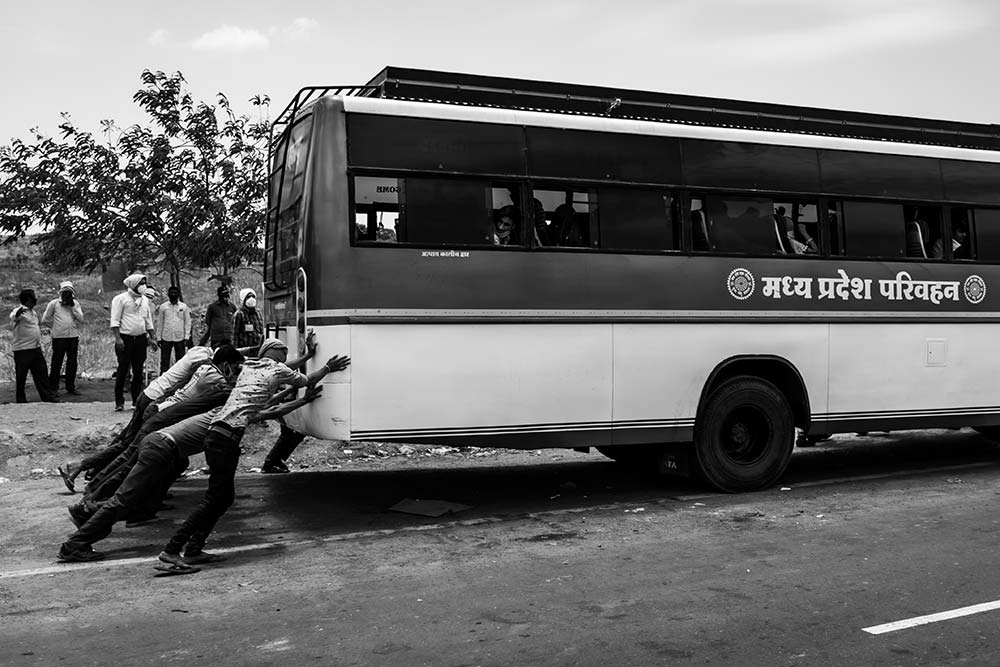
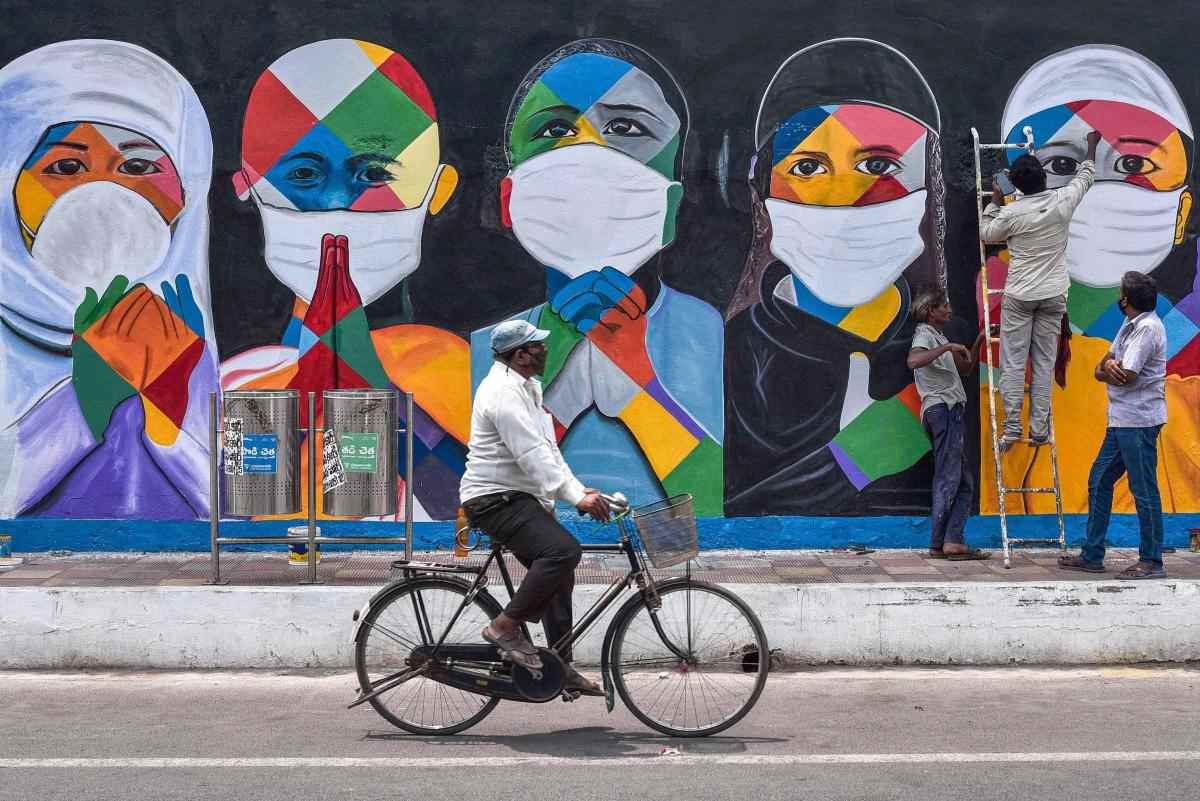
  • Karthik Velayutham, an innovator from Coimbatore, has built this robot which would stand in long queues and buy liquor for him. Karthik built this machine in two days and at a cost of Rs 3,000

    It was one of those days when many in Coimbatore were standing in a long queue to buy their liquor bottles. Little did they know there was a small four-wheeler machine standing in the queue along with them. Why? To buy liquor for its creator and to spread awareness about the need for social distancing to keep coronavirus at bay.

    Karthik Velayutham, an innovator from Coimbatore, has built this robot which would stand in long queues and buy liquor. “This is an awareness campaign to make people understand the need for social distancing in this time of a pandemic,” Karthik said.

    Karthik built this machine in two days and at a cost of Rs 3,000. The 31-year-old computer engineer says that his machine can be operated from anywhere in the world.

    “By using this Robo, you can maintain social distancing. It can provide services in hospitals where doctors and nurses can use this to dispatch medicines without personally interacting with the patients.”

    “The Robo can be used from anywhere in the world using the internet. All you need to do is enter the login details,” Karthik added.

    The Robo is currently being used using an android phone. There are video and call facilities and the owner can use these to interact and operate it with other people. The Robo at present can carry up to 30 kg of weight, and it has a backup power of six to seven hours.

    How does it buy liquor? Kathik can instruct the shopkeepers via the video facility on the robot. The shopkeepers can provide him the essentials. The payment is made online.

  • India’s official figure, according to the health ministry, is 81,970 and is expected to surpass China’s 84,031 as the country prepares to enter the lockdown 4.0 beginning Monday. India’s fatality rate due to coronavirus is, however, significantly …

    The nationwide tally of coronavirus cases is soon to cross that of China’s as more cases were reported from across the country on Friday. India’s official figure, according to the health ministry, is 81,970 and is expected to surpass China’s 84,031 as the country prepares to enter the lockdown 4.0 beginning Monday. India’s fatality rate due to coronavirus is, however, significantly lesser than China’s.

    Since Prime Minister Narendra Modi’s address to the nation on Tuesday, there have been indications that the fourth phase of the lockdown would be implemented with greater relaxations to revive the economy. PM Narendra Modi had said that the lockdown 4.0 will have a “completely different form”, with new rules. PM Modi had also said the guidelines will come before May 18.

    Just two days before the lockdown 3.0 is supposed to end and ahead of the announcement of guidelines for the fourth phase of coronavirus-induced lockdown 4.0, Home Minister Amit Shah held several meetings with his ministry’s officials. Senior officials have been busy in finalising the guidelines for the fourth-phase of the lockdown, a home ministry official said.

    Ahead of the lockdown 4.0 and the greater relaxations that are expected to contain the economic costs of the pandemic, a prominent health expert has said that India must gear up to face the possibility of community spread of the Covid-19 and cautioned there could be more widespread transmission of the novel coronavirus due to easing of the lockdown.

    Meanwhile, Maharashtra on Friday reported 1,576 new Covid-19 cases, taking the total number of cases in the state to 21,467. The fatalities due to Covid-19 mounted to 1,068 as 49 more deaths were reported.