分类: bharat

  • 印度总理莫迪在5月12日晚间的电视演讲中强调“新冠病毒疫情导致世界崩溃,正在迫使印度自立。必须将这次危机变为商机”

    5月13日,印度政府开始提出20万亿卢比规模(约合人民币1.9万亿元)经济刺激的具体对策。此举意在防止因新型冠状病毒疫情影响而低迷的经济显著恶化。计划以振兴当地制造业和农业作为重点,为在印度国内制造竞争力较强的商品而完善供应链。印度经济2020年有可能转为负增长,因此将启动大规模的经济刺激对策。
    印度财政部长希塔拉曼预定当地时间5月13日在首都新德里举行记者会,首日将提出针对中小企业及建筑业、非银行金融机构资金周转的对策。计划用几天时间对整体对策进行说明。
    印度自3月底开始以世界上最多的13亿人为对象启动封城措施。不过,以贫困阶层为中心,疫情蔓延并未停止,首都新德里和商业城市孟买处于难以预测经济活动重启时间的状况。
    印度总理莫迪在5月12日晚间的电视演讲中强调“新冠病毒疫情导致世界崩溃,正在迫使印度自立。必须将这次危机变为商机”。将投入相当于名义国内生产总值(GDP)10%的28万亿日元,在国内构建新的供应链和市场。财源将投向充分利用基础设施建设和应用IT的最新系统,还将重新审视关于土地、就业和税制的僵化法律体系。

    以产业培育迟缓为背景,印度经济自新冠疫情在世界范围内扩大之前就开始陷入低迷。2019年10~12月的实际增长率降至4.7%,为约7年来最低水平。从较近一段时间来看,印度的经济增长率以2018年1~3月的8.1%为顶峰,随后持续下降。印度在5月17日再次延长封城期限的可能性很高,支撑低迷经济的举措成为当务之急。

    莫迪指出“一系列的改革将促进商业,吸引投资”,提出了相关举措能加强当地产业的振兴政策“印度制造”这一看法。这是莫迪的招牌政策,对象涉及汽等超过20个行业。

    不过,外资对印度的高税制等显示出不满,制造业的培育进展迟缓是实情。管理咨询公司美国麦肯锡(McKinsey&Company)指出“印度的生产效率较低,仅为中国和泰国的四分之一到五分之一”。即使推出大规模的经济对策,也无法保证能吸引外资。能否像莫迪描绘的蓝图一样提振经济仍是未知数。

  • Coronavirus tally in India reaches 78,000, Centre announces sops for migrants, farmers

    The government on Thursday unveiled special measures amounting to over Rs 3 lakh crore for migrant workers, farmers and other segments of the economy to help them tide over the COVID-19 pandemic, even as the deadly virus infection spread further in various states to push the nationwide tally closer to the 80,000 mark.

    The death toll crossed 2,500, while more than 26,000 have recovered so far.

    Some states like Kerala, Goa and Assam have also begun showing a sudden uptick in new cases after having flattened the curve earlier, while Odisha, West Bengal and Bihar are also reporting higher rates for past few days. Officials said most of the new cases in these places are linked to people having returned from outside in special trains, buses and flights.

    Large numbers of cases continued to get reported in Maharashtra, Gujarat, Tamil Nadu and the national capital.

    Taking forward Prime Minister Narendra Modi’s announcement of Rs 20 lakh crore economic package to help India become self-reliant in the wake of the pandemic, Finance Minister Nirmala Sitharaman unveiled the second round of these special measures, totalling about Rs 3.16 lakh crore in terms of concessional credit for farmers, free foodgrains for migrant workers and working capital loan for street vendors, among other incentives.

    While PM Modi hailed the measures, the opposition termed them as jumla package. Meanwhile, the migrants continue to struggle in getting back home. Two accidents claimed the lives of 14 migrants and injured 60 others.

    As the World Health Organization announced the coronavirus may never go away, the government announced draft guidelines for work from home, indicating that it is going to be part of work culture for the foreseeable time.

  • Coronavirus: Curious case of India’s hotspots and brightspots

    India’s Covid-19 story is typically told at the national or state level. But national trends hide the more granular stories — both good and bad. On the one hand, five districts account for half of the deaths, and on the other, 75 districts have made a remarkable turnaround.

    The 10 districts with the highest cases till now are all among India’s million-plus cities. Delhi does not make it to the list because with 11 districts, the average burden of each district is lower than the worst-hit ones. Four districts in Maharashtra are among the worst hit. These are Mumbai, Mumbai Suburban, Pune and Thane.

    Maharashtra is the worst affected state in India due to coronavirus, followed by Gujarat. Two districts of Gujarat — Ahmedabad and Surat — also appear among the 10 districts in India with the highest number of cases. The others are Chennai, Indore, Jaipur and Kolkata. But leaving aside Mumbai and Delhi, a more diverse range of districts have a higher case burden proportionate to their populations, including two districts each in Madhya Pradesh and Rajasthan.

    Five districts — three among them in Maharashtra — account for over half of all deaths in India. These are Ahmedabad, Mumbai, Mumbai Suburban, Pune and Kolkata. But among districts with at least 20 deaths, some districts in Madhya Pradesh and West Bengal too have an unusually high burden of deaths for their populations.

    However, success stories at the district level abound. As of today, 75 districts, which earlier reported confirmed cases, are now reporting zero active cases. This includes 12 districts that had over 10 cases, but have no active cases at the moment, with Kerala leading the pack.

  • Including RBI’s measures announced since February, the worth of the existing Covid-19 package is Rs 9.75 lakh crore. PM Modi said Rs 20 lakh crore Covid-19 package subsumes previous measures

    In his fifth address to the nation on Covid-19, Prime Minister Narendra Modi announced an economic package to “make India self-reliant” signaling that the government has shifted its coronavirus strategy from “survival” to “revival” mode. The details of the economic package will be unveiled in days to come.

    PM Modi said if the latest package is added to the economic package announced recently by the government in the wake of Covid-19 crisis and the decisions taken by the RBI, “today’s package totals to Rs 20 lakh crore.”

    He said, “This is 10 per cent of India’s GDP.”

    Before we proceed, let’s recall some numbers.

    PM Modi made it clear that the Rs 20 lakh package includes liquidity infusion by the RBI in phases recently, and also Rs 1.7 lakh crore package announced by Finance Minister Nirmala Sitharaman on March 27.

    The RBI’s first major decision came even before coronavirus had become an Indian crisis. On February 6, the RBI announced measures to inject liquidity in the economy to the tune of Rs 2.8 lakh crore.

    When coronavirus outbreak became an Indian phenomenon, the RBI announced on March 27 – the same day as Sitharaman announced the special package – to inject an additional liquidity of around Rs 3.75 lakh crore.

    On April 17 and 27, the RBI infused Rs 1 lakh crore more liquidity through two separate announcements. The monetary value of all these announcements (Sitharaman plus RBI) comes at around Rs 9.75 lakh crore.

    The rest, that is, Rs 10.25 lakh crore is likely to be the actual announcement made by PM Modi on Tuesday evening. Standalone, this is little over 5 per cent of India’s GDP.

  • Bus runs over 6 migrant workers in UP’s Muzaffarnagar, 4 injured

    Six migrant labourers who were walking from Uttar Pradesh’s Muzaffarnagar to their homes in Bihar were run over by a bus late on Wednesday.

    Besides six migrant labourers who died on spot, four workers have been injured in the incident, confirmed Prashant Kumar, ADG, Meerut zone. All of them were working as labourers in Punjab.

    The road accident occurred on Saharanpur road in Nagar Kotwali area.

    Just a day ago, three migrant labourers and an infant girl were killed while 46 others suffered injuries in two road accidents when they were returning to their homes in Uttar Pradesh from other states.

    In another incident that shook the nation last week, 16 migrant labourers were mowed down by a goods train in Aurangabad district of Maharashtra. They, too, were walking back to their homes in Madhya Pradesh.

  • Railways To Resume Partial Operations, But Does It Have Answers To Customers’ Concerns

    Over a month-and-a-half after passenger trains were suspended due to the nationwide lockdown announced by Prime Minister Narendra Modi to contain the spread of the novel coronavirus, the Indian Railways will on Tuesday partially resume its operations. Initially, 15 pairs of special trains will be run with air-conditioned coaches accommodating the passengers. This comes even as the number of COVID-19 cases in the country continue to rise and neared and the 73,000-mark. So is it safe to travel on public transport? Let’s understand through this Q&A.

    What happens to social distancing?

    The entry into a railway station has been restricted only through a single gate across cities where the train will be playing in the coming days. The station entries have been earmarked to ensure social distancing until people board the train. All passengers shall be wearing face covers/masks at the entry and during the travel.

    However, the major concern remains. When the trains run full capacity, how will social distancing be followed? In fact, ‘Shramik’ Special Trains, which were running with 54 people against the capacity of 72 seats per coach, will also now run in full capacity.

    What if my co-passenger is Covid-19 positive but asymptomatic and shows symptoms during the travel?

    The railways claim the passengers will undergo thermal screening at stations. Passengers having symptoms like fever, cold, cough or breathing problems won’t be allowed to board trains. Only asymptomatic passengers are allowed to enter/board the train. All passengers are requested to download the Aarogya Setu app and use it while travelling.

    Concern: But what happens if asymptomatic passengers or those with fever take medicine like Crocin and Paracetamol and are not stopped at the thermal screening point. Since they are all air-conditioned trains, doesn’t it put all the travellers at risk?

    What amenities will you get while travelling?

    The railways has asked the passengers to carry their linen, stating no linen, blankets and curtains shall be provided inside the train. It has asked passengers to carry their food and water. Besides, the ticket charges won’t include any e-catering or pre-paid meal charges and IRCTC will provide limited dry and ready to eat food and drinking water.

    Concern: Most of the trains involve long-duration journeys. With summers already setting in, the home-cooked food may perish soon. You will have no option to get down at the station to buy food or water and have to buy it from the train vendors only at the charges they levy.

    Is it economical to travel by train?

    The trains tickets for these special trains can be booked only through IRCTC website. The travel fare for these special trains is equivalent to that of Rajdhani trains. Online cancellation shall be permitted up to 24 hours before the scheduled departure of the train. No cancellation permitted less than 24 hours before the departure of train. Cancellation charge shall be 50% of the fare.

    Concern: In such a challenging time, should the public transport think of profitability or be more flexible to its customers? With inter-state border transportation not allowed, if you are unable to reach the railway station to board a train, you will have to pay the penalty.

  • PM Modi announces Rs 20 lakh crore relief, lockdown 4.0 as India’s coronavirus tally crosses 70,000

    Prime Minister Narendra Modi on Tuesday announced a consolidated economic package of Rs 20 lakh crore to help make India self-reliant in the wake of the coronavirus pandemic and pitched for promoting local businesses. The PM flagged that the deadly virus may be part of our lives for a long time, as the nationwide tally crossed 70,000.

    The death toll also neared 2,300, while over 22,000 people have recovered from the disease so far.

    In his address to the nation on Covid-19 crisis, PM Modi also said the fourth phase of the lockdown, beginning May 18, would be totally different with new rules and guidelines that would be announced later after taking into account feedback from all chief ministers.

    Meanwhile, West Bengal has already extended the lockdown while giving some relaxations in red, orange and green zones within the state.

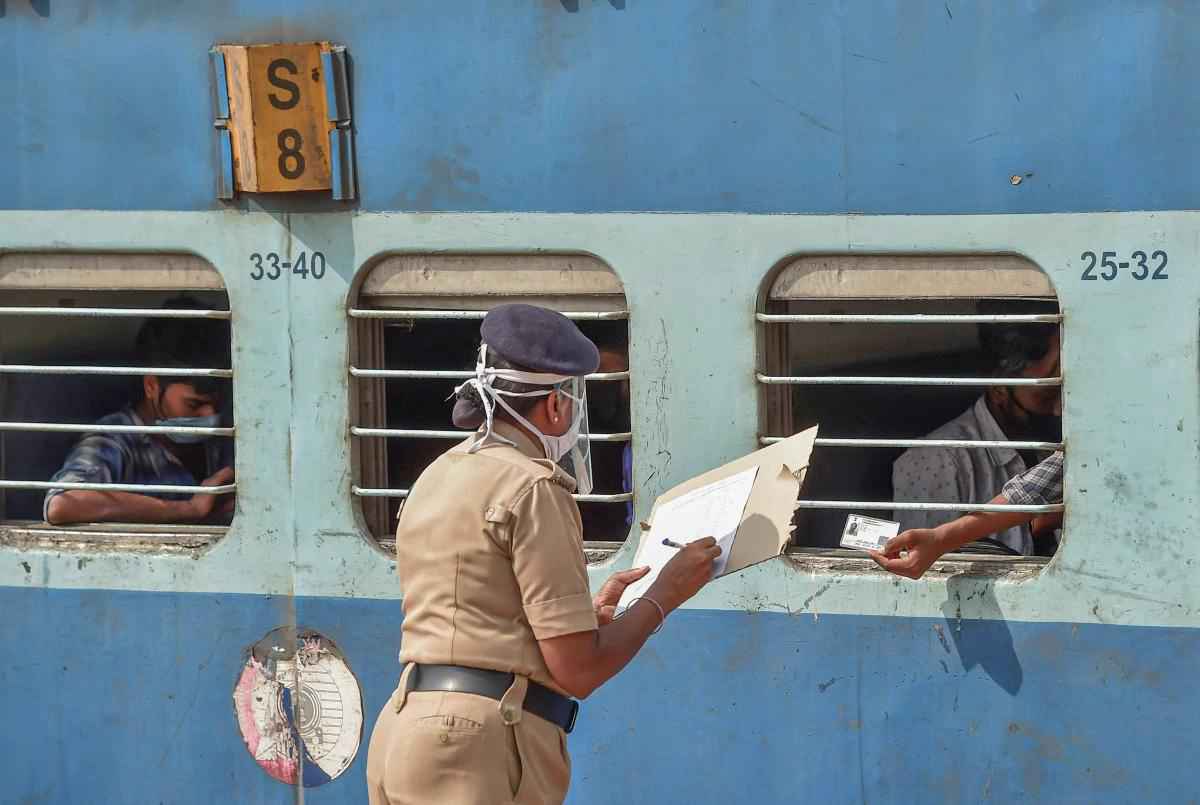
    On the 49th day of the nationwide lockdown, passenger trains finally left their stations to ferry people across the country. Eight trains, apart from Shramik Specials, reunited thousands of people with their loved ones after a long gap. While, flights and naval ships operating under Vande Bharat Mission brought back over 500 people from the US, the Philippines and Maldives.

  • 印度推出了一项20万亿卢比相当于国内生产总值(GDP)10%的财政刺激方案

    印度推出了一项相当于国内生产总值(GDP)10%的财政刺激方案,以抵御冠状病毒对经济的影响。

    彭博社报道,印度总理莫迪在周二的全国电视讲话中称,该计划总额达20万亿卢比(2650亿美元),将帮助印度在长达数周的防疫封锁期后恢复经济。他说,财政部长明天将提供该计划的细节。

  • Railway services resume partially: Eight trains to depart on Tuesday

    Nearly two months after it suspended operations of passenger trains over the coronavirus crisis, the railways resumed the services with 15 pairs of trains on select routes from Tuesday.

    The national transporter issued specific guidelines to passengers travelling on these trains which included asking them to carry their own food, linen, besides making it mandatory to wear face masks.

    Initially, the railways announced the booking of the tickets on the IRCTC website from 4 pm on Monday, but the website crashed due to the huge traffic of prospective passengers.

    The services of the portal resumed around 6 pm and in within 20 minutes, the Howrah to New Delhi train was completely booked. By 9.15 pm, approximately 30,000 PNRs were generated and reservations issued to more than 54,000 passengers for the next seven days.

    Though the railways had suspended passenger services, it operated over 400 trains from May 1 to May 11 to ferry lakhs of migrant workers following requests from several governments.

    A top official said the trains ferrying migrants were operated on requests of state governments and it was not part of Railways’ normal passenger services.

    Stations covered by 15 trains

    The trains will run at full passenger capacity, but railway zones have been instructed to ensure that there are separate entry and exit gates at stations to the extent feasible so that there is no face-to-face movement of passengers.

    For now, the Railways has issued time table for trains to be run between May 12 and May 20. They will run as daily, weekly or bi-weekly trains, as per the time table issued by the Railways. There are no trains on May 16 and May 19.

    These trains will run between Delhi and some major cities: Dibrugarh, Agartala, Howrah, Patna, Bilaspur, Ranchi, Bhubaneswar, Secunderabad, Bengaluru, Chennai, Thiruvananthapuram, Madgaon, Mumbai Central, Ahmedabad and Jammu Tawi.

    On May 12, three trains will begin from New Delhi terminating at Dibrugarh, Bengaluru and Bilaspur. One each will begin from Howrah, Rajendra Nagar (Patna), Bengaluru, Mumbai Central and Ahemedabad, all terminating at Delhi.

    On May 13, nine trains will be operated — eight of them starting from New Delhi and terminating at Howrah, Rajendra Nagar (Patna), Jammu Tawi, Thiruvananthapuram, Chennai, Ranchi, Mumbai and Ahmedabad. The ninth is a special train from Bhubaneswar to New Delhi.

    The railways will run five trains on May 14 from Dibrugarh, Jammu Tawi, Bilaspur and Ranchi to the national capital and one from New Delhi to Bhubaneswar.

    Three trains are scheduled on May 15, two of them from Thiruvananthapuram and Chennai Central and one from New Delhi to Madgaon.

    On May 17, when the current lockdown is slated to end, a train is scheduled from Madgaon to New Delhi and one from New Delhi to Secunderabad.

    The sole run from May 18 is a train from Agartala to New Delhi while two trains are scheduled on May 20 — New Delhi to Agartala and Secunderabad to New Delhi.

    These special trains will have only AC classes i.e. first, second and third AC and the fares will be equivalent to Rajdhani trains.

    The Railways has decided to begin select services so that at least the working class can be transported to their destinations.

  • 印度就业问题智库最新数据显示,为遏制新冠病毒传播实施封锁后,失业率创记录飚升


    印度就业问题智库最新数据显示,为遏制新冠病毒传播实施封锁后,失业率创记录飚升。

    根据私营的印度经济监测中心(the Centre for Monitoring the Indian Economy ,CMIE)的数据,印度的失业率目前达到27.1%的历史新高,仅4月份就有1.22亿印度人失业。但当局在抗疫和救经济上面临与其他大国不同的两难选择。

    印度有着和其他大国不同的管理计算方式。比如在就业问题上,印度官方不发布每月份、季度和年度就业数据,理由据称是为了维护社会和谐。

    因此私营的CMIE数据已被广泛接受。

    印度失业问题

    自3月25日以来,印度全国一直处于封锁状态,以遏制新冠病毒(Covid-19)的感染,造成大规模裁员和大量失业。

    印度目前报告了超过67000例感染病例。

    进入4月份后,印度失业率达到23.5%,较3月的8.7%大幅上升。防疫封锁使大多数经济活动陷入停顿(医院,药房和食品供应等基本服务除外)。

    绝望的农民工,特别是日薪工人,四处逃亡,步行逃离城市回到自己的家乡,这些情况在电视屏幕和报纸等媒体上到处都是。印度非正式工作岗位雇用了90%的劳动力人口,随着建筑业的停工以及城市暂停公共交通,他们首当其冲。

    但是,旷日持久的宵禁和企业的持续停工,以及封锁何时结束不确定,有正式的永久性工作的人都未能幸免。

    印度媒体,航空,零售,酒店,汽车等各个行业的大型公司在最近几周宣布了大规模裁员计划。专家预测,许多中小企业可能会完全倒闭。

    封锁的经济成本

    仔细查看CMIE的数据,可以发现防疫封锁对印度的经济造成了重大冲击。

    在失业的1.22亿人中,有9130万是小商人和劳工。但是,相当多的领薪工人(约1780万人)和自雇人士(约1820万人)也失去了工作。

    专家警告说,疫情封锁的经济成本才刚刚开始升高。

    CMIE首席执行官马赫什·维亚斯表示:印度必须权衡其疫情封锁的经济成本。

    政府已开始放宽对某些地区或报告感染率较低的地区的限制,而在那些发现感染病例较多的地区,仍实行严格的宵禁。

    维亚斯表示说,分区处理是一个很好的起点,但是,时间不能太长。因为印度各地区不能如同在孤岛上运作。人员,商品和服务需要流动性。供应链需要在企业失去流动性之前开始运作起来。

    印度的抗疫封锁定于5月17日结束,但一些邦进一步延长了封锁期,没有明确表明整个国家何时可能会从封锁中走出。

  • Railways to partially resume services from May 12, trains to connect Delhi to 15 cities, bookings open Monday

    Indian Railways is planning to gradually resume passenger train operations from May 12 onwards. Passenger train service will begin with 15 pairs of special trains, a government notification said.

    These trains will run as special trains from New Delhi Station to major stations across the country.

    These special trains will be run from New Delhi Station to Dibrugarh, Agartala, Howrah, Patna, Bilaspur, Ranchi, Bhubaneswar, Secunderabad, Bengaluru, Chennai, Thiruvananthapuram, Madgaon, Mumbai Central, Ahmedabad and Jammu Tawi, the government notice stated. Few of these trains may not be daily.

    The full schedule of these trains will be out on Monday.

    Initially, all air-conditioned services will begin on 15 Rajdhani routes and the fare would be equivalent to that of the super-fast train, it said.

    Union Minister of Railways and Commerce & Industry Piyush Goyal also took to Twitter to inform that railway operations will resume with 15 pairs of special trains connecting New Delhi with major stations across India initially.

    Bookings for these trains will start at 4 pm on May 11, Piyush Goyal informed.

    However, ticket booking counters at the railway stations will remain closed and no counter tickets (including platform tickets) will be issued.

    “Railways plans to gradually restart passenger train operations from 12th May, 2020, initially with 15 pairs of special trains connecting New Delhi with major stations across India. Booking in these trains will start at 4 pm on 11th May,” Union Minister Piyush Goyal said in a tweet.

    The government notice said, “Indian Railways plans to gradually restart passenger train operations from 12th May, 2020, initially with 15 pairs of trains (30 return journeys). These trains will be run as special trains from New Delhi Station connecting Dibrugarh, Agartala, Howrah, Patna, Bilaspur, Ranchi, Bhubaneswar, Secunderabad, Bengaluru, Chennai, Thiruvananthapuram, Madgaon, Mumbai Central, Ahmedabad and Jammu Tawi.”

    The notification further mentioned that Indian Railways shall thereafter start more special services on new routes, based on the available coaches after reserving 20,000 coaches for Covid-19 care centres and an adequate number of coaches being reserved to enable operation of up to 300 trains every day as “Shramik Special” for stranded migrants.

  • Hot and Cold war? Pakistan tries to hit back at India by releasing J&K weather updates

    Pakistan’s state-run media on Sunday started providing detailed weather update of Jammu and Kashmir, days after India started the coverage of weather of Pakistan-occupied Kashmir.

    State-run Radio Pakistan on Sunday reported that in most parts of Jammu and Kashmir “partly cloudy weather is expected with chances of rain.”

    It reported the maximum and minimum temperatures of Srinagar, Pulwama, Jammu and Ladakh.

    Radio Pakistan has special Kashmir coverage and a part of its webpage is dedicated to news from Jammu and Kashmir.

    The coverage is expected to increase after the Indian media started showing weather of Pakistan-occupied Kashmir.

    Pakistan on Friday rejected India’s move to begin broadcasting weather reports on Mirpur, Muzaffarabad and Gilgit in Pakistan-occupied Kashmir (PoK), terming it as a “legally void” action to change the status of the region.

    Pakistan Foreign Office said in a statement that like the so-called “political maps” issued last year by India, this move is also legally void, contrary to reality, and in violation of the relevant United Nations Security Council resolutions.

    India in November last released fresh maps showing PoK as part of the newly created Union Territory of Jammu and Kashmir, while Gilgit-Baltistan is in the Union Territory of Ladakh following the bifurcation.

  • Confirmed coronavirus cases in India’s paramilitary forces rise to 750, NSG reports first case

    Confirmed coronavirus cases in India’s paramilitary forces rise to 750, NSG reports first case

    Confirmed coronavirus cases in India’s paramilitary forces rise to 750, NSG reports first case
    With new developments that have come to light over the past 24 hours, the total number of novel coronavirus cases among India’s paramilitary forces is now 750. This tally includes cases that have been reported from among BSF, ITBP, CISF, CRPF and SSB.

    The National Security Guard (NSG) also reported its first case on Sunday, a 33-year-old jawan who tested positive in Manesar. Officials said that the patient has been admitted to CAPF Hospital in Greater Noida and is asymptomatic with only mild fever.

    Between Saturday and Sunday, the Border Security Force (BSF) reported 18 new cases of Covid-19. This takes the force’s tally of confirmed cases to 276.

  • In a major relief, the Indian Railways on Sunday announced that it is all set to partially resume passenger train services from May 12 onwards on 15 important routes in the country

    In a major relief, the Indian Railways on Sunday announced that it is all set to partially resume passenger train services from May 12 onwards on 15 important routes in the country

    In a major relief, the Indian Railways on Sunday announced that it is all set to partially resume passenger train services from May 12 onwards on 15 important routes in the country.

    In a government notification, Indian Railways notified that passenger train service will begin with 15 pairs of special trains from May 12 and bookings for the same will open on Monday, May 11.

    This development came as India’s coronavirus count stood at 62,939, including 19,358 deaths due to the virus and 2,109 recoveries so far.

    No Covid-19 case has been reported in 10 states and Union territories in the last 24 hours and the recovery rate has increased to over 30 per cent, Union Health Minister Harsh Vardhan said on Sunday, asserting that India was moving fast on the path of success in the fight against the pandemic.

    Railways to partially resume services from May 12

    Indian Railways on Sunday announced that it is planning to gradually resume passenger train operations from May 12 onwards. Passenger train service will begin with 15 pairs of special trains that will connect the New Delhi Railway Station with 15 major cities across India, a government notification said.

    These special trains will be run from New Delhi Station to Dibrugarh, Agartala, Howrah, Patna, Bilaspur, Ranchi, Bhubaneswar, Secunderabad, Bengaluru, Chennai, Thiruvananthapuram, Madgaon, Mumbai Central, Ahmedabad and Jammu Tawi, the government notice stated.

    Bookings for these trains will start at 4 pm on May 11, Piyush Goyal informed.

    However, ticket booking counters at the railway stations will remain closed and no counter tickets (including platform tickets) will be issued.

    It will be mandatory for the passengers to wear face cover and undergo screening at departure and only asymptomatic passengers will be allowed to board the train.

  • LG Chem senior officials to handle gas leak accident in India

    LG Chem CEO Shin Hak-cheol will likely visit India to handle the gas leak accident there to responsibly manage the mortality event that led to the deaths of 12 people and left hundreds of others hospitalized, the chemical arm of LG Group said Sunday.

    “Since the outbreak of the accident, LG Chem has operated an emergency measure team with CEO Shin in charge,” an LG Chem official said.

    “Shin is also considering visiting India despite entry restrictions because of the Indian government’s lockdown imposed to contain the spread of COVID-19. As head of the company, Shin is acting as a control tower to closely communicate with the Indian government and manage the aftermath of the accident.”

    The gas leak happened at the plant of LG Polymers India, an affiliate of LG Chem, on the outskirts of the Indian city of Visakhapatnam, May 7. LG Chem said “its initial investigations suggest the cause of the accident is prima facie by the leaking vapor from the styrene monomer storage tank” near the plant.

    LG Chem also expressed condolences over the gas leak and vowed to provide an effective care package for victims.

    “LG Polymers India would like to express sincere condolences and apologies to all who have been affected by this accident. We would like to assure everyone that the company is committed to work closely with the concerned authorities in India to investigate the cause of this accident, prevent future recurrences and secure the foundation for care and treatment,” the company said in a statement.

    The company is currently operating its emergency response team to “help victims and families to resolve any issues and provide every assistance to the bereaved families.”

    “All families will be contacted shortly. This team has the responsibility to provide every support for the deceased, medical supplies and household goods, and emotional management for psychological stability to all victims,” the firm said.

    LG Chem acquired the plant from Hindustan Polymers in 1996 and employs about 300 there. The plant has produced various polystyrene products such as engineering plastic, raw materials used for cars and electronic parts.

    The National Green Tribunal of India, a special tribunal that can handle speedy disposal of cases related to environmental protection, already imposed an interim fine of 500 million Indian rupees ($6.6 million), adding that “the amount is being fixed having regard to the financial worth of the company and the extent of the damage caused.”

    Residents living near the factory are reportedly protesting LG Chem for the firm’s poor handling of toxic chemicals and demanding the shutdown of the plant, according to local Indian news outlets.

    In regard to this, LG Chem said it acknowledged the situation but there’s nothing to comment on the factory shutdown, adding it will do its utmost effort to sort out the aftermath of the incident.

    It remains to be seen how the leading chemical firm would manage the deadly accident at a time the company is preparing to make a leap forward.

  • Migrant workers, families being fleeced as many spend life savings to head home

    Soaked in sweat and with not an extra inch to reposition themselves, a group of around 40 to 45 migrant workers from Uttar Pradesh, huddled together in a truck, were on their way to their native place when the Navi Mumbai Police intercepted their vehicle on Friday night.

    A young mother of two, tugging her one-year-old tightly to her chest did not know how will they manage to travel 1,700 km to their native in Siddharthnagar district of Uttar Pradesh which by road on a vehicle could take anywhere between five-six days.

    Many of these migrants had collected their life savings of around Rs 3,000 to 5,000 and handed it over to the truck driver who had promised them to take them to their villages. Some of them had even borrowed money so they could pay up the amount.

    Nand Kumar had just arrived in Mumbai to make a living and started working in a textile unit a fortnight before the lockdown due to coronavirus was announced.

    He was also in the group of migrant workers duped by the trucker waiting on the roadside while his wife with her year-old infant was still inside the truck’s container.

    Speaking to India Today TV team, he said “I arrived in Mumbai just a fortnight before the lockdown was announced and had been working in the textile unit. Due to the lockdown, we don’t have any work or money so, we decided to leave in this truck going to Siddharthnagar.”

    He added, “I paid Rs 6,000 to the truck driver for the journey. I was forced to leave as I had no money left with me and had to borrow this money so that I could leave for my native place. We had registered [for Shramik special trains] but it was taking very long and I had no clue when we will be allowed to travel so we decided to go in this truck. I paid him Rs 6,000 and Rs 1,000 was to be paid after reaching Siddharthnagar.”

    Unable to cope with no wages, hunger, and uncertainty amid the coronavirus crisis which has affected over 56,000 people in India, there are hundreds and thousands of migrants like Nand Kumar who can be seen walking towards the Mumbai-Agra highway, trying to make it to their respective villages, some as far as 1,800 km.

    The group of migrants on the truck were fleeing from Mumbai, the same city to which they had come a few months ago to eke out a living.

    With no other option in sight, no assurance even after registering for Shramik special trains operated by the Indian Railways to ferry the migrants to their native places, these workers opted for the option in front of them, a truck where they were put up in the container like a flock of sheep.

    Santosh Kumar, who was going to Azamgarh in the truck and had paid Rs 7,000 for two persons, spoke to India Today TV and said, “The vehicle belongs to one Pramod Jadhav and is from Digha village in Navi Mumbai. I work as a driver and had heard from some other drivers about the truck going to UP so I tried contacting them. This vehicle was going to Siddharthnagar and I had to go to my native place is Azamgarh. I have paid Rs 7,000 to the driver”.

  • Coronavirus cases in India top 56,000, Maha govt refutes rumours of Army taking over Mumbai as cases rise

    In a tragedy that highlights the plight of thousands of jobless labourers stuck in other states due by the coronavirus lockdown and walking long distances back to their native states, 16 migrant workers were killed after a goods train ran over a group of migrants who fell asleep on the rail tracks on Friday in Aurangabad district of Maharashtra.

    The Aurangabad incident was reported at around 5:22 am on Friday morning. The migrant labourers were on their way to their native places in Madhya Pradesh and had fell asleep on the railway tracks after an overnight walk from Jalna, about 40 kilometres from the site of the incident.

    A video clip from the incident site showed bodies of the migrants on the railway tracks and their personal belongings scattered around. The victims were aged between 20 and 35 years. Prime Minister Narendra Modi expressed anguish over the death of 16 migrant.

    The health ministry, in their routine daily briefings on coronavirus in the country, said that at least 216 districts in India have not reported any Covid-19 case till date. In the last 24 hours, Health Ministry Joint Secretary Lav Agrawal said, 3,390 new Covid-19 positive cases have been reported.

    Besides, 1,273 coronavirus patients have recovered. The recovery percentage is now 29.36 per cent, the health ministry said. Till now, 16,540 patients have been cured and 37,916 patients are under active medical supervision. In total, India’s coronavirus count has mounted to 56,342.

    Meanwhile, the number of coronavirus positive cases in Maharashtra — the worst-affected state in the country — reached 19,063, with 1,089 more people reporting positive on Friday. Thirty-seven people have died in the last 24 hours, taking the death toll in the state to 731, said the Maharashtra Health Department.

  • Coronavirus LIVE: With 448 fresh Covid-19 cases, Delhi reports highest one-day spike

    India is facing the worst wave of coronavirus outbreak as cases spiked sharply over the past few weeks. Positive Covid-19 cases in the country crossed 50,000-mark after the Union Health Ministry updated fresh data on its website on Thursday; the death toll has also crossed 1,700. India, one of the four worst-affected countries in Asia, is worried about the exponential rise of cases in urban areas and a high fatality rate in states like Maharashtra, Gujarat and West Bengal. The fact that it is spreading quickly among frontline workers including cops has also become a matter of concern. Fearing further spike in cases, state authorities are swiftly taking precautionary measures ahead of the arrival of migrants and non-residents next week. Globally, the situation remains grim as the US remains the worst affected country with over 70,000 deaths. In a first, the country also recorded the death of a detained immigrant who had tested positive for the virus. Follow IndiaToday.in for all the latest updates on Covid-19:

  • Gas leaked from a chemical plant in Visakhapatnam in the early hours of Thursday and quickly spread to villages in a five-kilometre radius, killing at least 11 people and impacting about 1,000, many collapsing to the ground as they tried to escape the toxic vapours

    Gas leaked from a chemical plant in Visakhapatnam in the early hours of Thursday and quickly spread to villages in a five-kilometre radius, killing at least 11 people and impacting about 1,000, many collapsing to the ground as they tried to escape the toxic vapours

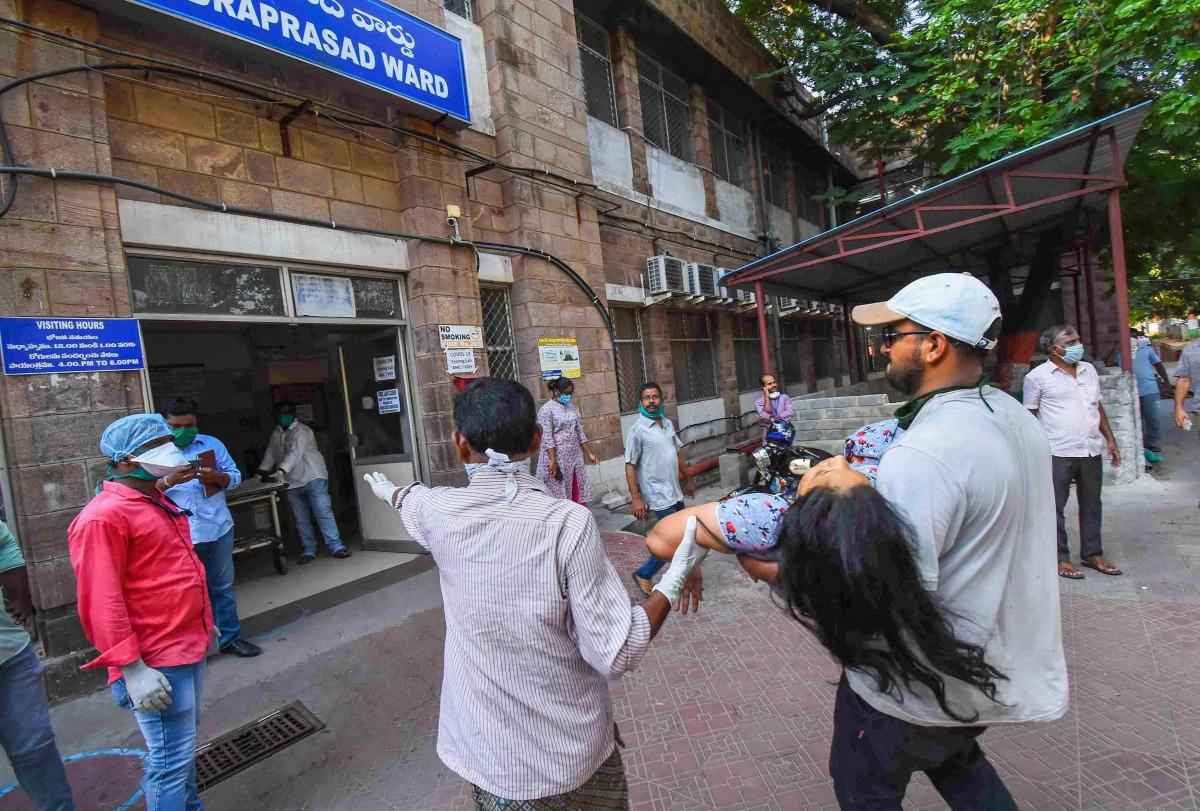
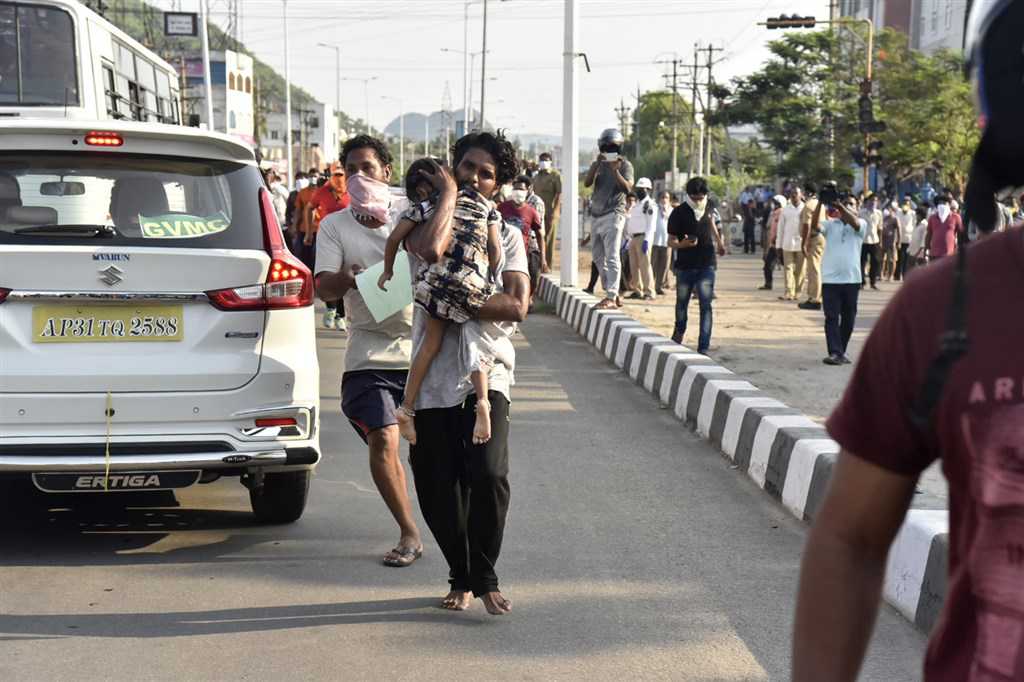
    Heart-wrenching scenes of anxious parents carrying their wards in arms, health workers scrambling to help the affected and fleeing residents were witnessed on Thursday

    He initially mistook it for a leak from cooking gas cylinder in his house, but only when G Vinay stepped out did he realise the pungent smell was of the killer vapour from a nearby chemical plant that snuffed out 11 lives and hit nearly 1,000 people in Andhra Pradesh.

    Heart-wrenching scenes of anxious parents carrying their wards in arms, health workers scrambling to help the affected and fleeing residents were witnessed on Thursday as the enormity of the situation forced them to ignore social distancing and other precautions against coronavirus.

    Many collapsed on roads and kerbs trying to flee from the affected areas in a five km radius, bringing back grim memories of the 1984 Bhopal gas tragedy.

    The leak of styrene, a chemical used to make synthetic rubber and resins, among others, occurred in LG Polymers Limited plant at R R Venkatapuram village near here in the wee hours while people were still fast asleep.

    The worst-hit Venkatapuram reverberated with cries of people for help. Many people fell unconscious during their sleep, a villager said.

    A couple of people in the village whom PTI contacted painted a grim picture, ruing their personal losses.

    “We were fast asleep and at around 2.30 am I woke up as my skin was itching. I opened my eyes but felt a burning sensation. I sensed some danger and woke up my other family members. We all came out and I along with my other neighbours and friends started waking up others,” he said.

    A first year medical student, two girls, aged six and nine, were among the 11 people killed due to the leakage of styrene vapour and related incidents.

    Women and children were seen lying on roads struggling to breathe, reminiscent of the infamous Bhopal gas tragedy when a leak from the Union Carbide plant left around 3,500 dead and many maimed.

    Vinay said his brother Kannaji fell unconscious after inhaling the gas and also sustained injuries.

    “He is now undergoing treatment at the NRI hospital here. Doctors told us that his lungs were filled with gas. He is
    being shifted to the ICU,” Vinay said.

    He said his brother must have sustained injuries in stampede when many of the residents were trying to come out on to the road at once. He, however, was not sure of it.

    His uncle Ganga Raju, who also suffered vision problems due to the vapours, fell into a well and died, he said.

    Vinay’s other family members were treated as outpatients and discharged.

    In the hour of crisis, several people extended a helping hand, throwing caution to the wind amid the coronavirus scare.

  • Vizag Chemical Gas Leak: 7 Killed, More Than 100 Hospitalised; PM Calls NDMA Meeting

    At least seven people, including a child, were killed following a chemical gas leakage at LG Polymers industry in RR Venkatapuram village, Visakhapatnam, early Thursday morning. Nearly seventy people have been hospitalised following the incident. The leak was first reported at 2:30 in the night, an official told a TV channel.

    More than a 1,000 people in five surrounding villages, in a three km radius, have reported sick.

    DG Sawang, the Andhra Pradesh DGP, said there have been seven casualties in the incident so far, adding of one peroson fell into a well while trying to escape. The evacuation is still underway, he said. The plant was shut due to the nationwide lockdown announced in the last week of March.

    After the leak, people complained of burning sensation in their eyes and experienced difficulty in breathing. They were immediately rushed to the hospital, multiple news agencies reported.

    Reacting to the unfortunate incident, Prime Minister Narendra Modi tweeted that he had spoken to officials of MHA and NDMA regarding the situation in Visakhapatnam, which is being monitored closely.

    “I pray for everyone’s safety and well-being in Visakhapatnam.”

    The Prime Minister has also called for a meeting with NDMA officials. “In the wake of the situation in Visakhapatnam, PM @narendramodi has called for a meeting of the NDMA at 11 AM,” tweeted the Prime Minister’s Office.

    TV channels showed people lying unconscious on roads.

    Teams of the National Disaster Response Force (NDRF) are on the spot.

    Police, ambulances, and fire tenders have been rushed to the area to assist in rescue operations.

    Reports said the gas leak has been contained.

    Chief Minister Y S Jagan Mohan Reddy enquired about the incident and directed the Visakhapatnam district collector to ensure proper medical care for the affected people.

  • India’s Covid-19 tally nears 50,000; Lockdown 3.0 Day 2 sees huge case spike in Maharashtra, Gujarat

    STATES HIKE FUEL, LIQUOR TAX

    The economic cost of the pandemic also began to hit the people with a sharp increase in fuel prices. Looking to shore up their dwindling resources, more states announced higher taxes on liquor sales.

    The Uttar Pradesh government on Wednesday hiked petrol and diesel prices and also asked tipplers to shell out more. Petrol will cost Rs 2 more for a litre and diesel Re 1. UPiites will shell out between Rs 5 to Rs 400 more per bottle of liquor, depending on its size and the category of the drink.

    Prices of liquor will be raised by a maximum of Rs 20 from May 7 in Tamil Nadu. Karnataka, too, hiked excise duty on liquor by 11 per cent to mop up revenues.

    Petrol and diesel prices in Chandigarh will go up by nearly Rs 3 per litre.

    Meanwhile, Punjab pegged its overall revenue loss for the month of April at 88 per cent due to all its tax revenues having dried up and only 1.5 per cent the industry being operational.

    AHMEDABAD SHUTS DOWN FULLY FOR 1 WEEK

    To control the spread of coronavirus in Ahmedabad city, civic authorities on Wednesday ordered the closure of all the shops except those selling milk and medicines for a week.

    As per the order, shops will remain closed from May 7 midnight till 6 am on May 15.

    While milk outlets and medical stores can remain open, all other shops, including those selling fruits, vegetables and grocery items, will remain closed, the order said.

    INDIA REGISTERS NEARLY 50,000 CASES

    While the Union Health Ministry stopped giving an evening update of the COVID-19 tally from Wednesday, its morning update showed the death rising to 1,694 and the number of cases climbing to 49,391, registering an increase of 126 deaths and 2,958 cases since Tuesday morning. It also showed more than 15,000 people having recovered, giving a recovery rate of nearly 29 per cent.

    While Maharashtra has reported the maximum number of cases and fatalities, Gujarat, Madhya Pradesh, West Bengal, Rajasthan Delhi, Uttar Pradesh, Andhra Pradesh, Tamil Nadu, Telangana, Karnataka and Punjab are among other major states affected badly by the virus.

    Kerala also has reported more than 500 confirmed cases so far, but it did not report a single new case on Wednesday and the state government officials said the number of active patients is now only 30 as a big majority of COVID-19 patients have recovered.

  • LG印度化學廠瓦斯外洩8死5000人不適 因封城無人看管

    LG印度化學廠瓦斯外洩8死5000人不適 因封城無人看管

    印度7日LG Polymers旗下一間化學工廠瓦斯外洩,造成至少6人罹難、近千人住院。圖為當地民眾抱著小孩逃離瓦斯外洩現場。

    根據路透社、法新社、新德里電視台(NDTV)報導,印度警方與政府官員今天表示,東岸一間化學工廠瓦斯外洩,已至少有8人死亡,逾300人住院,5000人表示身體不適。

    警官拉尼在維沙哈巴南市(Visakhapatnam)稍早說:「送到附近醫院的傷患中,至少有70人沒有意識,共有200到500名當地人仍在(醫院)接受治療。」

    拉尼說,這起事件是發生在樂金聚合物(LG Polymers)旗下一間工廠,瓦斯從兩個5000噸儲槽外洩,由於印度為因應新型冠狀病毒自3月底起封城,儲槽無人看管。

    拉尼告訴法新社:「由於政府下達禁足令,沒有人看管儲槽,結果引發了化學反應,儲槽內熱氣增加,導致瓦斯外洩。」

    她說:「我們是在今天凌晨3時左右接獲當地村民緊急報案,他們說空氣中有瓦斯味。」

    拉尼說:「我們馬上趕抵現場,空氣中的瓦斯味很濃,一秒都待不住。救災人員準備就緒後,於凌晨4時開始救援。」

    路透社報導有近6死;法新社最新消息說約有1000人送醫。美聯社說有5死、近1000人不適。

  • Coronavirus: States on alert as India registers 3900-case spike, liquor, fuel pave way for fiscal revival

    On Day 2 of the Lockdown 3.0, India remained on edge as a record number of new coronavirus cases on Tuesday pushed the nationwide Covid-19 tally closer to the 50,000-mark and the death toll crossed 1,500 with over 190 more fatalities.

    While several authorities withdrew relaxations introduced from Monday, others relied on them to revive sinking state economies. While tipplers queued up outside the liquor shops, Delhi and Andhra Pradesh levied 70 and 75 per cent additional tases respectively on alcohol. Delhi and Punjab also spike the prices of petrol and diesel to make up for the lost revenues during the lockdown.

    As the concern for coronavirus spread due to liquor queues gained traction on social media, states stressed that the revenue was crucial.

    Meanwhile, the Centre announced ‘Vande Bharat Mission’ to bring back stranded Indians abroad. Air India will operate 64 repatriation flights for a week from May 7 while the Navy deployed two ships as India rolled out a massive evacuation plan on Tuesday to bring back thousands of its nationals stranded abroad due to the coronavirus-triggered lockdown.

    Domestically, Indian Railways said that it has run 76 Shramik Special trains since May 1, carrying over 70,000 migrant labourers stranded due to the countrywide lockdown to their homes states. Twelve additional trains are likely to operate tomorrow.

    Health Ministry justifies spike in cases

    The Health Ministry said the country recorded a record single-day increase of 195 deaths and 3,900 cases between Monday 8 AM and Tuesday 8 AM. However, the ministry said that number was so high as it included old cases and deaths some states had not reported previously.

    At the same time, the recovery rate has improved to 28.17 per cent, joint secretary at the health ministry Lav Aggarwal said during a press briefing on the Covid-19 situation.

    “We are very comfortable in terms of managing Covid-19 as of now, but any laxity at the field level or any lack of cooperation may have its consequences,” he warned. Aggarwal also said that the delay in reporting of Covid-19 cases by certain states has led to the sudden spurt in figures.

    Several state and central government officials also said that the numbers have been going up in recent days due to an increased number of tests being conducted.

  • Delhi, get ready to pay 70% more for that bottle of alcohol, new coronavirus cess kicks in from today

    Alcohol will now cost more in the national capital starting Tuesday. Authorities have decided to impose a 70 per cent special ‘Corona-fee’ on the minimum retail price (MRP) of alcohol in Delhi. The decision was announced on Monday and will be enforced from May 5 onwards.

    The Delhi Police will allow liquor shops in the national capital to remain open from 9 am to 6:30 pm starting Tuesday.

    Earlier on Monday, 150 state-run liquor shops were opened in Delhi after a gap of 40 days. However, reports of massive crowds queueing outside liquor shops with absolutely no regard for social distancing or precautionary measures led authorities to retract the permission. As a result, liquor shops in Delhi’s four districts were asked to shut shop. Chief Minister Arvind Kejriwal had also said that relaxation on restrictions will be revered in areas where people are found violating safety guidelines.

    The order was issued late on Monday night under the scope of powers conferred to the government of the national capital territory of Delhi under sub-section (1) of section 81 of the Delhi Excise Act, 2009 (Delhi Act Act 10 of 2010). The order has been titled “Delhi Excise (Amendment) Rules, 2020”.

    The amendment has been made in rule 154 of the Delhi Excise Rules. According to the order, the cess will be applicable as, “70% of the maximum retail price on all categories of liquor sold through retail licensees for the consumption of the premises”.

  • Lockdown 3.0: Chaos on Day 1 as liquor buyers pour out, India sees highest single-day Covid-19 recovery rate

    As India’s Covid-19 fight entered its third phase on Monday with considerable relaxations in the lockdown curbs, the government said a record-high number of 1,074 patients recovered from the deadly virus infection in the last 24 hours but cautioned that the restrictions can be reimposed if there is any complacency in following the containment and social distancing norms.

    Massive crowds thronged liquor stores, more vehicles plied on roads and cab-hailing platforms resumed services in the shadow of the highest rate of recovery yet from coronavirus.

    While the nationwide tally of confirmed Covid-19 cases crossed 44,000 with more than 1,400 deaths, the number of recoveries also neared the 12,000-mark, as per numbers announced by various states and union territories.

    LIQUOR CAUSES CHAOS ON DAY 1 OF LOCKDOWN 3.0

    Tipplers queued up in large numbers since morning at liquor shops–a common sight in large parts of the country where they reopened as anxious people formed more than a kilometre long queue in several areas.

    In the national capital, many government-run liquor shops which opened after 40 days had to be shut as people who gathered outside the outlets did not follow social distancing norms, forcing the police to use mild force to disperse the unruly crowd.

    “Shops were asked to shut in places where social distancing norms were violated. At some places, a mild force was also used to disperse the crowd,” said a senior Delhi police official.

    In some places in Karnataka, people made a beeline to liquor shops even before day-break and performed “special prayers” with flowers, coconuts, incense sticks and camphor and burst crackers in front of the stores. An elderly woman identified as only Dakamma and stated to be aged 96 years was one among the crowd in Shivamogga waiting to get some liquor.

    Stand-alone liquor shops in West Bengal reopened in the three zones but the police closed down several of them within an hour as people started jostling with each other in front of the outlets with social distancing going for a toss.

    WHO WILL PAY FOR MIGRANTS?

    A political slugfest broke out on Monday over the ‘homecoming’ of migrants after the Congress accused the government of charging money from stranded workers and offered to pay for their travel to native places, drawing a sharp retort from the BJP which said the railways was already bearing 85 per cent of the travel cost and charging only 15 per cent from the state governments.

    Accusing the Central government and the Indian Railways of ignoring the demands made by the Congress for ensuring safe and free travel of migrant workers and labourers to their homes, Sonia Gandhi on Monday announced that party’s state units will bear the cost of rail travel of needy migrants stranded at various places across the country as its “humble contribution” to show solidarity with these workers, who have contributed to nation’s development.

    The BJP hit back saying the railways has subsidised 85 per cent of ticket fare for Shramik special trains being run to ferry migrant workers and the state government has to pay the remaining 15 per cent.

    Asked if the migrant labourers were being charged for being ferried home, Joint Secretary at the Health Ministry Lav Agarwal said, “Based on the request given from states for particular cases, permission was given to run special trains. Be it the government of India or the Railways, we have not talked about charging from workers. Eighty-five per cent of the transportation cost is borne by the Railways, while states have to bear 15 per cent of the cost.”

    DELHI IMPOSES 70% CORONA TAX ON ALCOHOL

    Liquor in Delhi will cost more from Tuesday as the government has decided to impose a 70 per cent ‘Special Corona Fee’ on maximum retail price, sources said Monday.

    “70 per cent ‘Special Corona Fee’ has been imposed on the MRP of liquor bottles. The new rate will be applicable from Tuesday,” an official said.

    Earlier in the day, Chief Minister Arvind Kejriwal said all relaxations in the areas where people violate social-distancing and other health norms will be withdrawn.

    GOVT TO BRING BACK INDIANS FROM ABROAD

    Plans to bring back Indians stranded abroad due the coronavirus pandemic have been chalked out by the government and the process will begin from May 7 in a phased manner, the Home Ministry said on Monday, adding it will be a paid service.

    In a statement, it said only people showing no symptoms of Covid-19 will be allowed to travel.

    After arrival in India, their medical examination will be conducted and they will be subsequently put under quarantine for 14 days, either in a hospital or in an institutional facility, also on payment basis, the statement said.

  • From showering rose petals to illuminating naval vessels: Here’s how armed forces will salute corona warriors

    From showering rose petals over hospitals treating Covid-19 patients to illuminating naval vessels, the armed forces through various military gestures will salute the coronavirus warriors on Sunday.

    The nation will witness flypasts by fighter and transport aircrafts of the Indian Air Force (IAF) at multiple locations on Sunday as announced earlier by Chief of Defence Staff (CDS) General Bipin Rawat Rawat.

    These aircrafts will cover major towns starting from Srinagar to Thiruvanathapuram and Dibrugarh to Kutch. The helicopters from the IAF and Indian Navy will fly over hospitals treating coronavirus patients and shower petals as a tribute to the coronavirus warriors.

    #WATCH: Indian Navy conducts rehearsals off Mumbai coast ahead of its ceremony to honour the efforts of frontline workers in the fight against #COVID19. pic.twitter.com/ihxNSzOQti

    — ANI (@ANI) May 2, 2020
    The IAF is scheduled to shower flower petals over two hospitals in Ahmedabad and Gandhinagar between 9-10 am.

    Flower petals will also be dropped in Itanagar, Guwahati, Shillong and Kolkata, around 10.30 am. The Air Force band will be playing in Guwahati as well for paying tribute to the corona warriors.

    In Uttar Pradesh’s Lucknow, the flower-petal showering will take place at KGMU and SGPGI Trauma Center between 10.15-10.30 am. Fighter aircraft will flypast over Vidhan Sabha in Lucknow around 12.20 pm.

    In the national capital, the fighter and transport aircrafts will fly between 10 am-11 am. This flying activity is combined with the training activity of the IAF and opportunity flight for transport aircraft and helicopters who are involved in moving supplies related to Covid-19 task.

    The aerial salute to the corona warriors’ is scheduled in Delhi between 10-10.30 am. Fighter aircraft formations, comprising of the Sukhoi-30 MKI, MiG-29 and Jaguar will be flying over Rajpath, and will orbit over Delhi and will be visible to the residents of Delhi from their roof tops.

    In addition, C-130 transport aircraft will follow a similar profile as fighters covering the entire Delhi and NCR region. The aircraft will be flying at an approximate height of 500 meters to 1,000 meters keeping aerospace safety in mind especially in respect of bird activity.

    Here’s the complete schedule of petal dropping by helicopters:


    Additionally, helicopters are schedulled to drop flower petals over the Police War Memorial at 9 am, followed by Delhi hospitals involved in providing relief to patients of Covid-19 between 10-10.30 am.

    The list of hospitals includes: AllMS, Deen Dayal Upadhyay Hospital, GTB Hospital, Loknayak Hospital, Ram Manohar Lohia Hospital, Safdarjang Hospital, Sri Ganga Ram Hospital, Baba Saheb Ambedkar Hospital, Max Saket, Rohini Hospital, Apollo Indraprastha Hospital and Army Hospital Research and Referal.

    The aerial salute from the armed forces will be flown as low as 500 meters so that everyone is able to witness the same from their home. Military bands all over the country will visit various civil hospitals treating Covid-19 patients to express their gratitude by playing patriotic tunes.

    In the evening, Naval ships on the coasts of Mumbai, Porbandar, Karwar, Vizag, Chennai, Kochi and Port Blair will light up and flare fires in solidarity with the corona warriors.

    Indian Naval aviation assets would shower petals by helicopters on hospitals treating Covid-19 patients in Mumbai, Goa, Kochi and Vizag between 10 am-10.30 am.

    Maharashtra: Indian Navy conducts rehearsals off Mumbai coast ahead of its ceremony to honour the efforts of frontline workers in the fight against #COVID19.

  • Govt to cap relief package at $60 billion to protect credit rating: Report

    The Indian government is likely to cap its overall spending on coronavirus-related relief at around 4.5 trillion rupees ($60 billion), due to concerns that excess spending could trigger a sovereign rating downgrade, two senior government officials said.

    “We have to be cautious as downgrades have started happening for some countries and rating agencies treat developed nations and emerging markets very differently,” the first official told Reuters.

    On Tuesday, Fitch warned India’s sovereign rating could come under pressure if its fiscal outlook deteriorates further as the government tries to steer the country through the coronavirus crisis.

    “We have already done 0.8% of GDP, we might have space for another 1.5%-2% GDP,” the official, who is involved in preparing the package said, referencing the 1.7 trillion rupee outlay that the government announced in March that was directed at helping the poor via cash transfers and food grain distribution.

    The stimulus plans yet to be outlined are likely to be aimed at helping people who have lost their jobs, as well as both small and large companies, via tax holidays and other measures, said both officials. They did not wish to be named as the matter is still under discussion.

    A spokesman for the finance ministry declined to comment.

    Fitch and Standard & Poor’s both have India pegged at an investment grade rating that is one notch above a junk rating, while Moody’s Investors Service is the only major rating agency that has India’s rating two notches above junk.

    With a 40-day nationwide lockdown bringing the $2.9 trillion economy to a standstill, and the lockdown in many of India’s big cities likely to be extended, many economists expect the economy to stagnate, or even shrink this year, putting further pressure on government finances.

    The second official said government revenues are in a tight position given “very weak” tax collections, and the fact that a 2.1 trillion privatisation programme planned for this fiscal year, now looks like it will be a non-starter.

    The government has cut salaries of lawmakers including the prime minister and the president, and withheld raises for government employees and pensioners, in a drive to save as much as it can to control fiscal slippage.

  • Centre Extends Nationwide Lockdown By Two More Weeks: Full Text Of Order

    The nationwide coronavirus lockdown will be extended by two weeks after May 4, the government has said.

    The home ministry has also issued new guidelines to regulate different activities in this period, based on the risk profiling of the districts of the country into red (hotspot), green and orange zones.

    The guidelines have permitted considerable relaxations in the districts falling in the Green and Orange Zones.

    Below is the full text of the press release issued by the Home Ministry

    EXTENSION OF LOCKDOWN FOR A FURTHER PERIOD OF TWO WEEKS WITH EFFECT FROM MAY 4, 2020.

    After a comprehensive review, and in view of the Lockdown measures having led to significant gains in the COVID-19 situation in the country, Ministry of Home Affairs (MHA), Government of India (GoI) issued an Order under the Disaster Management Act, 2005, today, to further extend the Lockdown for a further period of two weeks beyond May 4, 2020. MHA also issued new guidelines to regulate different activities in this period, based on the risk profiling of the districts of the country into Red (hotspot), Green and Orange Zones. The guidelines have permitted considerable relaxations in the districts falling in the Green and Orange Zones.

    2. The criteria for identification of districts as Red, Green and Orange Zones have been spelt out in detail in the letter dated April 30, 2020, issued by Ministry of Health and Family Welfare (MoHFW), GoI. The Green Zones will be districts with either zero confirmed cases till date; or, no confirmed case in the last 21 days. The classification of districts as Red Zones will take into account the total number of active cases, doubling rate of confirmed cases, extent of testing and surveillance feedback from the districts. Those districts, which are neither defined as Red nor Green, shall be classified as Orange zones. The classification of districts into Red, Green and Orange Zones will be shared by MoHFW with the States and Union Territories (UTs) on a weekly basis, or earlier, as required. While States and UTs can include additional districts as Red and Orange Zones, they may not lower the classification of a district included by MoHFW in the list of Red or Orange Zones.

    3. A number of districts of the country have, within their boundaries, one or more Municipal Corporations (MCs). It has been observed that due to higher population density within the MCs, and consequent greater inter-mixing of people, the incidence of COVID-19 within the boundary of the MC(s) is higher than in the rest of the district. In the new guidelines, therefore, it has been provided that such districts will be classified into two Zones, i.e., one Zone for the area under the boundary of the MC(s); and, another for the area falling outside the boundary of the MC(s). If the area outside the boundary of the MC(s) has reported no case for the last 21 days, it will be allowed to be classified as one stage lower than the overall classification of the district as either Red or Orange. Hence, this area will be classified as Orange, in case the district is overall Red; or as Green, in case the district is overall Orange. This classification will enable more economic and other activities in that area of the district, which is relatively less affected by the incidence of COVID-19, while also ensuring that due caution continues to be exercised so that these areas remain free from COVID-19 cases. This dispensation has been made only in respect of districts having Municipal Corporation (s).

    4. The most sensitive areas of the country, from the spread of COVID-19 point of view, and falling within the Red and Orange Zones, are designated as Containment Zones. These are areas where there is significant risk of spread of the infection. The containment areas would be defined by respective District Administrations, taking into account the total number of active cases, their geographical spread, and the need to have well demarcated perimeters from the enforcement point of view. The local authority shall ensure 100% coverage of Aarogya Setu app among the residents of the Containment Zone. Containment Zones would have intensified surveillance protocols, with contact tracing, house to house surveillance, home/ institutional quarantining of persons based on their risk assessment, and clinical management. Strict perimeter control would need to be ensured, so that there is no movement of people in and out of these Zones, except for medical emergencies, and for maintaining supply of essential goods and services. No other activity is permitted within the Containment Zones.

    5. Under the new guidelines, a limited number of activities will remain prohibited throughout the country, irrespective of the Zone. These include travel by air, rail, metro and inter-State movement by road; running of schools, colleges, and other educational and training/ coaching institutions; hospitality services, including hotels and restaurants; places of large public gatherings, such as cinema halls, malls, gymnasiums, sports complexes etc; social, political, cultural and other kinds of gatherings; and, religious places/ places of worship for public. However, movement of persons by air, rail and road is allowed for select purposes, and for purposes as permitted by MHA.

    6. The new guidelines also prescribe certain measures for well being and safety of persons. Hence, movement of individuals, for all non-essential activities, shall remain strictly prohibited between 7 pm to 7 am. Local authorities shall issue orders under appropriate provisions of law, such as prohibitory orders [curfew] under Section 144 of CrPC, for this purpose, and ensure strict compliance. In all zones, persons above 65 years of age, persons with co-morbidities, pregnant women, and children below the age of 10 years, shall stay at home, except for meeting essential requirements and for health purposes. Out-Patient Departments (OPDs) and Medical clinics shall be permitted to operate in Red, Orange and Green Zones, with social distancing norms and other safety precautions; however, these will not be permitted within the Containment Zones.

    7. In the Red Zones, outside the Containment Zones, certain activities are prohibited in addition to those prohibited throughout the country. These are: plying of cycle rickshaws and auto rickshaws; running of taxis and cab aggregators; intra-district and inter-district plying of buses; and, barber shops, spas and saloons.

  • Coronavirus: India extends limited lockdown till May 17, tally climbs to 35,365

    The nationwide lockdown in India has been extended till May 17. The Ministry of Home Affairs extended the lockdown for two weeks while allowing different sets of relaxations in red, orange and green zones. The new guidelines aim at allowing India to exit from lockdown in a staggered manner while reopening the economy.

    The decision for the lockdown extension came as the nationwide tally rose to 35,365. The country registered a record jump of 1,755 in novel coronavirus cases on Friday, while the toll from the deadly virus reached 1,152.

    As the new cases linked to the Tablighi Jamaat cluster started dropping, a new religious cluster has emerged. A number of pilgrims returning home from a Sikh gurudwara in Maharashtra have tested positive for novel coronavirus.

    Meanwhile, the Centre of Friday allowed stranded people across India to be transported back home using special trains and ships. The Modi government has also started mulling on devising a post-lockdown strategy to revive the Indian economy. PM Modi on Friday met Home Minister Amit Shah and Finance Minister Nirmala Sitharaman to discuss an exit strategy.

    To pay homage to the corona warriors, the armed forces said that they will be conducting fly-pasts, showering petals on hospitals treating Covid-19 patients and illuminating naval vessels on May 3.

    Here’s your daily capsule of all the updates on novel coronavirus:

    Record surge in national tally

    The death toll due to the novel coronavirus rose to 1,152 with 77 fatalities reported since Thursday evening, while the number of cases saw a record jump of 1,755 to go up to 35,365 cases on Friday, according to the Union health ministry.

    The number of active Covid-19 cases stood at 25,148 while 9,064 people have recovered, and one patient has migrated, the ministry said.

  • Coronavirus: Centre claims India on path to win Covid war, tally reaches 33,610

    The Centre of Thursday claimed that India has ‘gone quite ahead’ on its way to winning the war against Covid-19. The statement from Union Health Minister Harsh Vardhan came as his ministry claimed that India’s coronavirus recovery rate has reached 25 per cent with just 3.2 per cent mortality rate, even as the toll from the deadly virus neared 1,100 and the national tally climbed to over 33,600.

    Union Health Minister Harsh Vardhan said India is doing better compared to other countries on all parameters in its fight against Covid-19 and should be able to win this decisive war in the coming few weeks.

    Meanwhile, the states began preparations to help lakhs of migrant workers and students reach their homes from different parts of the country where they are stranded for over a month due to the Covid-19 lockdown.

    As the nation nears the end of the Lockdown 2.0, the economic fallout of the strict restrictions has started to become increasingly visible. A study by the International Labour Organisation has claimed that almost 50 per cent of the global workforce faces job loss. Its effects in India are also increasingly visible as industry experts say it will take around six quarters for several industries to get back on their feet.

    Here’s your Thursday’s wrap of top developments on Covid-19 outbreak in India:

    Despite 1,823 new cases, Centre expresses hope

    Even as India reported 1,823 new cases and 67 deaths due to Covid-19, the Union Health Ministry claimed that India is on the path of victory as the recovery rate has reached over 25 per cent.

    As per Union Health Ministry data, the total death toll due to Covid-19 rose to 1,075 and the number of cases climbed to 33,610 in the country on Thursday. The number of active Covid-19 cases stood at 24,162, while 8,372 people have recovered, and one patient has migrated, the ministry said.

    “Thus, 24.90 per cent patients have recovered so far,” a senior Health Ministry official said.

    The total number of cases include 111 foreign nationals.

    A total of 67 deaths were reported since Wednesday evening of which 32 fatalities were from Maharashtra, 16 from Gujarat, 11 from Madhya Pradesh, three from Uttar Pradesh, two each from Tamil Nadu and Delhi and one from Karnataka.

    Of the 1,075 deaths, Maharashtra tops the tally with 432 fatalities, followed by Gujarat at 197, Madhya Pradesh at 130, Delhi at 56, Rajasthan at 51, Uttar Pradesh at 39 and Andhra Pradesh at 31.

    The death toll reached 27 in Tamil Nadu, 26 in Telangana, 22 in West Bengal while Karantaka reported 21 deaths. Punjab has registered 19 fatalities so far. The disease has claimed eight lives in Jammu and Kashmir, four in Kerala, while Jharkhand and Haryana have recorded three Covid-19 deaths each.

    Bihar has reported two deaths, while Meghalaya, Himachal Pradesh, Odisha and Assam have reported one fatality each, according to the ministry data.

  • 印度准备扩大卡介苗抗新冠临床试验

    印度赫夫金研究所最近在马哈拉什特拉省对确诊患者注射卡介苗后,效果令人鼓舞,正准备扩大临床试验。


    一项研究显示强制接种卡介苗国家,感染2019年冠状病毒的病患死亡率较低,印度赫夫金研究所最近在马哈拉什特拉省对确诊患者注射卡介苗后,效果令人鼓舞,正准备扩大临床试验。

    中央社报道, 这一项项研究显示,印度等新生儿强制接种卡介苗的亚、非国家,感染2019年冠状病毒的病患,死亡率比意大利等未强制接种卡介苗的欧美国家要低,且确诊、重症案例相对较少,不过,这项研究仍未获得广泛验证。

    印度时报今天报导,位于孟买的赫夫金研究所进行动物卡介苗免疫反应试验后,在孟买所在的马哈拉什特拉省少数2019年冠状病毒病患身上施打卡介苗,初步评估出现「令人鼓舞的结果」。

    马哈拉什特拉省与赫夫金研究所计画与马哈拉什特拉省医学教育部门合作,小范围在国立医学院扩大进行卡介苗对抗2019年冠状病毒的人体试验,已获得马哈拉什特拉省政府和医疗伦理委员会批准。 马哈拉什特拉省医学教育部门秘书穆克吉说,一旦印度药物管制总局批准后,即可展开试验。


    世界卫生组织(WHO)表示, 正在进行两项卡介苗是否可预防2019年冠状病毒的临床试验。

  • The Union Home Ministry today passed an order to allow inter-state movement of migrants, students and others to reach their respective destinations, subject to certain conditions. Meanwhile, India’s Covid-19 tally reached 31,787.

    ith lakhs of migrant workers and students stranded at various places for over a month due to the nationwide lockdown, the government on Wednesday announced plans to allow their movement to help them reach their homes, including by crossing state borders. The Covid-19 tally in India, in the meantime, rose further and fresh indications emerged about the lockdown continuing beyond May 3, at least in some form and in some parts of the country.

    In its evening update, the Union Health Ministry said the Covid-19 death toll has risen to 1,008, with a record jump of 71 in the last 24 hours, while the number of confirmed infections has climbed to 31,787 in the country with more than 1,800 cases getting detected since Tuesday evening. Close to 7,800 people have recovered too.

    STATES ANNOUNCES EXTENSIONS, RELAXATIONS

    Punjab, which has reported 375 cases and 19 deaths, announced the extension of the lockdown in the state by two weeks after May 3, though some relaxations have been given in areas that do not fall under the containment or red zones.

    However, containment zones will continue to remain under total lockdown, Punjab Chief Minister Amarinder Singh said.

    In West Bengal, Chief Minister Mamata Banerjee said experts and doctors are of the opinion that the restrictions imposed to check the spread of Covid-19 should continue in the state till the end of May. She, however, also announced some relaxations, including the opening of standalone shops in green zones and non-containment zones with all precautionary and social distancing measures.

    Telangana Chief Minister K Chandrasekhar Rao has already announced the extension of the lockdown in his state till May 7 without any relaxation.


    During his last interaction with chief ministers on Monday, Prime Minister Narendra Modi had told them that the economy would need to be given importance too while fighting the Covid-19 pandemic.

    GLOBAL EASING OF LOCKDOWNS

    Ever since its emergence in China last December, more than 31 lakh have tested positive for the deadly virus infection worldwide while the death toll has topped 2 lakh. Some countries have, however, begun easing the lockdown.

    The US, which is among the worst-hit globally, reported that its economy shrank at a 4.8 per cent annual rate in the last quarter, triggering a recession that will end the country’s longest-ever expansion period.

    Following guidelines from the Centre, some states in India have also allowed the opening of standalone shops in non-containment zones, while several state governments have been demanding steps to allow movement of migrant workers to help them reach their respective homes. Some states including Uttar Pradesh have already undertaken special initiatives to bring back migrant workers and students.

    MHA ALLOWS INTERSTATE MOVEMENT FOR STRANDED

    To help these people who have been stuck in various cities for over a month, many of whom have been left jobless and homeless due to the lockdown, the Union Home Ministry has now passed an order to allow their inter-state movement to reach their respective destinations, subject to certain conditions. This will also apply to pilgrims, tourists, students and other people stranded at different places.

    In the order, Union Home Secretary Ajay Bhalla said buses shall be used for transport of such groups of stranded people and these vehicles will be sanitised and will have to follow safe social distancing norms in seating.

    Listing the conditions, the ministry said all states and union territories should designate nodal authorities and develop standard protocols for receiving and sending such stranded persons. In case of movement beyond states or UTs, the sending and receiving states will need to consult each other and mutually agree to the movement by road.

    These people would be screened and only those found asymptomatic would be allowed to proceed. On arrival at their destination, they would be assessed by local health authorities and kept in home or institutional quarantine, as required by the assessment, the order said.

    MHA HINTS LOCKDOWN WILL BE EXTENDED

    The Centre on Wednesday gave clear indications that the ongoing nationwide lockdown will be extended beyond May 3 but with “considerable relaxations” to people and services in “many districts”.

    The Ministry of Home Affairs, however, said there was a need to maintain a strict lockdown till May 3 so that the gains are not squandered away.

    In a series of tweets, the Union Home Ministry said it has held a comprehensive review meeting on the lockdown situation in the country and has found that there have been tremendous gains and improvement in the Covid-19 situation due to the lockdown till now.

    “New guidelines to fight Covid-19 will come into effect from 4th May, which shall give considerable relaxations to many districts. Details regarding this shall be communicated in the days to come,” the home ministry spokesperson tweeted.

    NEW COLLEGE SESSIONS FROM SEPT: UGC

    The University Grants Commission (UGC), in the meantime, said the new academic session for freshers will begin in universities from September and for already enrolled students in August.

    Detailing the guidelines for examinations and academic calendar for the universities in view of the Covid-19 pandemic and subsequent lockdown, the commission said the exams for final semester students be conducted in July.

    The varsities may decide whether to conduct exams online or offline keeping in view the support system available with them and ensuring a fair opportunity to all students.

    It also advised universities to follow a six-day week pattern and devise proforma to record travel or stay history of staff members and students for the lockdown period.

    CLASS 10, 12 BOARDS NOT SCRAPPED: CBSE

    The board exams for class 10 and 12 pending due to the coronavirus-induced lockdown will be conducted at the first possibility and there is no move to do away with the remaining exams, CBSE officials said on Wednesday.

    The board is prepared to conduct the exams for class 10 and 12 for crucial 29 subjects, while the HRD Ministry has directed states to start the evaluation process for the exams already conducted and facilitate the Central Board of Secondary Education (CBSE) in the evaluation of answer sheets.

    DELHI-HARYANA BORDER SEALED, CHAOS ENSUES

    Several people returning to their homes in Faridabad from Delhi were turned back amid chaos and confusion on Wednesday while vegetable supplies to Azadpur mandi were severely disrupted as Haryana sealed all its border points with the national capital citing the emergence of fresh coronavirus cases in its districts adjoining Delhi.

    Maintaining that prevention is better than cure, Haryana Chief Minister Manohar Lal Khattar said tough measures were required at the state’s border points with the national capital. “We will not allow this (coronavirus) infection to enter our state from Delhi”.

    In a televised address, Khattar said Covid-19 cases are either linked to those who are employed in Delhi, their family members or their contacts.

    “Prevention is better than cure… bitter medicine is important to cure the disease and we will have to stop this cross-border movement.
  • Stranded Migrants, Tourists, Students Can Go Home Amid Lockdown. But Conditions Apply

    Migrant workers, tourists, students and other people stranded in different parts of the country were on Wednesday allowed to move to their respective destinations with certain conditions, giving a big relief to the distressed people.

    In an order, Union Home Secretary Ajay Bhalla said buses shall be used for transport of such groups of stranded people and these vehicles will be sanitised and will have to follow safe social distancing norms in seating.

    The Home Ministry order, however, did not specify whether a person or a family can travel in a private vehicle, and if allowed, under what conditions.

    “Due to lockdown, migrant workers, pilgrims, tourists, students and other persons are stranded at different places. They would be allowed to move,” he said in an order issued to all states and union territories.

    Listing the conditions, the ministry said all states and union territories should designate nodal authorities and develop standard protocols for receiving and sending such stranded persons.

    The nodal authorities shall also register the stranded persons within their states and union territories, it said.

    In case a group of stranded persons wish to move between one state and union territory and another state and union territory, the sending and receiving states may consult each other and mutually agree to the movement by road.

    The moving persons would be screened and those found asymptomatic would be allowed to proceed, according to the Home Ministry.

    The states and union territories falling on the bus transit route will allow the passage of such persons to the receiving states and union territories, it said.

    On arrival at their destination, they would be assessed by the local health authorities, and kept in home quarantine, unless the assessment requires keeping the persons in institutional quarantine, the order said.

    They would be kept under watch with periodic health check-ups, it said.

    All those people who avail the opportunity will be encouraged to use ‘Aarogya Setu’ app through which their health status can be monitored and tracked.

    The union home secretary issued the order in his capacity as the chairperson of the National Executive Committee under the Disaster Management Act.

    The Home Ministry also said the guidelines of the Ministry of Health and Family Welfare on home quarantine should be followed by the authorities concerned.

    The decision of the central government will be a big relief to several lakh migrant workers, students, tourists and other people who are stranded in different parts of the country.

    Several states, including Uttar Pradesh, Uttarakhand, Gujarat, Punjab, Assam, Chhattisgarh and Rajasthan, have brought back thousands of their students and tourists stuck in different parts of the country by bus. However, most of the migrant workers, tourists and other people continue to stuck in their places of work or shelter homes.

    While Uttar Pradesh, Uttarakhand, Punjab, Assam, Gujarat and Chhattisgarh brought back their stranded students fron Kota in Rajasthan, Punjab has brought back stranded pilgrims from Maharashtra, besides students from Kota.

    A group of around 360 stranded people of Rajasthan is also being brought back from Assam. While transporting these students, pilgrims and other people, the states have used buses and other vehicles.

    There have been at least three protests by migrant workers in Surat in Gujarat in recent weeks as they have been demanding passage to their home states.

    A few hundred people had also gathered about a fortnight ago in Bandra in Mumbai after being influenced by rumours that trains would ply to North India.

    However, the Bihar government has been seeking the strict implementation of the lockdown, saying that people should remain wherever they are during the entire period of the lockdown.

    While announcing the lockdown, Prime Minister Narendra Modi had said people should remain wherever they are.

    In the beginning of the first phase of the lockdown, thousands of the migrant workers have started moving by foot from cities like Delhi, Mumbai and Hyderabad to their respective places, creating a humanitarian crisis.

    This led to the Home Ministry directing the state governments not to allow the migrants to move, arrange shelter homes for them and provide them food. The states were also allowed to even use money from the National Disaster Response Fund for providing food and shelter to the migrant workers.

    The desperation of the migrant workers was such that the police found a group of migrant labourers, who were travelling from Telangana to Rajasthan, inside a container truck in Maharashtra.

    The government has already allowed industrial activities in rural areas with conditions. Similarly, apart from the shops for the essential commodities, standalone business establishments of non-essential goods were also allowed to open during the lockdown.

    However, markets, malls, restaurants, parlour, liquor shops continue to remain shut.

    The lockdown was first announced by the prime minister on March 24 in a bid to combat the coronavirus pandemic. It was further extended till May 3.

  • Coronavirus: India allows asymptomatic patients to go home as tally nears 30,000

    The Centre on Tuesday said that Covid-19 patients who exhibited mild or no symptoms can opt for self-isolation at home as they recover from the novel coronavirus, which has affected nearly 30,000 people across the country and killed over 930.

    As per the Union Health Ministry data, the number of cases in India has reached 29,974 and the death toll has climbed to 937. In the last 24 hours, the country has registered an increase of 51 deaths and 1,594 cases.

    The positive news is that 23.34 per cent of all people infected in India have recovered, including 111 foreign nationals.

    Asian Development Bank issued India a loan of $1.5 billion to help the country fight the virus while Moody’s Investors Service slashed India’s growth forecast to 0.2 per cent for the 2020 calendar year from the earlier projection of 2.5 per cent released in March due to the economic crisis induced by the nationwide lockdown in wake of novel coronavirus.

    Here are all the latest updates on the outbreak of novel coronavirus in India:

    India’s coronavirus tally

    Death toll due to Covid-19 rose to 937 and the number of cases climbed to 29,974 in the country on Tuesday, registering an increase of 51 deaths and 1,594 cases since Monday evening, according to the Union Health Ministry.

    The number of active Covid-19 cases stand at 22,010, while 7,026 people have recovered, and one patient has migrated, the ministry said.

    Thus, 23.44 per cent of the infected people have recovered so far, a senior Health Ministry official said.

    The total number of cases include 111 foreign nationals.

    A total of 51 deaths were reported since Monday evening of which 27 fatalities were from Maharashtra, 11 from Gujarat, seven from Madhya Pradesh, five from Rajasthan and one from Jammu and Kashmir.

  • 美国Facebook决定向印度进行巨额投资,将向印度大型财阀信实工业(Reliance Industries)旗下企业出资57亿美元,在电子商务(EC)领域共同开展业务

    美国Facebook决定向印度进行巨额投资,将向印度大型财阀信实工业(Reliance Industries)旗下企业出资57亿美元,在电子商务(EC)领域共同开展业务。在个人信息保护规定日益严格、以广告为中心的经营模式前景不明的情况下,Facebook希望通过深耕印度这一巨大市场来恢复成长势头。


      Facebook将向印度最大电信企业Jio Platforms出资9.99%。这是继2014年以218亿美元收购聊天软件“WhatsApp”的运营公司后的又一笔大型投资。


      Facebook首席执行官马克·扎克伯格4月21日就出资的意义强调称“不仅仅是进行投资,为扩大全印度人民的购物机会,已承诺在多项主要业务方面开展合作”。 


      在有13亿人口的印度,Jio拥有近4亿手机签约用户。Facebook准备把自身社交网站(SNS)在印度的用户提高到3亿以上、WhatsApp用户提高到4亿。希望把双方的客户合在一起,构建庞大的服务提供基础。


      扎克伯格2019年介绍称“将为(旗下的WhatsApp等)短消息服务追加结算和零售等功能”,显示出要扩大收入来源的方针。因为个人隐私问题和市场趋于成熟,Facebook已经很难再继续“依赖网络广告”了。


      虽然Facebook很早就对发展潜力巨大的印度表现出兴趣,但到目前为止,很难说已经取得成功。该公司2014年提出在印度提供免费上网服务的方针,但由于担心印度相关部门等干预竞争而受挫。2018年提出在印度使用WhatsApp提供汇款与支付服务的计划,但一直没有得到印度相关部门的批准。


      由于一直没有在印度取得进展,虽然按照国家来看,Facebook在该国拥有的用户最多,但并未获得足够收益。2019年10月~12月,Facebook公司在全球的用户人均销售额为8.52美元,在北美这一数字超过40美元。而在包括印度在内的亚太地区则只有3美元多。

  • Health expert shares 3 ways Ayurveda can boost immunity

    Director of Jeeva Ayurveda Dr Pratap Chauhan shared three ways in which Ayurveda can boost your immunity at Aaj Tak’s E-Agenda on Saturday.

    #1: Eat Chyawanprash

    Speaking at a session, Dr Chauhan said the name of Chyawanprash, which is a popular Ayurvedic health supplement, comes first to his mind while talking about increasing immunity. He said Chyawanprash is very beneficial for the lungs.

    #2: Drink Ayush kadha, turmeric milk

    Dr Chauhan said most people are making Ayush kadha in their homes to avoid coronavirus, which is a good immunity booster. He also explained the method of making it: add four basil leaves, two black pepper, ginger, cinnamon and dry grapes to a cup of water and boil the water. To sweeten it, add jaggery or honey too. Drinking this twice a day to increase the immunity of your body. Apart from this, also consume turmeric milk.

    #3: Put sesame oil in nose or gargle with it

    The health expert further said that by putting oil in your nose, the body remains disease-free. He suggested putting sesame oil in both nasal cavities twice a day.

    He also suggested gargling with sesame oil. This too has to be done twice a day. He said that if the nasal membrane and mouth captivity remain lubricated, then no germs can attack the body through them.

  • Viruses like novel coronavirus that causes Covid-19 are very different from other pathogens such as bacteria. Immune system finds it difficult to respond to a viral than a bacterial attack. This is why even use medicines becomes complicated in viral …

    These molecules arrange themselves in different orders to form various types of shapes. In the case of the novel coronavirus, these molecules make a sparkling red ball with crowns – giving identity to the family of coronavirus.

    They are very, very small in size compared to their pathogenic cousins such as bacteria and fungi. They prey on almost any living organism. Some viruses infect other pathogens and make them sick. Bacteriophage is an excellent example. It infects and kills bacteria. Bacteriophage is considered as the reason why River Ganga water remained relatively bacteria-free before humans exceeded their capacity to keep the river water clean.

    Coming back to viruses, they are so simple that most scientists don’t even categorise them as living beings. Remember, school textbooks called them the link between the living and the non-living.

    The novel coronavirus, scientifically named as SARS-CoV-2, is a comparatively large virus. Its size is about 120 nanometres – four times that of the poliovirus, which is just 30 nanometres. But a harmless Escherichia coli bacteria – the ones present in our gut – is some 16 times the size of the novel coronavirus. An average red blood cell in our body is about 64 times larger than the novel coronavirus.

    The key molecule in all viruses including coronaviruses is protein. These are genetic materials and a storehouse of a very limited set of instructions – like a specific software programme. When these viruses get a favourable environment – namely, the body fluid – they start replicating themselves. This is their reproduction. They enter a cell and eat it from inside. When they leave the cell, they are in millions and the host cell is nothing more than garbage.

    This is the way they wreak havoc among species including humans and crops. They are very smart and can travel through air, water, soil, droplets and from one person to other person. Through human-to-human transmission via saliva or mucous droplets, the novel coronavirus spread to all corners of the world after emerging from Wuhan in China. It took humans for a ride, literally.

    Now, let’s take a look at how the novel coronavirus behaves in our body. Proteins are crucial for the functioning of any living body. They don’t only build muscles but they also establish the communication network within the body system. What is required, where and when, and how an issue inside the body is to be fixed is done by these proteins — specifically, mRNA (messenger RNA), which perform the sentry’s role in the body.

    It is this variety of protein that keeps SARS-CoV-2 going. Typically, a human cell uses about 20,000 different types of proteins. Viruses use much less. For example, an HIV — one that causes AIDS — uses only 15 proteins to do its work. The novel coronavirus deploys 33, that too with the small size of its body.

  • Covid-19 in India: Cases near 25,000 as states begin to open shops, WHO says maintain caution

    The ministry went further to state that current figures put the recovery rate of Covid-19 patients in India at 20.88 per cent. Between Friday night and Saturday evening, India recorded a total of 56 coronavirus-related deaths.

    Maharashtra accounts for 18 of these deaths, followed by Gujarat with 15, Madhya Pradesh with 9. At the same time, Delhi and West Bengal recorded three deaths each, Tamil Nadu and Andhra Pradesh two deaths each and Punjab and Kerala one death during the same period.

    According to the latest figures, Maharashtra has the most number of cases (over 6,000), followed by Gujarat, Delhi, Rajasthan, each of which has more than 2,000 confirmed cases. The state of Maharashtra has also witnessed the most Covid-19 casualties in comparison with other states.

    MHA order on standalone shops, shops in residential areas

    In an order late on Friday night, the Ministry of Home Affairs (MHA) made exceptions for shops selling non-essential goods in both urban and rural areas to reopen for business starting April 25. The order applies to standalone shops and shops in residential neighbourhoods, provided that they are registered under the Shops and Establishments Act and abide by a few instructions. The MHA order said that these shops have been allowed to operate with 50 per cent of their employee strength but they will have to follow social distancing norms and ensure that all staffers wear protective masks.

    While the MHA clarified that the order is applicable to shops located inside and outside the purview of municipal corporations and municipalities, it also stated that shopping complexes and malls have not been given the permission to reopen for business as of yet. In a tweet on Saturday, the MHA spokesperson further clarified that restaurants, salons and barbershops have not been given permission to operate since they provide services and the order is aimed at reopening shops selling goods.

    Apart from businesses included in Clause X, liquor stores across the country have also been exempted from this revival order. E-commerce platforms have also been denied to deliver non-essential goods for now.

    States react to MHA order: What’s open, what’s not

    Among states that took a cue from the MHA order to allow shops fitting the criteria to reopen for business are Nagaland, Odisha, Gujarat, Goa and Haryana. Meanwhile, Delhi has also implemented the order with the exception of its 95 containment zones.

  • Govt allows some shops to reopen from Saturday: List of what will open, what will remain closed

    In a major relief to the public at large, the Ministry of Home Affairs (MHA) in its latest order permitted the opening of the neighbourhood and stand-alone shops, selling non-essential goods and services, from Saturday (April 25) onwards. The shops that are allowed to open during the coronavirus lockdown from Saturday include those located in residential complexes within and outside the limits of municipalities and municipal areas. However, market complexes within the limits of municipal corporations and municipalities will not open from Saturday.

    The concession, however, has not been extended to shops in market places, multi-brand, and single-brand malls located in municipality areas, coronavirus hotspots and containment areas.

    The opening of shops selling non-essential goods and services from Saturday, according to the order released by the MHA in a modification of its April 15 order, will be subjected to the conditions that they will run with 50 per cent strength of workers, wearing of masks and following social distancing.

    As the government order has now allowed some economic activity, here’s a list of what will remain open and what will remain closed from Saturday:

    WHAT WILL OPEN FROM SATURDAY

    1. All shops registered under the Shops and Establishment Act of the respective State/Union Territory, including shops in residential complexes and market complexes, outside the municipal corporations and municipalities, will be allowed to open.

    2. Neighbourhood shops, standalone shops, and shops in residential complexes, within the limits of municipal corporations and municipalities, will be allowed to open.

    3. Shops located in registered markets located outside the municipal corporations and municipalities can open only with 50 per cent staff and following the drill of social distancing and wearing masks.

    4. The local salons and parlours will be allowed to operate from Saturday.

    5. In rural and semi-rural areas, all the markets have been allowed to open.

    6. In urban areas, non-essential goods and services will be allowed to operate provided they are in residential areas or is a standalone shop.

    7. In rural areas, non-essentials services can be sold in all kinds of shops.

    8. Market complexes, except those within the limits of municipal corporations and municipalities, are allowed to open.

    9. All small shops in the neighbourhood will be allowed to open amid the coronavirus lockdown.

    WHAT WILL REMAIN CLOSED

    1. Shops in multi-brand and single-brand malls outside the limits of municipal corporations and municipalities will not open.

    2. Shops in market complexes, multi-brand and single-brand malls within the limits of municipal corporations and municipalities will not open from Saturday.

    3. Big shops/brands/market places will remain shut.

    4. In urban [municipal] areas, market complex like Nehru Place, Lajpat Nagar etc will not open.

  • End of lockdown in sight? Centre reopens shops selling non-essential goods, hopes to bend coronavirus curve by May 3

    On Day 31 of the nationwide lockdown, India can hope to see light at the end of the tunnel. The Centre has claimed that if the current trend continues India will be able to bend the curve of novel coronavirus before May 3 – the end of Lockdown 2.0. The hope finds further ground as the Ministry of Home Affairs has announced that shops selling non-essential goods in municipal areas can reopen. Click here to know what will open and what will remain closed from Saturday.

    This comes, even as the country on Friday recorded 1,752 fresh cases taking the total number of infected people to 23,452 even as doubling rate of the disease improved to 10 days from 7.5 reported earlier this week. The death toll from the infection rose to 723 with 37 fatalities reported since Thursday evening

    It is the biggest single-day spike in the number of cases in India and it comes on the eve of the month of Ramzan.

    But the good news is that India’s recovery rate has reached 20.52 per cent and the mortality rate is limited to 3 per cent, which is less than the global average of around 7 per cent. The Centre, in a presentation issued at the daily presser, claimed that the Covid-19 curve in India will bend by May 3.