分类: bharat

  • India May See Second Wave of Coronavirus Outbreak In Monsoon, Warn Scientists

    The trajectory of COVID-19 cases could have plateaued and might even fall for some weeks after the lockdown is lifted but India is likely to see a second wave in late July or August with a surge in the number of cases during the monsoon, say scientists.

    The timing of the peak will depend on how India is able to control physical distancing and on the level of infection spreads after restrictions are relaxed, they said.

    “It looks apparent that the trajectory of daily new cases has reached a plateau and eventually it will take a downward fall, maybe for some weeks or even months,” Samit Bhattacharya, associate professor at the Department of Mathematics, Shiv Nadar University, told PTI.

    “Still, we may get a surge of new cases of the same coronavirus and this will be considered a second wave,” Bhattacharya explained.

    The second epidemic may come back in late July or August in the monsoon, although the peak timing will depend on how we control social distancing during that time, he said.

    Rajesh Sundaresan, professor at Bengaluru’s Indian Institute of Science (IISc), agreed.

    “Once we return to normal activity levels, there is a chance that infection may begin to rise again. China is seeing this to some extent post easing of some restrictions on travel,” Sundaresan, corresponding author of a working paper by researchers at IISc and the Tata Institute of Fundamental Research (TIFR) in Mumbai, said.

    On March 25, when the number of coronavirus cases was 618 with 13 deaths, the government announced a nationwide lockdown that was later extended to May 3.

    On Friday, the death toll due to COVID-19 rose to 718 and the number of cases to 23,077, according to the Union Health Ministry.

    In good news, officials said this week that the doubling rate of cases has slowed down in the period, going from 3.4 days before lockdown to 7.5 days, with 18 states doing better than the national average. The recovery rate has also almost doubled in the last 10 days.

    “Looking at the new cases in the past few days, it seems the growth of new daily infection is much slower than earlier. This apparently indicates that we might have reached at the plateau of the growth curve,” Bhattacharya said.

    He noted that recent studies in China and Europe observed that the infection might relapse in those people who have already recovered from earlier phases.

    “So, there is no evidence that the earlier infection may help acquire immunity against the second infection. And in that way, the entire population may be vulnerable to the second wave to some extent,” said the scientist.

    In their study unveiled this week, IISc and TIFR researchers analysed the impact of strategies such as case isolation, home quarantine, social distancing and various post-lockdown restrictions on COVID-19 that might remain in force for some time.

    The study modelled on Bengaluru and Mumbai suggests the infection is likely to have a second wave and the public health threat will remain, unless steps are taken to aggressively trace, localise, isolate the cases, and prevent influx of new infections.

    The new levels and the peaking times for healthcare demand depend on the levels of infection spreads in each city at the time of relaxation of restrictions, they said.

    “The lockdown is currently upon us. It has given us valuable time. Let us test, trace, quarantine, isolate, practice better hygiene, search for a vaccine, etc. We should do these anyway, and these are being done. When and how to lift the lockdown is going to be a difficult decision to make,” said Sundaresan.

    “It’s clear that it’s going to be phased. What our team is focusing on is to come up with tools to help the decision makers assess the public health impact of various choices,” he said.

    According to the experts, infectious diseases spread via contact between infectious and susceptible people. In the absence of any control measures, an outbreak will grow as long as the average number of people infected by each infectious person is more than one.

    Once enough people are immune there will be fewer people susceptible to the infection and the outbreak will die.

    However, when an outbreak is brought under control by social distancing and other interventions, it is possible only a small proportion of the population will have been infected and gained immunity, they said.

    This means enough susceptible people may remain to fuel a second wave if controls are relaxed and infection is reintroduced.

    “Until the vaccine comes on the market, we have to remain alert… Once sporadic cases occur here and there in the country, we immediately need to implement quarantine or social distancing locally for the people in that region, and also need to perform tests to identify positive cases irrespective of showing symptoms,” Bhattacharya explained.

    “Note that these monsoon months are also flu season in many places of India. So, we should not ignore the early signs of the flu symptoms. Irrespective of symptoms, we need to increase tests in the hotspots to identify people and contain the surge,” he said.

    Sundaresan added that the timeline for a second wave will depend on a lot of circumstances which may change as the time passes.

    “Significant testing may have been underway, there may be behavioural changes with people becoming more careful about their hygiene, wearing masks may become more common, etc. All these responses may help restrict the second wave,” he said.

    A study published in The Lancet journal earlier this month modelled the potential adverse consequences of premature relaxation of interventions, and found it might lead to a second wave of infections.

    The finding is critical to governments globally, because it warns against premature relaxation of strict interventions, the researchers said.
  • Doctors At Delhi Hospital Clap, Celebrate As First Batch Of Coronavirus Patients Recover, Leave Hospital

    The sound of claps reverberated the COIVD-19 block of Lady Hardinge Medical Hospital (LHMH) in New Delhi on April 23. All the doctors and health care professionals exchanged complements after the first batch of COVID-19 patients, admitted three weeks ago, fully recovered and left the hospital.

    Opened almost a month ago to quarantine symptomatic COVID-19 patients in one of its blocks, renamed as the COVID-19 block, the hospital received its first batch of four coronavirus patients, who were in their 20s and 30s and showed acute symptoms, almost three weeks ago.   

    “We discharged them when they became symptomless and their reports came negative,” said Dr NN Mathur, Director, LHMH. “They were full of gratitude while leaving the hospital.”

    Doctors said that it was a small exchange of complements, filling the atmosphere with happiness and a sense of achievement for a short period as bigger challenges lie ahead.

    “These four patients hold a special significance for us. They were the first ones when the block was opened. They went on oxygen support multiple times, so their recovery is a morale booster for us. They were never admitted to the ICU,” a doctor said.

    Doctors added that it took almost three weeks for the patients to recover, which suggests that the 14-day quarantine period is not of much significance today, as the behaviour and symptoms of Coronavirus keep on changing.  

    The block has a total 29 beds, including the ICU, and it is almost full to the capacity.

    The hospital is also assisting in the functioning of YMCA COVID Care Centre, which was opened by the district magistrate for asymptomatic patients.  

  • Though the lockdown in India is supposed to end on May 3, experts suggest the country might lose its momentum in the fight against coronavirus if restrictions are not extended further.

    Though the lockdown in India is supposed to end on May 3, experts suggest the country might lose its momentum in the fight against coronavirus if restrictions are not extended further.

    In an exclusive interview to India Today, Richard Horton, editor-in-chief of leading health journal “The Lancet”, warned that the minimum lockdown in India has to be 10 weeks, else all the good work achieved during this period will be lost and we would be in a situation far worse.

    “The epidemic in each country won’t go on forever, it will burn itself out. Countries are doing the right thing to control the outbreak. If the lockdown is successful in India, you could see a decline in the epidemic around the end of a 10-week time course,” Horton said on Wednesday.

    India Today Data Intelligence Unit (DIU) scanned countries that have either lifted the lockdown or are planning to do so within the next 2-3 weeks and analysed how they have fared so far.

    8-week lockdown in worst-hit countries

    The United States, despite having the highest number of Covid-19 cases, has not announced a nationwide lockdown yet. Governors of several states have ordered people to stay at home and closed all public places but not without retaliation.

    It was reported that in some states, people took to the streets demanding an end to the lockdown. President Donald Trump is also keen to reopen America, notwithstanding the fact that the country reported 8.5 lakh cases as of Thursday morning.

    Spain, the second most affected country with over 2 lakh cases, has been under lockdown since March 14. On Wednesday, the Spanish government extended the lockdown till May 9. Thus the lockdown in Spain will last for at least 57 days.

    Spain had locked down Haro, a small town in the northern part of the country, on March 7. Thus, lockdown in this town will last for at least 64 days. As of April 22, Spain reported more than 2.08 lakh cases, almost 86,000 recoveries and close to 22,000 deaths. Of the remaining 1 lakh cases, 92 per cent are in mild condition.

    Similarly, Italy had imposed a nationwide lockdown on March 9, which is expected to last 57 days till May 3. Italy has more than 1.87 lakh cases, over 54,500 recoveries and 25,000 deaths. According to “worldometers”, of the 1.07 lakh active cases in the country, 98 per cent are in mild condition.

    France announced strict restrictions in the first week of March and a nationwide lockdown on March 17. The lockdown in France will last 56 days till May 11. France has 1.6 lakh coronavirus cases, 40,657 recoveries and 21,340 deaths. Of its 97,000+ active cases, 95 per cent are in mild and 5 per cent in critical condition.

    Wuhan, the epicentre of the pandemic, was locked from January 23 to April 8, when China was able to contain the virus. According to Johns Hopkins University data, as of April 8, the day China opened Wuhan, the recovery rate in the country was 93 per cent.

  • The radical proposal underscores the challenges facing poorer developing countries – including nations like Indonesia and some in Sub-Saharan Africa

    • The radical proposal underscores the challenges facing poorer developing countries – including nations like Indonesia and some in Sub-Saharan Africa
    • The government has maintained its testing criteria gives an accurate tally of India’s number of cases, and says the disease is not spreading untracked

    Controversial given the high risk of deaths, a coronavirus strategy discarded by the UK is being touted as the solution for poor but young countries like India.
    The herd immunity strategy, which would allow a majority of the population to gain resistance to the virus by becoming infected and then recovering, could result in less economic devastation and human suffering than restrictive lockdowns designed to stop the virus’s spread, a number of experts have begun to argue in the nation of 1.3 billion people.
    “No country can afford a prolonged period of lockdowns, and least of all a country like India,” said Jayaprakash Muliyil, a prominent Indian epidemiologist. “You may be able to reach a point of herd immunity without infection really catching up with the elderly. And when the herd immunity reaches a sufficient number the outbreak will stop, and the elderly are also safe.”
    A team of researchers at Princeton University and the Centre for Disease Dynamics, Economics and Policy, a public health advocacy group based in New Delhi and Washington, has identified India as a place where this strategy could be successful because its disproportionately young population would face less risk of hospitalisation and death.
    They said allowing the virus to be unleashed in a controlled way for the next seven months would give 60 per cent of the country’s people immunity by November, and thus halt the disease.

    Mortality could be limited as the virus spreads compared to European nations like Italy given that 93.5 per cent of the Indian population is younger than 65, they said, though no death toll projections were released.

  • History teacher climbs tree to cross internet hurdle to teach students during coronavirus lockdown

    Prosperity is a great teacher, adversity even greater. And adversity in times of the lockdown has brought out the best in Subrata Pati who, unlike most other professionals, isn’t working from home.

    A history teacher, he works from a nest perched on a neem tree, giving lessons to his students on events of seminal importance that shaped civilizations and obliterated them, conquests by kings and generals, and horrors of war and pestilence, as the epoch-making coronavirus disease savages the world.

    Taking classes online is a battle Pati, who teaches at two educational institutes in Kolkata, is fighting from his native Ahanda village in West Bengal’s Bankura district, where his cell phone screen blipped to life one moment and lay dead frozen the next.

    Exasperated, just as he was about to give up, he was struck by the thought of climbing a tree to see if getting a few yards closer to sky made any difference.

    And it did.


    35-year-old teacher sets up the DIY (do-it-yourself) marvel

    Now, every morning, the 35-year-old man climbs up the neem tree next to his house and parks himself on a makeshift wooden platform tied to its branches and receives uninterrupted signals on his cell phone he uses too teach his pupils.

    Having set up the DIY (do-it-yourself) marvel with some help from his friends, the history teacher at Adamas University and RICE Education in the city doesn’t find the chore tiring.

    “I have temporarily shifted from my Kolkata residence to Ahanda, which is a part of the state’s Jangalmalal area, to be with my family in the midst of the COVID-19 crisis. That done, I couldn’t have shrugged off my responsibility as a teacher.”

    “The Internet network here is mostly patchy, so I had to look for a solution,” he said.


    Two to three classes are conducted at a stretch:

    Pati takes food and water with him to the tree-top platform, made of bamboo, gunny sacks and hay, on days when he has to conduct two to three classes at a stretch.

    “Sometimes the heat and the urge to pee bother me, but I am trying to adjust… sometimes storms and thunder shower damage the platform, but I try and fix it the next day. Under no circumstances I would want my students to be inconvenienced,” he told PTI.

    The attendance is usually high for his classes, said Pati with a broad smile.


    Here’s what students have promised in return to the efforts of teacher:

    “The students keep boosting my confidence. They have always been very supportive. They assured me that they would put in their best efforts to score well in my paper,” he said.

    Buddhadeb Maity, one of his students at RICE Education, said Pati was an inspiration for him.

    “What he does for his students is exemplary. I never miss his classes, nor do my friends. In fact, he takes timeout to answer our queries too. Attendance for his classes is usually 90 per cent,” he said.


    Idea of setting up the bamboo structure:

    Asked how he chanced upon the idea of setting up the bamboo structure, Pati explained that villagers often build ‘machan’ (makeshift watchtower) on tree-tops during the harvest season to keep an eye on elephants straying into their fields.

    “It is a common practice here. I sought help from some of my friends and together we set up the bamboo platform for my classes,” he said.

    Samit Ray, the chancellor of Adamas University, said the institute was proud of Mr Pati. He has been very sincere about his work from the start. He is shining example of how to surmount obstacles with hard work and willpower, he added.

  • As India completed 26 days of the nationwide lockdown on Sunday, the coronavirus tally in the country stood at 17,615, while the Covid-19 death toll climbed to 519.

    As India completed 26 days of the nationwide lockdown on Sunday, the coronavirus tally in the country stood at 17,615, while the Covid-19 death toll climbed to 519.

    As India completed 26 days of the nationwide lockdown on Sunday, the coronavirus tally in the country stood at 17,615, while the Covid-19 death toll climbed to 519.

    According to the Indian Council of Medical Research (ICMR), as on 9 pm on Sunday, India reported a total of 1,135 new positive Covid-19 cases.

    The union health ministry on Sunday said that selective relaxations will be given to non-containment zones in India after April 20 midnight, however, strict restrictions will continue in districts declared Covid-19 hotspots.

    Addressing a daily media briefing to give updates on the novel coronavirus situation in the country, Joint Secretary in the Health Ministry Lav Agarwal said some activities in agricultural sector and rural economy would be permitted as part of ensuring “Jaan bhi hai jahan bhi hai (life and wellbeing)”.

    Meanwhile, several states on Sunday declared that they will not be relaxing the lockdown after April 20.

    Delhi Chief Minister Arvind Kejriwal said that his government will not relax the lockdown for at least a week as the coronavirus spread “appears to have gained pace”.

    The Punjab government also on Sunday ruled out any relaxation in the curfew till May 3 barring the wheat procurement.

    On the other hand, Telangana extended the lockdown till May 7 with Chief Minister K Chandrashekar Rao saying that the state will now impose a “stricter” lockdown.

  • Hundreds of migrant workers—jobless, homeless and almost without cash and food—gathered outside a Bandra railway station in Mumbai following rumours that train services would resume on April 15.

    Hundreds of migrant workers—jobless, homeless and almost without cash and food—gathered outside a Bandra railway station in Mumbai following rumours that train services would resume on April 15.

    Hundreds of migrant workers—jobless, homeless and almost without cash and food—gathered outside a Bandra railway station in Mumbai following rumours that train services would resume on April 15.

    Those mercilessly pink-slipped are often too scared to even tell their families. “I don’t have the courage,” reveals Rohit Verma (name changed), who worked in the marketing division of Makino India, an auto-ancillary firm, and whose family includes his wife (homemaker), old parents and two children. Those who are at home are unsure if they will ever go back to their offices. “My owner gave Rs 7,000 in March, when the lockdown was announced. He assured us of future salaries, but I am not sure. I am not even sure about my job,” says Deepak Kumar, who operates a cloth-weaving machine at a garment firm.

    Fortunately, there is also an optimistic scenario—indeed, that will most likely intersect with the more depressing tendencies to produce a complex reality. The usual picture of a shell-shocked economy with zero demand may be too simplistic. Yes, the pain of unemployment will be felt acutely over the next three to six months, but there can also be a quick rebound. In fact, the creation of fresh jobs and a return of old ones may happen sooner than we expect due to two reasons. The first is psychological: consumers, liberated after being cooped up at home for over five weeks, may go berserk once the lockdown is lifted. They may wish to buy more, spend more—certainly, travel more. It may be irrational, but very human to go overboard. Of course, this release of pent-up demand will be restricted to those who retain their jobs.

    Brand expert Harish Bijoor offers a more concrete reason to feel optimistic. He says that although Goldman Sachs and World Bank have predicted the world economy could witness a negative growth of up to 3 per cent, and India to grow at a mere 1.5-1.6 per cent, the latter may not be true. India is less dependent on exports compared to China and Japan, he points out, and has a huge domestic demand—so growth may “remain static” around 4-5 per cent. In addition, economic crises in countries like India tend to boost labour productivity.

    Ultimately, it will be a toss-up between three scenarios—a V-shaped recovery, a U-shaped one or an L-shaped one. US President Donald Trump has categorically talked about the first—saying that the US and other economies will immediately rebound once the lockdowns are lifted, and, hence, there will be minimal unemployment and higher-than-estimated growths. Most experts are nervy and apprehensive: they believe the U-shaped scenario to be more likely, and expect the lower plateau to last for anything from six months to a few years.

    Only if the IMF’s dire prediction turns out true—which is that the COVID-19 crisis will be the worst after the Great Depression of the 1930s—will we be staring at the dismal L-shape spreading across the globe. That is, once growth plummets across countries, it will hug that low level for several years. In the case of the Great Depression, this trend lasted for over a decade. In such a situation, expect job losses in India to be nearer to 200 million, besides a long-lasting, severe impact on everything and everyone related to farming.

    However, there are too many ifs and buts here. No one has seen such a scenario before—and we don’t know if the recovery will be V-shaped, U-shaped or L-shaped (those are just shapes in a nervous Lego toy game we are playing right now). We don’t even know if we can compare across a century. The Great Depression was caused by huge and deep-rooted systemic problems that were accentuated by entrepreneurs, central bankers, policymakers and investors. This crisis is the result of an external shock; the state of most economies was within the range of normal, if not exactly in the pink of health. Hence, how the economies, consumers and entrepreneurs react is still in the realm of speculation and educated guesswork.

  • Coronavirus: Cases in India near 14,000-mark as public, leaders continue to flout lockdown rules

    India registered over 1,000 cases of novel coronavirus for the fourth straight day on Friday, taking the national tally close to 14,000. In the last four days, India has registered 4483 new cases of Covid-19 with 128 deaths and yet public and political leaders continue to make headlines for flouting lockdown rules.

    While a massive crowd was witnessed at a religious festival in Karnataka’s Kalburgi on Thursday, the state on Friday witnessed similar scenes at the wedding ceremony of former CM HD Kumaraswamy’s son. Crowding was also witnessed at various fruits and vegetable markets across the nation, where no social distancing was being maintained. Meanwhile, UP government sent around 300 buses to bring back students stranded in Rajasthan’s Kota despite restrictions on all non-essential movements.

    However, despite these violations, the Centre claims that India is doing fairly good in controlling the spread of the disease. The health ministry has said that time it takes for the Covid-19 cases to double has slowed down in last one week as against three days before the nationwide lockdown came into effect from March 25.

    India Today TV also spoke to an expert who suggested that the lockdown will fullfill its purpose only when the curve is flattened.

    Here’s all you need to know about Covid-19 related developments in India today

    Tally inches closer to 14,000

    Covid-19 cases in the country rose by 1,076 and 32 deaths were reported in 24 hours, taking the tally to 13,835 and the fatalities to 452, according to the latest health ministry data. A total of 1,767 patients have recovered, it said.

    According to a PTI tally based on reports from states, the total number of cases was 14,173 and 1,896 had recovered while the death toll stood at 479.

    The Covid-19 cases had jumped by 1,463; 1,118; and 1,043 on the three days respectively from Tuesday this week.

    At least six states in India – Maharashtra (3,236), Delhi (1,640), Tamil Nadu (1,323), Rajasthan (1,193), Madhya Pradesh (1,164) and Gujarat (1,021) – have surpassed the mark of 1,000 Covid-19 cases.

    In Mumbai alone, these cases rose to 2,120 with 77 more persons testing positive, the Brihanmumbai Municipal Corporation (BMC) said, adding the number in the Dharavi slum area reached 101.

    Of the total 452 deaths listed by the health ministry, Maharashtra tops the tally with 194 fatalities, followed by Madhya Pradesh at 57, Gujarat and Delhi at 38 each and Telangana 18.

    Picture of the wedding held on April 17 (Photo Credits: PTI)
    Tamil Nadu has reported 15 deaths while Andhra Pradesh and Uttar Pradesh reported 14 fatalities each.

    Punjab and Karnataka reported 13 deaths each.

    Rajasthan has registered 11 deaths while West Bengal reported 10 deaths fatalities. Some states have reported less than 10 deaths.

    Delhi, which has 1640 cases of Covid-19 with 38 casualties, has increased its list of containment zones to 68.

    Areas of L-2 Sangam Vihar, Streets no. 26&27 Tughlakabad Extension, C-105, Hari Nagar, B-33 Hari Nagar, C-785 Camp no. 2, Nagloi and RZ-168, K-2 block, Nihal vihar have been added to the list.

  • What will happen to India’s economy if coronavirus lockdown isn’t lifted until May?

    With India set to extend the lockdown that was due to end next week in an effort to prevent the further spread of Covid-19, global consulting firm McKinsey & Co has warned that the measures could come at a great cost.
    In its recent report, the consultancy considered three possible scenarios for the country’s economy, depending on how long the restrictions stay in place. The decision to prolong the lockdown, announced on Saturday, renders the prediction with the mildest impact (10 percent contraction in the first quarter) impossible, as it was predicated on the measures being lifted on Tuesday.
    While it is not yet clear how much longer Indians will have to stay home, if the lockdown continues for an additional month, it could put 32 million livelihoods at risk and the country’s economy could contract by around 20 percent in the first quarter, McKinsey’s analysts warn.

    However, annual results in this case would not be too devastating, with growth falling between two and three percent in the fiscal year 2021.

    The worst-case scenario envisaged by the report said there could be an even deeper annual economic contraction of around eight to 10 percent. This might happen if the epidemic continues to ravage the country and the authorities have to impose additional restrictions that spill into the second quarter and beyond. This scenario would result in an “even greater reluctance among migrants to resume work, and [ensure] a much slower rate of recovery.”

    To evaluate those risks, the consulting firm spoke with more than 600 economists, financial market experts and policy makers, in 100 companies across multiple sectors.

    The potential economic fallout of the coronavirus would vary by sector, with aviation, the auto industry, construction and real estate taking the biggest hits. The demand in key categories would also drop sharply.

  • a large number of migrant workers who earn daily wages came out on roads across India demanding transport arrangements to go back to their native places.

    Hours after Prime Minister Narendra Modi announced the extension of the coronavirus-enforced lockdown till May 3, a large number of migrant workers who earn daily wages came out on roads across India demanding transport arrangements to go back to their native places.

    In a repeat of shocking scenes from when the lockdown was first announced by the Union government, migrants across the country once again set off to reach their hometowns in huge numbers, violating orders to stay at home.

    Hours after Prime Minister Narendra Modi announced the extension of the coronavirus-enforced lockdown till May 3, a large number of migrant workers who earn daily wages came out on roads on Tuesday demanding transport arrangements to go back to their native places.

    BANDRA

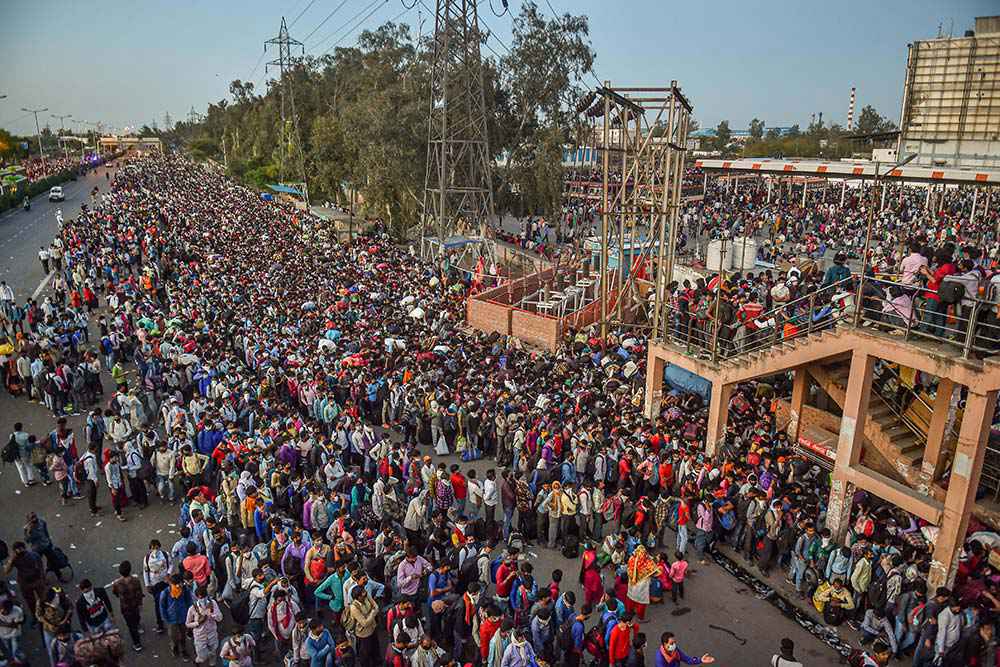
    The biggest such incident was reported from Mumbai’s Bandra West, where flocks of migrant labourers gathered outside the railway station, hoping to go home as they had no jobs, no money and no source of food.

    Daily wage earners, numbering around 1,000, assembled at suburban Bandra (West) bus depot near the railway station and squatted on road at around 3 pm.

    Videos and images showing hordes protesting outside the Bandra station soon went viral on social media.

    Heavy police deployment was made at the site to tackle any untoward incident.

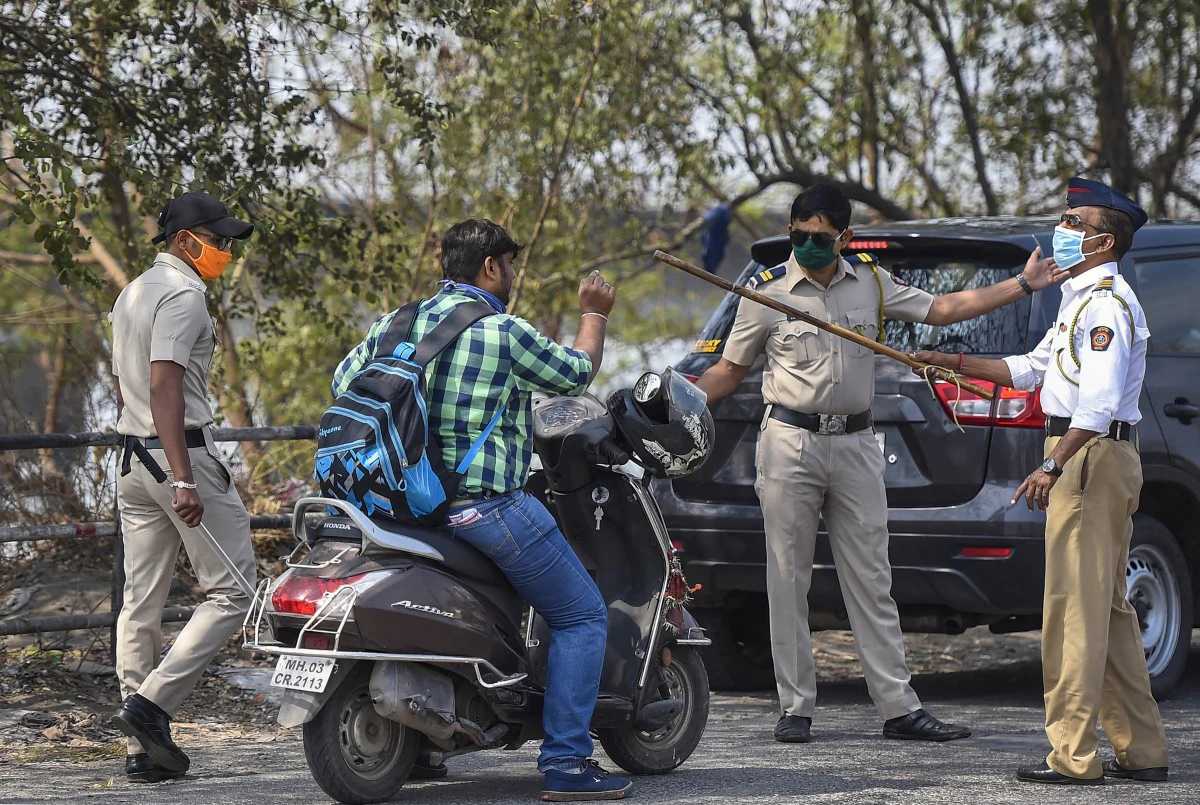
    Initially, the police asked local community leaders to help convince the crowd to leave the area but when the labour refused to disburse, the police resorted to lathicharge.

    A police official said the migrants were dispersed two hours later and have been assured accommodation and food till the lockdown lasts.


  • since March this year, since the country went into lockdown, which also forced the closure of the industries along its banks, the water quality has been improving dramatically

    In May 2019, the Central Pollution Control Board (CPCB) had said that the water from the holy river Ganga was absolutely unfit for “direct drinking”.

    In October 2019 the UP Pollution Control Board (UPPCB) had stated that the river water unfit even for bathing.

    According to UPPCB the level of Coliform and Fecal Coliform bacteria in the river water was so high that against the maximum permissible limit of 500 MPN (most probable number)/100 ML of water for both bacteria, 40,000 MPN of Coliform and 22,000 MPN of Fecal Coliform bacteria was measured in the Ganga, in Jana village of Kanpur.

    But since March this year, since the country went into lockdown, which also forced the closure of the industries along its banks, the water quality has been improving dramatically.

  • Man is by nature a social animal. This is perhaps the most quoted statement of Greek philosopher Aristotle

    Man is by nature a social animal. This is perhaps the most quoted statement of Greek philosopher Aristotle. It is this human nature that has led to the immense success of globalisation. Like humans, nations too felt the need for cohesion and cooperation.

    The World War II accelerated the process of globalisation. The human crisis called for greater collective action to fight off any future crisis. Three key institutions founded after World War II – the United Nations, the World Health Organisation and the World Bank — were expected to avert a global crisis.

    Observers have flagged novel coronavirus pandemic as the biggest human crisis since World War II. On evidence, all three, the UN, the WHO and the World Bank, have failed the world as novel coronavirus hit country after country and destroyed their economies. All three face a serious challenge to their credibility, and this challenge is a major lesson for India to fend for itself and prepare itself better for future global human crisis.

    First, the failure of the WHO in preventing the novel coronavirus outbreak of China from becoming a pandemic.

    What makes novel coronavirus or Covid-19 outbreak dangerous is its human-to-human transmission, both from symptomatic and asymptomatic infected persons. The WHO is a UN-affiliated body with global presence. It is expected to pass on a disease alert, more so in the cases of fast-transmission contagion, to member countries.

    Taiwan says it learnt about human-to-human transmission of novel coronavirus infection in Wuhan in December, and alerted the International Health Regulations (IHR) of the WHO the same month. A huge number of Taiwan nationals work on mainland China including in Wuhan, the coronavirus ground-zero.

  • A broad consensus has emerged that the national lockdown should be extended by at least two weeks after a meeting between the prime minister and state chief ministers on Saturday

    A broad consensus has emerged that the national lockdown should be extended by at least two weeks after a meeting between the prime minister and state chief ministers on Saturday

    LOCKDOWN 2.0 TO FOCUS ON LIVELIHOOD

    A broad consensus has emerged that the national lockdown should be extended by at least two weeks after a meeting between the prime minister and state chief ministers on Saturday.

    Several chief ministers at the same time have pushed for a resumption of some economic activities like in the farming sector in regions with no Covid-19 cases.

    With most states favouring the lockdown to be extended at least by two weeks beyond April 14, the government is broadly focusing on a two-pronged action plan–containing the spread of Covid-19 in the country and staggered resumption of economic activities, according to an official.

    The Centre’s plan is seen as a change in strategy from saving lives a month ago to saving lives as well as livelihoods now in the fight against the pandemic.

    States are likely to designate districts, towns and cities as red, orange and green zones depending upon the number of Covid-19 cases as part of efforts to allow differentiated restoration of normalcy with conditions like uses of masks and social distancing in public.

  • In the wake of spurt in cases of coronavirus in India, the ICMR has taken into account the need to expeditiously expand Covid-19 testing facilities in all parts of the country and has initiated a proactive search of potential laboratories which could be enabled for coronavirus testing

    In the wake of spurt in cases of coronavirus in India, the ICMR has taken into account the need to expeditiously expand Covid-19 testing facilities in all parts of the country and has initiated a proactive search of potential laboratories which could be enabled for coronavirus testing

    INDIA WORKS TO BOOST TESTING

    Seeking to expeditiously expand Covid-19 testing facilities, the government has identified 14 Centres of Excellence such as PGIMER in Chandigarh, AIIMS, New Delhi and NIMHANS in Bangalore to mentor all government and private medical colleges in their catchment areas to create state-of-art molecular virology setups.

    In the wake of spurt in cases of coronavirus in India, the ICMR has taken into account the need to expeditiously expand Covid-19 testing facilities in all parts of the country and has initiated a proactive search of potential laboratories which could be enabled for coronavirus testing, a senior official said.

    According to an ICMR official, 2,06,212 tests for Covid-19 have been conducted so far.

    “Of these 14,855 tests took place at 156 government labs and 1,913 tests happened at 69 private labs on Sunday. There is no need to worry. We have enough stocks to conduct tests for six weeks,” the official said.

  • Ba thường dân đã thiệt mạng trong một cuộc đấu súng và nã pháo dữ dội giữa các binh sỹ Ấn Độ và Pakistan ở khu vực Ranh giới Kiểm soát (LoC) chia tách vùng lãnh thổ Kashmir.

    Theo Tân hoa xã, người phát ngôn quân đội Ấn Độ ở thành phố Srinagar – Đại tá Rajesh Kalia cho biết, 3 thường dân nước này đã thiệt mạng hôm 12/4 trong một cuộc đấu súng và nã pháo dữ dội giữa các binh sỹ Ấn Độ và Pakistan ở khu vực Ranh giới Kiểm soát (LoC) chia tách vùng lãnh thổ Kashmir.

    Vụ đấu pháo nổ ra tại các khu vực tiền tiêu của huyện biên giới Kupwara, cách thành phố Srinagar – thủ phủ mùa Hè của vùng lãnh thổ Kashmir nằm dưới sự kiểm soát của Ấn Độ – khoảng 140km về phía Tây Bắc.

    Đại tá Kalia nói: “Lúc 5 giờ chiều (theo giờ địa phương), phía Pakistan đã khởi đầu hành động vi phạm lệnh ngừng bắn một cách vô cớ ở khu vực Keran. Pakistan đã tấn công người dân ở khu vực Kupwara gần LoC, gây ra hành động giết hại 3 thường dân vô tội, trong đó có 1 phụ nữ và 1 trẻ em.”

    Theo lực lượng cảnh sát, một quả đạn pháo đã phát nổ gần ngôi nhà của các nạn nhân ở làng Tumna-Chowkibal, khiến họ thiệt mạng.

  • Coronavirus India LIVE: MHA pulls up Bengal govt for not implementing lockdown in Murshidabad, Siliguri

    Coronavirus LIVE Updates: The global death toll due to Covid-19 pandemic has now crossed 108,700 even as the US eclipsed Italy’s death tally for the highest in the world on Saturday at about 20,000. France reported a fall in daily deaths from Covid-19 while Mainland China reported 99 new confirmed coronavirus cases, a jump from the previous day. Meanwhile, amid speculations whether the lockdown will be extended across India, the number of cases in the country rose by more than 900, taking the total cases to over 8,000. Some states including Maharashtra, Punjab and Telangana have already announced an extension of the lockdown. In a video-conference with the Prime Minister Narendra Modi on Saturday, the chief ministers of several states had suggested him to extend the period of lockdown to contain the spread of novel coronavirus. Follow Indiatoday.in for live updates on coronavirus in India and world.

  • Here’s a deep-dive into data retrieved from multiple sources for an insight into the coronavirus trajectory in India so far.

    From hotspots, recovery spans, the lockdown impact to the gender patterns, here’s a deep-dive into data retrieved from multiple sources for an insight into the coronavirus trajectory in India so far.

    COVID-19 HOTSPOTS

    Based on the number of cases and the frequency of the same, the below areas can be designated as COVID-19 hotspots. These areas would ideally require longer lockdowns and aggressive testing measures. These areas will also be hotbeds for widespread community infection if not addressed immediately.

  • Coronavirus LIVE: 134 new cases in Maharashtra, total rises to over 1,800

    Coronavirus LIVE Updates: The global death toll due to Covid-19 pandemic has now crossed 108,700 even as the US eclipsed Italy’s death tally for the highest in the world on Saturday at about 20,000. France reported a fall in daily deaths from Covid-19 while Mainland China reported 99 new confirmed coronavirus cases, a jump from the previous day. Meanwhile, amid speculations whether the lockdown will be extended across India, the number of cases in the country rose by more than 900, taking the total cases to over 8,000. Some states including Maharashtra, Punjab and Telangana have already announced an extension of the lockdown. In a video-conference with the Prime Minister Narendra Modi on Saturday, the chief ministers of several states had suggested him to extend the period of lockdown to contain the spread of novel coronavirus. Follow Indiatoday.in for live updates on coronavirus in India and world.

  • Coronavirus: Hydroxychloroquine consignment from India arrives in US after Trump’s intervention

    A consignment of hydroxychloroquine from India arrived in the United States on Saturday, days after New Delhi lifted a ban on the export of the anti-malaria drug, seen as a possible cure for Covid-19, to the US and some other countries on humanitarian grounds.

    Earlier this week, India at the request of President Donald Trump cleared the export of 35.82 lakh tablets of hydroxychloroquine to the US along with nine metric tons of active pharmaceutical ingredient or API required in the manufacturing of the drug.

    “Supporting our partners in the fight against Covid-19. Consignment of hydroxychloroquine from India arrived at Newark airport today,” India’s Ambassador to the US Taranjit Singh Sandhu tweeted.

    Trump, during a phone call last week, asked Prime Minister Narendra Modi to lift the hold on American order of the anti-malarial drug, of which India is the major producer. India, which manufactures 70 per cent of the world’s supply of hydroxychloroquine, lifted the ban on April 7.

    Hydroxychloroquine has been identified by the US Food and Drug Administration as a possible treatment for the Covid-19 and it is being tested on more than 1,500 coronavirus patients in New York.

    Anticipating that it will work, given initial positive results, Trump has bought more than 29 million doses of hydroxychloroquine for the potential treatment of Covid-19 patients.

    The arrival of the consignment was welcomed by Americans. “US will never forget this great humanitarian gesture by India. Under President Trump and Prime Minister Narendra Modi, the two largest democracies of the world have come together than ever in the past,” said New York-based Al Mason, a real estate consultant and a Trump supporter.

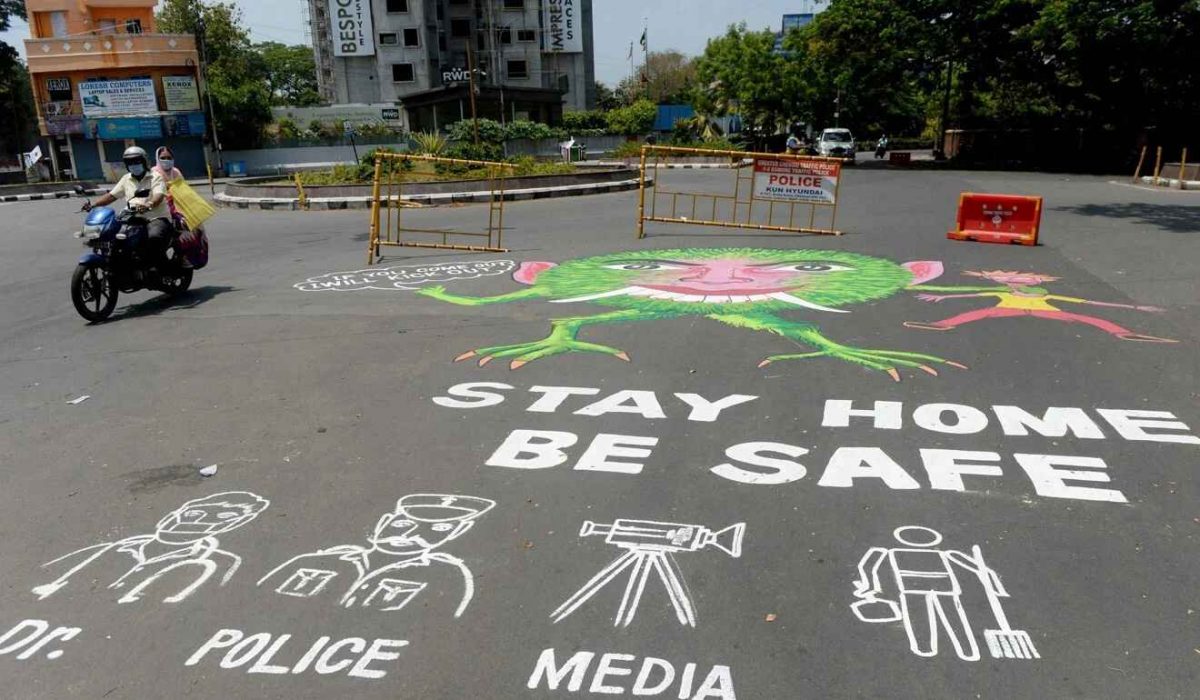
  • A motorist rides past an awareness graffiti reading ‘Stay home be safe’, during a government-imposed nationwide lockdown as a preventive measure against the coronavirus in Chennai.

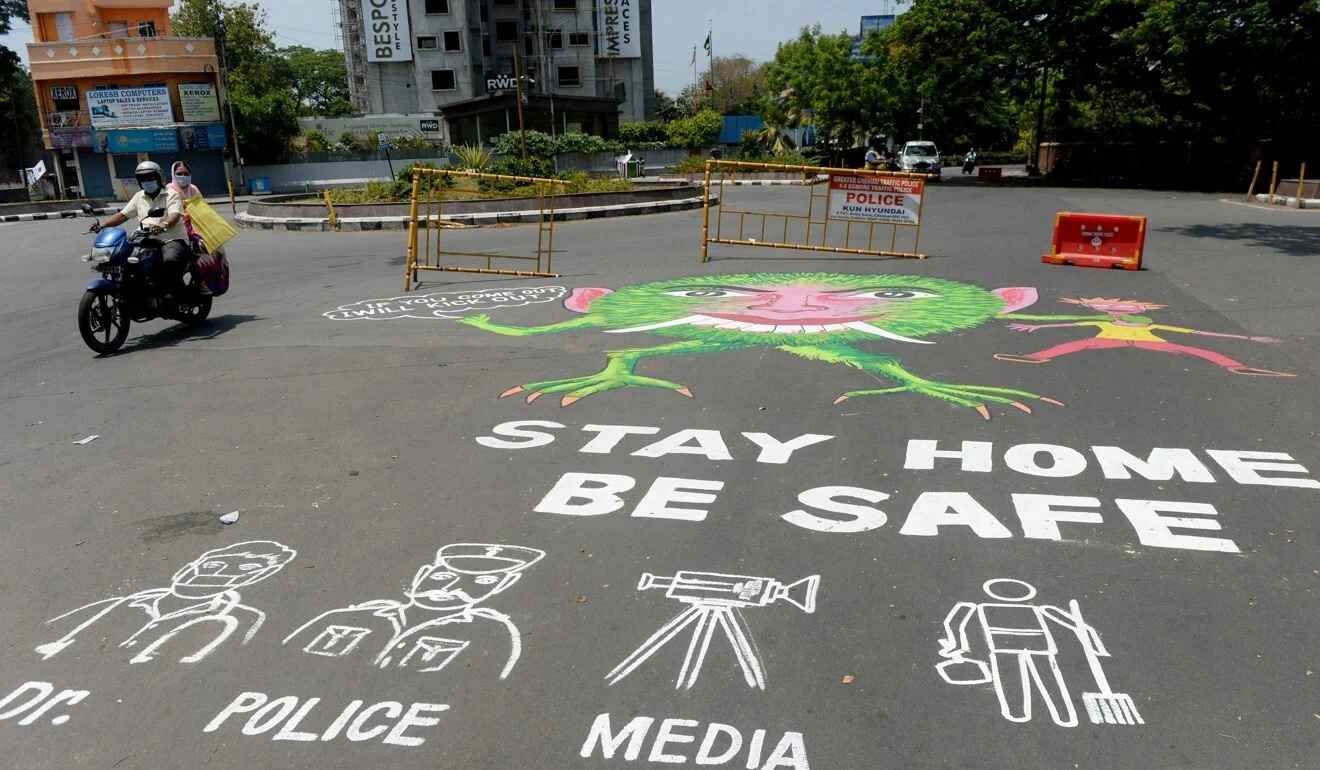
    A motorist rides past an awareness graffiti reading ‘Stay home be safe’, during a government-imposed nationwide lockdown as a preventive measure against the coronavirus in Chennai.

    A motorist rides past an awareness graffiti reading ‘Stay home be safe’, during a government-imposed nationwide lockdown as a preventive measure against the coronavirus in Chennai.

    In India for instance, the world’s biggest lockdown has prompted hundreds of thousands of migrant workers to return to their home villages, many on foot.

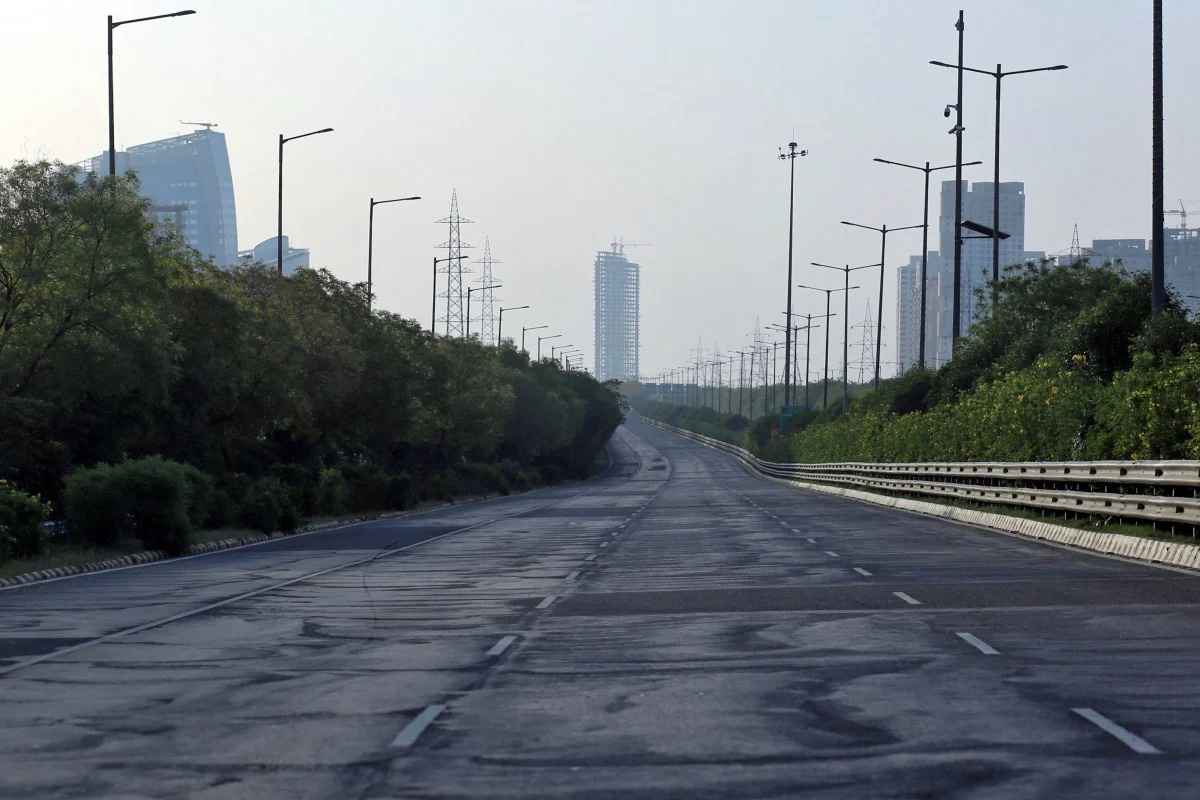
  • A deserted view of the Yamuna motorway that connects Delhi with Agra during a 21-day nationwide lockdown

    A deserted view of the Yamuna motorway that connects Delhi with Agra during a 21-day nationwide lockdown

    A deserted view of the Yamuna motorway that connects Delhi with Agra during a 21-day nationwide lockdown

    India, Bangladesh, Pakistan, Afghanistan and other smaller nations, which have 1.8 billion people and some of the planet’s most densely populated cities, have so far reported relatively few coronavirus cases but experts fear they could be the next hotspots.


    The dire economic effects are already much in evidence, with widespread lockdowns freezing most normal activity, Western factory orders cancelled and vast numbers of poor workers suddenly jobless.


    “South Asia finds itself in a perfect storm of adverse effects. Tourism has dried up, supply chains have been disrupted, demand for garments has collapsed and consumer and investor sentiments have deteriorated,” said a World Bank report.

  • The nationwide lockdown to contain the deadly coronavirus looks set to be extended by two more weeks till April-end

    The nationwide lockdown to contain the deadly coronavirus looks set to be extended by two more weeks till April-end after a consensus emerged among states on Saturday for continuing the curbs amid the tally of confirmed infections crossing 7,500 with a record increase of over 1,000 cases within 24 hours.

    While Prime Minister Narendra Modi asked state governments to take steps to curb the lockdown violations and ensure adherence to social distancing, he also announced a shift in focus from ‘Jaan hai to jahaan hai’ (health is wealth) to ‘Jaan bhi, jahaan bhi’ (lives as well as livelihoods), which many saw as indications towards relaxations for certain economic activities, including for industrial and agriculture sector.

    The next 3-4 weeks would be critical to determine the impact of steps taken till now to curb the virus spread, Modi told the chief ministers.

    ‘JAAN BHI, JAHAAN BHI’

    The nationwide coronavirus lockdown is set to be extended at least till April 30 after a broad “consensus” on it emerged on Saturday during a meeting of chief ministers with Prime Minister Narendra Modi, who stressed on “jaan bhi, jahaan bhi”, indicating that restrictions may be tweaked as it was important to save livelihoods along with lives.

    During their interaction, several chief ministers demanded financial and fiscal relief from the Centre to fight the pandemic, while Modi suggested measures to incentivise direct marketing of farm produce to help farmers, among other steps to help the country remain healthy and to prosper too. West Bengal Chief Minister Mamata Banerjee said the states have demanded Rs 10 lakh crore package.

  • Has the Tamil Nadu chief secretary let the cat out of the bag

    Has the Tamil Nadu chief secretary let the cat out of the bag? While briefing the media in Chennai on Saturday, after the conclusion of the state cabinet meeting, Tamil Nadu Chief Secretary K Shanmugam said there is a delay in receiving the rapid antibody test kits Tamil Nadu had ordered because the consignment, meant for India, had been diverted to the United States by China.

    The bureaucrat informed that the state had placed an order of a total of 4 lakh test kits with the Centre, of which 1 lakh was expected from China. Shanmugam said though the production of rapid antibody test kits was limited to China, it had sent one consignment to the USA.

    This could possibly explain the constant delay in India receiving its order of 5 lakh rapid antibody test kits that it had placed with a Chinese firm on March 28.

    At least four deadlines for delivery have been missed so far, adding to India’s wait for conducting more tests to detect the spread of Covid-19 among its citizens.

    Rapid antibody tests are quicker and inexpensive alternative to the standard RT-PCR tests being conducted currently in the country.

    The advisory to start rapid antibody-based blood tests for Covid-19 was issued by the Indian Council of Medical Research (ICMR) on April 4. It authorised for the tests to be conducted in areas reporting clusters (containment zone) and in large migration gatherings/evacuee centres.

    But the first order for the rapid antibody test kits was placed on March 28, and since then deadlines have only come and gone.

  • 印度为防疫实施全国封锁,安德拉省(Andhra Pradesh)一名19岁年轻女子仍突破封锁,为爱走了60公里到邻近村庄嫁给她的男友

    印度为防疫实施全国封锁,安德拉省(Andhra Pradesh)一名19岁年轻女子仍突破封锁,为爱走了60公里到邻近村庄嫁给她的男友,女方家长已提出投诉,警方正在处理。

    印度2019年冠状病毒疾病(COVID-19,新冠肺炎)疫情不断扩大,确诊病例迄今已破6000例,而印度总理莫迪已宣布3月25日起全国封锁21天,民众非必要不得外出,连婚礼也不能举办,最近媒体报导有两对新人只好透过视讯举办婚礼。

    印度媒体News 18今天报导,家住安德拉省克利希纳县(Krishna)农村的19岁年轻女子巴凡妮(Chitikala Bhavani)等不及要与男友结婚,突破封锁走了60公里,成功抵达男友住的村子,要嫁给男友。

    巴凡妮与男友已交往4年,最近才向父母透露两人交往并打算结婚,但女方家长反对;因此,巴凡妮和男友计划私奔。

    就在巴凡妮与男友准备启动私奔计画时,莫迪突然宣布全国封锁,让计画受阻。但巴凡妮却等不及想嫁给男友,于是偷偷瞒着家人出走,经过60公里艰苦跋涉后抵达男友的家。

    巴凡妮说,她和男友原本决定在全国封锁结束后就私奔结婚,但目前封锁可能延长,所以她等不及了,决定步行到男友家结婚。

    但巴凡妮的父母非常生气,威胁这对小情侣,于是小情侣向警方报案寻求保护。

    虽然官方宣称印度已废除种姓制度,但印度一般家庭仍习惯由父母根据种姓帮子女找寻对象,经相亲结婚;情侣若私奔,往往会遭愤怒的父母以保护家族名誉为名,对情侣进行「荣誉处决」(honour killing)。

    当地警方表示,今天上午接获一对新婚夫妇报案,称生命受到威胁,听了他们的描述,才知道这名女子突破封锁走了60公里与男友结婚;由于两人已经成年,可以自行决定婚嫁,警方也接到女方父母的投诉电话,正与女方父母沟通。

  • Coronavirus: PM Modi likely to take call on lockdown extension as 1000+ new cases take India’s tally to 6,872

    The massive spike in coronavirus cases comes a day ahead of Prime Minister Narendra Modi’s meeting with chief ministers of all states, where he is expected to take a call on the extension of nationwide lockdown imposed on March 25

    India on Friday registered the highest-ever single-day spike in the number of Covid-19 cases. As per the official government tally, India now has 6,872 cases of novel coronavirus – 24 hours ago the figure stood at 5,865. The central government data puts deaths due to Covid-19 in India at 206.

    The massive spike in coronavirus cases comes a day ahead of Prime Minister Narendra Modi’s meeting with chief ministers of all states, where he is expected to take a call on the extension of nationwide lockdown imposed on March 25, even as two states – Odisha and Punjab – have already extended restrictions till April 30.

    Meanwhile, the World Health Organisation has also cautioned the global leaders against a hastened withdrawal of restrictions imposed to control the virus, as the organisation said, it could lead to a re-emergence of the deadly infection. The novel coronavirus pandemic has infected over 16 lakh people globally since its emergence in China last December while the worldwide death toll is fast approaching 1,00,000.

    Over 1,000 new cases in India in one day

    Despite the 17th day of the nationwide lockdown, India registered over 1,000 new cases of the novel coronavirus. By 9 PM April 10, ICMR data said that total 6872 individuals had tested positive in India. However, a PTI tally of numbers reported by various states as on 9.30 PM showed a total of 7,510 having been affected by the virus nationwide so far with at least 251 deaths. More than 700 have been cured and discharged.

    While several states including Maharashtra, Tamil Nadu, Jammu & Kashmir and Uttar Pradesh reported a rising number of cases, the Union Health Ministry said the rate of people testing positive was only 0.2 per cent on Thursday when more than 16,000 samples were tested. Cumulatively close to 1.5 lakh samples have been tested so far across India.

  • India’s white sugar shipments have been brought to a near standstill by the coronavirus lockdown

    India’s white sugar shipments have been brought to a near standstill by the coronavirus lockdown, depriving the global market of key supplies after a poor harvest in Asia’s top exporter Thailand.

    Most of India’s private ports have declared force majeure and while government ports are operating, they face labour shortages as Indians have been ordered to stay home and avoid spreading the coronavirus under a 21-day lockdown.

    “Ports are functioning for clearing backlogs rather than executing new business,” Rahil Shaikh, managing director of trading company MEIR Commodities India, said.

    “Container traffic has virtually stopped, there’s no courier services, no buses, and no public transport. Migrant labour has gone back to the countryside and customs are operating at about 5-10% of capacity,” Shaikh said.

    Even before the lockdown, Indian industry officials had cut 2019/20 sugar export estimates to 4.5 million tonnes as a drop in prices had made overseas sales unprofitable.

    This could fall further if the lockdown is extended. Most of India’s 2019/20 sugar exports contracts were for white, rather than raw, sugar.

    “In the last three weeks, not a single new deal was signed due to labour shortages and lower prices,” a Mumbai-based dealer at a global trading firm said. Two other dealers based in the capital confirmed the trend.

    Of the 3.75 million tonnes of sugar export deals agreed to since the start of the season on Oct 1, Indian mills have shipped out 2.86 million tonnes, the All India Sugar Trade Association said.

    Shaik said nearly all the remaining tonnages are stuck.

    Data from his firm shows private operators like Adani Ports and Special Economic Zone have declared force majeure, while state-run ports such as Jawaharlal Nehru Port Trust (JNPT) are all operating with delays.

  • When should India end coronavirus lockdown

    When should India end coronavirus lockdown? This is the question that people are asking and is being discussed by leaders and those in the government.

    In his interaction with chief ministers last week, Prime Minister Narendra Modi asked them for suggestions for an exit strategy to end the nationwide lockdown enforced on March 24 to contain novel coronavirus outbreak. The 21-day national lockdown would end on April 14. Now, the dominant exit strategy suggestion from the states is to extend the lockdown.

    Reports say at least half-a-dozen states, including worst-affected Maharashtra, have favoured extension of national lockdown citing no let-up in the coronavirus situation. Some others have called for graded end to the lockdown. PM Modi in his interaction with the chief ministers had also favoured a staggered lifting of the lockdown.

    This state of confusion is because there is no concrete model anywhere in the world to exit from coronavirus lockdown. In China, where Covid-19 pandemic began, the lockdown continued for over two months and was lifted in a phased manner.

    For example, in the coronavirus epicentre Wuhan, China lifted lockdown after 76 days. Residents of Wuhan are now being allowed to travel in the city and also cross its borders. But, reports suggest that the Chinese authorities are keeping intense surveillance on the movement of people.

    Broadly, there are five focal points around which exit strategies have been suggested world over. Lockdown is widely considered as a strategy coming out of the confusion that the coronavirus pandemic has created. Since the virus is still new and understanding coronavirus is a process in progress, lockdown has bought authorities some time to prepare a plan.

  • The present situation is an epoch changing event in mankind’s history and we must evolve to counter its impact

    Dashing hopes of a complete exit from the ongoing lockdown in one go, Prime Minister Narendra Modi on Wednesday said the country is facing a “social emergency” like situation as well as serious economic challenges due to the Covid-19 pandemic, which showed a sharp spike in the infections, taking the nationwide tally to over 5,200 with at least 149 deaths.

    After an interaction with Modi via video conference, several political leaders said the lockdown might not be lifted completely after April 14 and they were told by the prime minister that the pre-corona and post-corona life won’t be the same.

    “The situation in the country is akin to a social emergency…it has necessitated tough decisions and we must continue to remain vigilant,” the prime minister told the leaders, according to an official statement. He asserted that his government’s priority is to “save each and every life”.

    “The present situation is an epoch changing event in mankind’s history and we must evolve to counter its impact,” Modi said.

  • Coronavirus Live Updates: Over 750 cases in 24 hours take tally near 5,200; death toll climbs to 149

    New Delhi | April 08, 2020 11:08 IST

    As the number of confirmed Covid-19 cases in India nears 5,000, several states have asked the government to extend the lockdown and are taking stricter measures to prevent the virus from spreading further. Special teams have been set up in some states to monitor the situation in coronavirus hotspots and ramp up testing infrastructure. Despite all measures, states fear more cases could emerge if the lockdown is not extended. It remains to be seen whether the government extends the lockdown as cases in India continue to increase. Meanwhile, China finally lifted the 76-day lockdown in Wuhan, the epicentre of the novel coronavirus outbreak, which has now claimed over 82,000 lives globally and infected over 14.2 lakh people. Countries like the US, France, Spain and Italy are facing a severe crisis due to the pandemic as more than 10,000 people have died in all four countries. 

  • Covid-19 crisis may drag 400 mn Indian workers further into poverty: ILO

    About 400 million workers in India, working in the informal economy, are at risk of falling deeper into poverty during the COVID-19 pandemic crisis. The International Labour Organisation (ILO) said in a report on Wednesday that the COVID-19 pandemic is affecting 2.7 billion workers globally due to lockdowns.

    COVID-19 is already affecting tens of millions of informal workers. In India, Nigeria and Brazil, the number of workers in the informal economy affected by the lockdown and other containment measures is substantial.

    In India, nearly 90 per cent of the people work in the informal economy and about 400 million of these are at risk. ILO said rt said that particularly in low- and middle-income countries, hard-hit sectors have a high proportion of workers in informal employment and workers with limited access to health services and social protection. Without appropriate policy measures, workers face a high risk of falling into poverty and will experience greater challenges in regaining their livelihoods during the recovery period.

    ILO noted that the COVID-19 pandemic has further accelerated in terms of intensity and expanded its global reach. Full or partial lockdown measures are now affecting almost 2.7 billion workers, representing around 81 per cent of the world’s workforce.

  • The signs of an ominous food crisis in rural areas are already there

    The signs of an ominous food crisis in rural areas are already there. Most rural households—barring the land-owning ones— across six or seven Indian states that Outlook spoke to fear that they may run out of food in a few days, given the number of family members returning home from cities. Retail outlets are unable to refurbish their dwindling inventories. Given the creeping onset of what could be a dispersed famine, experts fear that India may soon find itself in the midst of food riots and civil crisis if circulation is not eased. Economist Jean Dreze, who has worked extensively on starvation, fears rural India will be in a lot of pain with the rev­erse flow of migrants unless emergency measures are taken (see interview, “Bihar will take the worst hit”). The Centre and state governments are confident as of now, and say they will manage and resolve the distribution bottlenecks in a few days. A lot of Indians will be hoping that the proof of the pudding will come—in the eating.

    The real extent of the emergency, even if of a disaggregated nature, will be known soon. There will also be economic consequences to contend with. In rural areas, the good news is that the croppers, or those whose produce is ready, are unlikely to go hungry. But the full force of the downstream repercussions will be on them—for the next 2-3 years, or more. Since they will be unable to sell their crops, or even opt for distress selling, their incomes will dwindle this season. That means they will be unable to repay their current debts, and will need to borrow even more for the next season.

    In effect, farmers will get even more entangled in a debt whirlpool. Result? Suicides, extreme poverty and subsistence living—or, if they are fortunate, loan waivers at least for those within the formal system. There are many marginal farmers outside that. Also, armies of migrant workers—those who return home to earn money during the cutting season, who find themselves high and dry. They will depend heavily on welfare schemes, like MNREGA, which need to be escalated immediately. Else, we may be staring at extreme rural distress.

    Urban areas have another phalanx of ghosts haunting them. Already strained by bankruptcies and more possible failures in the organised sector, they may soon see companies slashing costs (read: layoffs). Salaries may be cut too. Middle-class consumption will consequently come down drastically. As for the unorganised sector, the spectre of an uncertain future looms even sharper—and longer. One variable here: will migrant labourers even come back from the villages? Or will uncertainty keep them back? It will be bleak at home, and back in the city too.

  • Delhi Fire Services personnel on Thursday sprayed 20,000 litres of disinfectant in a four-hour operation in south Delhi’s Nizamuddin area

    Delhi Fire Services personnel on Thursday sprayed 20,000 litres of disinfectant in a four-hour operation in south Delhi’s Nizamuddin area which has emerged an epicentre for spread of the coronavirus.

    According to Delhi Fire Services (DFS) director Atul Garg, two fire tenders manned by nine personnel carried out the task.

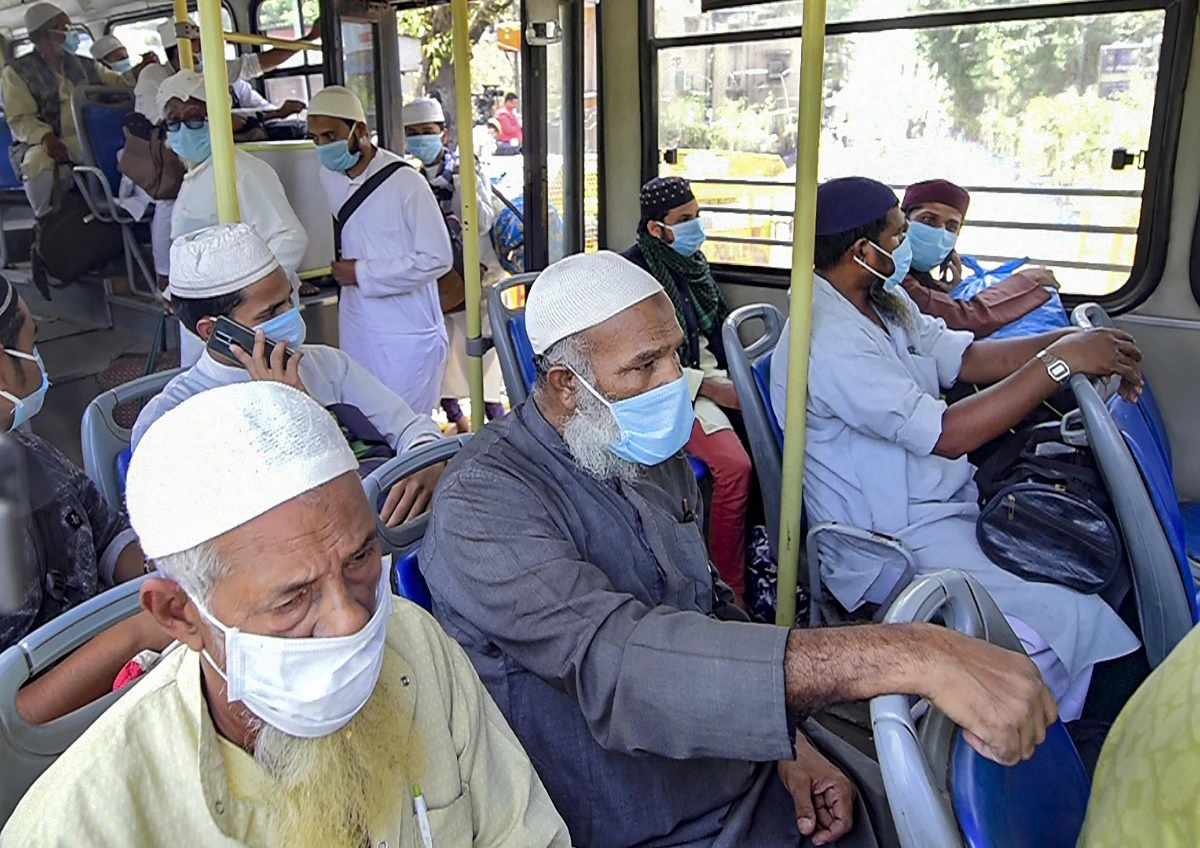
    Tabligh-e-Jamaat’s Markaz in Nizamuddin West has emerged as an epicentre for spread of the coronavirus in different parts of the country after thousands of people took part in a congregation from March 1-15.

    In Delhi alone, over 50 participants of the congregation have tested positive for coronavirus till now.

    About 9,000 Tablighi Jamaat members and their primary contacts have been quarantined till now in the country after the government undertook “massive efforts” as part of steps to check the spread of the novel coronavirus, a senior home ministry official said on Thursday.

  • Tablighi Jamaat Markaz event attendees significantly added to India’s Covid-19 cases on Wednesday as state governments continued to trace

    Tablighi Jamaat Markaz event attendees significantly added to India’s Covid-19 cases on Wednesday as state governments continued to trace, quarantine and test those who were present at the congregation between March 1-15. By Wednesday night, the total number of positive novel coronavirus cases in India was 1,998, with at least 58 deaths.

    On Wednesday, over 5,000 of those identified to have attended the congregation have been quarantined, including in hospitals across states, while efforts are on to trace another 2,000 including in Gujarat, Tamil Nadu and Telangana.

    Experts believe these numbers are likely to go up as several hundred attendees of the religious congregation in south Delhi’s Nizammudin area showed symptoms of Covid-19, their test results are awaited.

    Meanwhile, the common people continued to suffer on Day 8 of the nationwide lockdown as essential commodities remained in short supply across the nation. While shopkeepers blamed it on the absence of supply chain, the government assured that it was working to ensure that at least 2 lakh trucks ply on the roads by Thursday, delivering essential food items and medicines.

  • The Union Home Ministry said approximately 2,100 foreigners visited India for ‘tablighi’ activities this year, including those from Indonesia, Malaysia, Thailand, Nepal, Myanmar, Bangladesh, Sri Lanka and Kyrgyzstan

    The Union Home Ministry said approximately 2,100 foreigners visited India for ‘tablighi’ activities this year, including those from Indonesia, Malaysia, Thailand, Nepal, Myanmar, Bangladesh, Sri Lanka and Kyrgyzstan

    TABLIGHI JAMAAT-LINKED CASES SPRING ACROSS COUNTRY

    In the national capital alone, at least 24 people who took part in the religious congregation, Tablighi Jamaat, have tested positive for the novel coronavirus, Delhi Chief Minister Arvind Kejriwal said, as he slammed the organisers for being “highly irresponsible” on their part to hold such an event at a time when thousands have died in other countries due to the pandemic.

    The Union Home Ministry said approximately 2,100 foreigners visited India for ‘tablighi’ activities this year, including those from Indonesia, Malaysia, Thailand, Nepal, Myanmar, Bangladesh, Sri Lanka and Kyrgyzstan.

    It also said that all state police have been asked to locate Indian Tabligh Jamaat workers from local coordinators, followed by their medical screening and quarantine.

    So far, 2137 such people have been identified and are being medically examined and quarantined, while more would be located, the Ministry said.

    Several state governments, including in West Bengal, Assam and Manipur, said they are taking steps to locate participants of the Nizamuddin event.

    Karnataka government said 54 people from the state had attended the event, out of which 13 have been identified but they have tested negative for the Covid-19.

    Gujarat police also launched a probe to identify all the attendees from the state and said primary investigations have revealed that some persons from Bhavnagar had attended the congregation.

    At least 17 people from Himachal Pradesh also attended the congregation, a state police spokesperson said.

    2,100 foreigners visited India for ‘tablighi’ activities this year.

    A Srinagar-based businessman is being seen as the “super-spreader” in this entire case as he travelled by air, train and road to Delhi, Uttar Pradesh and back to Jammu and Kashmir before he died of Covid-19 on March 26, raising fears he may have infected many others along the way, officials said on Tuesday.ADVERTISEMENT

    Six people in Telangana who attended the meeting in the city’s Nizamuddin West area also died on Monday.

    According to officials, other states from where the attendees had come include Tamil Nadu, Uttar Pradesh, Maharashtra, Madhya Pradesh, Bihar, Jharkhand, Uttarakhand, Haryana, Andaman Nicobar Islands, Rajasthan, Kerala, Odisha, Punjab and Meghalaya.

    In Andhra Pradesh, officials said more than half of the 40 people who have tested positive for coronavirus in the state were linked to the Nizamuddin event.

    The police registered an FIR against Maulana Saad of the Nizamuddin centre under sections of Epidemic Disease Act and other sections of the Indian Penal Code for violating government orders on the management of the Markaz in relation to a social, political or religious gathering.

  • The Union Health Ministry lamented that the number of hotspots has risen due to “lack of people’s support and delay in timely detection” of the cases.

    The Union Health Ministry lamented that the number of hotspots has risen due to “lack of people’s support and delay in timely detection” of the cases.

    LACK OF COOPERATION INCREASING CASES

    The Union Health Ministry lamented that the number of hotspots has risen due to “lack of people’s support and delay in timely detection” of the cases.

    Health Ministry Joint Secretary Lav Agarwal said the government is using cluster containment strategies and doing rigorous contact tracing in these hotspots to check the virus from further spreading.

    Union Health Ministry lamented that the number of hotspots has risen due to “lack of people’s support and delay in timely detection” of the cases.

    Within the national capital, more than 1,100 people who attended the congregation have been quarantined while at least 441 have been hospitalised. The government is screening all those who participated in the event, officials said.

    Agarwal, however, said it was not the time to find faults but to take action.

  • The Covid-19 crisis appeared escalating on Monday with at least 11 new deaths including of six from Telangana

    The Covid-19 crisis appeared escalating on Monday with at least 11 new deaths including of six from Telangana who had attended a religious congregation in the national capital’s Nizamuddin area earlier this month, while the government reported 227 fresh cases of infection nationwide — the highest for a day.

    While the Union Health Ministry maintained the deadly coronavirus was still in the local transmission stage in India and yet to move to the community transmission phase, the Supreme Court cautioned that fear and panic are becoming a bigger problem than the coronavirus.

    GOVT DENIES INDIA IN COMMUNITY TRANSMISSION STAGE

    The Union Health Ministry in its daily briefing said the Covid-19 is still in local transmission stage in India and it took 12 days for cases of infection to rise from 100 to 1,000 at a rate of increase slower than some of the developed countries.

    Joint Secretary in the Ministry of Health Lav Agarwal asserted there has been no community transmission as yet.

    “Technically, Covid-19 is still in the local transmission stage in the country as there has been no community transmission as of now,” Health ministry joint secretary Lav Aggarwal said, adding, “If there will be a community transmission we will want to covey it to the community through you (media) to increase the level of alertness and management for Covid-19 at the field level.”

    The government also said there was no immediate plan to extend the 21-day lockdown period, which entered its sixth day on Monday, while the Indian Army dismissed as “fake” social media posts about a possible emergency declaration next month.

  • Interacted with heads of our Missions abroad on the COVID-19 situation.

    Narendra Modi
    @narendramodi

    Interacted with heads of our Missions abroad on the COVID-19 situation. We discussed many issues including ways to combat Coronavirus and the role our Missions can play in assisting Indians abroad.

  • The nationwide tally of confirmed Coronavirus cases crossed the 1,000-mark and the death toll reached 29 on Sunday

    The nationwide tally of confirmed Coronavirus cases crossed the 1,000-mark and the death toll reached 29 on Sunday, even as the central government ordered sealing of all state and district borders to check community transmission of the deadly virus by migrant workers and asked those having left already to be quarantined for 14 days.

    The national capital alone reported 23 fresh positive cases, taking its count to 72, while more people tested positive in adjoining Noida as also in Maharashtra and Bihar, among other states.

    2 ARMYMEN TEST POSITIVE

    The new cases included a SpiceJet pilot with no history of international travel and also a doctor and a junior commissioned officer in the Indian Army.

    The Colonel-rank doctor is serving at the Command Hospital in Kolkata while the JCO is posted to an Army base in Dehradun.

    Sources said the Army has traced all those who have come in contact with the two persons and accordingly they were quarantined. The two are understood to have visited an Army facility near the national capital earlier this month.

    The total number of positive cases has increased by 201 in the last 24 hours to reach 1,010 and nine more persons died in this period to take the nationwide toll to 27, according to the latest official figures.

    LOCKDOWN DAY 5: NO END TO MIGRANT EXODUS

    As the 21-day lockdown entered its 5th day, the exodus of migrant workers from big cities continued unabated, desperate to return to their villages after being left jobless and many of them without food or shelter.

    Charitable organisations, volunteers, religious institutions and government bodies including Railway Protection Force fed tens of thousands of people across the nation but many more remained outside the safety net.


    POOR FEAR HUNGER MORE THAN VIRUS

    A panic-like situation emerged due to mass exodus of migrant workers from various parts of the country, including the national capital, Maharashtra and Kerala, where a large number of people came out of relief camps and demanded being allowed to go to their homes.

    A migrant worker reportedly died of a heart attack in Uttar Pradesh after walking more than 200 km on way to his hometown in Madhya Pradesh from Delhi.

    “People are talking about the danger of some virus which can kill all of us. I don’t understand all these. As a mother, I am pained when I cannot feed my children. No one is there to help. All are equally worried about their lives,” Savitri, 30, a New Delhi slum dweller, told PTI as she walked along the Mathura Highway carrying her belongings on her head.

    “We will die of hunger before any disease if we stay here,” she said, determined to walk 400 km to her village in Uttar Pradesh’s Kannauj district.

    Hundreds of migrant workers also gathered again near the Anand Vihar terminus near the Delhi-UP border, hoping to board buses to their villages but they were turned back by police. A large number were seen walking in groups on highways and even on railway tracks.

    PM MODI SHARES MANN KI BAAT, APOLOGISES TO COUNTRY

    Prime Minister Narendra Modi, in his ‘Mann Ki Baat’ radio broadcast, sought the nation’s forgiveness for the hardships caused by the stringent nationwide lockdown, saying it was necessary because the country was fighting a battle between life and death.

    He, however, expressed confidence that “we will definitely win the battle” against the coronavirus menace and praised the front-line workers in this fight against as well as countless workers delivering the essential services.

    The government announced some more exemptions to the lockdown by allowing movement of all goods, irrespective of those being in essential or non-essential categories.

  • Punjab Police commando patrol in the front of Hall Gate during a government-imposed nationwide lockdown as a preventive measure against the Covid-19 coronavirus in Amritsar on March 26, 2020

    At least 15,000 people who may have caught the coronavirus from a ‘super-spreader’ guru are under strict quarantine in northern India after the Sikh religious leader died of Covid-19.


    The 70-year-old guru, Baldev Singh, had returned from a trip to Europe’s virus epicentre Italy and Germany when he went preaching in more than a dozen villages in Punjab state.


    It has sparked one of India’s most serious alerts related to the pandemic and special food deliveries are being made to each household under even tighter restrictions than the 21-day nationwide stay-at-home order imposed by the government.


    “The first of these 15 villages was sealed on March 18, and we think there are 15,000 to 20,000 people in the sealed villages,” said Gaurav Jain, a senior magistrate for the district of Banga, where Singh lived.


    “There are medical teams on standby and regular monitoring,” he told AFP on Friday.


    Nineteen people who were in contact with the preacher have already tested positive for the new virus, said Vinay Bublani, a local deputy police commissioner.


    Results are being awaited from more than 200 others.


    The guru and his two associates — who have also tested positive — ignored self-isolation orders on their return from Europe, and were on their preaching tour until Singh fell ill and died.


    The case has stunned India and a popular Punjabi singer based in Canada, Sidhu Moose Wala, released a song about Singh that has been viewed on YouTube more than 2.3 million times in less than two days.


    “I passed on the disease… roaming around the village like a shadow of death,” say the lyrics to the song, which Punjab’s police chief Dinkar Gupta has encouraged people to listen to as a warning.


    With 873 confirmed coronavirus cases and 19 deaths, India’s toll is lower than other countries afflicted by the pandemic, but experts say many infections have not been detected due to a lack of testing.

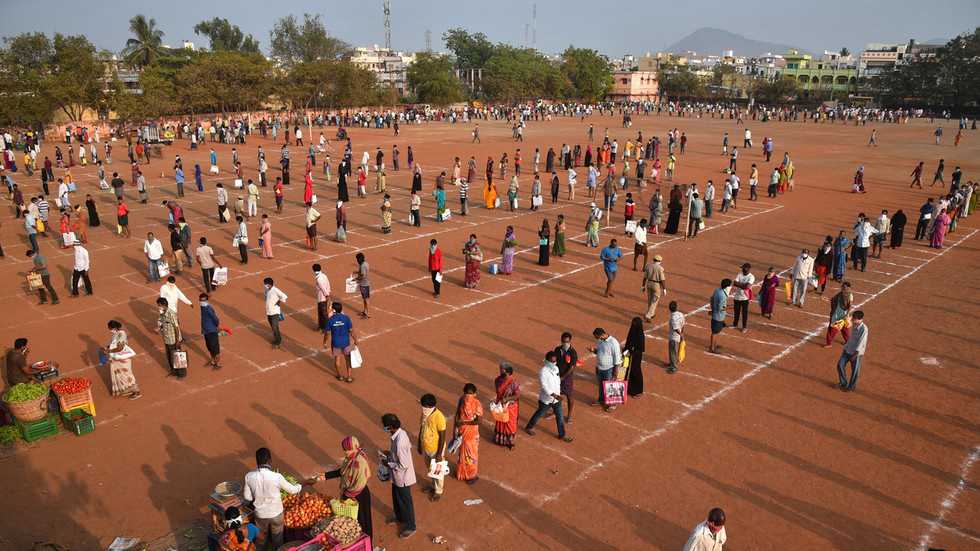
  • Indians maintain safe distance as they queue to buy vegetables during a 21-day lockdown

    Indians maintain safe distance as they queue to buy vegetables during a 21-day lockdown

    Indians maintain safe distance as they queue to buy vegetables during a 21-day lockdown

    With its 21-day lockdown, India joined a long list of nations taking extraordinary steps to battle Covid-19 — and its results will determine the future of this worldwide pandemic. Can India help the world avert major catastrophe?
    Indian Prime Minister Narendra Modi announced the unprecedented move on Tuesday to put “the entire country on lockdown” for three weeks until April 14. The PM told Indians that saving lives is his “first priority,” requested that people stay inside and reiterated that social distancing is the only way to break the cycle of the infection, which has spread rapidly around the world. “Step outside your house in the next 21 days and you will set the country back by 21 years,” Modi warned.

    This is no exaggeration. Indeed, with a population of over 1.3 billion people, how India responds to this crisis now could determine the trajectory of the Covid-19 pandemic for the entire world. The future of the outbreak largely depends on what happens in large and densely populated countries like India, according to Dr. Michael J Ryan, executive director of the WHO health emergencies programme. Dr. Ryan cautioned on Monday that India must continue to take “aggressive action at the public health level and at the level of society to contain, control, suppress this disease and save lives.”

    India’s Covid-19 challenges
    It’s no surprise that India faces several major hurdles in its fight against Covid-19; insufficient healthcare funding, lack of clean water and hygiene facilities in several regions and the aforementioned high-density population, to name a few. It is estimated that around 420 people live on each square kilometer of land in many of the country’s largest cities — a situation which undoubtedly makes “social distancing” and “self-isolation” impossible without a strictly enforced lockdown policy — and even then, it will still be difficult.

    An effective law governing public healthcare is another glaring gap in India’s fight against the Covid-19 pandemic. While the government has declared the disease a “notified disaster” under the Disaster Management Act – giving certain overriding powers to the central government over states and enabling more funds to be allocated to the crisis — the truth is that India lacks dedicated legislation for a pandemic situation. The primary law it resorts to in governing healthcare emergencies is the 123-year-old colonial-era Epidemic Diseases Act of 1897, which was enacted to fight the bubonic plague.

    India’s preparedness to deal with the global pandemic therefore immediately appears inadequate, especially when viewed in the context of how badly developed countries like Italy, Spain, and the United States are faring — even with their relatively lower population densities and more advanced healthcare systems.