分类: bharat

  • An Indian man is seeking damages for the “mental trauma” he endured after being intentionally abandoned on a train in Mumbai 38 years ago

    An Indian man is seeking damages for the “mental trauma” he endured after being intentionally abandoned on a train in Mumbai 38 years ago by his mother who wanted to pursue a career in the film industry, his lawsuit says.

    In a lawsuit filed to the Bombay High Court and cited by local media, make-up artist Srikant Sabnis, 40, alleges that his biological mother willfully abandoned him when he was just two years old.

    Sabnis claims that in September 1981, his mother, Aarti Mhaskar, left his hometown of Pune for Mumbai to seek a job in the film industry. According to the plaintiff, the woman left her infant son on the train once they arrived in the city. The boy was found by a railway officer and was sent to an orphanage, the lawsuit says, after which he was forced “to live like a beggar” until his grandmother obtained custody over him.

    The plaintiff allegedly did not learn the identity of his mother until 2017, and met her a year later. According to the lawsuit, the woman admitted to leaving Sabnis nearly four decades ago due to “unavoidable circumstances,” but she and her current husband asked him not to reveal who he really is in front of their other children.

  • a true friend of India

    India will observe a day of state mourning on Monday for the late Omani Sultan Qaboos bin Said Al Said, who was hailed for helping Indian expats and building “vibrant” relations with New Delhi.
    Flags will be flown at half-mast across India on Monday and a day of state mourning will be observed as “a mark of respect” for the late sultan, the spokesperson for the Ministry of Home Affairs said.
    Prime Minister Narendra Modi earlier hailed Qaboos as “a true friend of India” who did a lot for “a vibrant strategic partnership” between the two nations.“I will always cherish the warmth and affection I received from him,” Modi tweeted.

  • New Delhi already has a regulatory policy in place for unmanned aerial vehicles (UAVs) and their remote pilots

    India is scrambling to keep its skies safe after the US breached the sovereignty of its “friend” Iraq by carrying out an illegal drone attack which killed, among others, Iran’s top military commander General Qassem Soleimani.

    New Delhi already has a regulatory policy in place for unmanned aerial vehicles (UAVs) and their remote pilots who require prior permission to be in Indian skies but it’s no safeguard if a foe (Pakistan, for example) or a perceived friend (the United States) comes hissing from above and starts raining mayhem.

    India had begun to put its drone policy in place after Pakistan was caught dropping a cache of arms in Punjab last September but it’s the United States, with its brazen disregard for international norms, as well as its murderous drone background, which has had a chilling effect on India’s strategic boardrooms.

  • Thousands of angry protesters took to the streets to tell India’s leader he was unwelcome in Kolkata on Saturday

    Thousands of angry protesters took to the streets to tell India’s leader he was unwelcome in Kolkata on Saturday, in the latest rally against a citizenship law that critics say discriminates against Muslims.
    Widespread street demonstrations, and occasionally deadly clashes, have gripped the Hindu-majority nation since the law was approved by parliament last month.
    Police said nearly 30,000 protesters took to the streets of Kolkata to denounce Prime Minister Narendra Modi’s visit, with many linking hands to form human chains that spanned miles through the streets of the eastern megacity.
    “What we are fighting for is the future of India,” Surita Roy, a woman who joined the rally

  • India’s top court on Friday ordered the government to review all restrictions, including the suspension of internet service, in Indian-controlled Kashmir

    India’s top court on Friday ordered the government to review all restrictions, including the suspension of internet service, in Indian-controlled Kashmir within a week, saying the measures amounted to abuse of power.
    Defense attorney Vrinda Grover said the Supreme Court also directed the government to make public all orders imposing a lockdown in Kashmir in August after Prime Minister Narendra Modi’s Hindu nationalist-led government revoked the Muslim-majority region’s semi-autonomous status.

    The court held that the internet shutdown impacted the freedom of press, which is part of freedom of speech and expression.

    Ghulam Nabi Azad, a leader of the opposition Congress party, and Anuradha Bhasin, editor of The Kashmir Times, were the main petitioners in the case.

    The Congress party said the court delivered the “first big jolt of 2020 to illegal activities of Modi’s government by stating the importance of the internet as a fundamental right.”

    The people of Kashmir were waiting for this judgement, said Azad.

    The decision to abolish Kashmir’s special status was accompanied by a extensive lockdown, with New Delhi sending tens of thousands of additional troops to the already heavily militarized region, imposing a sweeping curfew, arresting thousands and cutting virtually all communications.

    Authorities have since eased several restrictions, lifted roadblocks and restored landlines and cellphone services. The internet, however, remains cut off.

    Officials also have encouraged students to return to school and businesses to reopen, but top political leaders from the region continue to be under arrest or detention.

    On Jan. 1, authorities announced that internet service would be allowed in 80 state-run hospitals in the Kashmir valley.

    The Press Trust of India news agency said the Supreme Court on Friday ordered the authorities to restore the internet to essential services like hospitals and educational institutions as they reviewed restrictions in the region.

    Bhasin said the restrictions had crippled media outlets, essential services and even communications between families, bringing untold miseries to people.

  • 印度北部北方邦周五(10日)晚发生一起两车相撞事故

    据《印度时报》,印度北部北方邦周五(10日)晚发生一起两车相撞事故,目前已造成至少20人死亡、约25人受伤。

    当天晚上,一辆双层长途大巴行驶到北方邦根瑙杰地区时,与一辆对向行驶的卡车相撞,随后两车起火。目击者说,事发时听到至少两声爆炸。

    根瑙杰地区警方表示,大巴载有45名乘客,事发时多数乘客正在睡觉,来不及逃生。伤者已被送往医院接。

  • Kolkata-born sisters Mrinalika M Bhanj Deo and Akshita M Bhanj Deo promote local art and culture

    As young entrepreneurs make their mark in the world of business, young royals are following this trend by establishing their presence in different industries.
    Mrinalika M Bhanj Deo and Akshita M Bhanj Deo are the second and third daughters of Praveen Chandra Bhanjdeo, the 47th ruler of the Bhanja dynasty, part of India’s princely state of Mayurbhanj, part of Orissa, a state in eastern India. Their mother is Rashmi Rajyalaxmi Bhanjdeo, from the royal family of Jaisalmer, and their father’s mother is Maharani Bharati Rajya Lakshmi Devi, daughter of Nepal’s late King Tribhuvan, and the aunt of the current king.
    Technically, India’s royalty lost their official powers in 1947, but while the ceremonial elites remains, Mrinalika, 28, and Akshita, 26, are not your average pampered heiresses. Beyond attending Le Bal des Debutantes in Paris a few years ago, to represent India alongside debutantes and cavaliers from the Kennedys and the Windsors, the sisters are focused on promoting local art and culture, running a sustainable boutique palace hotel, and embracing eco-tourism in Orissa.

  • at minus 17.6 degrees Celsius recording the coldest night in 12 years on Thursday

    Most parts of Himachal Pradesh continued to reel under biting cold with tribal district Lahaul-Spiti’s administrative centre Keylong at minus 17.6 degrees Celsius recording the coldest night in 12 years on Thursday, the meteorological department said.

    Meanwhile, Shimla MeT centre has issued a fresh orange warning of heavy rain, snowfall in the state on January 13 and 16.

    Earlier, Keylong had experienced the coldest night on January 31, 2008, with a low of minus 18.4 degrees, the MeT centre director Manmohan Singh said here on Friday.

    The weatherman said Shimla experienced the coldest night on Wednesday in 12 years with the mercury dipping to minus 3.7 degrees while Manali was the coldest in nine years with minimum temperature sinking to minus 7.8 degrees.

  • nearly 84 per cent failing to clear the mandatory test required to practice in India

    Dearth of MBBS seats along with difficulty in getting admissions in medical colleges is forcing aspiring Indian doctors to explore learning opportunities abroad. Thousands of such aspiring doctors have enrolled in foreign universities over the years, spent lakhs of rupees as tuition and accommodation fee, and dedicated 5-6 years pursuing the course. But latest data show this investment is proving to be unproductive for a majority with nearly 84 per cent failing to clear the mandatory test required to practice in India.

    Indian laws allow students to pursue MBBS courses from universities abroad. But in order to get a license to practice in India, they are required to qualify the Foreign Medical Graduate Examination (FMGE) conducted by the National Board of Examination (NBE).

    Clearing FMGE test is mandatory for all doctors who have earned their MBBS degree from a foreign country. Only those who earn their MBBS and post-graduate degrees from Australia, Canada, New Zealand, the UK and the US are exempted from this test. Besides earning their degrees from these five countries, these students (in case they want to practice in India) also have to be recognised for enrollment as medical practioners in the respective countries.

    Replying to written questions in the Lok Sabha on November 29 and December 6 during the Winter Session of Parliament, the Union health ministry accepted that a majority of foreign-educated doctors are finding it hard to qualify the screening test.

    Calling out these institutions for poor performance of their students, the government said they “admit Indian students without proper assessment” of the students’ academic ability to cope up with medical education, resulting in a situation where many students fail to qualify the screening test.

  • India’s supreme court has ordered the government to review all restrictions in Indian-controlled Kashmir within a week

    India’s supreme court has ordered the government to review all restrictions in Indian-controlled Kashmir within a week, saying the indefinite suspension of people’s rights amounted to an abuse of power.

    Last August, Modi revoked Jammu and Kashmir’s autonomy and split the state into two territories under the direct control of Delhi. The move was followed by a series of draconian measures including curfews, the detention of political leaders and the cutting off of all communications including phones and the internet.

    The government has gradually restored landlines, and SMS services were restored on 31 December, but 7 million Kashmiris still do not have online access in the longest internet shutdown ever imposed in a democracy.

    The government has repeatedly justified the continued internet suspension as necessary for preserving human life and preventing terrorism. In its justification, it said no one had died.

    The court said any suspension of the internet, which it called intrinsic to free speech, must be accompanied by detailed reasons to allow aggrieved persons to challenge it in court.

    The ruling came in response to petitions filed by Anuradha Bhasin, the executive editor of the Kashmir Times, the opposition Congress party leader, Ghulam Nabi Azad, and others.

  • A death warrant has been issued for the four men convicted of the 2012 gang-rape and murder of a young woman on a bus in Delhi

    A death warrant has been issued for the four men convicted of the 2012 gang-rape and murder of a young woman on a bus in Delhi, which galvanised protests across India and brought global attention to the country’s sexual violence epidemic.

    A court in the Indian capital scheduled the hangings for 22 January, the Press Trust of India news agency reported.

    The warrant had been anticipated since India’s supreme court rejected one of the men’s final review pleas last month. The Indian president can still grant mercy, but this is not expected.

    The victim, a 23-year-old physiotherapy student referred to by Indian media as Nirbhaya, the Hindi word for fearless – because Indian law prohibits rape victims from being identified – was heading home from a cinema with a male friend in December 2012 when six men lured them on to a bus. With no one else in sight, they beat the man with a metal bar, raped the woman and used the bar to inflict massive internal injuries.

    The pair were dumped naked on the roadside, and the woman died two weeks later.

    The assailants were tried relatively quickly in a country where sexual assault cases often languish for years. Four defendants were sentenced to death in 2013. Another hanged himself in prison before his trial began, though his family have insisted he was killed. The sixth assailant was a minor at the time of the attack and sentenced to three years in a reform institution.

  • It took a minute for Malhaar Rathod, then an aspiring teenage actress, to realize what the 65-year-old Indian film producer was asking her to do

    It took a minute for Malhaar Rathod, then an aspiring teenage actress, to realize what the 65-year-old Indian film producer was asking her to do – and to make the decision to walk away.

    “He claimed he had a part for me and then asked me to lift my top. I got so scared, I didn’t know what to do at first,” Rathod, now an up-and-coming television star, told AFP in Mumbai.

    Her experience with what is euphemistically known as Bollywood’s “casting couch” culture underlines the challenges facing anyone seeking to break into India’s massive, insiders-only film industry, where the #MeToo movement has secured few wins.

    After #MeToo triggered the downfall of top Hollywood powerbrokers like Harvey Weinstein and Kevin Spacey, many women in Bollywood spoke up about their experience of sexual harassment, breaking a long-established culture of silence. 

    The Indian industry has largely looked the other way however and many of the alleged perpetrators have been able to revive their careers after lying low for a few months.

    Movie-mad India is the world’s largest producer of films, with around 1,800 releases a year in multiple languages, easily dwarfing Hollywood’s output – but forging a career in the nepotistic industry can be a challenge. 

    Unlike the children of celebrities who are groomed for stardom and tailor-made debuts, outsiders have to fend off lecherous men and contend with a gruelling routine of auditions and rejections.

    ‘Dream come true’

    “It’s very difficult to crack Bollywood if you don’t have connections. No one is going to offer you a launch, you have to do small parts and work your way up,” actor Paras Tthukral told AFP.

    “I have done all kinds of jobs to survive. Worked in a call center, in corporate gifting, marketing, you name it,” Tthukral, who moved to Mumbai in 2008 and has since appeared in two TV shows and a couple of films, added.

    “An alternative career would have been easier for sure… but being an actor is a dream come true.”

    Rathod is one of the lucky ones. After her early brush with the casting couch, she is now a familiar face to Indian viewers, appearing in advertisements for global skincare brands including Garnier and Dove.

    The sole breadwinner for a family of five including two younger sisters, she has managed to make inroads into television with a part in the hit show Hostages on India’s Disney-owned streaming platform Hotstar.

    The 25-year-old is hoping to see that success translate to the silver screen, following in the footsteps of film stars such as Preity Zinta and Deepika Padukone who began their Bollywood career with advertisements.
  • the 3rd annual conference of CCBTC was held in Beijing on Friday

    Hosted by the China Council for Brazil, Russia, India, China and South Africa (BRICS) Think Tank Cooperation (CCBTC) and organized by the Beijing International Studies University, the 3rd annual conference of CCBTC was held in Beijing on Friday.

    More than 200 Chinese scholars and representatives of universities, research institutions and enterprises had in-depth exchanges on the theme “Path to Rejuvenation amid Biggest Change in a Century.” 

    The forum discussed diverse topics such as great changes unseen in a century and China-US relations, global governance and new South-South cooperation, and new industrial revolution and a community with a shared future for mankind.

    Guo Yezhou, CCBTC chair and vice minister of the International Department of the CPC Central Committee (IDCPC), said that the council’s responsibility and value are to provide intellectual support for BRICS’s cooperation.

    Guo stressed that all governing units should focus on promoting new South-South cooperation, and pay close attention to the turning points caused by scientific and technological changes to grasp insightful methods of the changing international environment.

    Guo also noted that the council will continue to provide platforms and resource support for all governing units.

    Huang Yiyang, a deputy director-general of the Department of International Economic Affairs at the Ministry of Foreign Affairs, said that think tank cooperation among BRICS countries have been enriched and expanded under the guidance of CCBTC, and many valuable and feasible policy suggestions have been put forward for BRICS’s cooperation.

    Huang stated that BRICS’s cooperation has become one of the most important multilateral cooperation mechanisms, and hoped that all governing units of CCBTC can take full advantage of their strengths, actively deliver suggestions and speak out to the outside world and make contributions to the major country diplomacy with Chinese characteristics.

  • India’s trade deficit with China reached $42.96 billion. India urgently needs to expand exports to China

    Although trade between China and the US will not return to the original pattern, 2020 will undoubtedly be a crucial year for China to expand its export market and, at the same time, increase its import sources. We have seen that the efforts of Chinese companies have brought positive results. According to official data, the proportion of China’s imports and exports with emerging markets increased 1.7 percentage points to 59.5 percent of China’s total trade volume in the first 11 months of 2019. 

     This situation will help India expand its exports to China.

    China-India trade has been affected by the trade war during the past year. According to Chinese statistics, from January to September 2019, China-India trade was $69.66 billion, a year-on-year decrease of 3 percent. Breaking the total down, China’s exports to India stood at $56.31 billion, a reduction of 2.7 percent, while imports from India were $13.35 billion, down 4.1 percent. India’s trade deficit with China reached $42.96 billion. India urgently needs to expand exports to China. It’s become a vital issue in bilateral relations.

    In terms of Indian exports to China, mineral products, chemical products and textiles are the top three categories. In 2018, India exported $5.03 billion worth of mineral products, $3.63 billion of chemical and $1.84 billion of textiles, and these three products accounted for 63.6 percent of India’s exports to China. 

    China imports many raw materials, mostly for use in manufacturing, which generate a large number of export products. Since the outbreak of the trade war, China’s export to the US have been affected by increased tariffs. That in turn has forced Chinese manufacturers to reduce their imports of raw materials from India.

  • India & hypocrisy

    In India, the protests genuinely seem to be motivated by the citizenship and immigration laws – or rather, a misunderstanding thereof. That did not stop the issue from being quickly weaponized, both by Indian politicians and neighboring countries that have conflicts with New Delhi. However, and somewhat crucially, the one player who has so far refrained from getting involved is Washington.

    Oh sure, the US Commission for International Religious Freedom (USCIRF) has condemned “religious violence” in India and called for PM Narendra Modi to “stop use of force on those exercising right to express concern” about the new laws – but the State Department has so far not followed the lead of its attack dog. In fact, by keeping Pakistan on the “naughty” list of countries concerning religious freedom, Foggy Bottom managed to get India and Pakistan to actually agree on something: condemning the US for meddling in their internal affairs.

    Yet such meddling can’t hold a candle to the “Hong Kong Human Rights and Democracy” Act which the US Congress adopted – and President Donald Trump signed – at the beginning of December. If the Indian laws are truly as awful as the mainstream media says, don’t they warrant something similar?

  • Huawei in India: green light for 5G trials


    While Huawei reacted with jubilation to the Indian government’s decision not to exclude it from the country’s upcoming 5G trials, New Delhi is undecided as to whether the embattled Chinese firm will be allowed in the final roll-out – and is more concerned with keeping Beijing onside for now.
    An official with the Indian telecommunications ministry,said the government had not made a final decision and Huawei was only permitted to participate in the trials as New Delhi did not want to antagonise Beijing.

  • 印度“月船2号”探测器所携带的着陆器9月7日在月球南极试图软着陆时与控制中心失去联系

    “看来是硬着陆了”。印度太空和研究组织ISRO负责人西万K Sivan幽幽的叹了口气说。

    印度“月船2号”探测器所携带的着陆器9月7日在月球南极试图软着陆时与控制中心失去联系后,ISRO一直在努力寻找着陆器的下落,试图重新恢复联系。

    72小时后,印度登月探测行动的环月轨道器上的多架照相机终于锁定了着陆器坠落的确切地点。

    印度“月船2号”项目总耗资约1.4亿美元,探测器重达3850千克,包括轨道器、着陆器和月球车3个模块,携带了10多个各类研究装置。如果按照计划成功实现软着陆,印度将成为继俄罗斯、美国以及中国之后第四个登陆月球的国家。

    9月9日找到了坠落的着陆器后,印度国家航天局的官员表示,正在试图重新与着陆器取得联系。

    无论ISRO科学家的努力是否凑效,对于月球来说,人类又在它那里留下了最新的一堆废铜烂铁。

  • 华为有望进入印度电讯市场

    中国电信巨头华为公司的一位发言人周一说,印度政府已经允许华为参加该国5G网络试验。

    华为需要继续在全球投资,并且进入新兴市场,保持自己的运营规模。对华为来说,没有比印度更大的市场。

    印度电讯市场规模仅次于中国,是任何公司都不能忽视的市场。

  • Passengers taunt crew, threaten to break into cockpit after spending hours on board delayed Air India flight

    Angry passengers in India lashed out at the air crew and threatened to storm the cockpit after they were forced to spend hours on board, as their flight was delayed for technical reasons.
    Air India flight AI 865 was about to make the trip between India’s capital, Delhi and Mumbai on Thursday when an apparent technical glitch forced the plane full of passengers to return from the runaway to its ramp.

    The crew, however, did not let the passengers disembark immediately, apparently hoping the issue was minor and would be resolved more or less on the spot. This proved, however, not to be the case.

    The passengers had to spend more than four hours effectively trapped on the plane before they were finally cleared to get off the aircraft. The long hours of waiting began to wear on people’s patience.

    Footage emerged online showing disgruntled passengers standing in the aisle as the cabin crew attempts to calm things down. A group of particularly agitated people can be seen knocking on the cockpit door, demanding the pilots come out. Some can be heard calling the pilots “losers” while others threaten to break down the door.

    The cabin crew still somehow managed to keep things under control as, according to local media, the passengers spent around two more hours inside the plane without much disturbance, and the cockpit remained intact.

    However, after more than four hours of waiting, some, perhaps understandably, just about completely lost it. As the crew was about to let the passengers out, a woman rushed to the exit door to open it on her own. A flight attendant had to intervene, as other passengers pleaded with the woman to let it go.

    Eventually, the passengers flew to Mumbai on another aircraft following an eight-hour delay. All’s well that ends well, but that may not apply to at least some of the passengers who could face consequences over their angry outbursts, as both the airline and India’s civil aviation regulator, DGCA, have launched an inquiry into the case.

    “DGCA has asked Air India management to take necessary action against unruly passengers,” the regulator’s official told the local media.

    India has recently introduced new rules aimed at countering disruptive behavior on airplanes. The punishments under these regulations vary from three-months’ grounding over “physical gestures or verbal harassment” to a lifetime ban on flying for “life-threatening behavior,” damage to an aircraft, and attempted or actual breach of cockpit.

  • Facial recognition for cows: how the search for tech unicorns is revolutionising India’s farms

    • Hundreds of start-up tech firms are offering everything from wearable health monitors for livestock to real-time agriscience data
    • The boom has excited investors and raised hopes of solutions to the industry’s more intractable problems – if the government is willing to help

    In India, agriculture remains a pillar of the economy, contributing about 18 per cent of GDP and employing more than half of the population. Yet the industry is highly fragmented, with outdated infrastructure and poor logistics contributing to an estimated US$13.1 billion post-harvest loss each year, according to Indian environment and science magazine Down to Earth.
    But India’s booming agritech industry hopes to change all that, and has some novel ideas – wearable tech for livestock and facial recognition systems for cows among them – to do so.
    Amid a wave of suicides by heavily indebted farmers and mass protests demanding better crop prices, drought relief and loan waivers, Prime Minister Narendra Modi has promised to increase farmers’ incomes and in 2018, launched the ‘DigiGaon’ or Digital Village programme, which aims to connect more than 100,000 villages to the internet so that residents can access services such as banking, health care and education online.
    The prospect of greater rural connectivity appears to have inspired India’s private sector, and agricultural technology start-ups are now booming – in August, there were at least 450 nationwide, according to industry body the National Association of Software and Services Companies (Nasscom), with that figure expected to increase by 25 per cent annually.
    CropIn, a nine-year-old start-up based in Bangalore that has been backed by the Bill and Melinda Gates Foundation, is indicative of the trend. After somewhat troubled beginnings, it has grown 300 per cent in the past 15 months on the back of providing farmers with real-time agriscience data that they can access using their smartphones.
    The company uses “field officers” to collect an array of information – ranging from weather patterns to land records and crop yields – which is then collated and presented on a single connected platform that adds value “for each stakeholder, be it farmers, banks, insurance firms, commodity traders, government and development agencies, farming companies, or the end customer,” said start-up co-founder Kunal Gupta.
    “We’ve so far digitised 5.5 million acres of farmland and are expanding our operations overseas as well,” he said.
    Money has been flowing into the sector from foreign investment funds such as the US-based Tiger Global and Germany’s Bertelsmann, with US$248 million invested in various Indian agritech initiatives in the first six months of 2019 – a 300 per cent increase on the whole of 2018.
    And there certainly isn’t a lack of problems that need to be tackled either – Sangeeta Gupta, senior vice-president and chief strategy officer at Nasscom, identified bottlenecks in the country’s supply chain system, soil-data management and technology-driven initiatives as three areas where start-ups can bring a range of benefits.
    “For the start-ups, choosing the right marketing strategy and specialising in a particular segment to scale it across the country will be crucial given that India is a diverse agriculture market with a variety of needs,” she said, adding that companies will also need policy support from the government to thrive.

  • ‘It’s going to be an eventful year’: India set to launch THIRD lunar mission in 2020

    India will send its Chandrayaan 3 orbiter to the Moon, hoping that it could further explore the Earth’s satellite later this year. The previous attempt failed after mission control lost contact with the Chandrayaan 2 rover.
    Chandrayaan-3, India’s third lunar exploration mission, will attempt to land on the Moon again, Jitendra Singh, minister of state for department of space, confirmed Wednesday. “Yes, the [next] lander and rover mission will happen in 2020,” he told the media.

    Singh said the new spacecraft will incorporate lessons learned during last year’s Chandrayaan 2 mission which attempted to deploy a lander called Vikram, but suddenly fell silent during hard touchdown “within 500m of the designated landing site.” However, Chandrayaan 2 can’t be seen as failure, the official explained.

    There is no country in the world that has landed on its first attempt; the US took several attempts. But we will not need so many attempts.

    Revealing some details about the mission, ISRO chief K Sivan said that Chandrayaan-3 – which is set to launch in November this year – will be similar to its predecessor. “In Chandrayaan-3, we will have landing and rover with propulsion module,” he said, adding, “this is going to be an eventful year for ISRO.”

    India is striving to become the fourth country, after the US, USSR, and China, to land on the Moon. Chandrayaan 2 stands out from other missions, as it attempted to land at the little-explored South Pole. It was tasked with gathering data on the lunar surface, searching for water and minerals. Among other things, the mission’s goal was recording and measuring moonquakes.

  • ‘Will they go to Italy?’ Indian minister rallies behind citizenship law, says other nations won’t take ‘poor’ Hindus

    ‘Will they go to Italy?’ Indian minister rallies behind citizenship law, says other nations won’t take ‘poor’ Hindus

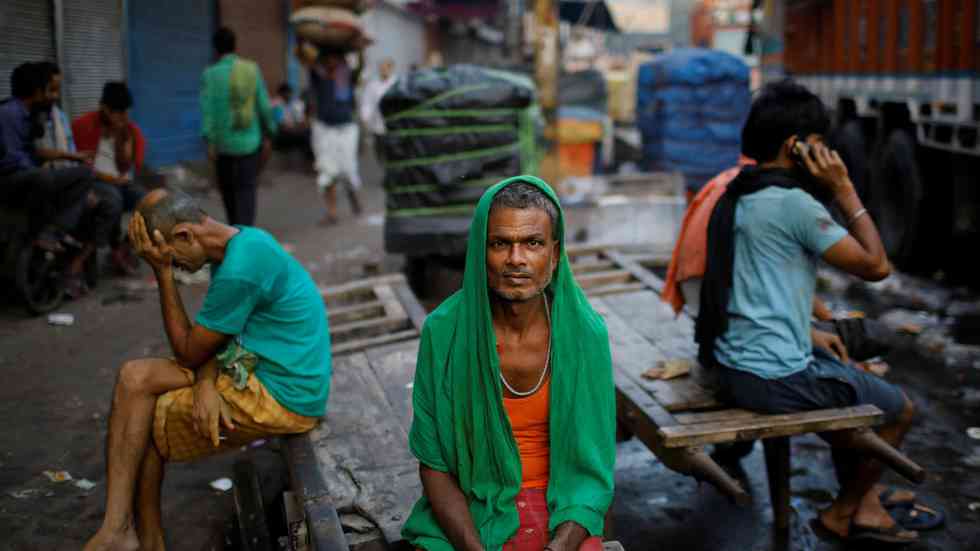
    Migrant laborers sit on a handcart as they wait for work at a wholesale market in the old quarters of Delhi, India. 

    India’s Home Minister G. Kishan Reddy said it was imperative that persecuted religious groups in neighboring countries be granted Indian citizenship, arguing they have nowhere else to go.
    Speaking in the context of the recently passed Citizenship Amendment Act, which fast-tracks Indian citizenship for religious groups fleeing persecution in Afghanistan, Pakistan and Bangladesh, Reddy said India must pick up the slack for other nations unwilling to take in poor refugees, singling out Italy by name.

    “It’s our moral responsibility to give citizenship to the minorities [from three neighboring Muslim countries],” Reddy said. “If they don’t come to India, where will they go? To Italy?”

    Italy will not accept Hindus or Sikhs as they are poor people.

    The citizenship act has courted controversy and sparked nationwide protests, with opponents arguing it discriminates against Muslims, who were left off the list of groups eligible for expedited citizenship. Supporters of the bill have defended the exemption, however, arguing the three neighboring countries are predominately Muslim and that the bill is designed to protect vulnerable minorities.
    Since the Mediterranean migrant crisis broke out in the 2010s, Italy has been among the least willing to open its doors to refugees, many of whom are fleeing violence and various forms of persecution in Africa. During his tenure in office, the country’s recently replaced Interior Minister Matteo Salvini – who also heads up the right-populist Lega Nord party – helped to drive an anti-immigration policy agenda. In 2018, a measure dubbed the “Salvini decree” was signed into law, scrapping a number of legal protections for migrants and streamlining the deportation process.

    Though the decree and other similar acts appear to have had some effect – with Italy taking in about half the number of refugees in 2019 that it did in the previous year – Salvini’s replacement, Luciana Lamorgese, has indicated a much less hawkish stance on the migrant question. In an interview with La Repubblica in November, she denied that Italy was “facing any invasion” – a term Salvini and like-minded lawmakers have used to describe the large influx of refugees into Europe.

  • 印度货币政策走进死胡同?

    印度货币政策走进死胡同?

    印度的货币政策越来越无计可施。印度储备银行(央行)12月保持政策利率不变,原本预计央行将连续6次降息的金融市场感到失望。为什么在经济持续减速的情况下,印度央行却不连续降息呢?探究原因会发现,背负不良债权的金融机构惜贷,货币宽松政策无法波及经济的现状。


    经济陷入萎靡


    印度央行12月5日决定保持政策利率不变后,市场相关人士受到震动。在事先实施的调查中,超过30位经济学家全部预计央行将降息。央行行长沙克蒂坎塔·达斯(Shaktikanta Das)在当日的记者会上表示,“从经济增长和通货膨胀的动向来看,认为暂时停止降息比较合适”。


    10月印度的消费者物价涨幅为4.6%,超过央行设定的4%的目标。这似乎成为央行停止降息的依据,不过也有观点认为,夏季天气不好导致蔬菜价格上涨,物价上涨只是暂时性的。


    另一方面,印度7~9月的经济增长率为4.5%,降至6年半来的最低水平,经济萎靡。原本有必要通过降息来支撑经济,但印度央行此次却放弃降息。印度经济研究所的菅谷弘理事表示,“(央行认为)即使降息也无法取得政策效果”。


    两个利率的“分裂”反映出货币政策的极限。印度央行为了唤起消费和企业投资,2月下调了政策利率(6.5%)。通过连续5次的货币宽松,10月将政策利率下调至5.15%。政策利率降低了1.35%,而金融机构的融资利率却几乎没有任何反应。在此期间所有银行平均的贷款利率基本上没有波动。


    通常如果央行降低政策利率后,民间的金融机构将能够以更低成本筹集资金。因此,银行可能会下调向企业和个人贷款的利率。但是在印度,即便央行降低政策利率也没有波及到贷款利率。在印度的金融行业,越来越多的观点认为“废除大额钞票引发的混乱产生了影响”。


    印度莫迪总理2016年11月为了打击逃税的黑钱,决定废除1000和500卢比的纸币。伴随这项措施,银行增加了近2亿个账户,过去存放在家里的现金被存入银行。2017年初银行出现了约6万亿卢比的巨额资金剩余。


    银行于是拼命地将这些过剩资金贷出去。2017年1月银行贷款余额的同比增长率为3.4%,而2018年4月则达到10.5%,升至2位数。


    对财政出动很纠结


    但是任意无度的融资招致了主要贷款方非银行金融机构的经营危机。2018年夏季大型非银行金融机构出现债务违约,信用崩塌。银行不再向非银行金融机构贷款,市民也越来越难获得购车等贷款。

    印度所有银行的不良债权率在2018年3月超过11%,当前也没有改善的迹象。银行担心出现新的不良债权,对向企业贷款持谨慎姿态。因此,无论央行如何降低政策利率,贷款利率也不降低。


    莫迪与央行的关系也陷入迷失状态。上一任行长帕特尔(Urjit Patel)以及上上任行长拉古拉姆·拉詹(Raghuram Rajan)均为科班出身,重视央行的独立性,但是似乎因与莫迪意见不合而被更迭。2018年莫迪起用与自己关系亲近的前财政部官员达斯担任央行行长,达斯一直在推行降息,但是未能取得成果。


    如果货币政策无法产生效果,原本这时候应该实施财政出动。但是莫迪对前政权过度补贴农户的做法进行反省,提出通过法律将财政赤字占国内生产总值的比例控制在3%之内的目标。莫迪政权对财政赤字扩大持谨慎态度,一直没有出台能够立刻提振经济的刺激政策。


    获得2019年诺贝尔经济学奖的阿比吉特·班纳吉(Abhijit Banerjee)10月回到母国印度,指出“印度当前的经济问题是需求不足”。如果印度不能出台推高需求的有效措施,将陷入经济减速的深渊。

  • Indian govt issues ‘RED WARNING’ for Delhi as capital & adjacent states shiver in ‘extreme cold’

    Local media also reports that at least 28 people may have died due to the cold in Uttar Pradesh, which is experiencing the coldest days of December this weekend.

    The severe cold wave will last at least two more days, but the weather may improve a little around New Year’s, meteorologists say.

    “We are expecting a marginal rise in temperature on December 31 and January 1, and rains from December 31 night, which is likely to relieve severe cold day conditions,” Kuldeep Shrivastava, the head of the Regional Weather Forecasting Centre in Delhi, was quoted by local media as saying.

  • Flights diverted, trains delayed: New Delhi sinks in dense fog as India shivers from cold

    Several flights have been diverted and almost three dozen trains are running behind schedule as a thick blanket of fog covered New Delhi amid an unusually severe winter season in India.
    Photos and videos shared on social media Monday morning show the Indian capital and its suburbs fully consumed by impenetrable fog.
    The latest weather surprise comes just a day after temperatures in New Delhi plummeted to 2.5 Celsius (36.5 Fahrenheit), forcing the Indian Meteorological Department (IMD) to issue a “red warning”. The air quality in the national capital remains in the “severe” category since Sunday.

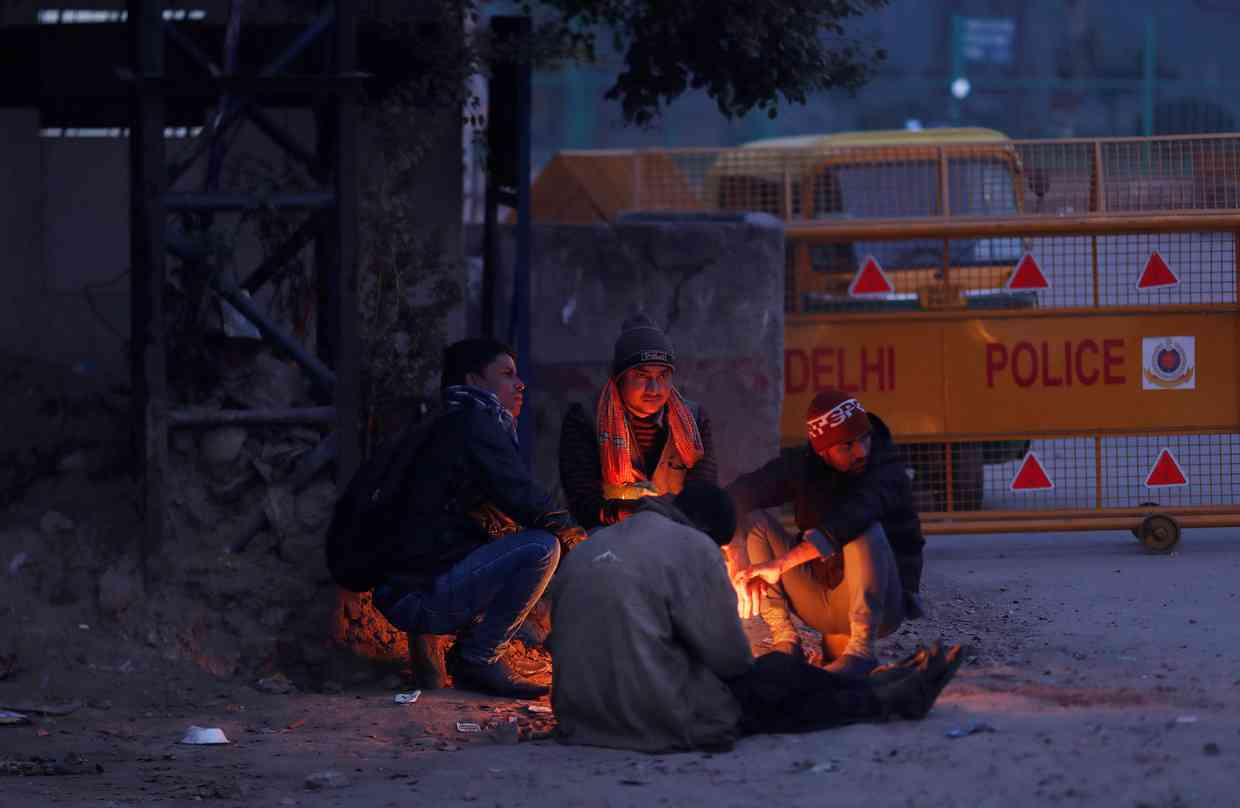
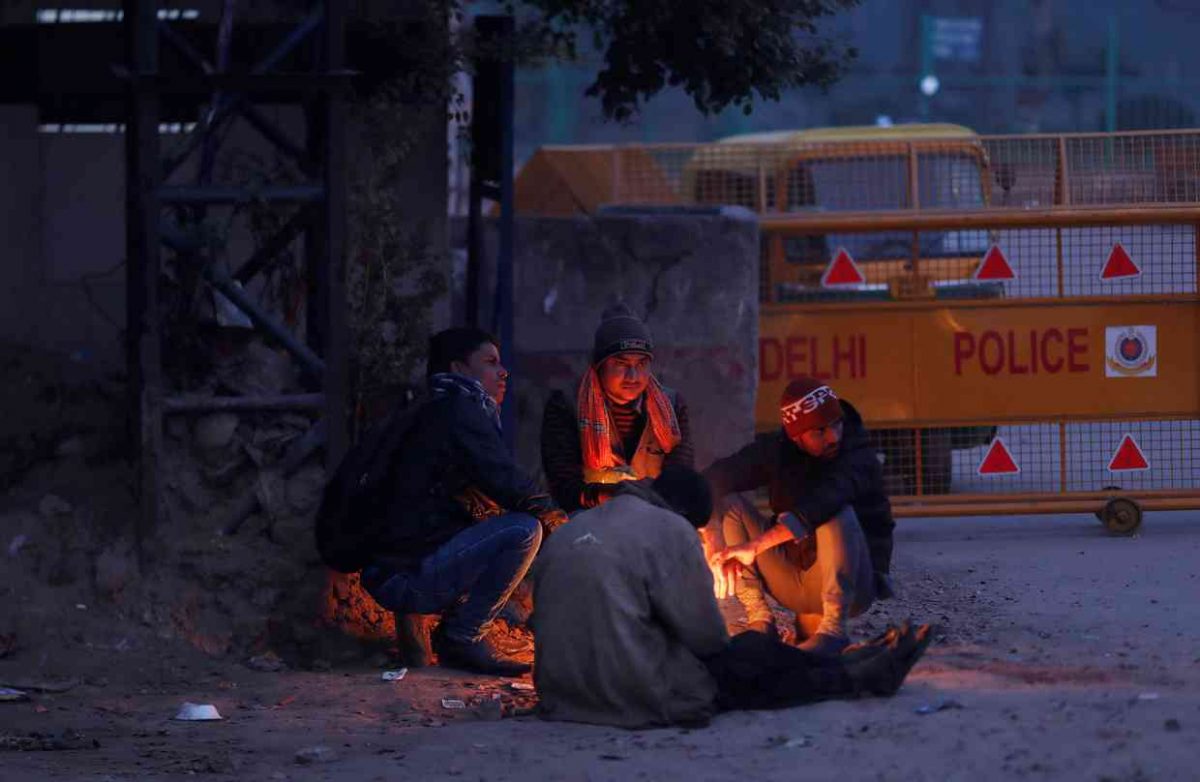
  • People across India have gathered around bonfires near streets and other public places

    People across India have gathered around bonfires near streets and other public places

    Worsening weather has caused massive delays for several trains bound for Delhi and flights at the capital’s international airport. Bus lines have also experienced disruptions and traffic jams.

    People across India have gathered around bonfires near streets and other public places. To cope with the emergency, local authorities have also made sure that shelters and firewood are provided to the population.

  • Pure Form Of Love: Camel Hugs Caretaker Who Had Been Away From Its Herd For A Few Days

    Everyone knows the love and loyalty of dogs, they are known to wait for their owners for days at end. But dogs are not the animals that are expressive of their love towards humans.

    A video of a camel hugging its human buddy after meeting it after days is going viral on the internet. The seven second short video exemplifies the unique bond between humans and animals.

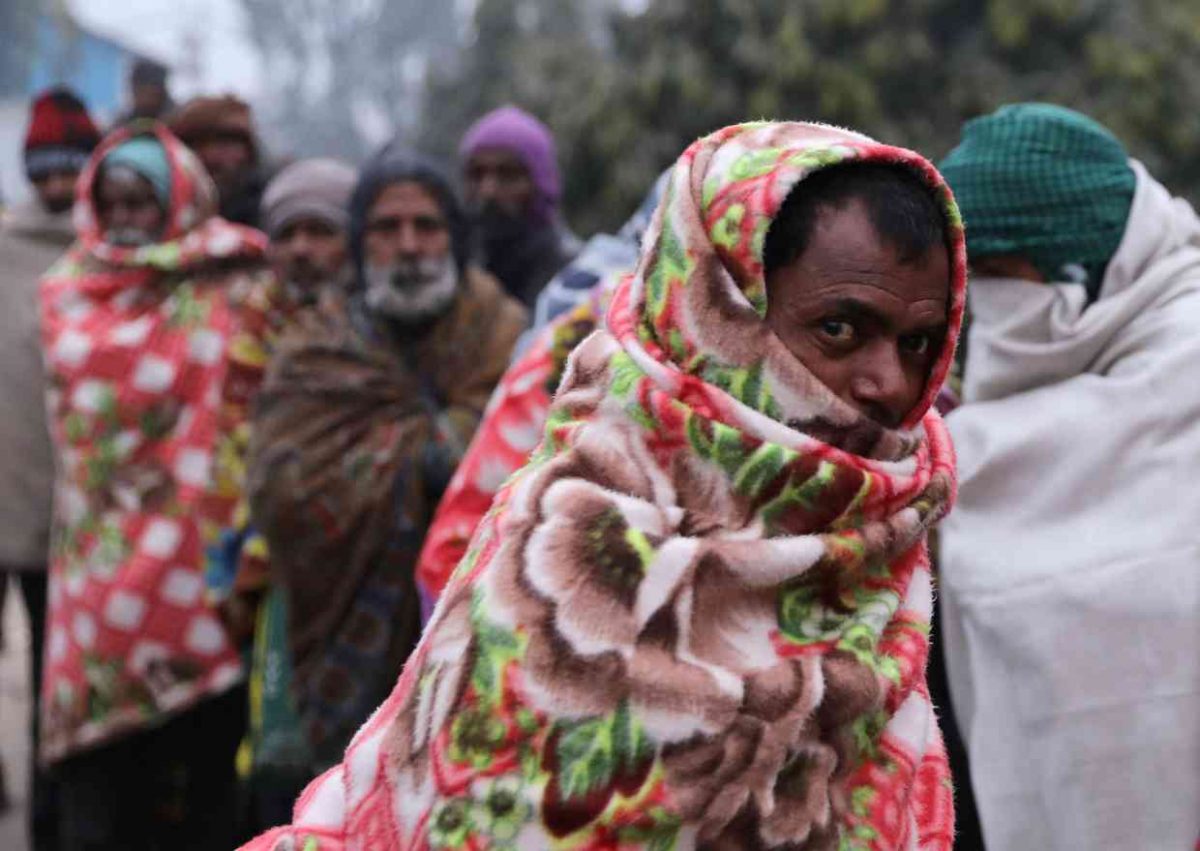
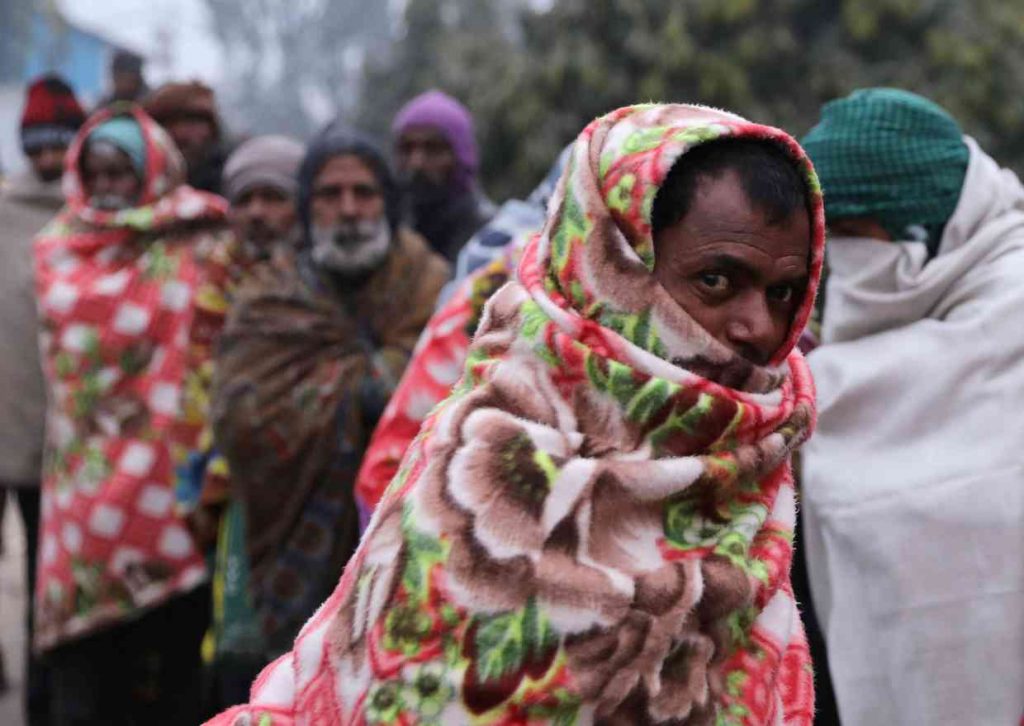
  • With No Respite From Bone-Chilling Cold, IMD Warns It’s Going To Be Worse In North India

    The intense spell of cold that has gripped most of northern India is showing no signs of improving. In fact, it is only getting colder and Sunday and Monday will be particularly harsh.

    The India Meteorological Department (IMD) has issued a code red warning for Sunday for the cold wave conditions in Delhi, Haryana, and Chandigarh.


    Code red, under the IMD’s classification, is the highest level and a warning for the public to take action in adverse weather.

    According to an IMD bulletin on Saturday night, on Sunday, cold wave to severe cold wave conditions are very likely in many pockets over Delhi, Haryana and Chandigarh, in some pockets over Punjab, Uttar Pradesh and Rajasthan, in isolated pockets over Madhya Pradesh and cold wave conditions in some pockets over Vidarbha, Chhattisgarh and in isolated pockets over Bihar, north Gujarat and Odisha.

  • ‘Indian lobby is far more powerful!’ Imran Khan urges Pakistani-Americans to ramp up propaganda efforts

    Prime Minister Imran Khan urged a powerful US-based association of Pakistani doctors to step up their lobbying and propaganda efforts, while setting an example by once again comparing Modi’s India with Hitler’s Nazi Germany.
    “You are the most educated, with the most awareness,” Khan told members of the Association of Physicians of Pakistani Descent of North America (APPNA), who gathered for an annual meeting in Peshawar, Pakistan on Saturday.

    APPNA is the third largest medical association in the US, representing more than 17,000 physicians. It trails behind the union of 80,000 doctors of Indian origin and the 240,000-strong American Medical Association – but the Pakistani non-profit has yet to unleash its full potential, Khan believes.

    A vocal critic of his Indian counterpart, Narendra Modi, the Pakistani PM railed against the contentious Citizenship Amendment Act (CAA) and India’s move to revoke the special status of Kashmir, going as far as to drop a ‘Nazi’ bomb to woo the audience and inspire them to help Islamabad in countering New Delhi’s “fascist” propaganda with its own narrative.

    “The programs they are bringing in are identical to those in Hitler’s Nazi Germany when they committed genocide of the Jews,” he told the crowd, accusing India of violating “all humanitarian laws and international laws,” as well as persecuting and even committing “war crimes” against Muslims.

    Dismissing criticism of their policies as mostly uninformed and misguided, Modi and his ruling Bharatiya Janata Party (BJP) have long argued that reorganizing Kashmir will help to combat terrorism and boost the region’s economy as it becomes more integrated into India.

    As for the CAA, the law makes it easier to acquire citizenship for six religious minorities arriving from Afghanistan, Pakistan, and Bangladesh. The government insists the action is non-discriminatory and only signifies that the people of India have “decided to accept the minorities who have faced humiliation” in these Muslim-majority states. New Delhi says that the law, which sparked protests and deadly riots across the nation, affects neither Indian Muslims not foreigners who can still acquire citizenship under existing laws.


  • Reality of fakes: Western media’s news factory on India is well-oiled and kicking

    From the New York Times to the BBC and the Wall Street Journal, the biggest news media have been caught peddling lies and being condescending and hostile towards India, a vibrant democracy and one of the oldest civilisations.
    It has been 72 years since India achieved freedom from her British colonisers, but the West’s media has still not come to terms with it.

    Its correspondents still arrive like new viceroys, and much of the reportage ranges from patronising and condescending to viscerally hostile and downright fake. Media outlets from nations merely a few hundred years old, for instance, lecture civilisations like India – one of the oldest in the world – on civilisational matters such as Kashmir. They also give sermons to unique civilisations like China or Russia on matters they understand little about.

    And the vanguards of western media continue to speak sanctimoniously about their editorial standards, despite being repeatedly caught spreading fake news.

    Citizenship law and ‘Eew’ York Times
    The moment the Narendra Modi government passed the Citizenship Amendment Act to shelter persecuted minorities from neighbouring Islamic nations Pakistan, Afghanistan and Bangladesh, the western fake narrative-setting machinery creaked into action. One of the first off the block was the virulently anti-India – and globally anti-nationalist – New York Times.

    One of its very first reports carried a lie in the headline. ‘India takes step towards blocking naturalization for Muslims’, it screamed.

    Another NYT report spoke about the marginalisation of Muslims, which is ‘Prime Minister Narendra Modi’s Hindu-nationalist agenda’. Again, this is either an uninformed rant or a blatant falsehood. India’s new citizenship law has nothing to do with Indian Muslims. And the ‘Hindu nationalist’ government has included persecuted Christians, Buddhists, Jains, Sikhs and Zoroastrians from the three Muslim-majority nations as beneficiaries along with Hindus.

    How media vulture fed on Kashmir
    Kashmir, one of the world’s most militarily sensitive zones, has always been the playground of propaganda for the western press. India’s strong, civilisational bond with Kashmir has been stubbornly ignored, and jihadi separatist voices given legitimacy.

    The scrapping of the Jammu and Kashmir’s special status under Article 370 earlier this year triggered a fresh fake news salvo by the western media.

    The Wall Street Journal reported: ‘India’s Kashmir clampdown turns hospitals into graveyards’ – a claim stoutly refuted by one of the most senior police officers in Kashmir, who also pointed to the total lack of proof in the article.

  • Chinese apps edged out by domestic rivals in India as competition heats up in world’s No 2 smartphone market

    Locally developed apps make up 41 per cent of India’s top 200 installed apps this year

    Chinese apps in India were overtaken by locally developed offerings this year in terms of total number of installations, as the world’s second largest smartphone market continues to draw major international players in a range of categories.
    Of the top 200 installed apps in India this year, domestic apps now make up 41 per cent of the list, a 38 per cent increase from last year, according to a new report released this week by AppsFlyer, a San Francisco-based mobile marketing analytics firm. It said much of that growth was driven by demand for apps in the shopping, food and drink categories. The AppsFlyer review covered 6.5 billion total installations in the April to September period.
    Apps from Chinese developers, by contrast, made up 38 per cent of the top 200 list, down from their market-leading 43 per cent share last year. Chinese apps, however, continued to lead in categories such as gaming, news and entertainment, and utilities.
    “Given the size and blue-sky potential of the market, India could very well see more foreign competitors following in the footsteps of the Chinese, which have expanded at a surprising clip, over the next decade,” the AppsFlyer report said.
    The increasingly competitive apps market in India reflects how Chinese technology companies have sharpened their focus in the world’s second most populous country amid a slowdown in their home market. Chinese Android device brands Xiaomi Corp, Vivo, Oppo and Realme had a combined 52 per cent share the country’s smartphone market in the past two quarters, according to data from the AppsFlyer report.
    India’s policymakers are also pushing initiatives to further boost domestic technology development. A regulation on e-commerce, for example, went into effect in February this year. There are already 665 million internet users in India, according to the country’s Telecom Regulatory Authority. That number is about double the size of the US population.
    The AppsFlyer report cited a Cisco Systems forecast that smartphone ownership and internet usage in India will surge to 60 per cent of the population by 2022.
    While they may have been surpassed in overall number of installations this year, Chinese apps developers remained leaders in popular categories. Internet giant Tencent Holdings, for example, continued to lead in the gaming category, where the Chinese firm’s Clash of Kings mobile game has an overall share of 20 per cent this year, the AppsFlyer report said. It said game apps from developers in Israel and Slovenia have also carved a growing niche in the Indian market.
    In the news and entertainment app category, Chinese apps – led by popular video-sharing app TikTok from Beijing-based ByteDance – bolstered their share to 59 per cent this year, up from 36 per cent last year, the report said.
    TikTok was already the most downloaded social media app worldwide for November, with close to 72 million installations, which represented an 11 per cent increase from a year ago, according to data from apps analytics firm Sensor Tower.
    Despite domestic developers’ lead in India’s shopping app category, Hangzhou-based e-commerce platform operator Club Factory’s app remained one of the top performers in that category. Club Factory was the most downloaded shopping app worldwide for November, with more than 27 million installations, according to Sensor Tower. It said 99 per cent of those installations during that period were in India.

  • Fighting for your rights – don’t forget about duties, Modi tells Indian citizenship law protesters

    India’s PM Narendra Modi has urged critics of the contentious citizenship bill to stay civilized, lashing out against rioters who damaged public property and again warning citizens against falling for rumors and misinformation.
    “People who damaged public property and were involved in violence in the name of protests in Uttar Pradesh should ask themselves if what they did was right. They destroyed buses and public property that belongs to the future generation,” Modi said in his address at the foundation-laying ceremony of the Atal Bihari Medical University in Lucknow.

    I want to tell every resident of Uttar Pradesh that after Independence, we only insisted on our rights. But the time has come to also put emphasis on our duties.

    “Better roads, transport and sewers are our rights, and it’s our duty to protect it. Quality education is our right but safety of educational institutions and respect for teachers is our duty. Secure atmosphere is our right, but it’s also duty of citizens to respect the work of police,” he said, praising local police for doing a “good job.”

    The Uttar Pradesh administration earlier promised to slap rioters with fines, estimating the damage inflicted on public and state property at over $14 million. Rallies across the state turned especially violent, resulting in at least 18 casualties out of a nationwide death toll of 25. Accused of using excessive force, police claim they’ve only resorted to live fire in rare cases of self-defense, when overwhelmed by violent protesters.

    The Citizenship Amendment Act (CAA), the bill that sparked nationwide rallies, fast-tracks naturalization to religious minorities from Pakistan, Afghanistan and Bangladesh – but doesn’t extend to Muslims.

    Critics claim that the new measures are discriminatory, stoking fears that Muslims would be rounded up and sent to detention centers, especially since, aside from that, the government also plans to compile a National Register of Citizens to tally up illegal immigrants on Indian soil.

    New Delhi strongly rejects the criticisms, insisting that its move instead actually demonstrates “a culture of compassion” towards persecuted minorities, and won’t affect India’s Muslims in any way.

  • Indian PM Modi says memes ‘most welcome’ after tweeting pic of himself observing solar eclipse

    Indian Prime Minister Narendra Modi joked that he does not mind being ‘memefied,’ after a photo of him gazing at the last solar eclipse of the decade has become viral.
    “Like many Indians, I was enthusiastic about #solareclipse2019,” Modi wrote, while posting several pictures of himself gazing at the sky in protective shades.

    “Unfortunately, I could not see the Sun due to cloud cover but I did catch glimpses of the eclipse in Kozhikode and other parts on live stream.”

    The images were retweeted more than 5,500 times. One user suggested that the photo of the PM is turning into a meme, to which Modi simply replied: “Most welcome… enjoy :)”

    The eclipse began on 8am local time on Thursday and was visible in most parts of India, with the best view in the southern states of Kerala, Tamil Nadu and Karnataka.

    The Moon passed between Earth and the Sun, but could not obscure the Sun completely, thus for a brief time creating an illuminated ‘Ring of Fire’.

    People in India and other parts of Asia posted photos of the eclipse in different weather conditions.

  • India orders drawback of 7,000 troops sent to Kashmir after security review

    Over 7,000 troops, which were deployed to the India-controlled Kashmir ahead of the withdrawal of its semi-autonomous status, are returning to their permanent bases due to the improved security situation.
    A total of 72 companies drawn from various paramilitary branches were ordered to return from Kashmir on Monday, Indian media has reported. Each company comprises 100 people. The decision to scale down the presence of troops in the predominantly Muslim region was made as the government in New Delhi evaluated the security situation there as safer.
    The units were drawn from the Central Reserve Police Force (CRPF), Border Security Force (BSF), Indo-Tibetan Border Police (ITBP), Central Industrial Security Force (CISF), and the Sashastra Seema Bal (SSB) and were sent to the Kashmir Valley earlier this year as part of a 43,000-strong surge.

    The build-up of troops was ordered as the central government feared a surge of violence after it abrogated the special status for Jammu and Kashmir in August and brought the security presence in the area over the levels seen in the 1990s. The crackdown included curfews, house arrests of local politicians, and suppression of internet and cell phone services.

    This week’s withdrawal follows a smaller drawdown of 2,000 men earlier this month.

  • 印度房地产泡沫在缩小?

    印度房地产泡沫在缩小?

    印度正在因住宅市场的混乱而动摇。由于2年前引进的法律规定和2018年秋季以来的信用紧缩,很多住宅建设项目出现延期或停工。此前提供贷款的非银行金融机构的不良债权增加,形成恶性循环。印度经济陷入2008年雷曼危机以来的低增长,在此背景下,房地产问题成为印度深层次的结构性问题之一。


    “钱都交了,希望早点盖好我的房”,已支付200万卢比(约合人民币19.22万元)住房预付款的德里的一位公务员这样抱怨。


    如今很多印度房地产开发项目陷入停滞。开发商虽然向买家收了预收款,但因工程停滞而无法交房等。印度大型房地产咨询企业阿纳洛克(Anarock)的数据显示,截至9月底,仅印度七大城市圈就有58万个项目陷入严重的工程延误或完全停工,售价相当于4.64万亿卢比。


    印度的房地产建设项目(资料图)

    认为事态严重的印度政府11月宣布,通过与国有金融机构的共同出资,设立为重启工程提供贷款的2500亿卢比的国营基金,但与问题整体的规模相比仍显得杯水车薪。


    导致接连出现工程中止的是印度2017年5月引进的房地产开发调控法案。在此之前,印度的房地产开发项目属于名副其实的完全没有法律监管的地带。一般情况是开发商借助1张广告就向买家收取预收款,利用这笔资金支付材料费和工程费,然后建设住房。也就是说,开发商没有自有资本,完全依赖向购房者提前收取的资金来拓展业务。而且这笔资金被挪用的情况突出。


    新法案规定,以各项目专用的纳入监管的账户来管理预收款。这样一来,原有的住宅项目多数突然陷入违法状态。未能返还挪用的资金,进而无法开设专用账户的项目无法注册,相继停工。


    2018年秋季,因大型非银行金融机构的经营破产而发生的信用紧缩构成进一步打击。非银行金融机构陷入手头现金不足,依赖这些机构贷款的开发商相继出现债务违约。停工的房地产项目进一步增加。非银行金融机构的不良债权增加,在资金流入非银行金融机构和流出非银行金融机构两方面,都发生信用紧缩。

    民间的住宅建设投资与汽车等耐用品消费、企业的设备投资等并驾齐驱,都是印度经济的民需的支柱之一。而且房产占到印度家庭资产的7成,如果价格崩溃,家庭的购买力和消费意愿将受到打击。


    印度政府11月底发布的数据显示,7~9月国内生产总值(GDP)增长率为4.5%。是仅次于2013年1~3月的4.3%以来的低增速。印度中央银行12月5日把2019年度增长率预期下调至5.0%,创出2008年度以来最低,比10月的上次预期下调1.1个百分点。


    普林斯顿大学客座教授阿什卡·莫迪(Ashoka Mody)表示,“此前通过基于借贷的房地产开发和建筑业推动经济增长的泡沫终于开始萎缩”,显示出悲观看法。

  • 印度可把经济危机变成发展机遇

    印度可把经济危机变成发展机遇

    国际货币基金组织(IMF)要求印度在经济下滑的背景下采取“紧急”行动,而中国印度问题专家郁龙余在接受卫星通讯社采访时就此指出,与中国、俄罗斯和其他金砖国家的合作可以成为印度经济增长的强大推动力。

    IMF在其年度审查报告中指出,消费和投资的下降,加上税收减少,是导致这个亚洲和印太地区发展最快的经济体之一——印度经济停滞不前的因素。

    根据来自印度政府官方的数据,从7月到9月印度的经济增速已降至6年来最低,下降4.5%。印度央行已将2019年增长率预期从6.1%下调至5%。印度储备银行已经降息五次,并已降至九年来的最低水平,但仍然未能阻止经济下滑。12月初央行在今年最后一次会议上,宣布保留贴现率不变,让国际货币基金组织感到失望和不解。

    观察人士认为,今年美国与印度开打贸易战的迹象可能会给印度出口导向型公司带来强大心理压力。美国取消印度最惠国待遇已经关闭了印度每年向美国出口高达56亿美元商品的大门。而印度在此之前是该制度的最大受益者之一。

    现在印度正试图从美国那里重新获得贸易优惠,显然是希望促进出口增长,进而增加财政收入。

    经济疲软显然也是印度代表在有关筹备区域全面经济伙伴关系协定(RCEP)的谈判中表现出来的紧张的原因。“印度和中国在这一机制框架内合作可能是印度增长的潜在动力,” 莫斯科国立国际关系学院专家叶卡捷琳娜·阿拉波娃在接受采访时说指出,“印度还受益于扩大同参与RCEP谈判的亚洲合作伙伴的互动。”

  • India lashes out at Malaysia over PM’s ‘ill-informed’ remarks about citizenship bill

    New Delhi has reportedly summoned Malaysia’s envoy after the country’s prime minister made critical comments about India’s new citizenship act, describing his remarks as erroneous and harmful.

    The Malaysian ambassador was told that Prime Minister Mahathir Mohamad’s objections to the Citizenship Amendment Act (CAA) are both “ill-informed and insensitive,” an Indian official told the Times of India newspaper.

    In an earlier statement, India’s ministry of external affairs said that the Malaysian leader had interfered in a matter “entirely internal to India,” and stressed that the legislation fast-tracks naturalization for persecuted minorities from neighboring Muslim-majority states, and has no bearing on those who are already citizens of India.

    “The Prime Minister of Malaysia’s comment is factually inaccurate. We call upon Malaysia to refrain from commenting on internal developments in India, especially without a right understanding of the facts,” the statement said.

    The Malaysian leader had criticized the new law while speaking on the sidelines of a summit in Kuala Lumpur on Friday.

    “I am sorry to see that India, which claims to be a secular state now is taking action to deprive some Muslims of their citizenship… People are dying because of this law,” he claimed.

    Ongoing nationwide rallies against the CAA have turned violent and have already claimed seventeen lives, according to reports. While protesters see the law as discriminatory against Muslims, the Indian government says it is only aimed at protecting persecuted minorities.

  • ‘Lies & rumors’ being spread over citizenship bill, Modi tells huge crowd at Delhi rally

    Recent unrest over a new citizenship law has been fueled by misinformation spread by opposition parties, Indian Prime Minister Narendra Modi claimed while speaking to supporters who gathered in Delhi.

    Tens of thousands of people attended the Sunday rally for Modi’s Bharatiya Janata Party.

    Speaking to the crowd, the Indian PM said that protests against the Citizenship Amendment Act (CAA) have been “incited” by political parties “spreading rumors” about the legislation, ANI reported.

    He accused his rivals of stoking fears that Muslims would be rounded up and sent to detention centers and called on people to read the Act in detail.

    “Respect your education, read what is the Citizenship Amendment Act… You are educated,” he said.

    The government claims that the law aims to protect persecuted religious minorities by fast-tracking citizenship for refugees from Afghanistan, Pakistan and Bangladesh. Critics say the bill is discriminatory because it does not include Muslims.

    Opening his remarks by saying “unity in diversity is India’s specialty,” Modi stressed that Hindus, Muslims, Sikhs and Christians have all benefited from India’s secular constitution.

    One thousand police officers, as well as anti-drone teams, were deployed to provide security for the event, local media reported.

    Demonstrators against the CAA haven’t stopped protesting in cities and towns across India since the Act was ratified by parliament on December 11, with some rallies turning extremely violent and claiming at least 21 lives.


  • Aisa Desh Hai Mera: Pride And Prejudice Bring India To A Grinding Halt Over New Citizenship Law

    In an unprecedented showdown against PM Narendra Modi-led NDA government’s controversial Citizenship Amendment Act, thousands of university students flooded the streets of India’s capital, while a southern state government led a march and demonstrators held a silent protest in the northeast on Monday.

    The protests are aimed at opposing a new law that gives citizenship to non-Muslims who entered India illegally to flee religious persecution in several neighbouring countries.

    But vociferous demonstrations that have been rocking the world’s largest democracy ever since Home Minister Amit Shah introduced the contentious bill in the Parliament reached their crescendo, on Sunday, as police entered the premises of a leading university and thrashed its students after numerous cases of violence surfaced in the national capital.

    The protests in New Delhi followed a night of violent clashes between police and demonstrators at Jamia Millia Islamia University. People who student organizers claim were not students set at least three buses on fire and police stormed the university library, firing tear gas at students crouched under desks.

    At Jamia Millia Islamia University on Monday, thousands stood outside the locked-down campus. Inside, hundreds of students took part in a peaceful sit-in, holding placards denouncing the injuries of dozens of students the night before.

    The government maintains that the Citizenship Amendment Bill, which was approved by Parliament last week, will make India a safe haven for Hindus and other religious minorities in Muslim-majority Bangladesh, Pakistan and Afghanistan. But critics say the legislation, which for the first time conditions Indian citizenship on religion, violates the secular constitution of the world’s largest democracy.

    The law’s passage has triggered protests across India, but Assam, the centre of a decades-old movement against illegal immigrants, has seen the highest toll.