分类: bharat

  • India protests: Modi government cracks down on phone, internet as death toll rises

    • Law passed on December 11 gives people from persecuted minorities from three neighbouring countries easier path to citizenship – unless they are Muslim
    • Internet shutdowns are a favoured tactic for Modi’s government. Authorities have interrupted internet services at least 102 times so far this year

    Activists of the Youth Forum for Kashmir burn an Indian flag with pictures of Indian Prime Minister Narendra Modi. Photo: AFPActivists of the Youth Forum for Kashmir burn an Indian flag with pictures of Indian Prime Minister Narendra Modi. Photo: AFP
    Activists of the Youth Forum for Kashmir burn an Indian flag with pictures of Indian Prime Minister Narendra Modi. Photo: AFP
    Indian authorities have stepped up phone and mobile internet shutdowns in some parts of the country in an effort to thwart a groundswell of protests over a new citizenship law that excludes Muslims.
    Thousands of people joined rallies on Saturday, with 23 killed so far in the unrest, police said. The death toll jumped after demonstrations turned violent on Friday in the most populous state of Uttar Pradesh, leaving at least 11 dead including an eight-year-old boy, who was trampled.
    On Saturday more protests began in cities including Chennai, capital of southern Tamil Nadu state, and Patna in eastern Bihar state. Crowds were also expected again in the national capital New Delhi.
    Disquiet has been growing about the law, which was passed by parliament on December 11 and gives people from persecuted minorities from three neighbouring countries an easier path to citizenship – but not if they are Muslim. Critics say the law discriminates against Muslims and is part of Prime Minister Narendra Modi’s Hindu-nationalist agenda, a claim his political party has denied.
    “This piece of legislation strikes at the heart of the Constitution, seeking to make India another country altogether,” prominent historian Ramachandra Guha wrote in an Indian newspaper, The Telegraph, after being detained and then released for protesting in the southern city of Bangalore. “It is thus that so many people from so many different walks of life have raised their voices against it.”
    Student-led protests that have galvanised a large section of the Indian public have been met with communications blocks in areas of New Delhi, in the eastern state of West Bengal, the northern city of Aligarh and the entire state of Assam in the days since the contentious law was passed in parliament.
    In Aligarh, where police beat students and fired tear gas shells inside a university last week, internet services on Saturday were suspended for the sixth straight day. The services were also barred in the capital of northern Uttar Pradesh, where nine people have been killed statewide in protests since Friday.
    Internet shutdowns are a favoured tactic for Modi’s government. Authorities have interrupted internet services at least 102 times so far this year, according to a public online tracker maintained by the New Delhi-based Software Freedom Law Centre.
    In 2018, the #KeepItOn coalition, which works with the support of 191 organisations globally, and the non-profit group Access Now reported that of the 196 internet shutdowns reported from 25 countries, India was responsible for the majority, with 134 incidents – almost 67 per cent of the world’s documented shutdowns.
    Since Modi’s Hindu nationalist-led government first came into power in 2014, the internet has been suspended more than 360 times.

  • India will reverse economic slowdown to become stronger, as it did before – Modi

    India’s economy has the resilience to overcome the current slowdown and return to high growth trajectory, said Prime Minister Narendra Modi. He reassured investors about their long-term bets on Asia’s third-biggest economy.
    “India has witnessed such ups and downs previously as well,” Modi told business leaders in New Delhi. “And each time, we have emerged even stronger. That’s why even now India will forge its path ahead with firmer determination and confidence.”

    The country’s economy grew five percent year-on-year between April and June, its weakest pace since 2013, as consumer demand and government spending slowed amid global trade conflicts. This prompted a number of rate cuts by the central bank, with the government introducing several measures (including a sharp cut in corporate taxes) to boost growth.

    According to Modi, his government wants to formalize and modernize the country’s economy. A massive amount of money will be spent in the coming years on building infrastructure and rural economy, he said, explaining that will help to achieve the ambitious $5 trillion target by 2024.

    Goldman Sachs projected this month that the Indian economy will rebound in 2020 as global conditions are set to improve. It also said that growth will fall to 5.1 percent this year from roughly seven percent annually in 2017 and 2018.

  • India could become fastest growing energy market by 2030

    India’s Energy Minister Dharmendra Pradhan said that his country will surpass China and become the world’s fastest growing market for energy by 2030.
    “We are on our way to become the world’s largest energy consumer,” the minister said, noting that India plans to use a combination of conventional fuel and sustainable fuels to create a “balanced energy mix.”

    India will also explore the use of other sustainable sources of energy, such as hydrogen, Pradhan said.

    The energy and steel sectors will play important roles in driving India on the path of becoming a $5-trillion economy, the minister added on Twitter.

    India aims to move to a gas-based economy and looks to invest around $100 billion in energy infrastructure, including renewables, he said.

    Economic and energy demand growth in India – which relies on oil imports for more than 80 percent of its oil consumption – and China are the two key drivers of the demand outlook for oil and consequently, for oil prices.

    In recent months, India has seen its oil demand growth faltering amid an economic growth slowdown that has now continued for sixth consecutive quarters. If India’s economic growth picks up in the coming quarters amid brighter economic climate around the world, India’s oil demand growth would also pick up pace and increase overall global demand growth.

    Last year, India’s oil consumption grew by 5.3 percent year on year and surpassed 5 million barrels per day (bpd), according to the BP Statistical Review 2019.

  • ‘It’s my 2nd life’: Indian officer says coin-filled purse saved his life after protester’s bullet pierced his body armor

    A police constable in Firozabad, Uttar Pradesh, swept by violent protests against a citizenship law, said he narrowly escaped certain death after a bullet passed through his bulletproof vest but was stopped by a coin.
    Vijender Kumar, 24, has been celebrating his “second life” after he was shot in the chest as protests against the citizenship law descended into violent clashes in the city of Firozabad on Friday.
    Protesters reportedly set at least six vehicles on fire, including police cars, while hurling stones at the officers, who responded with tear gas. One person was killed in the showdown, and two police officers, including Kumar, suffered bullet wounds. Twenty-five civilians were taken to the hospital, predominantly with injuries resulting from stone-pelting and about 30 police officers were hurt, according to police.

    Kumar said he was hit by a bullet after police, put on the defensive by the demonstrators, moved in to disperse the rally.

    “Amid heavy stone-pelting and firing, I had to chase the violent mob. The bullet escaped my heart by a whisker”

    While the officer was wearing protective body armor at the time, the vest failed to stop the live fire he said was coming from the protesters’ side.

    “Though the vest failed to protect me, my wallet, in which I had kept a picture of Lord Shiva and a few coins, saved me. It’s my second life and I’m thankful to God.”

    Protests over the Citizenship Amendment Act (CAA), which New Delhi says is aimed at the protection of persecuted minorities, have been marred by widespread violence, with opponents slamming the legislation as discriminatory towards Muslims. The unrest has reportedly claimed 22 lives across the country, including 15 in Uttar Pradesh.

  • An invasion of falsehoods: India’s ‘liberals’ running propaganda war over new citizenship law

    As cops are being beaten up and trains and buses burnt by communal mobs, an info war has been unleashed against Modi’s government to twist the CAA and spin large-scale violence and bigotry as spontaneous, progressive resistance.
    This protest movement has many fathers, the most useful being the one that should disown it the quickest: Liberals.

    It is through them that a massive information war against India’s new Citizenship Amendment Act (CAA) –– which offers shelter to persecuted Hindus, Christians, Sikhs, Buddhists, Jains and Parsis from Islamic Pakistan, Afghanistan and Bangladesh –– is being carried out.

    From film personalities like Farhan Akhtar and Sushant Rajput to selectively secular activists and journalists, self-proclaimed liberals are circulating lies from very dubious sources about the CAA and the proposed nationwide National Register of Citizens (NRC).

    The same global breed pander to Islamists in the name of multiculturalism in Europe, fight for an unbridled refugee movement, and facilitate demographic and cultural takeovers across the continent.

    Circulation of fakes
    Bollywood film actor and director Akhtar recently tweeted a widely circulated online poster inviting people to join the CAA protests in Mumbai. The poster is credited to Stand With Kashmir, an online entity suspected to be run by the Pakistani spy agency ISI from the US and Canada. It has Facebook and Instagram pages with 50,000 and 15,000 followers respectively. It aggressively pushes Pakistan’s separatist and jihadi view of Kashmir, and this poster is a class showcase of that.
    Akhtar failed to notice that India’s map in the poster did not show Pakistan Occupied Kashmir and Akshai Chin (conflicted zones with Pakistan and China) as integral parts of the nation.

    Then come the outright lies. The poster says the “law excludes Muslims.” But why should the majority Muslims of Pakistan, Bangladesh and Afghanistan, who have systemically persecuted their minorities to the point of near-extinction, be granted protection from religious persecution? Do you protect the sheep running away from a wolf by sheltering the wolf alongside its prey?

    Sudden love for women and LGBTQIA
    The propaganda document goes on to say, “When combined with the National Register for Citizens…many people will be inhumanly excluded due to being Muslims, transgender, atheists, adivasis, Dalits, women, landless… [sic]”

    Amusingly, a nationwide NRC has not yet been drafted. And India’s citizenship has nothing to do with religion, gender, colour, caste, or being tribal or not.

    The same Islamists were livid with the special status to Kashmir under Articles 370 and 35A –– which discriminated against women, LGBTQIA, and backward castes.

  • When people buy smartphones to get free onions: India’s economic omen

    • A wave of bizarre onion-related violence has prompted many humorous memes under #OnionCrisis
    • But as prices of the staple vegetable soar, this may be a sign of political turbulence ahead, within India’s borders and beyond

    When Saravana Kumar sold 20 smartphones within two days in the tiny town of Pattukottai it was a major cause for celebration – and confirmation of a maverick marketing strategy.
    Kumar would usually struggle to sell two handsets a day, but this time those smartphones were flying off the shelves and all because of the free gifts he was giving away with each model.
    Those gifts were not headphones, or covers, or cash-back coupons, but something his low-key shop wouldn’t usually even keep in stock: a kilogram of onions.
    As soon as Kumar had advertised he would be doling out the vegetables free of charge to smartphone buyers, business began to boom – making his STR Mobiles store the latest setting in a series of tragicomic episodes that have catapulted onions to the top of the economic agenda in India and beyond.
    Onion prices in the country have soared tenfold this year, sparking a nationwide outcry, questions in parliament, a spate of bizarre onion-related crime and dozens of viral memes as the outraged citizens of the world’s second most populous nation find themselves unable to afford their staple food.
    A kilogram of onions now costs one-third of an average Indian’s daily income, having hit a record high of 200 rupees (US$2.79) per kilogram after unseasonal downpours in key onion-growing states left crops damaged.
    And that spells trouble for the leaders of a nation where such spikes have been enough to topple governments in the past.

    Back in the Kumar household, there has been a foretaste of the public’s anger.
    “My wife is quite upset with me that I was giving away onions for free when prices are rocketing. But it’s a marketing strategy for my small business venture and it paid off, ” says Kumar, adding that he plans to gift the leftover onions to his wife.
    Whether or not that placates Mrs Kumar, the rest of the Indian public may well be less forgiving.
    In recent days half a dozen onion-linked robberies, assaults, fist-fights and attacks on trucks carrying the vegetable have been reported across the country.
    Politicians have been quick to spot an opportunity, with opposition parties rallying in the streets wearing onion garlands and offering onions as wedding gifts.
    Such scenes are a political nightmare for Prime Minister Narendra Modi, who is already under fire for a lacklustre economic performance, and some critics suggest signs of panic are setting in.
    A few state governments have started selling onions at a subsidised price while analysts believe the onion crisis was behind the Reserve Bank of India’s surprise move to hold rates steady last week.
    There are even signs the crisis is having an impact internationally. India is the world’s second-largest onion producer and makes US$360 million annually by exporting its surplus, but in light of the price rises the government has moved to ban exports of the vegetable and is rushing to import from places like Turkey and Egypt.

  • ‘Life’s short, let air pollution kill us!’ India gang-rape & murder convict files ridiculous petition to delay execution

    One of five perpetrators of a notorious rape and murder in India has made a bizarre last-ditch effort to dodge death penalty, insisting that India’s poor air quality has already shortened his lifespan enough.
    The absurd petition, written in rudimentary English, was recently submitted to the Supreme Court through the inmate’s lawyer.

    “Everyone is aware of what is happening in [New Delhi] with regard to water and air. Life is going from short to [shorter], then why the death penalty?” asked the convict, Akshay Singh, adding that air in the city is “like a gas chamber” and “full of poison.”

    And terrible grammar. This Petition should be rejected just for the abhorrent usage of English.

    The inmate also cited Hindu religious texts, arguing that “people lived for thousands of years” previously – he did not specify when – and that average lifespans had steadily fallen. “When age is reducing, why [the] death penalty?” the convict reasoned.

    The appeal is unlikely to be accepted by the court, having rejected all of Singh’s previous attempts to overturn his execution, granting only temporary delays to date.

    Singh, along with four others, was convicted for the rape, torture and murder of a 23-year-old paramedic student, attacked by the gang as she traveled on a New Delhi bus late one night in 2012. The victim, who came to be known by the nickname “Nirbhaya” (“fearless”), survived the initial assault, but succumbed to severe internal injuries some 12 days later. Her death sparked widespread outrage across India, culminating in mass demonstrations calling for the men’s execution, which even sparked clashes with riot police in New Delhi.

    While anger among Indians persists seven years on from the heinous crime, the reaction to Singh’s outlandish appeal ranged from hatred to hilarity online, with netizens venting their rage at the killer – and critiquing his bad grammar.

  • 预测:印度GDP2029年超日本

    日本经济研究中心日前发布了以亚太地区15个国家和地区的81个主要城市为对象、截至2035年的经济增长展望。该中心预测称,目前仅为日本一半左右的印度名义国内生产总值(GDP)到2029年将超越日本,印度将成为经济规模超过日本、居世界第3位的大国。2035年印度的GDP将达到10万亿美元规模。

    作为印度高增长的火车头而受到期待的是大城市的人口增长。在2035年人口排在前10位的城市中,孟买排在第4位,德里排在第5位,分别比2015年增加4成以上,排名提高。

    新兴企业的增长也值得期待。从未来有望受关注的115家企业(未上市、企业估值在10亿美元以下)的国家和城市分布来看,作为初创企业聚集地而闻名的班加罗尔等印度城市占到近1成。

    从2035年各城市的GDP(名义值)来看,前10大城市中有5个美国城市,其中纽约排在第1位,洛杉矶居第3位,芝加哥居第6位,旧金山居第8位,达拉斯居第9位。在日本城市中,东京排在第2位,大阪排在第10位。

    中国城市也将飞跃发展。截至2015年没有中国城市进入前十,但在2035年的预测中,上海跃居第4位,北京跃居第5位,深圳跃居第7位。调查负责人指出,“在中国,无人机和纯电动汽车开发等新产业正在成长”。

    日本经济研究中心作为“亚洲经济中期预测”,每年发布一次各国和地区的增长率展望。

  • 性的暴行証言の女性 火をつけられ死亡 怒りの声広がる インド

    インドで今月5日、23歳女性が性的暴行を受けたとして、裁判所へ証言に向かう途中、複数の男らに火をつけられ、死亡しました。この事件を受けて、インド各地では抗議デモが行われるなど、怒りの声が広がっています。

    インド北部のウッタルプラデシュ州で今月5日、23歳女性が性的暴行を受けたとして、裁判所へ証言に向かっていたところ、5人の男らに灯油をかけられたうえ、火をつけられて死亡しました。

    5人は逮捕され、このうち2人は、女性に性的暴行を加えた疑いのある容疑者だったことが分かり、警察が調べを進めています。

    事件を受けて7日、インド国内では首都ニューデリーなど各地で、性暴力の撲滅と加害者の処罰を求める抗議デモが行われ、参加した人たちは「被害者に正義を」などと書かれたプラカードを持って行進しました。

    インドでは先月にも、27歳女性が集団で性的暴行を受けて殺害されたあと、遺体を焼かれる事件が起きていて、女性への性的暴行が深刻な社会問題となる中、国民の間には怒りの声が広がっています。

  • 印度体制下恶性轮奸案发后的“惊世结局”

    印度警方在海得拉巴击毙了4名涉嫌奸杀一名年轻女子的男子。印度民众庆祝。女性今后会更安全吗?

    在印度第6大城市海得拉巴,2019年11月27日周三的傍晚6点钟,一名职业是兽医的27岁女子出门,骑着她的摩托车,按约看医生。她不知道她在人世间的命运已经快要结束。

    事件经过
    后来她给家人打电话说,她有一个轮胎爆胎,而有一个卡车司机主动提出帮忙。她说她在一个公路收费站附近等着。

    此后,她的家人就没能再联系上她,随后报警,称其失踪。第二天早上,一个送牛奶工在天桥下发现她已经被烧焦的遗体。

    警方调查后称,这位27岁受害者在被杀前遭到轮奸。

    印度强奸问题频发,近年来社会民情对这一事件愤怒不已。事件曝光后,其家人指责警方行动缓慢。特别是有警察甚至暗示受害者当时是否私奔了。

    之后,警方将3名接到失踪报告的警察解职,并逮捕了4名嫌疑人。

    此案让民众就强奸频发问题的愤怒情绪爆发,几天内,大规模抗议导致群体事件,警方受到巨大的批评和压力。很多民众要求,不能让这些罪犯借助司法逃避罪责,应该严惩甚至对其立即处以极刑。

    惊悚结局
    4名嫌疑人被警方拘留后,于当地时间周五(12月6日)凌晨被带回犯罪现场重现指认案发情况。这是海得拉巴市郊区的一个名为赛博阿巴德(意为网络之地)的新兴区域,这里有着许多全球大科技公司驻地,比如微软和谷歌。

    印度警方告诉英国广播公司(BBC)泰卢固语部说,嫌犯试图偷取警察的枪逃跑,被警察击毙。在这个过程中,两名警察也受伤了。

    击毙嫌疑人的消息传出后,受害者的母亲告诉BBC说,虽然女儿再不能失而复得,但原来以为无法得到的正义已经得到伸张。希望其他女孩不会再有自己女儿的悲惨遭遇。

    这位母亲还说,她希望印度能加强关于性侵犯和强奸的法律。

    受害人的妹妹说,警方的行动非常出乎意料。她原来也期待法庭审判和法庭伸张正义,虽然这不能让她姐姐死而复生,但这是一个很大的安慰。

    她说,由于警方的行动,潜在的罪犯将会三思而后行,可能不敢再做这样的事情。

    民众庆祝
    BBC泰卢固语部在当地的记者得到嫌疑人被击毙的消息后,去受害者家里采访,看到受害者的邻居们用鞭炮庆祝,数千人走上街头为警察欢呼,有人在街上发糖。

    然而,一位执法专家批评了警方的行动,但同时补充说,现在说警方杀人是否构成法外处决还为时过早。

    在印度的社交媒体上,警方行动的消息广为流传。许多人在推特和脸书上为警察点赞鼓掌,称赞他们替天行道,伸张正义。

    2012 年,在首都德里,一名学生曾在公交车上遭到轮奸折磨后死亡,其母亲也对这起枪杀嫌疑犯事件表示赞许。

    她告诉印度媒体表示,她对这种惩罚非常满意。警方做得非常好。

    英国广播公司(BBC)泰卢固语部记者巴拉在枪杀现场报道说,大约有2千民众在那里聚集,造成巨大的交通堵塞。

    车辆在高速公路上已经无法行使,现场人们高声喊着警察万岁。

    在事件现场,人们还将玫瑰花瓣和糖果撒向在场的警察。

    警察能采取不同的做法吗?
    少数有些人质疑警方对事件的说法。

    普拉卡什·辛格是一名退休警官,也是警察制度改革的主要设计师。他告诉BBC,枪决嫌疑人事件完全可以避免。

    他表示,在押人员被带往法庭或犯罪现场时,应谨慎行事。在将其提取出监狱之前,应保护他们,戴上手铐,并妥善搜查。

    如果警察不小心,什么样的事情都可能发生。

    但辛格也表示,现在说这起事件是否属于法外杀戮还为时过早。

    在强奸谋杀案发生后的几天里,数千人到海得拉巴警察局外面抗议,坚决要求处死凶手。

    前宝莱坞明星、现为印度议会上院议员的贾亚·巴赫昌甚至表示,被告应该被私刑处决。

    她在印度议会辩论这起轮奸案事件时表示,她知道这听起来很苛刻,但这类人就是应该公开处死。

    其他几位来自各政治派别的议员也谴责了这起残忍的轮奸谋杀行为。

    今天印度的妇女更安全了吗?
    在印度其他地方,还举行了不少支持这名受害者的抗议示威和守夜活动。根据印度法律,这名受害者姓名尚不能透露。

    自从2012 年 12 月在首都德里发生一名女学生在一辆公共汽车上遭到轮奸和谋杀以来,针对妇女的强奸和性暴力一直是印度关注的焦点。

    但是,没有迹象表明对针对妇女的犯罪正在减少。

    根据印度政府官方数据,2017年印度警方登记了33658起强奸案,平均每天发生至少92起强奸案。

    但印度地方官方报告透露,有远超过60%的强奸案没有报告或者立案。

    数据显示,2016年年末,印度法庭等待审理的强奸案件数量为133,813起。

  • Rape victim dies after being set on fire on way to court to testify against her attackers

    A RAPE victim has died after being set on fire on her way to an Indian court to testify against her brutal attackers.

    The woman was about to board a train in Uttar Pradesh to head to the hearing when she was doused with kerosene and set alight.

    She was airlifted to New Delhi for treatment but eventually succumbed to her shocking injuries late last night.

    The attack, the second major case of violence against women in the past two weeks, has sparked public outrage in India.

    The woman died after suffering a cardiac arrest, Dr Shalabh Kumar, the head of burns and plastic department at Safdarjung Hospital told Reuters.

    “She was having 95 per cent burns,” he said, adding the woman’s windpipe was burnt and “toxic and hot fumes” had filled her lungs.

    The woman had filed a complaint with Unnao police in March alleging she had been raped at gunpoint on December 12, 2018, police documents show.

    The woman named two local men, one of them was arrested by police, the other absconded.

    Having been subsequently jailed, the alleged rapist was released last week after securing bail, police officer S.K. Bhagat said in Lucknow, the capital of Uttar Pradesh state.

    On Thursday, the rape victim was seized by five men, including the two people she had named in her complaint, and beaten, stabbed and set on fire, a police statement revealed.

    Still ablaze, she walked nearly a kilometre seeking help before finally calling the police herself.

    All five of the accused have been arrested and are in custody.

    A fast-track court would now hear the case and the guilty would not be spared, said Chief Minister Yogi Adityanath.

    FAMILY THREATS
    In India, lengthy trials, often a result of fewer courts and judges, tend to delay convictions, leaving poor, disillusioned victims with little money and patience to pursue the case.

    Also, long trials result in bails to the accused who often intimidate victims and their witnesses, and try tampering with evidence.

    The victim’s father has alleged that his family was been harassed and threatened by the family of the accused.

    “We tried to seek protection as the accused and their family kept threatening my daughter and my family, but we received little help from the government,” he said.

    “Now, every single accused should be either hanged or shot dead.”

  • New Delhi’s pollution crisis is a lesson to the world: politicians blowing hot air are not the solution to climate change

    New Delhi’s pollution crisis is a lesson to the world: politicians blowing hot air are not the solution to climate change

    • Elected leaders have preferred to play the blame game over severe pollution in India’s cities, especially the capital
    • This should show the world that political sloganeering is not the answer to an increasingly inhospitable climate

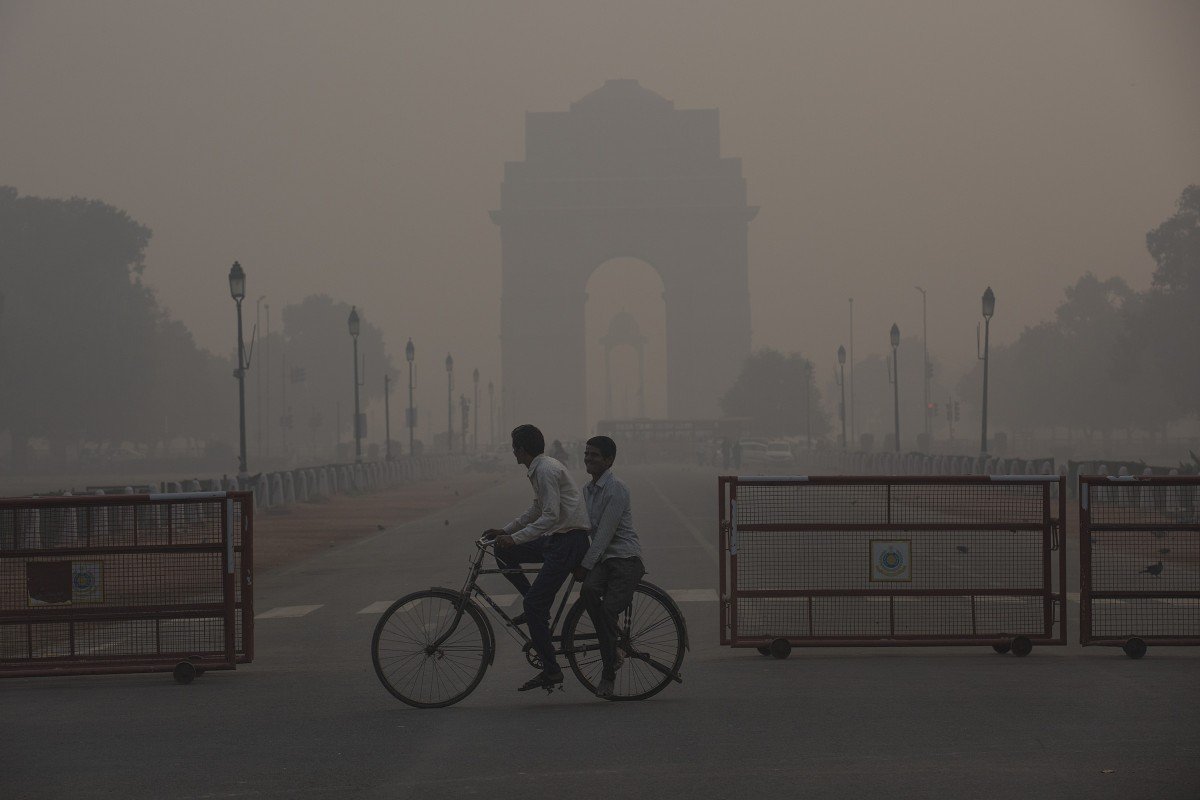
    The Indian capital of New Delhi was recently crowned the most polluted city in the world. Pollution was so severe in November that people were advised to stay home and schools were closed.
    Delhi Chief Minister Arvind Kejriwal, leader of the Aam Aadmi Party (AAP), said in October that the city was choking because farmers in neighbouring states had been burning straw left over after the harvest. In response, the government of the state of Punjab acted against nearly 3,000 farmers, but chief minister Amarinder Singh also said that Kejriwal was “playing political games” instead of addressing the problem.
    After Delhi’s air quality dipped further, the AAP temporarily reinstated its “odd-even” scheme, under which cars with licence plates ending in an odd number were only allowed on the streets on odd-numbered dates of the month while cars with even-numbered licence plates could only run on even dates, with some exceptions. The scheme has run several times since 2016, proving ineffective or, at best, a short-term fix.
    The party also announced that women could use the city’s public transport for free to encourage more women to use the public transport system instead of private cars, which would also improve their safety.
    While other politicians accuse the AAP of not taking the pollution crisis seriously and of vilifying farmers, long-term solutions have yet to be discussed. The arguments between the AAP and other parties – in some cases, long Twitter battles — have been vitriolic and futile.
    For example, a member of parliament from the Bharatiya Janata Party (BJP) asked why the Delhi government hadn’t allotted funds for water sprinklers to minimise air pollution due to dust, with the central government, led by the BJP’s Narendra Modi, then having to step in with funding. Another BJP member of parliament said: “Earlier, the chief minister coughed alone. Now, the whole of Delhi coughs with him. The only thing he has given to Delhi for free is pollution.”
    Delhi’s pollution woes extend beyond air quality though: a study conducted by the Bureau of Indian Standards found that Delhi had the most unsafe water among 21 of the country’s major cities. Kejriwal dismissed the study, saying it was “false and politically motivated”.
    However, Delhi is not an outlier when it comes to pollution in India; the country has six of the world’s 10 most polluted cities.
    Indian politicians have been quick to capitalise on the issue of pollution. One central government minister promised earlier this year that Delhi would be free of air and water pollution in the next three years. Bold declarations such as this one are too frequent in Indian politics and have no space in serious discussions on climate change. It is not a matter to be taken lightly. Yes, climate change is a political matter to some extent, but the Indian people must determine that extent – not their politicians.
    Climate change needs long-term solutions not constant soapboxing. Indian farmers do not have adequate access to sustainable agricultural methods, especially given the extreme fluctuations in rainfall patterns the country has seen over the last few years.

  • 起亚汽车年产30万辆印度工厂竣工,加速攻占全球第四大市场

    起亚汽车的年产量达30万辆的印度工厂竣工,通过为当地量身定做的新车进军世界第四的印度市场。继最近决定投资印度尼西亚之后,起亚汽车还计划在印度增加销量,以挽回现代汽车集团在中国市场的销售颓势。

    起亚汽车5日(当地时间)在位于印度安得拉邦阿南塔普尔的印度工厂举行了竣工仪式,并表示将在明年上下半年推出“高级多功能车(MPV)”和小型运动型多功能车(SUV)2款车型。高端MPV将于明年2月在德里车展上亮相,这是一款针对印度高收入人群的车型。而入门级的小型SUV车型不仅面向印度,还面向亚洲及中东等新兴市场。起亚汽车印度工厂的第一辆车“Seltos”从7月上市到上个月共售出了4.0649万辆。11月销量达到1.0045万辆,以单一车型为准,在印度市场内销量排名第四。

    起亚汽车印度工厂于2017年10月动工,今年7月生产出Seltos,正式投产。印度市场汽车生产量居世界第五,年销量仅次于中国、美国、日本,是世界第四大汽车强国。印度人口约13亿,但汽车普及率仅为每千人30多辆。中国每千人的汽车普及率为141辆,美国为837辆。近年来,印度的汽车销量快速增长,预计到2030年左右,印度的汽车销量将超过日本,成为世界第三大汽车市场。

    起亚汽车相关人士解释说,“向印度出口整车时附加的关税为60%,因此在印度之外制造汽车供应的价格竞争力较低。需要确保当地生产工厂。”

    此前,现代汽车于1996年首次进军印度市场。目前,现代汽车的印度钦奈1、2工厂年生产能力为68万辆,明年计划增加到75万辆。如果加上起亚汽车的30万辆,合计将超过100万辆,很有可能超过现代•起亚汽车的中国年产量。

    现代•起亚汽车相关人士表示:“现代汽车出口印度工厂生产的汽车的40%,起亚汽车也计划将部分产量出口到非洲、中东、亚太、中南美等新兴市场。印度将成为现代汽车集团进军海外市场的桥头堡。”

    起亚汽车还加快了进军印度未来移动出行市场的步伐。今年3月,起亚汽车向印度第一大网约车服务(Car-hailing)企业奥拉(ola)投资6000万美元(约677亿韩元),正在挖掘新产业。此外,公司还计划与印度第二大共享汽车(car sharing)企业“Revv”合作,为移动出行服务提供专业化的车辆供应、管理及维修解决方案等。

    最近,印度汽车市场因利率上调和贷款强化、环境限制等而出现不景气,这是危险因素。据韩国汽车产业协会分析,截至今年第三季度(7~9月),印度汽车累计销量仅为218万辆,与去年同期相比减少了16.4%。

    起亚汽车社长朴韩宇自信满满地说:“为了达成明年16万辆规模的生产目标,将倾尽全力新增2款车型生产线。今后3年内工厂的机器

  • 4 men accused of gang-rape of young Indian doctor in Hyderabad killed by police in escape attempt

    All four of the men accused of a grisly rape and murder of a young Indian veterinarian have been shot dead by police, around the same area the young vet’s badly burned remains were discovered.
    The men had reportedly been taken to an area near the initial crime scene by police in order to reconstruct the events that led up to 26-year-old Priyanka Reddy’s horrific death when one of the accused grabbed an officer’s service weapon and fired, attempting an escape. All four were killed when police shot back, according to the Shamshabad district police chief.

    The group was arrested in late November after Reddy’s charred corpse was found by a local resident beneath an overpass on the outskirts of the city of Hyderabad. According to police, the group punctured a tire on Reddy’s unattended motorbike and then offered to give her a ride when she returned, ultimately abducting the young woman. It is believed she died of suffocation before the men attempted to incinerate her remains.

    The gruesome killing sparked widespread outrage and protests across India, with tens of thousands gathering on the streets of Hyderabad to demand justice for Reddy. Police were forced to call in reinforcements to prevent an enraged mob from lynching the suspects on the spot, ultimately dispersing the crowd when demonstrators began hurling projectiles at officers. The accused were identified as Mohammad Areef – the prime suspect – Jollu Shiva, Jollu Naveen, and Chintakunta Chennakeshavulu. Many Indians demanded a harsh punishment for the suspects in the wake of the murder, including the death penalty, with the mother of one of the men even stating: “If my son is wrong, burn him the same way [Reddy] was burned.”

  • India to become $5 trillion economy, doubters are just ‘professional pessimists’

    India to become $5 trillion economy, doubters are just ‘professional pessimists’

    Explaining how India can achieve the ambitious target of becoming a $5 trillion economy in the next five years, Indian Prime Minister Narendra Modi has hit out at those who sow the seeds of doubt over the plan.
    “I am confident that we will achieve the goal of $5 trillion economy in 5 years, but some people ask what is the need for this and why is it being done? This is the section which is called ‘professional pessimists,’” Modi told Bharatiya Janata Party workers in Varanasi, as cited by local media. It was Modi’s first visit to his constituency in Uttar Pradesh state, northern India, since re-election.

    He also said to beware of the “pessimists,” adding that they bring “more problems and troubles than you ever imagined.”
    “Size of the cake matters,” Modi stated as he explained why it is important for India to stick to his plan.

    Larger the size of the economy will be, the larger the prosperity will it bring for the country.

    Achieving the goal is not such a difficult task, he said. To do so, India has to raise per capita income, which will in turn boost purchasing power and the rise of demand, further triggering an expansion in services.

    Farmers could also contribute to economic success. In his speech on Saturday, Modi said the government is seeking to create an environment for export of agricultural products as it views farmers “as exporters and beyond just being producer of food.”

    Earlier this week, India rolled out a roadmap to reach the $5 trillion objective, laid down by the prime minister in mid-June. On Friday, Indian Finance Minister Nirmala Sitharaman presented her maiden Union Budget to parliament. In her speech presenting the economic plan for 2019-20, she said the country is set to become a $3 trillion economy by the end of the year, adding that Modi’s goal is “well within” India’s capacity.
    The budget stipulates a continuation of structural reforms and heavy investment in infrastructure and digital economy to make India a $5 trillion economy.

    One day before the finance minister’s speech, the chief economic adviser to the government of India (CEA) presented ‘Economic Survey 2019’. The document states that India needs to sustain real GDP growth of eight percent to achieve the $5 trillion economy status. Economic growth should be driven by a “virtuous cycle” of savings, investment, and exports, according to the survey.

    As global economic growth cools down and is expected to grow at the slowest pace in three years this year (2.6 percent), India remains one of the fastest growing economies in the world. According to Nasdaq analysts, it is in the top five, and is expected to grow at 7.4 percent till 2021. It also boasts the status of world’s third largest economy in terms of purchasing power parity and seventh largest in terms of nominal GDP.

  • India to push Japan out of world’s top 3 economies by 2025

    India is projected to outpace the UK by the end of the year to become one of the world’s top five economies. It will then take it just six more years to overtake Japan as the world’s third largest economy, a new study suggests.
    India’s gross domestic product (GDP) is expected to reach $5.9 trillion by 2025, according to the estimates of global consulting firm IHS Markit. The forecast plays into Indian Prime Minister Narendra Modi’s ambitious plan to make the country a $5 trillion economy in the next five years.

    “Total Indian GDP is forecast to rise from $3.1 trillion in 2019 to $5.9 trillion by 2025, while the size of the Indian consumer market is forecast to increase from $1.9 trillion in 2019 to $3.6 trillion by 2025,” the report reckoned. It adds that the country is set to be one of the main drivers of growth in the Asia-Pacific region and will contribute greatly to global GDP growth.
    However, to enter the ranks of the world’s upper middle-income countries, India has to address several challenges, such as reforms to its legal system and labor market and development of its transport and power infrastructure, among other priorities, according to the report.

    “Despite significant achievements in new infrastructure construction during PM Modi’s first term, rapid infrastructure development in key sectors such as transport and power infrastructure remain important priorities, as well as reducing the regulatory burden of government red tape,” the IHS Markit analysis reads.
    Those priorities were highlighted in the latest annual Economic Survey published by the Indian government earlier this month. The document, set to serve as a roadmap to reach the $5 trillion objective, says that India’s growth should be driven by a “virtuous cycle” of savings, investment, and exports.

    The consultancy stressed that, despite the existing challenges, the country’s economic outlook looks positive for Modi’s second term, with annual economic growth expected to stand at 7 percent over the 2019-2023 period.

  • Goldman Sachs sees India’s growth picking up in 2020

    The third-largest economy in Asia should rebound in 2020 as global conditions are set to improve, helping India’s economic growth to pick up, according to US investment bank Goldman Sachs.
    The bank’s chief economist and head of global economics and markets research Jan Hatzius said the extent of the recovery will likely be modest instead of returning India to the growth rates seen a few years back.
    “As we go into 2020, we think there’s a tentative sense of stabilization in the Indian economy,” Hatzius told CNBC.

    In its report last week, Goldman projected India’s growth to fall to 5.1 percent this year from roughly seven percent annually in 2017 and 2018. The bank forecasts the country’s growth to pick up to 6.4 percent in 2020.

    According to Hatzius, an improving global economy and domestic policies such as corporate tax cuts should help to lift economic activity in India. He also said that the country’s central bank, the Reserve Bank of India, “probably isn’t quite done” with easing monetary policy yet.
    “We’ll see how strong the rebound is. We did see a significant deceleration; will it be able to make that up in 2020 and 2021 to get back to the growth rates that we saw a couple years ago?”

    Hatzius continued: “That may be a tall order, but incrementally we do think that growth probably picks up somewhat from here.”

  • The devils that dog India and its women: Why Modi’s words have fallen on deaf ears

    To the images of the charred remains of a young woman, raped and murdered, countless Indians woke up this morning with a sense of having failed their nation.

    Dr Priyanka Reddy was out and about her work as a vet in the outskirts of Hyderabad when her motorbike broke down and she fell prey to the evil eyes of men around her, with no route of escape left for her modesty or her life.

    All of India’s gains on women’s issues in recent years, personally for me, had been put to flames.

    Four years ago, India’s premier Narendra Modi launched a scheme for girls, appropriately in the northern state of Haryana, which suffers from a skewed gender ratio and where women must largely look after home and hearth, and little else.

    “The prime minister of this country has come to you like a beggar, begging for the lives of our daughters,” Modi had implored.

    Flip through the news pages of the last six years and you would see countless tales of Indian women who are world champions, two of them –Saina Nehwal and Sania Mirza– from the very city of Hyderabad which today hangs its head in shame.

    You would find women who scaled Mount Everest on one leg; the youngest ever to swim her way to a record in icy Antarctic waters; grandmasters in chess; unbeatables in squash; an amateur world boxing champion’s reign of six years; authors who are internationally acclaimed; women scientists who are today the backbone of India’s space research programme, the envy of the world.

  • Russia wants to attract Indian investors to mine rare earths in Far East

    Indian companies IREL (Erstwhile Indian Rare Earths Ltd) and KABIL (Khanij Bidesh India Ltd) are looking into rare earth elements projects in Russia, according to Russia’s Far East Investment and Export Agency.
    In a meeting with Indian firms in New Delhi, the Russian delegation presented perspective projects that could be implemented in the remote Far Eastern region and the Arctic zone.

    “We’re considering mining of lithium and cobalt,” the director of the agency, Leonid Petukhov, said. The official added that the region is keen to secure foreign investment for developing local deposits amid the lack of Russian investors.

    The agency also said that the agency wants to attract foreign investors to participate in other projects in Zabaykalsky Krai, part of Russia’s Far East district, including those related to excavating a rare-earth element, yttrium, as well as other metals such as tantalum and niobium, among others.

    Cobalt and lithium are key components for the production of rechargeable batteries. The so-called rare earths are a group of 17 chemical elements with special characteristics which are important for making many different devices from smartphones to weapons.

    The materials are not actually rare, despite their name, but they are difficult to find in desirable concentrations and they are difficult to process as the ores often contain naturally occurring radioactive materials such as uranium and thorium. China is the world’s leading producer of rare earth metals; it accounts for around 80 percent of imports worldwide.

  • ‘I want the accused burnt alive’: Mother of slaughtered Indian vet demands justice

    India is in shock after the brutal rape and murder of 27-year-old veterinarian Priyanka Reddy this week. Her father has called for the perpetrators to be hanged, while her mother wants them to be publicly burned alive.

    Reddy was allegedly raped, murdered and her body burned on Wednesday night. Her charred corpse was discovered on Thursday morning by locals after a frantic search by her family and local authorities. Her remains were identified by a locket she wore around her neck. 

    Hyderabad police have arrested four men, including truck driver Mohammed Pasha, in connection with the incident.

  • 4 men confess to gang-rape & murder of Priyanka Reddy as crowds demand death sentences in India’s Hyderabad

    The four men accused of raping and murdering a 27-year-old woman on the outskirts of Hyderabad have confessed to the gruesome crime. Meanwhile, mass protests swept across the state, resulting in heated standoffs with police.
    Tens of thousands of people poured onto the streets of Hyderabad, and elsewhere across the state of Telangana, as the accused appeared before a district magistrate on Saturday. Police had to call in reinforcements to prevent lynching, escorting the suspects through the angry masses in one piece.

    As the crowd grew increasingly violent, throwing slippers at the officers and refusing to let them pass, police were forced use batons to disperse the mob.

  • Outrage and protests in India over latest horrific murder-rape case

    • A 27-year-old veterinary surgeon was gang-raped and murdered before being burned, in the latest case to shock India
    • Protests have spread from Hyderabad to other cities, as well as online, as women share their fears for their safety

    Hundreds of people on Saturday laid siege to a police station where four men are being held over the latest gruesome rape-murder to shock India.
    Baton-wielding police pushed back crowds from the building in the southern city of Hyderabad where they said the 27-year-old veterinary surgeon was gang-raped, killed and then her body burned.
    While the suspects were quickly detained, the killing sparked new outrage in a country that has been in the international spotlight over its handling of sex assaults since the brutal gang-rape and murder of a student on a Delhi bus in 2012.
    “How anyone could subject another human being to such terrible, unprovoked violence is beyond imagination,” said former opposition Congress party leader Rahul Gandhi on Twitter.
    Police had to bring in reinforcements to bolster security around the Hyderabad police station. The suspects appeared before a magistrate and were remanded in judicial custody for 14 days.
    But police were also criticised as protests spread to other cities.
    A woman who tried to stage a one-person demonstration outside the Indian parliament in New Delhi said she was beaten by police after refusing to go home.
    Anu Dubey had sat outside the assembly carrying a sign questioning why she could not “feel safe” in her own country.

  • India halved its poverty rate since 1990s – World Bank

    India halved its poverty rate since 1990s – World Bank

    India, the second-most populous country in the world, has achieved annual growth exceeding 7 percent over the last 15 years and continues to pull millions of people out of poverty, according to the World Bank.
    The country has halved its poverty rate over the past three decades and has seen strong improvements in most human development outcomes, a report by the international financial institution has found.

    Growth is expected to continue and the elimination of extreme poverty in the next decade is within reach, said the bank, which warned that the country’s development trajectory faces considerable challenges.

    It explained that the South Asian nation will need to achieve greater resource efficiency as it sustains growth, given its resource endowments and large population. Land must be used more productively in urban areas through the spatial transformation of cities to achieve agglomeration economies, and in rural areas through increased agricultural productivity. Water management will need to prepare for shifting water allocation to higher-value uses and for policies to increase the value of water use within sectors.

    The World Bank pointed out that 230 million people are not properly connected to the electricity grid. It said that India’s rapidly growing economy needs investment in infrastructure, an estimated 8.8 percent of GDP, or $343 billion a year until 2030.

    A particular challenge lies in the country’s declining female labor force participation, according to the bank. It is at about 27 percent and is among the lowest in the world, despite overcoming gender gaps in education, the financial institution said.

  • India set to eclipse US with global economic growth share by 2024

    India is expected to become a much bigger driver of global growth than the world’s current largest economy, the US, in just five years, according to Bloomberg calculations based on International Monetary Fund (IMF) data.
    The global economic watchdog warned about the risks of the slowdown that the world is currently facing as it downgraded growth to three percent, the weakest since the global financial crisis. This is the result of multiple factors, including the US-China trade war, geopolitical tensions, as well as Brexit-related risks, according to the IMF’s World Economic Outlook released earlier this week.

    However, some countries are projected to contribute more to the development of the world economy. China is set to remain the indisputable leader despite its share is set to fall from 32.7 percent in 2019 to 28.3 percent in 2024.

    India’s growth can outpace that of the US, Bloomberg reported, citing IMF estimates adjusted for purchasing power parity (PPP). In five years, the South Asian nation will account for 15.5 percent of global growth, jumping two percent from the current figures. Meanwhile, the US contribution is set to fall by more than 3.5 percent from its current 13.8 percent, to 9.2 percent.

    Other changes in the top five include Russia pushing Japan off fifth place with its share of GDP growth expected to stay at its current level of two percent in 2024. Indonesia will remain in fourth place.

    This week, the IMF cut India’s GDP growth forecast for 2019 to 6.1 percent, which is 1.2 percent lower than the body’s April projections. Despite the gloomier prognosis, the country’s finance minister argued on Thursday that the Indian economy is “still growing as the fastest,” although it remains far behind China.

  • India’s debt-crippled national carrier focused on day-to-day survival, will have to shut down if not privatized

    Air India will have to cease operations if a renewed attempt to sell the debt-laden company fails to find a buyer, the country’s Aviation Minister Hardeep Singh Puri said.
    “Once we invite bids, then we’ll see how many bids will come in,” he told Parliament.

    A group of officials is currently finalizing the process of inviting bids from the private sector. Last year, the government failed to attract any bidders when it tried to sell a 76 percent stake in the airline and offload about $5.1 billion in debt. Air India is saddled with an $11 billion overall debt.

    According to Puri, the government is now re-evaluating some of the terms and is open to selling the airline in its entirety. One of the biggest hurdles, he said, is its large number of employees.

    Air India has about 9,400 permanent staff and 4,200 contract workers.The minister said the government is committed to securing a deal that is favorable for the employees.

    The carrier has struggled to pay salaries and buy fuel, with losses mounting following earlier privatization attempts. Air India spokesman Dhananjay Kumar told AFP the company is unable to pay its debts and its outlook is gloomy.

    “We are concentrating on day-to-day operations and not focusing on the future,” he said, adding “Whatever resources we have, we are trying to use them in an optimum manner and trying to run our flights.”

    Air India, which started as Tata Airlines in 1932 and later became state-owned, has been losing money for more than a decade. The company, which was once known as the ‘Maharaja of the skies’, has lost market share to low-cost rivals in one of the world’s fastest-growing but most competitive airline markets.

  • Good as gold: Thieves in India empty truck loaded with 40 tons of onions as price hike makes haul pure treasure

    A truck delivering onions worth $30,000 for an Indian trader was found totally emptied out in what police suspect was a brazen robbery amid skyrocketing prices for India’s staple food.
    The vehicle, loaded with a whopping 40 tons of onions, set off from the state of Maharashtra to Uttar Pradesh in mid-November, but never reached its destination. It disappeared halfway to its intended customer last week and was found empty, deep in the central Indian state of Madhya Pradesh on Tuesday.

    Police say the cargo – worth up to 2.2 million rupees (roughly $30,000) – could have been an outright bonanza for those who dared to steal it. One kilogram of onions is retailing at 100 rupees ($1.40) in most Indian states, often peaking at 120-130 rupees in major cities such as Mumbai, Chennai, Kolkata, Chennai and Pune.

    Onion is a mandatory ingredient in India’s most iconic meals © Global Look Press / Hu Xiaoming / Source: Xinhua
    There were other onion thefts this week, however, these were not as grand as the one in Madhiya Pradesh. On Thursday, five 50kg sacks of onions were stolen early in the morning from a Gujarat vegetable shop. In a similar incident, thieves targeted a market in West Bengal, walking off with bags full of onions, potatoes, garlic and ginger.

    Skyrocketing prices for onions have become one of the major issues in India, with local politicians seizing on it. Some of them weren’t shy about sending a bold message to the government.

    The price spikes have been blamed on unseasonal rainfall, which delayed the planting of the winter-sown crop across the country. Coping with the crisis, the Indian government vowed to extend a ban on onion exports and moved to import the bulb from neighboring countries.

  • ‘I’m so scared!’ India shocked by brutal rape & murder of young vet, touched by her last words

    The charred remains of a missing Indian veterinarian have been discovered discarded beneath an overpass. The young woman was apparently abducted and raped on her way to work in yet another attack that has shocked Indian society.
    The 26-year-old vet, Priyanka Reddy, suffered a flat on her motorbike on her way to an animal hospital on Wednesday and was stranded in the town of Shamshabad, where a group of men offered her “help.” Reddy’s sister Bhavya said she had last talked to her sometime in the evening – unaware they would never speak again.

    Dr. Priyanka Reddy’s found brutally murdered & charred to death after she was stranded in Hyderabad outskirtsGrieving family demands death penalty to perpetrators, Nothing less will be a denial to justice

    — Geetika Swami (@SwamiGeetika) November 29, 2019
    During their final phone call, Bhavya said Priyanka indicated she was frightened at being stranded in an unfamiliar area, where she said there were several men and trucks parked nearby. Bhavya suggested that her sister should abandon the crippled bike and walk to the nearest toll gate to wait for her, but it was not to be.

    Reddy’s badly burned corpse was discovered on Thursday morning by locals. The woman’s family could only identify her by a locket she was wearing.

    Her last conv to sis 9.22pm”Scooty punctured..two people took my vehicle forcibly saying they will get it repaired…. Some strangers following me…scared…”her sis asked her to keep talking and her call was cut.they identified her burnt body today.#RIPPriyankaReddypic.twitter.com/PZrtE8xcr0

    — preethi bandaru (@Preethi_Princes) November 29, 2019
    “We are examining CCTV footage from the area,” Shamshabad’s deputy police commissioner told reporters. “The police [were] informed at about 7:30 this morning about the burnt body. We suspect she was doused with kerosene and burnt.”

    Police have dispatched 10 different teams to track down the perpetrators, though it is unclear if any suspects have yet been identified. Reddy’s bike remains missing, but police say it could provide important clues.

    The woman’s family has demanded justice for the heinous crime. “Whoever has done this needs to be hanged to death,” Reddy’s father said, echoing an outpouring of sentiment on social media.

    What a horrifying incident.. So sad to hear about Priyanka Reddy being kidnapped.. raped.. n burnt alive.. I don’t even know what punishment would be enough for the B*ds who did this.. My condolences and prayers up for the family..

    — Varun Sandesh (@itsvarunsandesh) November 28, 2019

  • 扩大印度制造 苹果供应商玺合康将投资85亿

    扩大印度制造 苹果供应商玺合康将投资85亿

    苹果计划扩大在印度生产iPhone,而印度当局 透露,苹果将扩大其印度业务,苹果供应商“玺合康”(Salcomp)将在印度清奈(Chennai)附近的工厂生产零部件,该公司将在未来5年内,投资200亿卢比,约新台币85亿元。

  • India launches Cartosat-3 observation satellite & 13 other craft into orbit

    India has launched its Cartosat-3 observation satellite into orbit – the first in a new series of remote sensing craft – accompanied by thirteen smaller probes, in a significant step for the country’s space program.

    The Indian Space Research Organization (ISRO) sent off the satellites from the Satish Dhawan Space Centre on the island of Sriharikota at 09:28 local time, marking the forty-ninth flight for India’s domestically-designed Polar Satellite Launch Vehicle (PSLV).

    The Cartosat-3, the primary payload, is an advanced Earth-observation satellite equipped with a variety of different imaging devices, useful for cartography and weather mapping, as well as for strategic and military applications. The ISRO says the craft will help India to meet increased demand for “large-scale urban planning, rural resource and infrastructure development, coastal land use and land cover, etc.” It is designed to operate for at least five years.

    Twelve compact SuperDove probes will also make the journey into orbit, built by California-based firm Planet, which already has 26 similar prototypes in orbit, in addition to over 100 other functional spacecraft. Despite their tiny stature at under 12 inches tall, each cube-shaped SuperDove is capable of producing images of Earth at a resolution of about 10 feet, providing an up-close look from very far away.

    The final device, dubbed the Meshbed, will serve as “demonstrator technology” for a novel communications system developed by American firms Analytical Space Incorporated (ASI) and MITRE Corporation. According to ASI, the device is “intended to pave the way for users on the ground to gain faster access to satellite data.” Like the SuperDoves, the Meshbed will also be operated by American companies.

  • ‘Better kill them with explosives!’ India’s Supreme Court says air pollution turned New Delhi into a ‘gas chamber’

    India’s Supreme Court said New Delhi’s staggeringly poor air quality was akin to a “gas chamber” which “suffocates” residents, and slammed both city authorities as well as local farmers for their inaction on the crisis.

    With air quality in India’s capital city deteriorating year after year, in a hearing on Monday the Supreme Court said living there was now “worse than Narak [hell],” and demanded to know why authorities weren’t doing more to address the issue.

    “In the capital of the country, if you will create this kind of situation, how will the people survive? How will the country become a global superpower if you are not able to check these things?” court justices asked, singling out the Chief Secretary to the state of Punjab, Shri Karan Avtar Singh.

    Time has gone where we will keep on waiting. Why this is continuously happening?

    The court warned that farmers across the states of Punjab, Haryana and Uttar Pradesh were continuing the practice of “stubble burning,” or setting fire to the remains of crops after harvest to prepare for the next season. While the process is cheaper than other methods, such as weeding out the stubble by hand, it contributes greatly to India’s air pollution and is currently banned by law.

  • सुपरहिट एक्टर होने के बाद भी अपने को स्टार नहीं मानते नवाजुद्दीन, ये है वजह

    नवाजुद्दीन सिद्दीकी ने पिछले कुछ सालों में अपनी एक्टिंग से खुद को स्थापित कर लिया है. वे इंडस्ट्री की खान तिकड़ी के साथ तो काम कर ही चुके हैं, इसके अलावा कई शानदार किरदारों के सहारे अपने आपको बॉलीवुड में एक बेहतरीन एक्टर के तौर पर भी स्थापित कर चुके हैं. हालांकि वे अपने आपको अब भी स्टार नहीं मानते हैं.

    नवाजुद्दीन ने हाल ही में आईएएनएस को बताया कि असली एक्टर वो होते हैं जो अलग-अलग तरह के रोल करते हैं, लेकिन जब आप स्टार कैटेगिरी में फंस जाते हैं तो आपको स्टीरियोटाइप किया जाने लगता है. स्टार और सुपरस्टार जैसी चीजें मार्केटिंग की रणनीतियां हैं. इसलिए मुझे अपने आपको स्टार कहलाना पसंद नहीं है.

    नवाजुद्दीन ने ये भी माना कि स्टार के टैग के चलते एक एक्टर की ग्रोथ पर फर्क पड़ता है. उन्होंने कहा कि मैं अपने कंफर्ट जोन में नहीं रहना चाहता. ये किसी भी एक्टर के लिए बेहद जरुरी है कि वो अपने कंफर्ट जोन से बाहर निकले. मैं वर्सेटाइल बनना चाहता हूं और हर तरह के रोल करना चाहता हूं. अगर मैं अपने आपको स्टार मानने लगूंगा तो मुझमें घमंड आ सकता है और इससे एक आर्टिस्ट के तौर पर मेरी ग्रोथ पर फर्क पड़ सकता है.

    गंभीर फिल्मों के बाद हल्की फुल्की फिल्मों में काम कर रहे हैं नवाज

    गौरतलब है कि मंटो, ठाकरे और सेक्रेड गेम्स जैसे प्रोजेक्ट्स में गंभीर रोल निभाने के बाद नवाजुद्दीन ने हल्की फुल्की फिल्में करने का फैसला किया है. कुछ समय पहले उनकी कॉमेडी ड्रामा फिल्म मोतीचूर चकनाचूर फिल्म रिलीज हुई थी. इस फिल्म में वे आथिया शेट्टी के साथ नजर आए थे. इसके अलावा वे तमन्ना भाटिया के साथ फिल्म बोले चूडियां में दिखाई देंगे. इस फिल्म को नवाजुद्दीन के भाई डायरेक्ट कर रहे हैं. फिल्म में अनुराग कश्यप का भी कैमियो है.

  • Why India has not been able to resolve the Teesta stalemate

    Since the news of the Bangladesh PM’s visit to Kolkata for the India-Bangladesh day-night Test match became known, there had been widespread speculation on whether the issue of Teesta water sharing between the two countries would be taken up. PM Hasina categorically stated that cricket and Teesta need to be ‘decoupled’.

    Dhaka is evasive

    Bangladesh’s expectations on the Teesta deal go up almost everytime its PM visits India. In view of the longstanding controversy over the Teesta waters, there is a perception among many in Bangladesh and India that the stalemate on water sharing may have a domino effect on diplomatic relations between the two nations.

    A recent memorandum of understanding signed by Bangladesh allows India to withdraw 1.82 cusecs (cubic feet per second) of water from the Feni river to meet the drinking water needs of Sabroom town in Tripura. This has created more pressure on PM Haseena to negotiate and close the Teesta deal.

    A tributary of the Brahmaputra river (known as Jamuna in Bangladesh), the Teesta river, with its origin at the Teesta Kangse glacier above 7,068 m, flows southward through the states of Sikkim and West Bengal in India, and crosses over to Bangladesh.

    Around 83 per cent of the basin area of 12,540 sq km lies in India. Historically, it has been an issue of contention between Bangladesh and India over sharing of dry season flow (December-May), when the irrigated boro rice is grown in both countries. In 1983, an adhoc agreement allocated 39 per cent to India and 36 per cent to Bangladesh, leaving the remaining unallocated.

    This agreement lapsed within two years. In 1984, the Joint Rivers’ Commission recommended allotting 42.5 per cent to India and 37.5 per cent to Bangladesh. A 2011 attempt to ink an agreement on the basis of the 1984 recommendations could not be implemented due to objections from West Bengal. Lately, Bangladesh has been complaining how the low flow from upstream has affected the standing paddy crops and fisheries, impairing critical livelihoods. Meanwhile, the West Bengal CM has taken the stance that Teesta’s overall flow in the state has declined. The water flow is “one-sixteenth of total water requirement in [the] two countries,” according to an excerpt from a recent internal report on the Teesta prepared by an Expert Committee of West Bengal Government, published on thethirdpole.net.

    Earlier in my articles, I have raised questions against these estimates. Yet, there is no doubt that flow has diminished downstream. The Teesta Barrage Project (TBP) at Gajoldoba in the Jalpaiguri district of West Bengal can provide partial answer to the disappearing waters. There is water diversion from Gajaladoba through the Teesta-Mahananda irrigation canal to meet the urban water needs of the growing urban centres of Siliguri and Jalpaiguri. What may not be known is the prevalence and dominance of irrigated paddy fields thriving with this diverted water adjacent to the link canal in West Bengal!

    Turbines play spoiler

    Again, neither West Bengal, nor Bangladesh has an idea that the mystery of disappearing water in the summer months needs to be traced back to the inorganic process of killing the river by as many as 30 hydropower projects (most of which are in Sikkim) in the stretch of the Teesta (operating and planned). Though hydropower is claimed to be ‘non-consumptive’ use of water being operational as ‘run-ofriver’, during the phases of low flows the water needs to be stored in the ‘pondages’ upstream of these projects. My own field observations reveal that due to the low flow at least 12-15 hours of storage daily is required, before the turbines could function.

    Successive projects at very a short distance from each other substantially fragment the river, dry up the downstream, and prove detrimental for biodiversity and critical ecosystem services like water provisioning and fisheries. This is a classic example of how myopic economics dominates over long-run sustainability concerns!

    Crops are a cropper

    There is no deying that the water conflict between the two nations centres around irrigated boro paddy, which has a crop-water requirement of around 1,800-2,800 mm, ie, 10 times those of drier cereals like sorghum, or ragi. It is common sense that in a water-scarce region, demand management is the key. However, vote-bank politics and appeasement prevail. This is visible from the governments’ indifferences to motivate farmers to diversify to other less water-consuming crops through counselling, price signals, or procurement mechanism! Bangladesh’s unbridled penchant for dry season paddy cultivation has been further facilitated by development of irrigation facilities through hydrological interventions, and there seems to be no intention of reversing this trend.

    Seen from an institutional perspective, the Teesta stalemate is largely created due to water being a state subject in the Indian Constitution. The federal structure of our governance has created an institutional void at the basin level, by bridling the Centre from taking an integrated approach to water governance that can lead to a cooperative outcome. In the process, the divergent views of the Centre and the state of West Bengal have led to the Teesta river being subjected to ‘conflictual federalism’.

  • What Bharat row? Priyanka Chopra and Katrina Kaif party with Salman Khan’s sister Arpita in Mumbai


    Priyanka Chopra on Saturday had a splendid time with her friends from Bollywood at a party hosted by Rohini Iyer. The actress was spotted dancing and clicking selfies with Bollywood stars like Kriti Sanon, Huma Qureshi, Nushrat Bharucha, Ayushmann Khurrana and Tahira Kashyap. What caught our eyes is the selfie of The Sky Is Pink actress with Katrina Kaif and Arpita Khan Sharma.

    Katrina Kaif took to Instagram to share the picture and wrote, “Girls,” followed by a heart emoji.

    The photograph of Priyanka with Katrina and Arpita is just like thousands of other pictures clicked at the party. But what caught our attention is the fact that during the release of Bharat, Salman Khan appeared pissed off with Priyanka for leaving the film to get married to Nick Jonas, and now Salman Khan’s Bharat actress Katrina Kaif and his sister Arpita are partying with the Quantico star and posting pictures on social media.

    Bharat was meant to be Priyanka Chopra’s comeback in Bollywood which eventually happened with Shonali Bose’s The Sky Is Pink recently. After Priyanka left Bharat. director Ali Abbas Zafar took to social media to announce the same with ‘nick in time’ post. And then, Katrina Kaif came onboard last minute.

    During the promotions of Bharat, Salman Khan time and again targeted Priyanka for leaving his film. The Ek Tha Tiger actor left no stone unturned in making sly remark after sly remark on Priyanka’s decision and taunting her choice. During one of such press conferences, he said, “She [Priyanka Chopra], over Bharat, did choose USA in the ‘nick’ of time. She has worked so hard all her life, okay? And when she got the biggest film of her life, she dumped that film and got married. You know, hats off! Usually, people leave their husbands for a film like this.”

    In another such press interview, when Katrina Kaif was telling how Kumud Raina’s role in Bharat is the best role in her career so far, Salman Khan was quick to interfere and say, “Thank you, Priyanka.”

    On another occasion, when Katrina was asked how difficult was it to prepare for the film, Salman Khan interjected and said, “Priyanka didn’t give us enough time to prepare.” He also commented about how it was “sweet of her (Priyanka) to tell us five days before the shoot that she couldn’t do Bharat.”

    So this was past and now it seems that everyone has moved on in their lives. Bharat opened at the box office with a record-breaking collection and went on to become of the biggest hits of 2019. Priyanka Chopra, on the other hand, got the love of her life Nick Jonas. Katrina Kaif was also appreciated for her role in Bharat and after the film she gor busy with Akshay Kumar’s Sooryavanshi. Everybody is happy and content in their lives and it seems the Bharat row is finally over. At least the photograph portrays that.

  • India vs Bangladesh Live Score, Pink Ball Test Day 3: Mushfiqur stands between India and innings win

    India (IND) vs Bangladesh (BAN) Pink Ball Test Day 3 Live Score: When the fast bowling unit led by Ishant Sharma removed the top four Bangladesh batsmen, it looked like the match would finish on Day 2 itself. However, it was Mushfiqur Rahim who took the 2nd Test to day 3 with his valiant 50 after Mahmudullah retired hurt due to a hamstring injury. Ishant Sharma fell a wicket short of claiming his 2nd 10-wicket haul and would look to achieve that feat on Day 3. Earlier, Virat Kohli hit his 27th Test hundred as India declared on 347.

  • Swiggy invests ₹250 crore to set up 1000 cloud kitchens

    • Swiggy is investing as much as ₹250 crore to bring 1,000 cloud kitchens on board.
    • In the last two years, Swiggy invested ₹175 crore in one million sqft space across 14 cities.
    • Swiggy claims that its cloud kitchen initiative generated 8,000 direct and indirect jobs.

    Food aggregator unicorn Swiggy is investing as much as ₹250 crore to bring 1,000 cloud kitchens on board. Swiggy will invest in building the cloud kitchens for its restaurant partners.

    “Swiggy has always maintained that cloud kitchens will be the future of food delivery. Very soon, India will have the second-highest number of cloud kitchens in the world, only next to China. With the massive growth in online food ordering over the last 2-3 years, India has leapfrogged the widespread in-restaurant dining culture that was prevalent in many international markets,” said Vishal Bhatia, CEO of new supply at Swiggy.

    Swiggy Access, an initiative that was launched two years ago, helps restaurants set up cloud kitchens. In the last two years, Swiggy has invested ₹175 crore in one million sqft space across 14 cities.

    With this, Swiggy has the highest number of cloud kitchens in India.

    Cloud kitchens help startups as well as restaurants to also reach out to more cities and service more customers.

    “The milestone of Swiggy successfully creating over 1000 partner kitchens shows the faith the restaurant partners have in the concept and bolsters our pioneering efforts in enabling more success stories in the restaurant ecosystem,” said Bhatia.

    Swiggy also claims that its cloud kitchen initiative generated 8,000 direct and indirect jobs in the country.

    Interestingly, Uber founder Travis Kalanick also invested in the same space as the CEO of Cloud Kitchens. Kalanick’s startup is also looking at expanding its business into India as it has been looking to hire India program managers and more.

  • Virat Kohli Reigns Supreme At Eden Gardens, Is The First Indian To Score A Pink Ball Test Hundred

    Ishant Sharma was the first Indian to take five wickets with the pink ball and now Virat Kohli has scored the first century from India in a pink ball Test. Yes, our skipper notched up his 27th Test ton on Day 2 vs Bangladesh at Eden Gardens.

    Resuming overnight on 59 not out, Kohli just continued where he left off on Day 1. Ajinkya Rahane supported him till he fell for 51, but Kohli marched on. This is his 27th Test century.

    Earlier Kohli became the first Indian skipper to score 5000 Test runs and the sixth overall. Not to mention the fact that he was the quickest to the milestone. He also has the most double centuries for India with 7 to his name. But what makes this hundred special is the fact that it came in the historic Day-Night Test at an iconic venue.

    Kohli is the King of Eden and he is reigning supreme. When he reached his hundred the jubilation on his face and the reaction of the crowd said it all, it was a moment to cherish. He reached the landmark in 159 balls with 12 fours to his name.

    India are already building a big lead after their pacers cut Bangladesh down to size for a mere total of 106. This hundred forms the base to go even further as we look to seal a 12th straight Test series win on home soil. Also this will be our 7th straight Test win, so another record looks set to be in the wings.

    Kohli’s shot selection was so good over the course of his innings that on Day 1 one bowler even applauded the cover drive after he was hit for four. There was no change on Day 2 and Kohli kept at it and eventually reached a well-made hundred.

    He loves to score big and consistently and the man seems to be making up after scoring a duck in the previous game. This is his way of balancing the scales as India look to complete a 2-0 whitewash. The fact that he is the captain puts more value in his contribution as the man is leading by example.

    He is considered the best player across formats, the only one with a 50-plus average in all versions and also with no apparent weakness. Kohli is the ultimate nightmare for a bowler because one can rarely set a trap for him. So once he is on song, better pray he makes a mistake, for the fielding side more often than not throws in the towel.

  • Two Indian Supercomputers Make Us Proud, Ranked 45th And 73rd In 100 Powerful Systems On Earth

    When we think of supercomputers, we forget how crucial they are to help us live a better life with their gargantuan processing power.

    Top500 is a global institution that keeps a track of such powerful supercomputers across the globe. Last year, it picked two supercomputers — Pratyush and Mihir (ranked at 45 and 73 respectively), however this year they’ve updated their list and looks like they’ve managed to retain their spot in the top 100.

    Pratyush ranked at 53 whereas Mihir is now ranked at 100. While they’ve lost their positions from last year, considering tech across the globe is evolving at an exponential pace and better processing hardware comes out every year, they’re still some really fast machines.

    Pratyush is installed at the Indian Institute of Tropical Meteorology in Pune. The supercomputer is equipped with a 4.0 petaflop array of processors dedicated to weather and climate analysis. In case you didn’t know, a petaflop is a measure of a supercomputer’s processing speed, meaning it can perform one quadrillion floating-point operations per second or FLOPS. For Pratyush, multiply that measure by 4.0. In simpler terms, it’s blazing fast!

    Mihir, on the other hand, is installed at the National Centre for Medium Range Weather Forecasting in Noida. It is capable of churning out 2.8 PetaFlops, which might seem like a little underpowered against Pratyush but is still a performer nonetheless.

    Costing a massive Rs 450 crore, both these systems are based on the Cray XC40 supercomputer. They’re running on arrays of Intel Xeon processors and Nvidia’s Now you might be wondering what would a supercomputer really do that a normal computer cannot.

    Essentially the massive processing power in these two systems allows for lots of data to be analysed simultaneously — whether it is related to rain patterns or earthquakes, air quality and other weather conditions — something that a standard computer would take months or years to figure out.

    Pratyush and Mihir are essentially HPCs or High Performance Computing facilities which made India the fourth country in the world to have an HPC facility dedicated for weather and climate research after Japan, the United States and the United Kingdom.

  • Aankhen And Dostana All Set For Its Second Installment! Here Are 7 Bollywood Movies Which Deserve A Sequel Too

    Bollywood movies usually depict real life situations. The cinema is like a mirror to the society, usually giving relevant messages. But there are some movies which are over the top, dreamy and spectacular on 70mm. While the arrival of OTT platforms is becoming popular medium but silver screen still holds a special place in our hearts and will continue to do so.

    In recent times, some filmmakers with brilliant content have hardly left us disappointed. Their movies are so good, it wins your heart. And listening to fans, the makers decided to spun a sequel on Dostana and Aankhen.

    Taking to Instagram, Kartik Aaryan, who is the lead actor in Dostana 2 alongside Janhvi Kapoor, posted a picture with Dharma head honcho Karan Johar.

    1.Hum Tum

    A 2004 movie about 2 people meet, fall in love, break up and then come together again. Lead roles played by Saif Ali Khan and Rani Mukerji, the film was heartwarming, romantic and had portions of comedy.

    The movie especially the songs was so relatable to the young generation that it ended up garnering five Filmfare awards. The duo came together in Thoda Pyaar, Thoda Magic, Tara Rum Pum and this. They have not come together in so long and everyone wants to know what transpired after their wedding. So a sequel definitely will work.

    2.Andhadhun

    A story of a blind piano player who unwittingly becomes embroiled in a murder. The movie features Ayushmann Khuranna and we know what’s that looking like in 2019. He is one of the finest actors of this era. And audience is seeking a sequel for this one as the ending of the movie was left open ended. Andhadhun leaves you to imagine what could have possibly happened. Fun fact: It was made on a budget of Rs 32 crore and ended up raking in Rs 456 crore.

    3.No Entry

    OMG! This is one movie we’re dying to have a sequel for. The movie is a hilarious roll coaster ride about three married friends – Sunny, Kishan and Prem who get stuck with Bobby (Bipasha Basu). Their wives constantly doubt their better halves and they get into trouble without really having done anything.

    There were rumors during the making that the movie could be similar to Masti. However, the producer of the film Boney Kapoor stressed that he would never endorse innuendo-based films such as Masti. While Masti has had many versions so far, No Entry is yet to get a sequel. It’ll be interesting to see who will play Salman Khan, Anil Kapoor and Fardeen Khan’s roles although we would like the original trio.

    4.Queen

    This 2014 movie was one which liberated many women. It shows Kangana Ranaut as an under confident Punjabi girl in a comic-drama when her wedding is called off. She then decides to embark on her honeymoon all by herself and shows the situations she gets into. Queen is a journey about a timid girl who in the end becomes happy, free and liberated and OWNS it. And people still want to know what really happened to Queen aka Kangana and does she end up getting married to someone at all.

    A sequel will definitely help us get a closure.

    5.Andaz Apna Apna

    This Salman Khan-Aamir Khan starrer has become a cult status over the years. Infact, the language used in the film has become a part of our everyday conversations. “Do dost ek pyaale se chai piyenge, ussey pyaar badhta hai” is just one of our favourite dialogues from the film. It’s a dream we all secretly think of – to marry someone rich and nice, right? Andaz Apna Apna revolves around two day dreamers who ‘smartly’ fall in love with two rich girls from a business family. However, the twists and turns that come along with it are hilarious and unmissable. A lot of people want Salman-Aamir to come together to show lives after they get married to Raveena and Karisma Kapoor. Now, now, wouldn’t that be interesting?

    6.Rockstar

    This movie is a tribute to Jim Morrison. Ranbir Kapoor aka Jordan embarks on a musical journey as he aspires to be a rock star. He attains all the fandom he dreamt of but becomes anguished and distant after losing Heer aka Nargis Fakhri who he passionately loves.

    The 2011 movie received a cult classic in India where AR Rahman was awarded for excellent music throughout the film and Kapoor for his impeccable acting. In the sequel, it’ll be interesting to see Jordan’s life post Heer and how he handles the stardom.

    7.Ae Dil Hai Mushkil

    It’s musical. It’s romantic. It’s dramatic. Helmed by Karan Johar, the movie is based on the concept of unrequited love. Apart from having a stellar starcast, Ae Dil Hai Mushkil had some picturesque locations as well.

    The movie which revolved around how a man who gets friend zoned by the one he loves goes to a woman older than him seeking for the same affection. Failing to achieve that, Ranbir who pays the lead role tries getting back to his old love. However, he still gets the same response despite her ailing health.

    The movie features Fawad Khan, Ranbir Kapoor, Anushka Sharma, Aishwarya Rai and a special appearance by Lisa Haydon and Alia Bhatt. Karan Johar is known for making larger than life cinema and this particular movie apparently depicts a portion of his real life.

    The movie was the highest grossing film of 2016 and it would be interesting to see if Ranbir eventually does fall in love with someone, at all.

  • Pay to breathe? ‘Oxygen bars’ hit New Delhi as India chokes under pollution & declares health emergency

    Pay to breathe? ‘Oxygen bars’ hit New Delhi as India chokes under pollution & declares health emergency

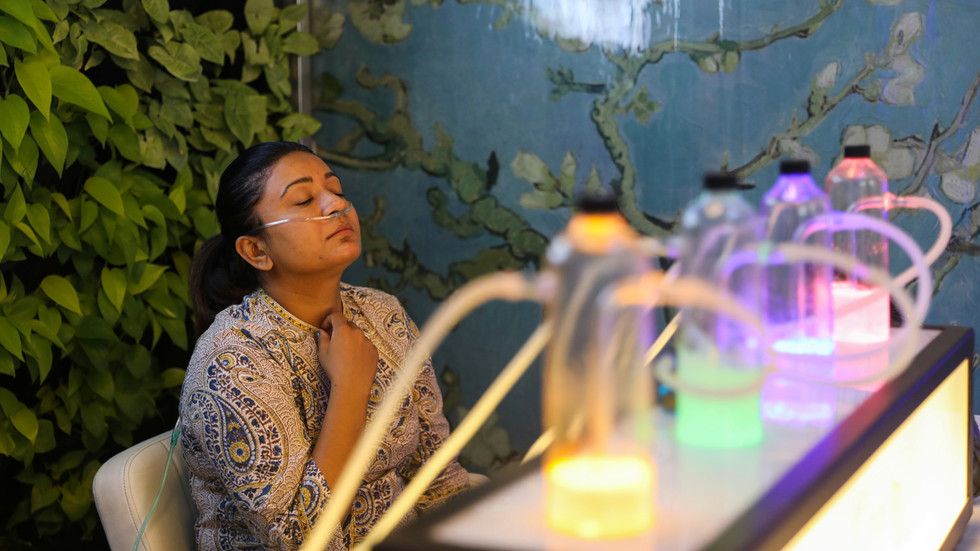
    A new fad sweeping India offers customers a breath of fresh air… literally. As pollution in New Delhi hits toxic levels, “oxygen bars” are popping up in the city to help locals breathe easy, but some found the idea off-putting.
    New Delhi officials were recently forced to declare a public health emergency over the city’s hazardous air quality after pollution levels soared to around 20 times what the World Health Organization deems safe, halting construction projects, and closing schools across the capital. While the smog-filled air is inescapable for many, those with the cash may find a brief reprieve at their local oxygen bar.

    $4 for 15 minutes of FRESH AIR at oxygen bar to escape air pollution in #Indiapic.

    One such establishment, dubbed Oxy Pure, is tucked away in the corner of an upscale shopping mall, with bright lights and gadgets glowing through its clear glass storefront. Here, customers can pay between 299 and 499 rupees (around $4 to $7) for a 15-minute oxygen session, with their choice of several fragrances: orange, lavender, cinnamon, eucalyptus, lemongrass or peppermint.

    Delhi: An oxygen bar in Saket, ‘Oxy Pure’ is offering pure oxygen to its customers in seven different aromas (lemongrass, orange, cinnamon, spearmint, peppermint, eucalyptus, & lavender), at a time when Air Quality Index (AQI) in the city is in ‘severe’ category.

    “Air pollution is going to dangerous levels so people are coming here to breathe pure oxygen,” Oxy Pure owner Aryavir Kumar told the National.

    Each winter, air quality suffers in cities around India as winds die down and farmers burn the remnants of crops to make room for the next harvest. This time around, Kumar says New Delhi’s worsening smog has driven a surge of business at his establishment.
    “We would get 15-20 people a day [before]. Now we are getting 30-40 customers every day,” he said. “There is a tremendous increase in the numbers of customers in the last two weeks.”

    Conjuring images of a pulmonary ward, the bars deliver O2 through a standard cannula device which customers hook up to their nostrils, cranked out of a “concentrator” machine that pulls clean oxygen out of the polluted air. While Kumar is careful to insist the “oxygen therapy” does not cure any diseases, he says the air can rejuvenate “like a spa.”

    Oxygen bars are not all that uncommon.

    It offers a ‘natural high.’ We’re not used to breathing air which is > 20% oxygen. So, when you take a hit of oxygen at an oxygen bar, you immediately start to saturate your blood with oxygen, which can heighten concentration.

    Despite the potential for benefits, many online found the concept downright dystopian, suggesting a future in which only the wealthy can afford to breathe non-toxic air.

  • Reversible sterilization? India fights back against overpopulation

    Many view India’s ballooning population –set to overtake China’s by the next decade– as a ticking time-bomb, but a solution is now at hand that, nevertheless, has taken four long decades to see the light of day.

    India had only 54 million on its population chart in 1979 when a slight professor in his 40s, Dr Sujoy Kumar Guha, published his first scientific paper on Risug, a molecular drug he had developed as a reversible contraceptive for men.

    He pleaded for clinical trials. But the ‘Doctor’ in front of his name was not from a medical degree; it was courtesy of his PhD studies at an American university. No go, said India’s supreme medical body, the ICMR (Indian Council of Medical Research).

    Guha chose to circumvent this closed door by opting to sit his medical entrance test and by becoming a qualified medical doctor. The ICMR relented and the clinical trials began, but more than a decade had passed and Guha was now in his 50s, an age when most men tend to get somewhat flaccid of mind.

    Phase One of the clinical trials progressed from rats to rabbits to monkeys and then to humans, and proved spectacularly successful in 1993. But then the ICMR brought them to a halt, after someone complained that certain components of Risug are known to cause cancer.

    Guha argued that these individual substances become harmless as compounds, just as chlorine, which could melt human flesh, becomes basic everyday salt when mixed with sodium. The ICMR wasn’t convinced.

    Dr Guha then knocked on the doors of the Supreme Court; Phase Two was set in motion after a few years and, by 2002, Dr Guha’s dreams were close to being realized, before another spanner was thrown in the works.

    This time, it was changes to the international norms for clinical trials. It took the Indian medical authorities another five years to put these required norms in place.

    The envy that took its toll

    Unsurprisingly, Guha’s work evoked interest and envy in equal measure around the world. Peers began sniffing around his wonder drug, and not always with a sense of appreciation. The National Institutes of Health in the US raised questions, causing more delays.

    Dr Guha believes to this day that this was meant to promote a pill-in-the-making which, unlike his one-time injectable hormone-based drug, promised a continual demand and endless profits.

    Now, after another dozen years and nearly four decades all told, Dr Guha’s dream is close to becoming a reality. Extended tests on Risug have shown no side-effects. The Indian medical authorities are hopeful of introducing his reversible contraceptive to the market in the next six to seven months. It would be the first injectable male contraceptive in the world. Its competitor, the pill, is nowhere in sight.

    Indian men prefer to use condoms rather than invasive vasectomy surgery to sterilize their reproductive systems. But Dr Guha’s invention is external, non-invasive and cheap, and could prompt millions to opt for it, given it’s reversible with just two counter injections. There are no barriers to physical intimacy, as with condoms.

    Youth and the shackles of population

    There’s a great imbalance in India’s population trajectory, with southern states meeting the global trends of less than two children per household. In contrast, families in the northern states, home to 40 per cent of India’s population, tend to have nearly four children per household.

    Education, the economic dependence of women and a rural-urban divide all play roles in India’s population, which is bursting at the seams and poses a great strain on the country’s diminishing resources, such as water and energy. India has more than 600 million young people and needs 12 million jobs for them each year. Population is an issue which can no longer be put off till tomorrow.

    In times gone by, around the time when Dr Guha had worked out his invention, Sanjay Gandhi, son of India’s then-reigning prime minister Indira Gandhi, opted for a compulsory sterilization programme to halt the population boom in 1976. Over six million men were sterilized in just a year. Nearly 2,000 men died because of botched operations.

    In the ensuing elections, India voted the Gandhis out of power. Nobody in authority has dared to do anything as dramatic as this since those dark days.

    Dr Guha, nearing 80 and still sprightly, could finally give India a solution to a problem which has seriously shackled the nation’s future. He won’t meet the tragic fate of Dr Subhas Mukherjee, who was the real architect of ‘test-tube baby’ procedure but lost the rights of invention to Louise Brown only because his work hadn’t appeared in any international journal. In 1981, Dr Mukherjee was found hanged in his Kolkata apartment.