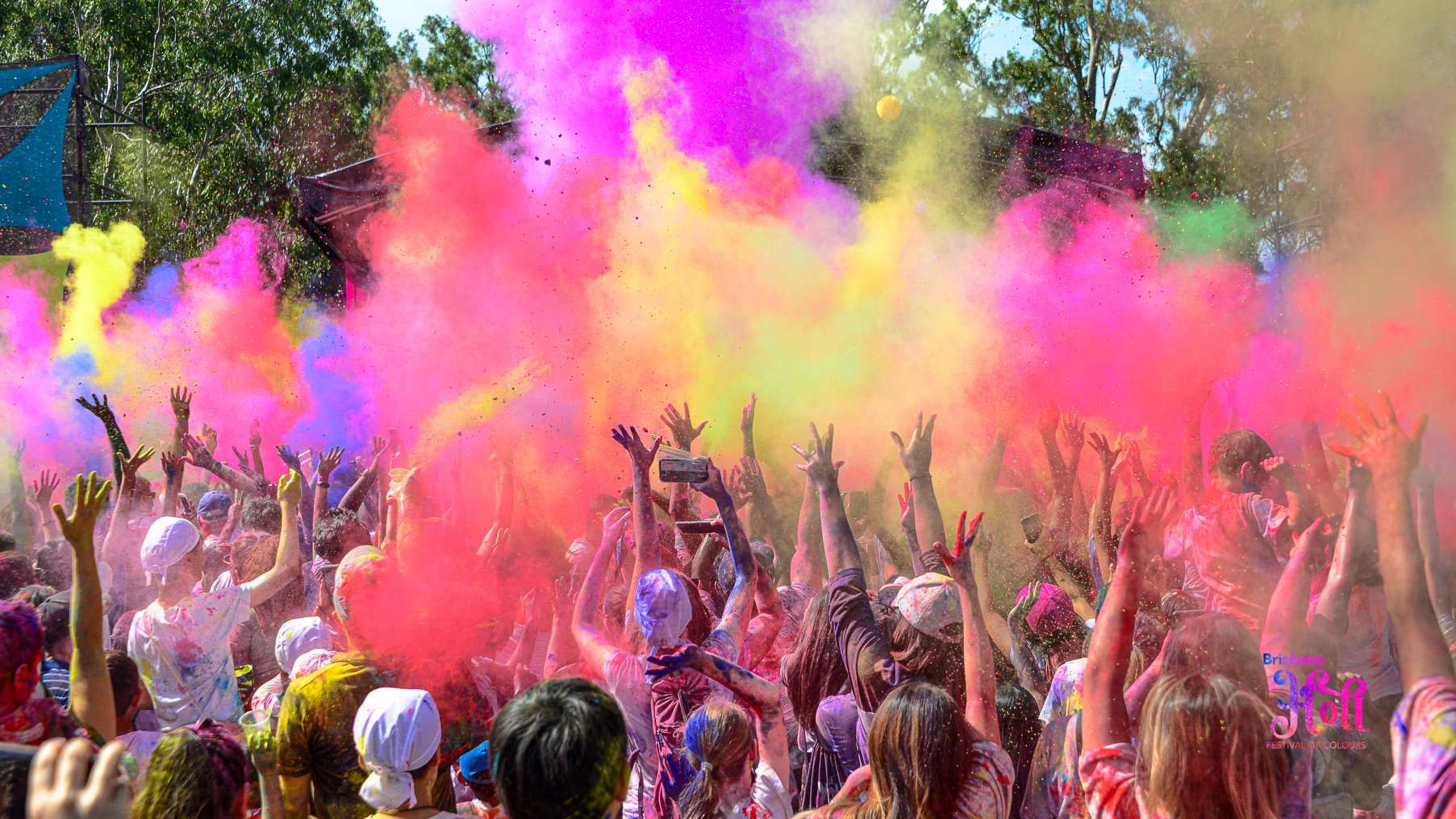
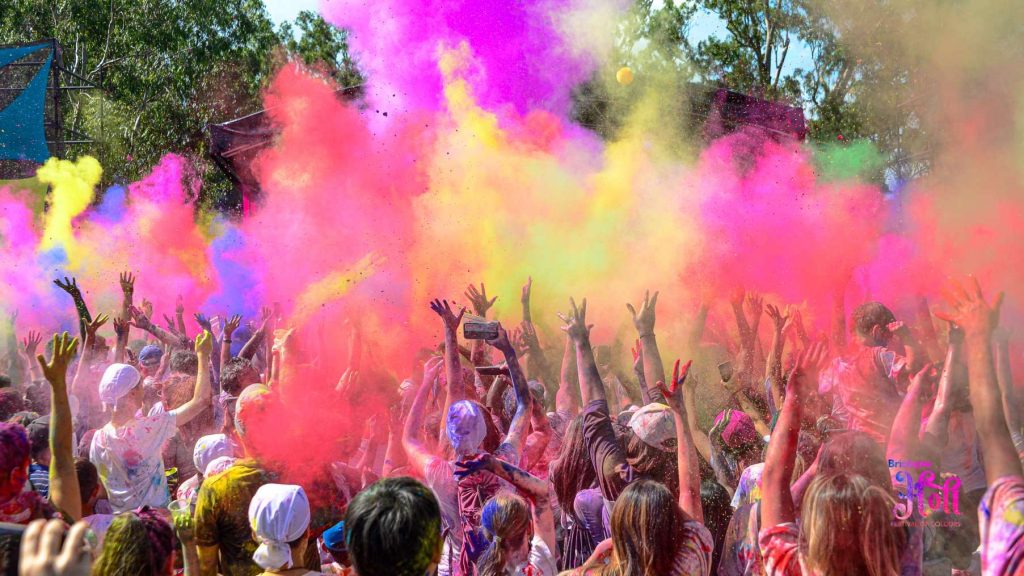
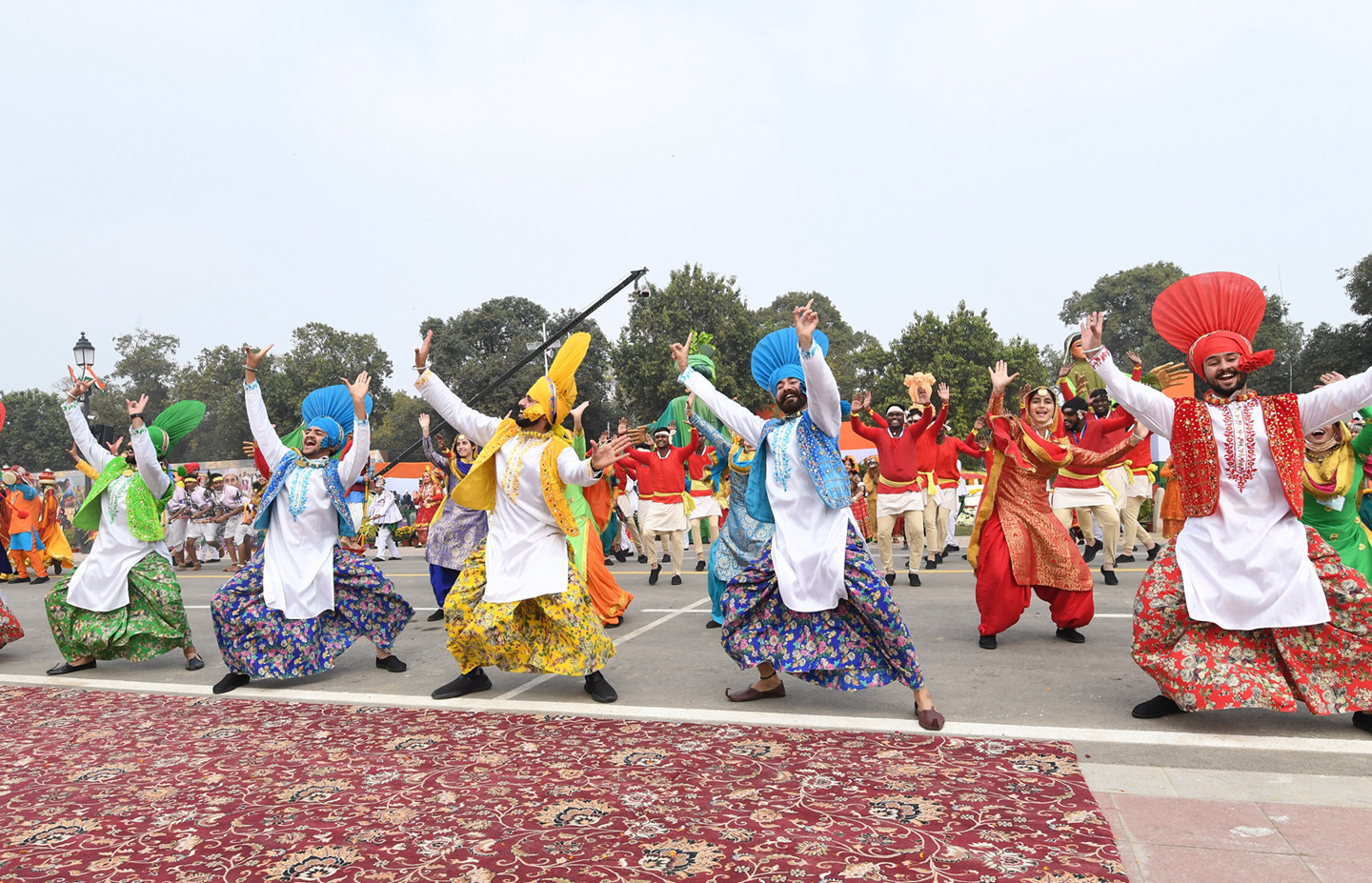
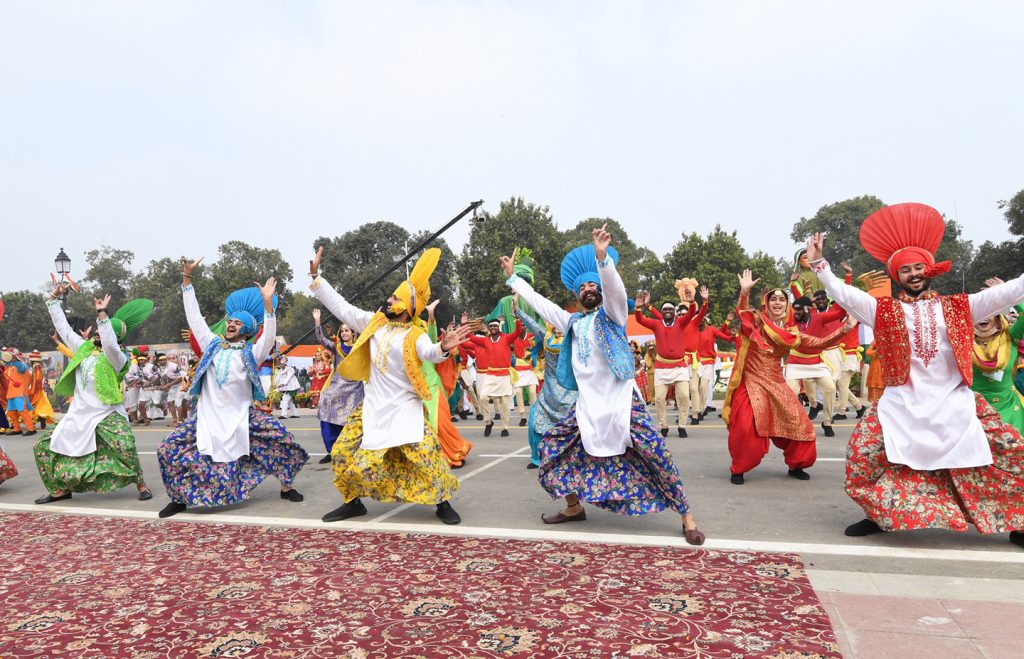
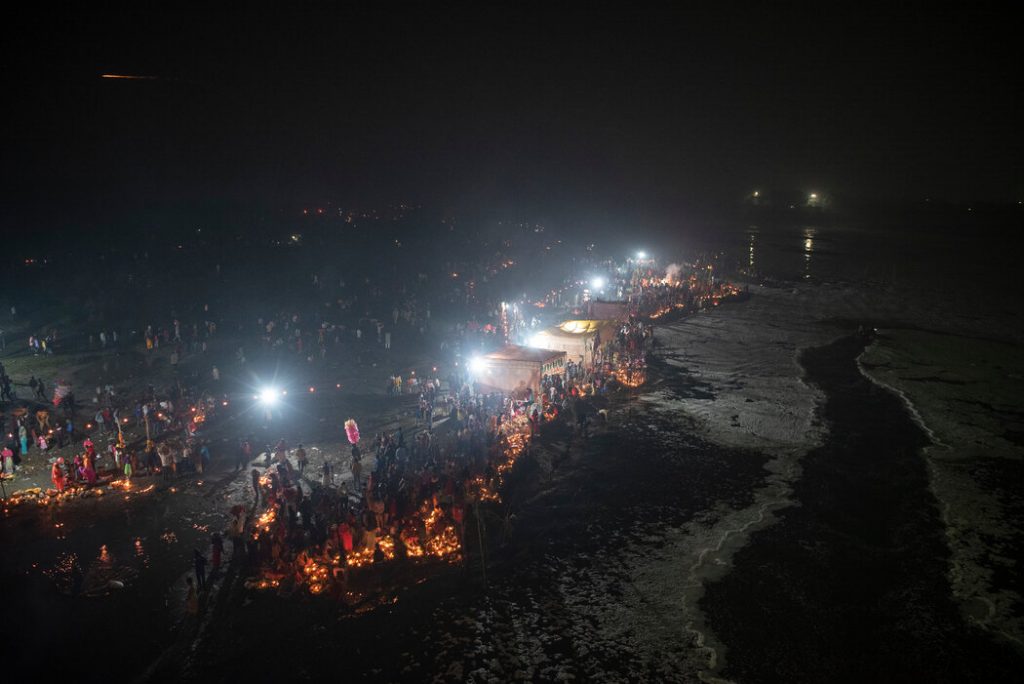
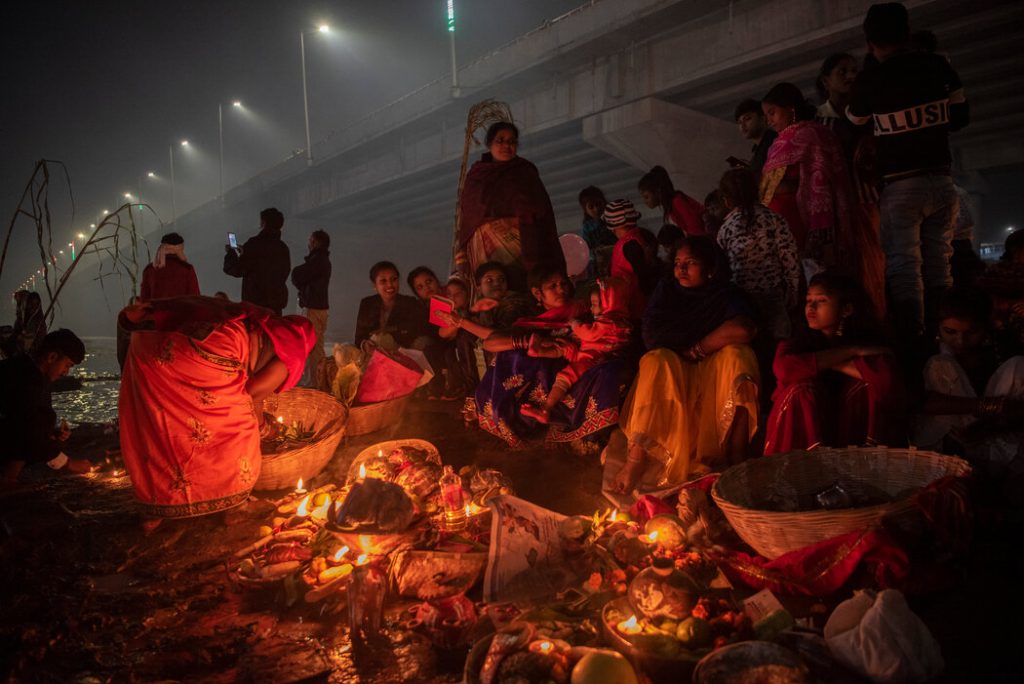
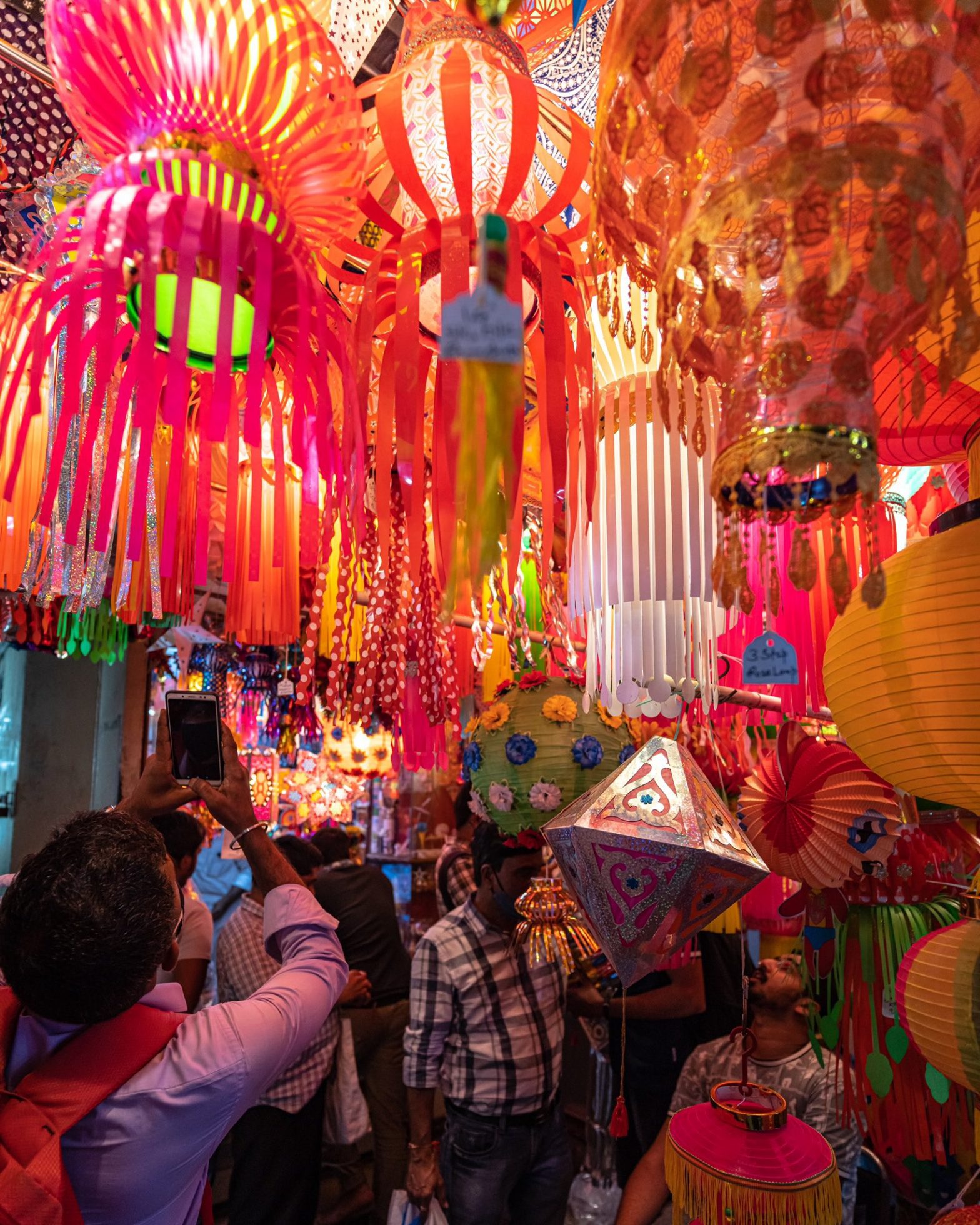
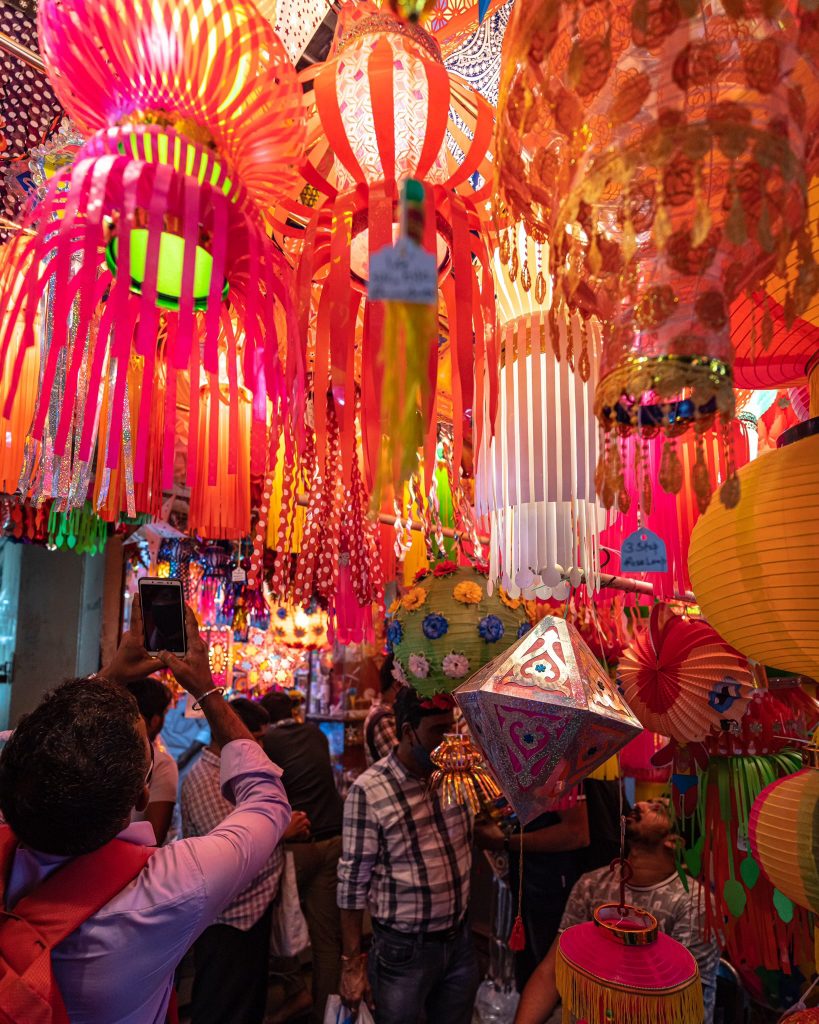
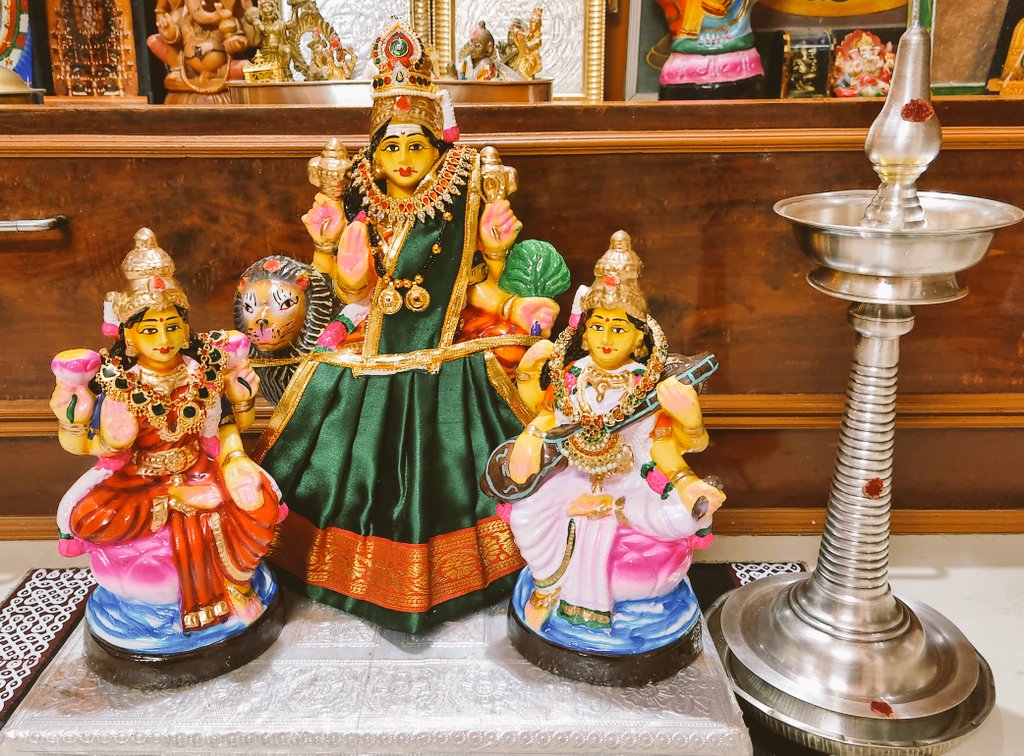
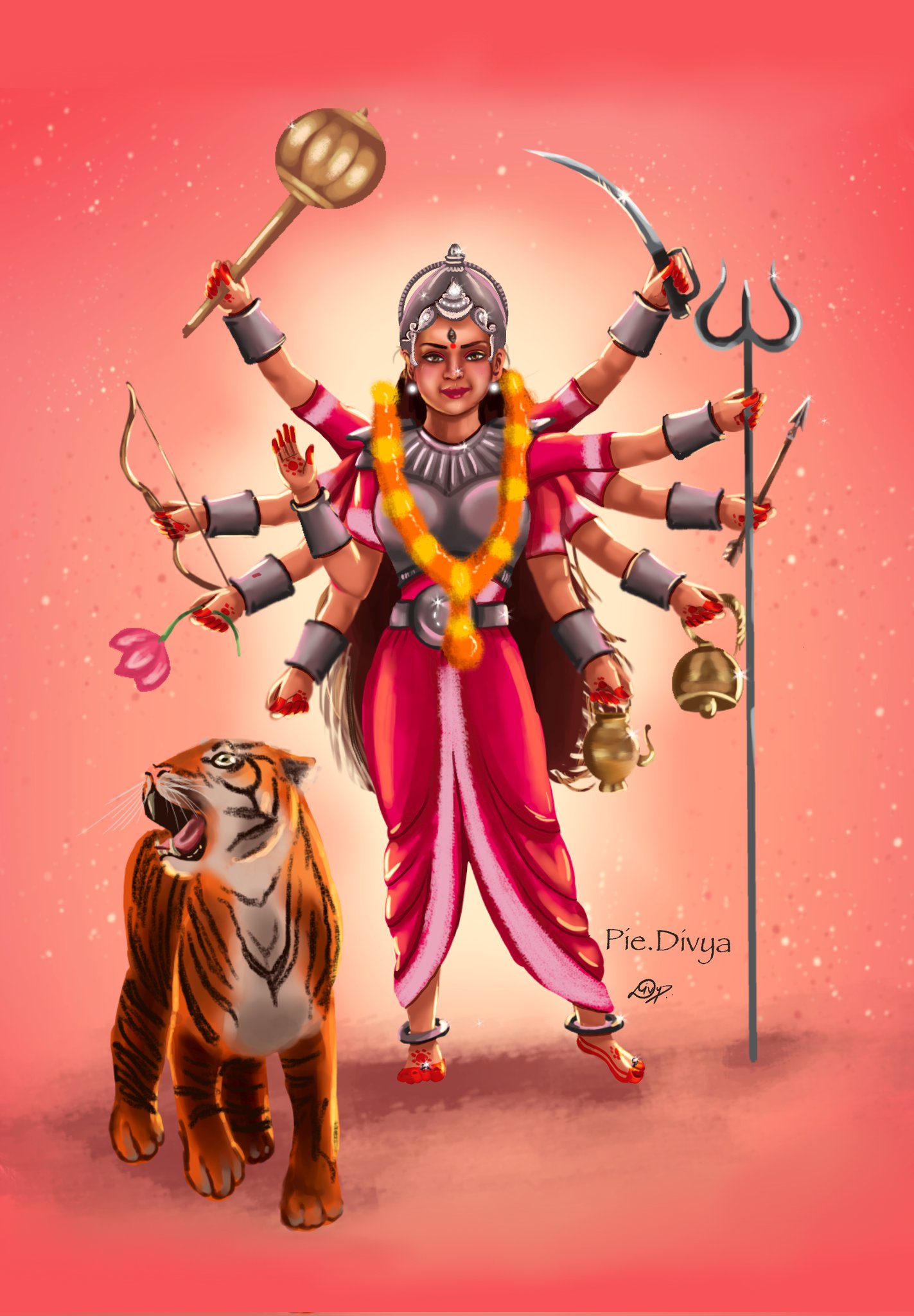
Today marks the start of Holi, a Hindu celebration known as the festival of colours. Revellers throw brightly coloured powder and water balloons at each other on the streets as part of the festivities, as well as singing, dancing and gathering around bonfires. In India the festival is held over two days. On the first, families pray and sing and dance around a bonfire which symbolises cleansing. On the second day, participants take to the streets to douse each other with coloured powder while firing water pistols and throwing water balloons. The coloured powders, known as gulal, were traditionally made from natural sources like turmeric and indigo and believed to have healing properties. Now they are typically made from synthetic materials and are coloured bright yellow, pink, green, red, blue and various colours of the rainbow.
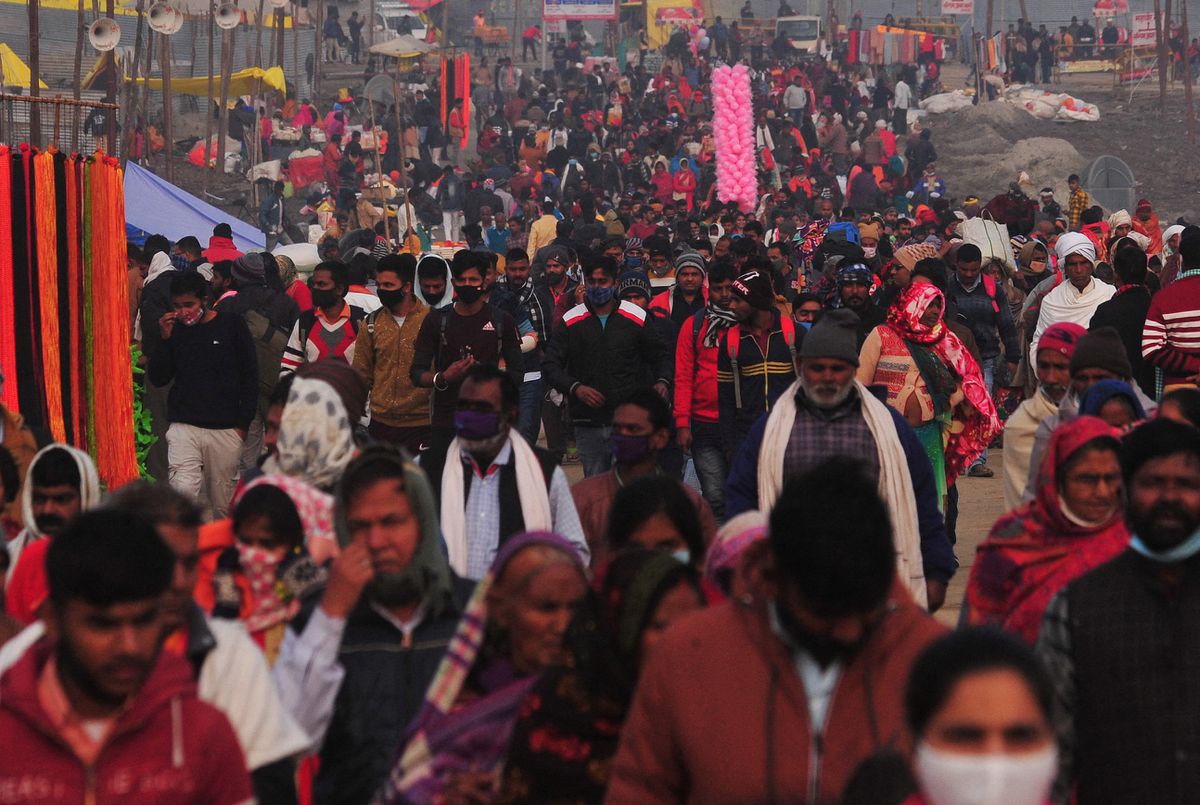
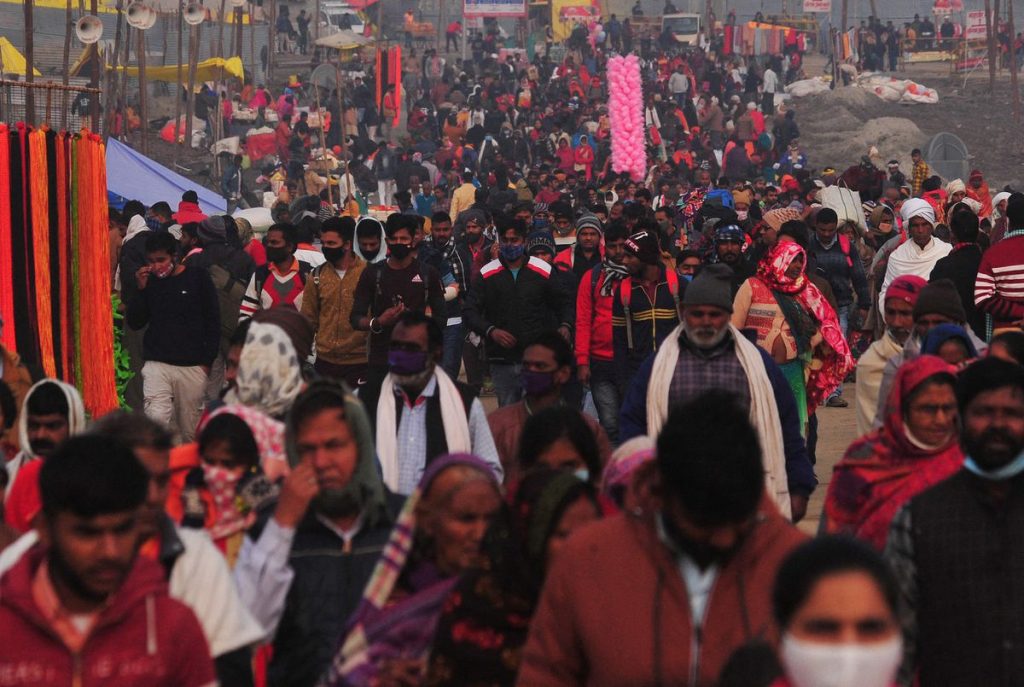
Hindu devotees arrive to take a holy dip in the waters of Sangam, the confluence of the Ganges, Yamuna and Saraswati rivers during Magh Mela festival, amidst the spread of the coronavirus disease (COVID-19) in Prayagraj, India, January 14, 2022 India reported on Saturday 337,704 new COVID-19 infections over the past 24 hours, and a daily positivity rate of 17.22%, a government statement said.
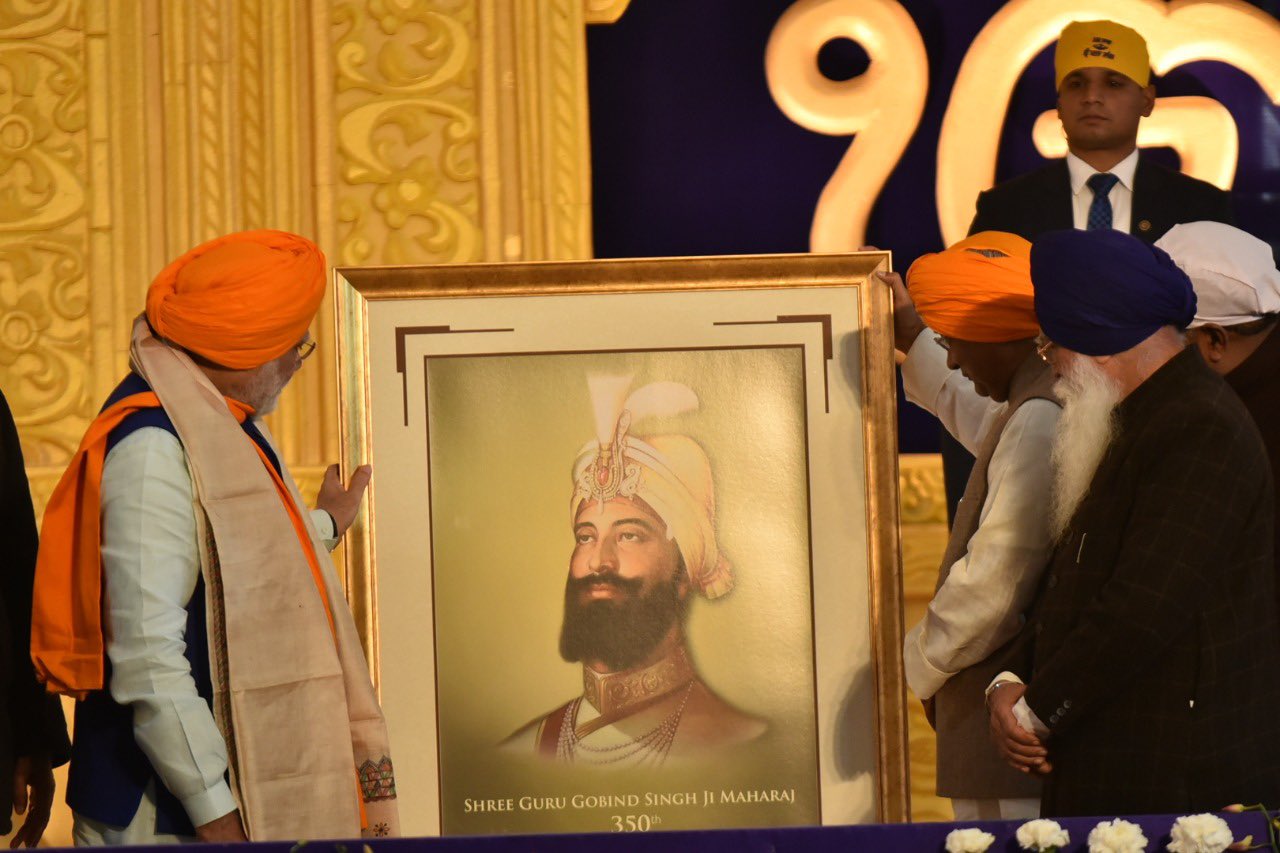
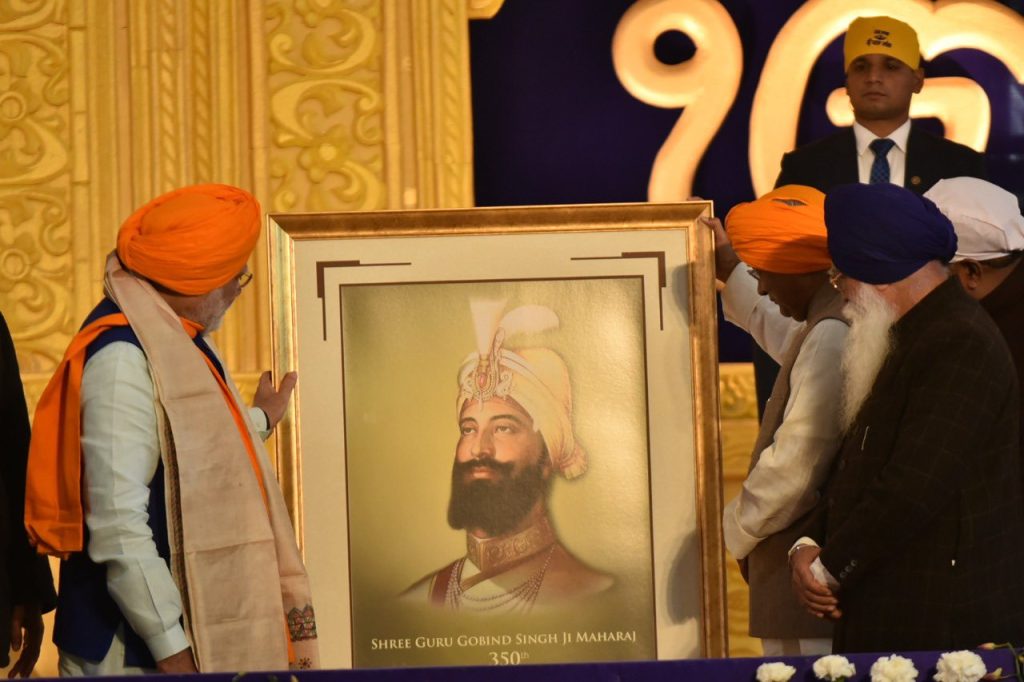
Narendra Modi Greetings on the Parkash Purab of Sri Guru Gobind Singh Ji. His life and message give strength to millions of people. I will always cherish the fact that our Government got the opportunity to mark his 350th Parkash Utsav. Sharing some glimpses from my visit to Patna at that time.
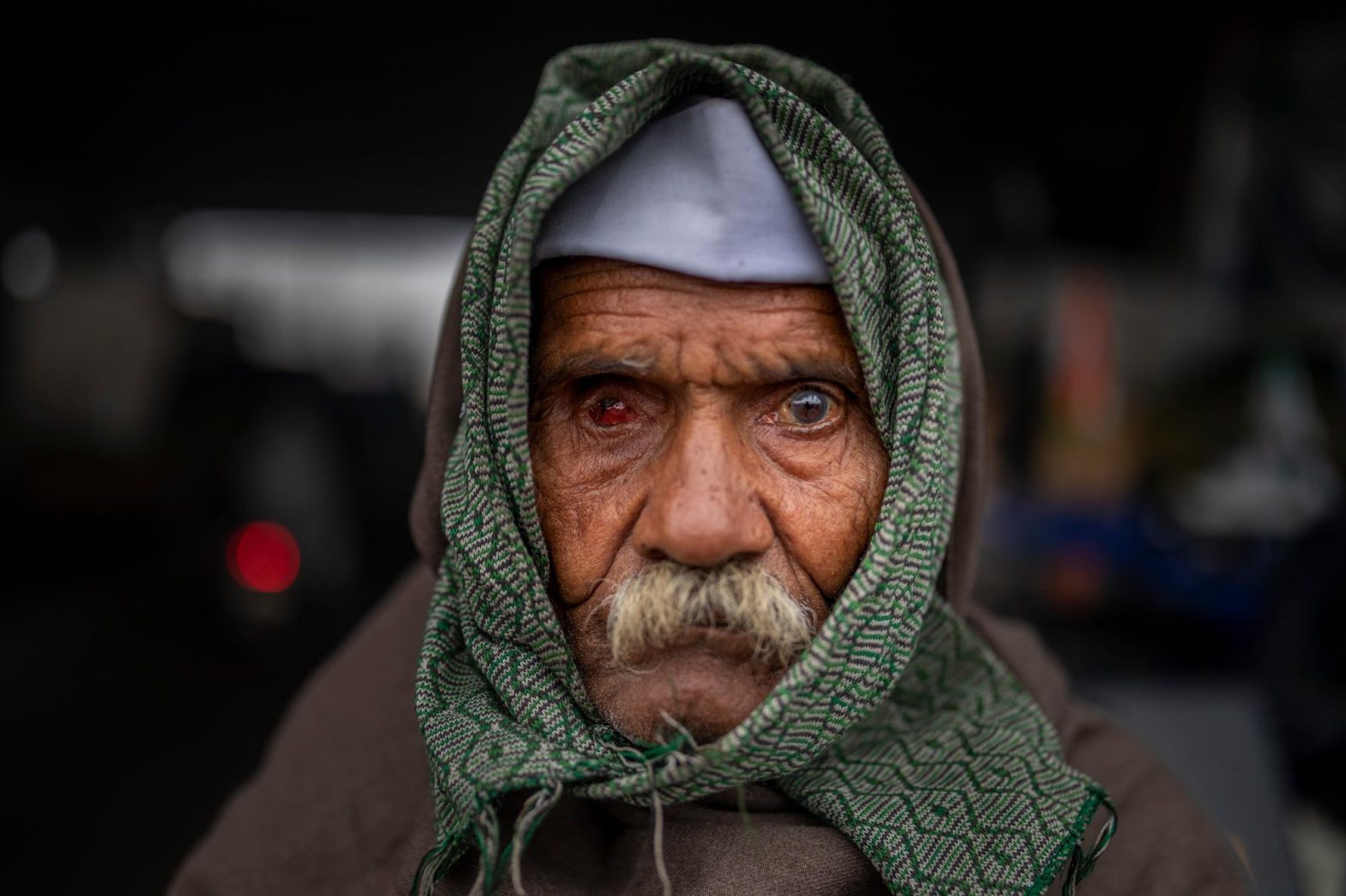
Mahavir Singh, 90, stands for a photograph as he participates in a protest against new farm laws at the border of Delhi and Uttar Pradesh states in India, on Jan. 8, 2021.
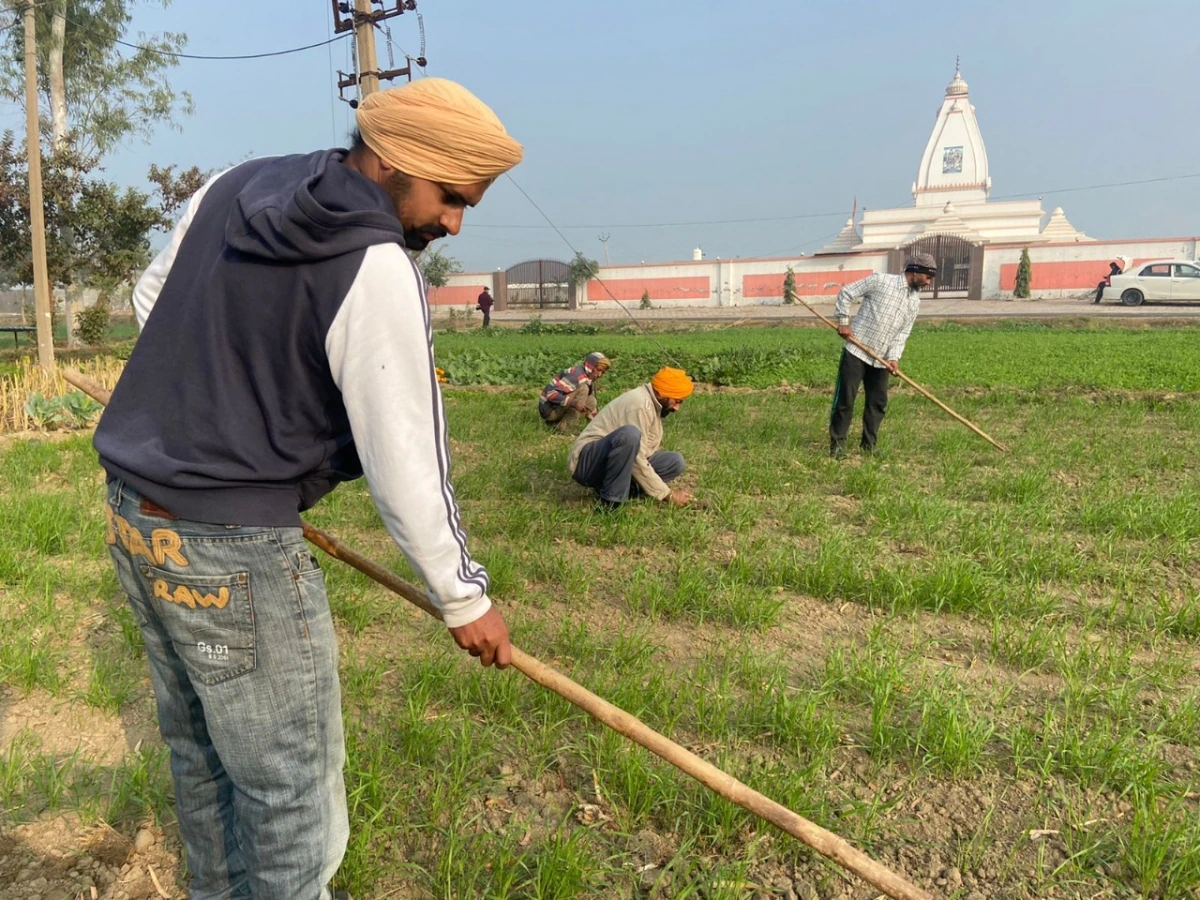
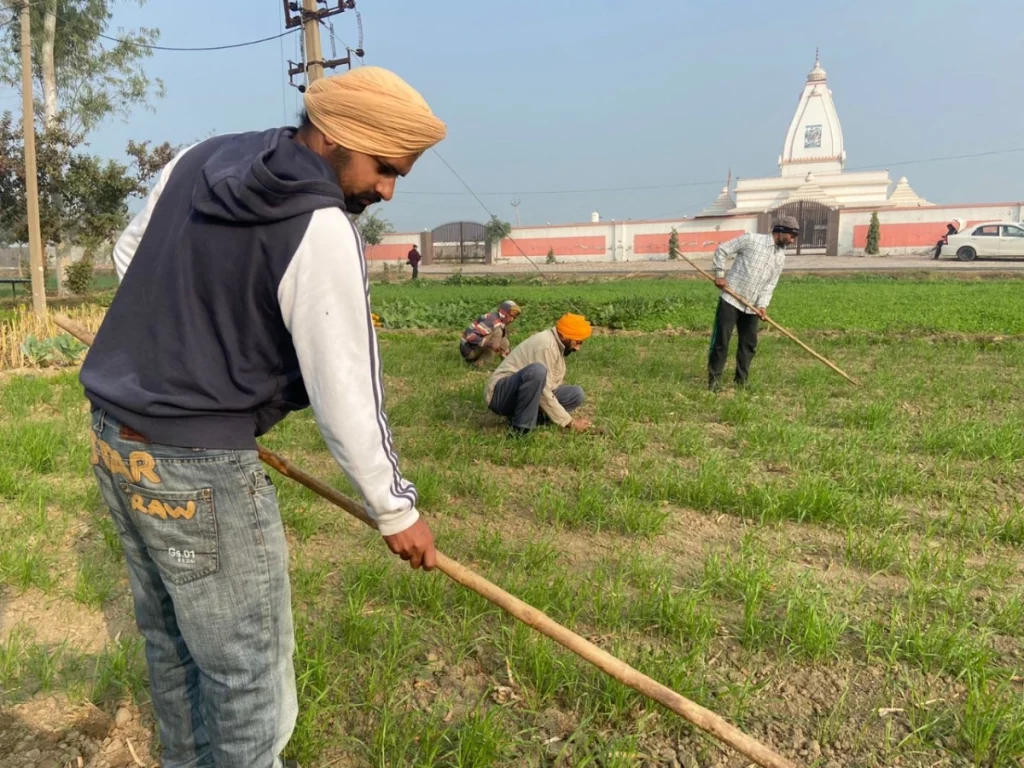
Punjab farmers back to the fields after winding up their year-long agitation.
There’s been too much of surround sound on Punjab, especially during — and now even after — the farm agitation. And that surround sound by propagandists bends the line between reality and fantasy.
But I try to look at the quiet byways of the state. I try to hear its rural voices.
DON’T WRITE OFF THE BADALS
Dec 15: And a political reality dawned on me while we were having our meals at a highway eatery, Kashmiri Dhaba, run by a Punjabi Hindu gentleman along Majari village.
“Sir, the Congress is a divided house. The Captain and his friends in the BJP want to divide the people. The Aam Aadmi Party has no (CM) face till now. Who is the most organised then?” the dhaba owner asked in chaste Punjabi, looking at us through his dilapidated kitchen as he fried the lentils.
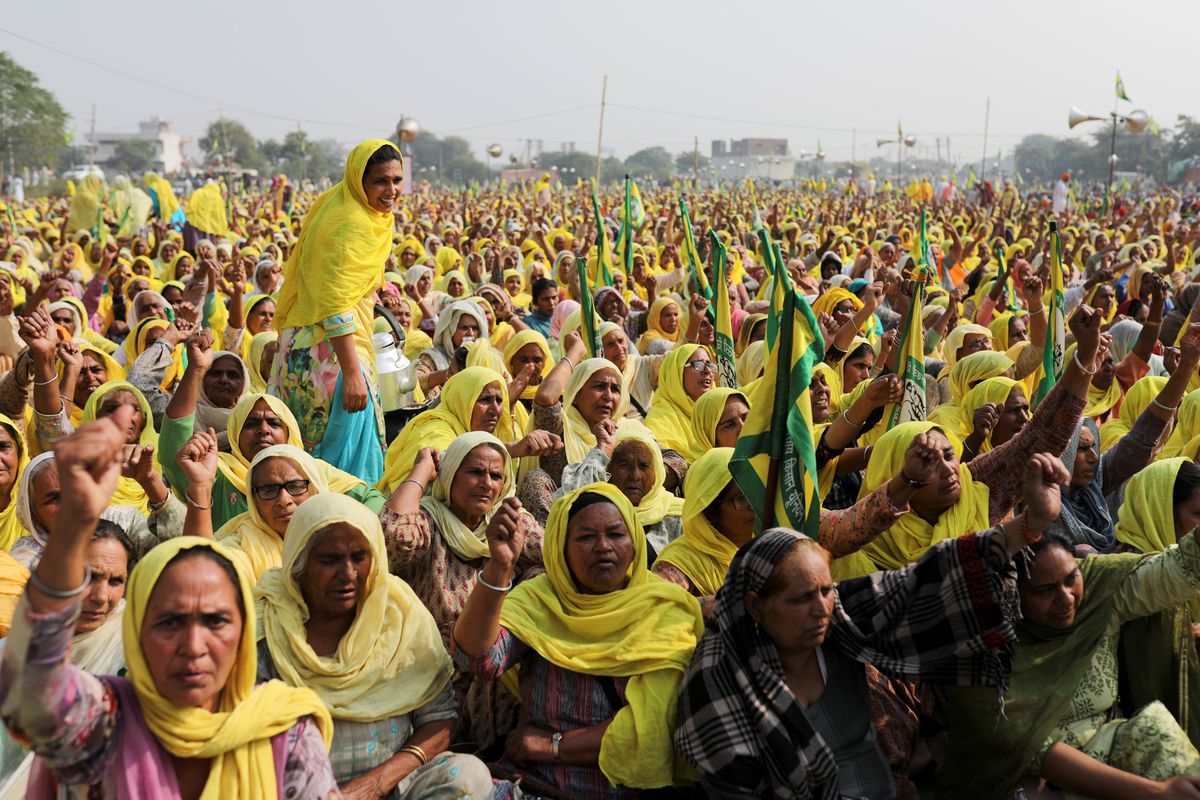
Farmers gather to mark the first anniversary of their protests on the outskirts of Delhi at Pakora Chowk near Tikri border, India, November 26, 2021.
India’s repeal of agriculture laws aimed at deregulating produce markets will starve its vast farm sector of much-needed private investment and saddle the government with budget-sapping subsidies for years, economists said.
Late last year, Prime Minister Narendra Modi’s government introduced three laws meant to open up agriculture markets to companies and attract private investment, triggering India’s longest-running protest by farmers who said the reforms would allow corporations to exploit them.
With an eye on a critical election in populous Uttar Pradesh state early next year, Modi agreed to rescind the laws in November, hoping to smooth relations with the powerful farm lobby which sustains nearly half the country’s 1.3 billion people and accounts for about 15% of the $2.7 trillion economy.
But by shelving the most ambitious overhaul in decades, Modi’s backtracking now seemingly rules out much-needed upgrades of the creaky post-harvest supply chain to cut wastage, spur crop diversification, and boost farmers’ incomes, economists said.
“This is not good for agriculture, this is not good for India,” said Gautam Chikermane, a senior economist and vice president at New Delhi-based Observer Research Foundation.
“All incentives to shift towards a more efficient, market-linked system (in agriculture) have been smothered.”
The u-turn does allay farmers’ fears of losing the minimum price system for basic crops, which growers say guarantees India’s grain self-sufficiency.
“It appears the government realised that there’s merit in the farmers’ argument that opening up the sector would make them vulnerable to large companies, hammer commodities prices and hit farmers’ income,” said Devinder Sharma, a farm policy expert who has supported the growers’ movement.
Indian village marks end of Diwali with massive cow poo fight
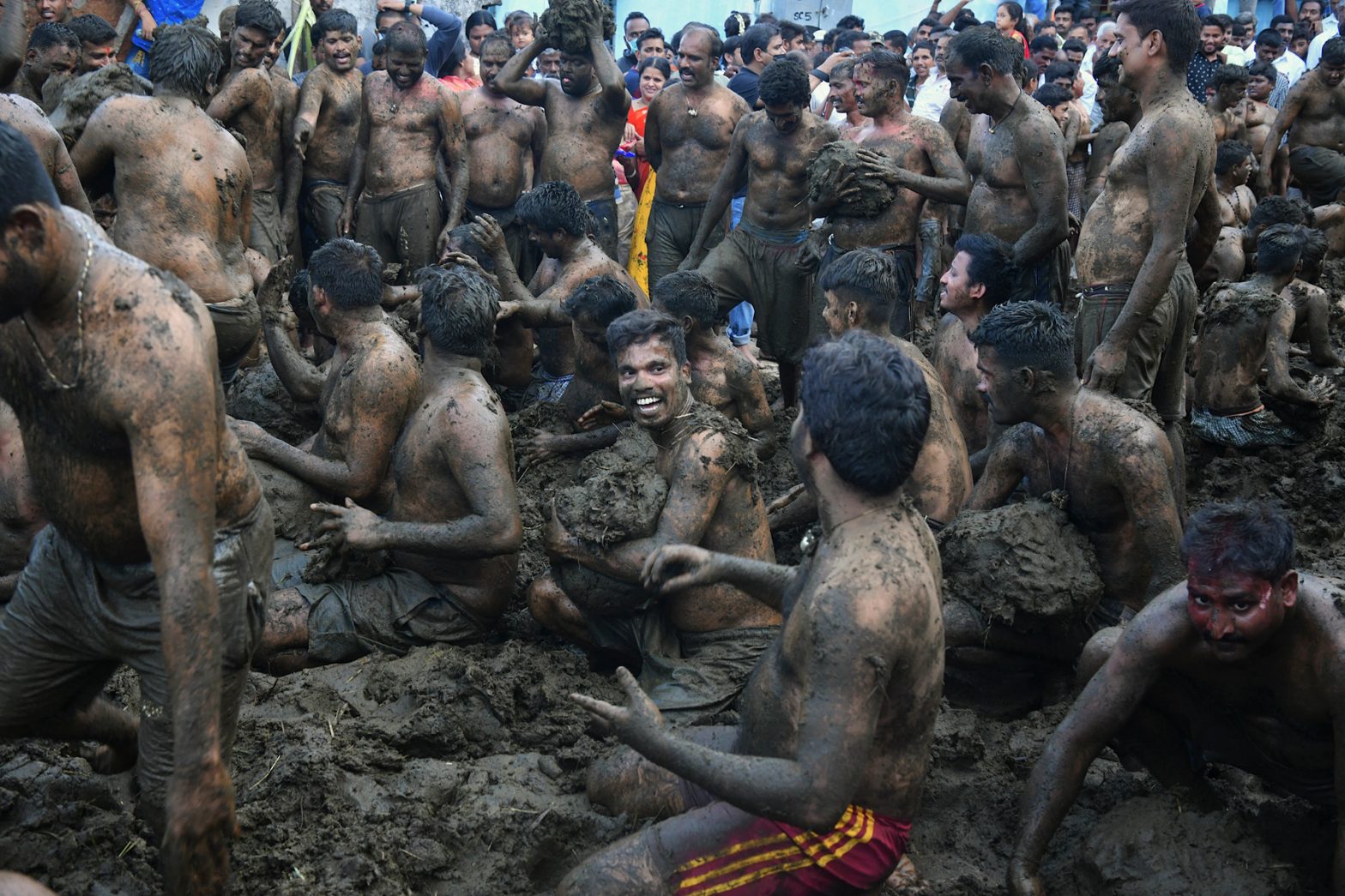
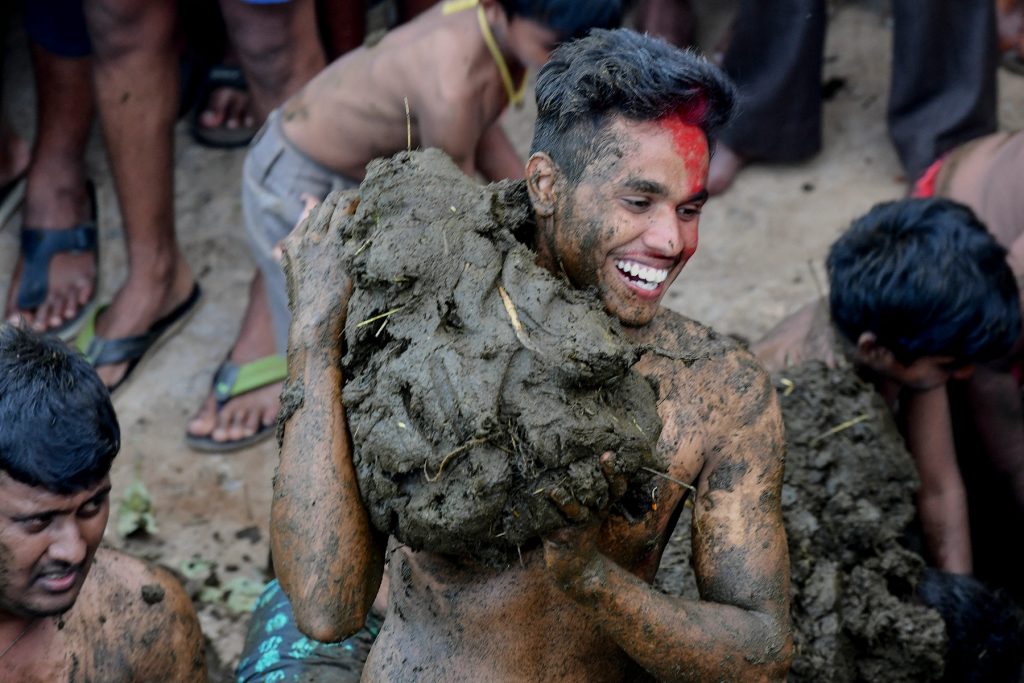
Shirtless men fling dung at each other in a pile of dung. The Gorehabba festival is held in on the border of Karnataka and Tamil Nadu in India.
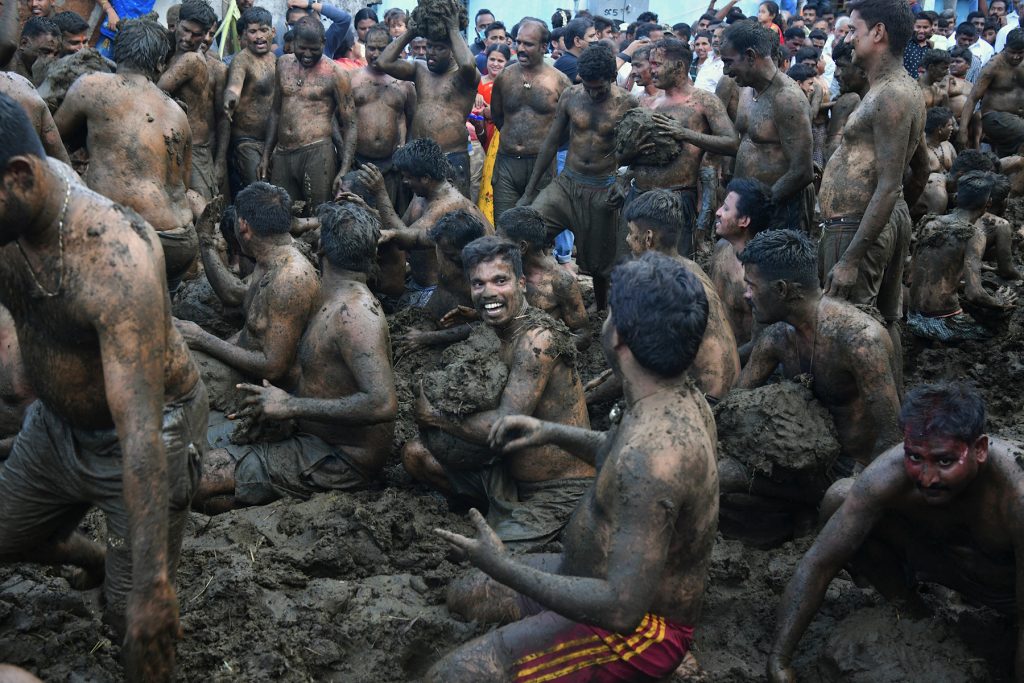
Joyful crowds have pelted each other with fistfuls of cow manure as part of one village’s local ritual to mark the end of Diwali, India’s most important Hindu festival.
Similar to Spain’s La Tomatina festival — the eccentric tomato-hurling celebration — residents of Gumatapura instead fling snowball-sized wads of bovine poo.
The Gorehabba festival on Saturday began with the afternoon collection of “ammunition” from cow-owning homes in the village, which lies on the border of the southern states of Karnataka and Tamil Nadu.
The manure was brought to the local temple on tractor trolleys, before a priest performed a blessing ritual.
After that, the dung was dumped in an open area — with men and boys wading in to prepare their weapons for the battle ahead.
People flock to Gumatapura from far-flung cities each year, and for those in attendance, the messy battle is as much about fun as it is about the perceived health benefits.
“If they have a disease, it will get cured,” said Mahesh, a farmer at Saturday’s festival.
Some Hindus believe cows and everything they produce is sacred and purifying.
Hindu nationalist Prime Minister Narendra Modi has pushed for greater protection of the animals, and many Indian states have long banned their slaughter for meat.
A smiling man hefts a large wad of cow manure. The cow dung is blessed before the event by a Hindu priest.
Residents Of This Tamil Nadu Village Bid Adieu To Diwali By Throwing Cow Dung At Each Other
Joyful crowds pelt each other with fistfuls of cow manure this weekend as part of one village’s local ritual to mark the end of Diwali.
Similar to Spain’s “La Tomatina” — the eccentric tomato-hurling celebration of the local fruit — residents of Gumatapura instead fling snowball-sized wads of a more earthy variety.
The Gorehabba festival begins with the afternoon collection of “ammunition” from cow-owning homes in the village, which lies on the border of the southern states of Karnataka and Tamil Nadu.
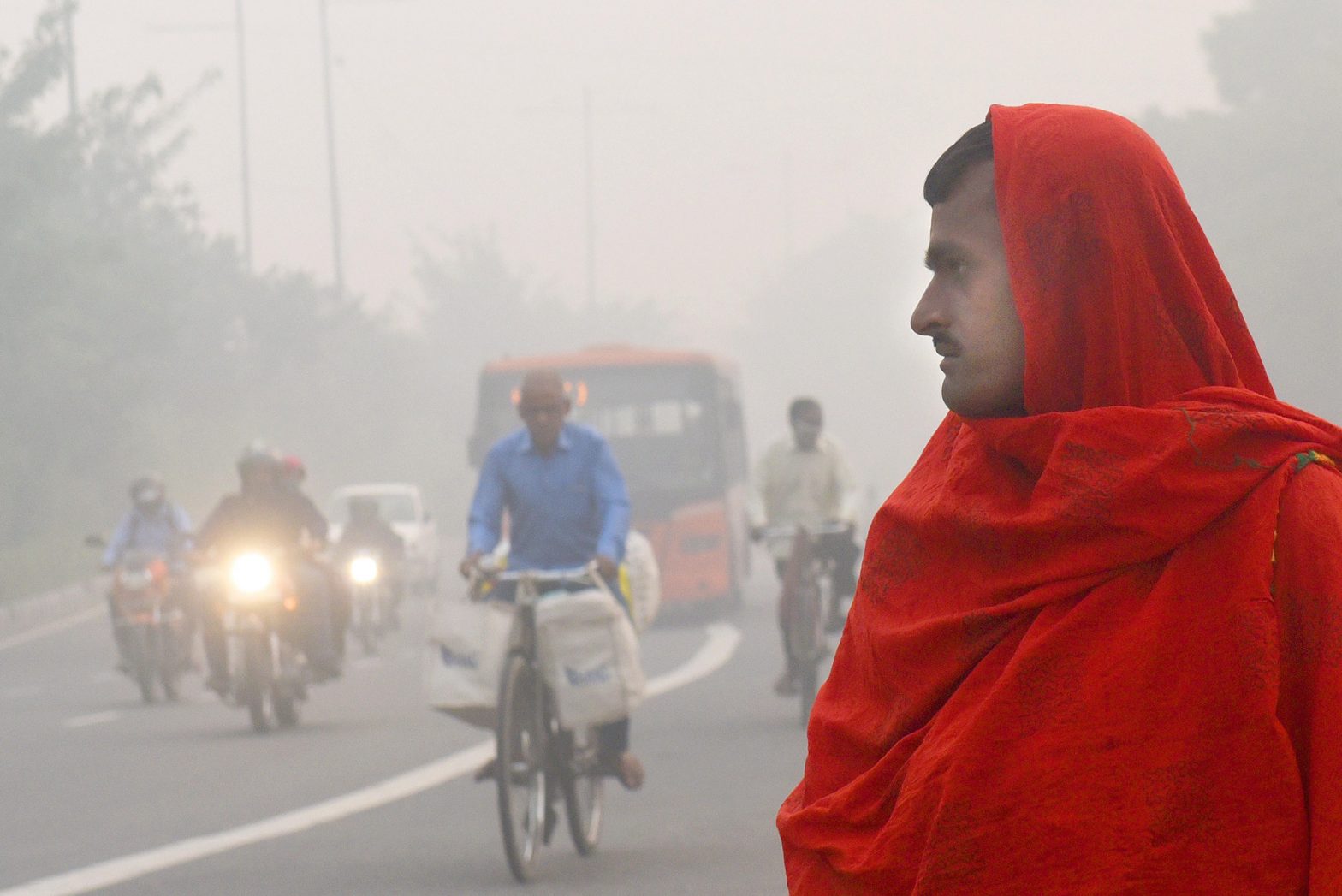
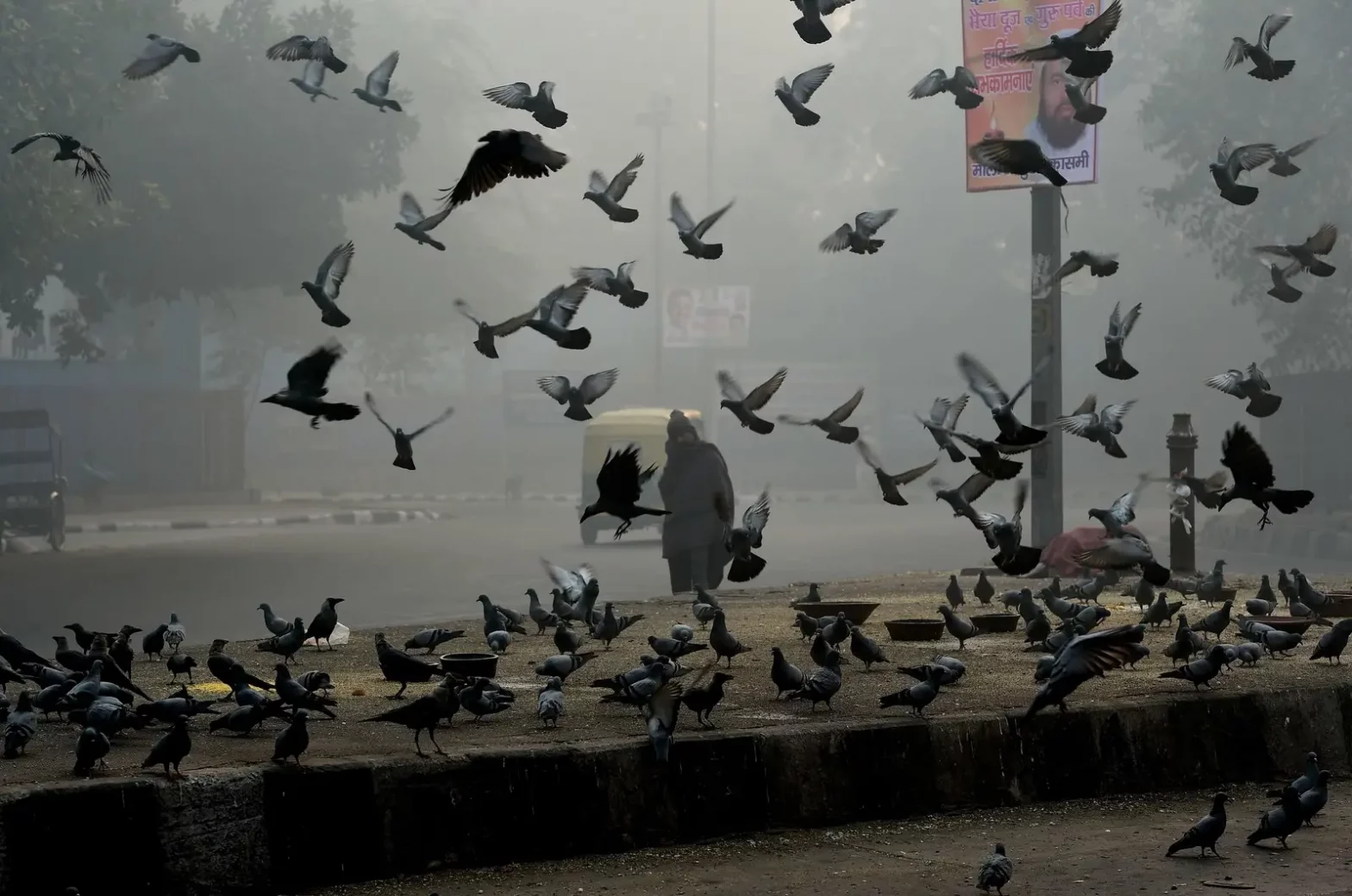
The air quality in the national capital improved slightly on Saturday due to higher wind speed. Still, the overall AQI of Delhi was 449 in the severe category at 8 am on Saturday, a small improvement from the 462 a day earlier. The overall AQI was at 533 at 6 am and is predicted to improve as the day progresses.
Worst Diwali air since 2015 According to reports, the 462 AQI on Friday was the worst AQI the city has seen the day after Diwali since monitoring began in 2015. Delhi also recorded the sharpest deterioration in AQI since 2015, from the day before Diwali (AQI 314 ) to the day after.
Unfavourable weather conditions Experts said the air quality degraded to severe in Delhi-NCR due to unfavourable weather conditions calm winds, low temperature and low mixing height and a poisonous cocktail of emissions from firecrackers, stubble burning and local sources. Many residents, including young students were extremely vocal about the problem caused by pollution and the efforts to tackle it. “Earlier, we did not get tired while cycling after a short time. But now with such levels of pollution, we get tired. It causes pain and a burning sensation in the lungs. It causes a lot of breathlessness. Visibility is also low because of pollution. Bursting firecrackers is a cause of it, they were used in spite of a ban. Pollution control is dependent on the conduct of people, how they follow instructions of the government,” Gaurav, a student said.
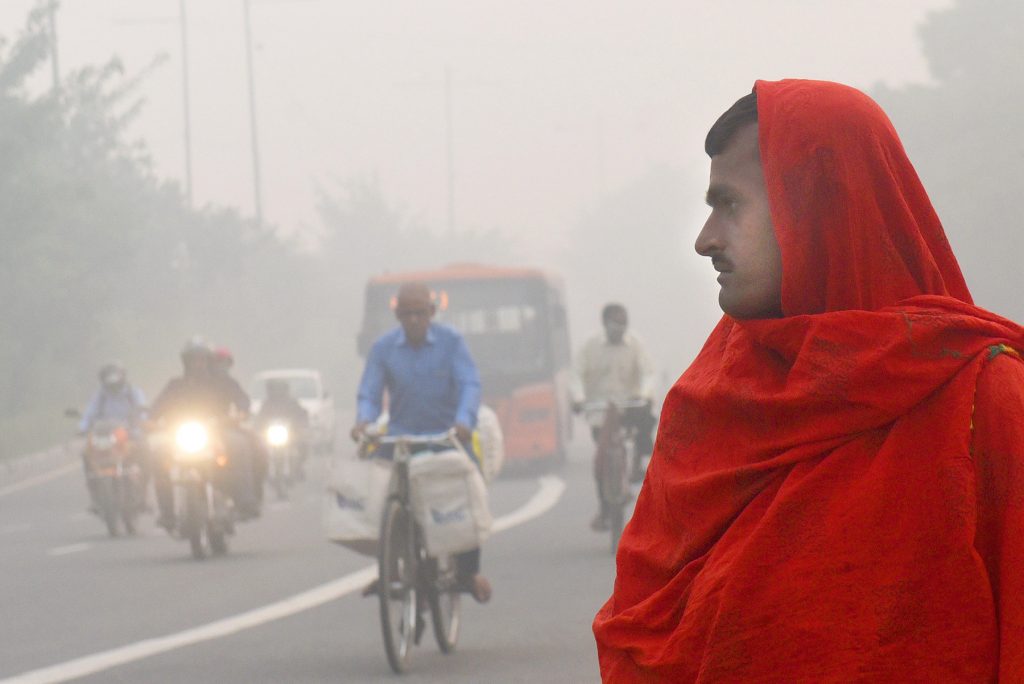
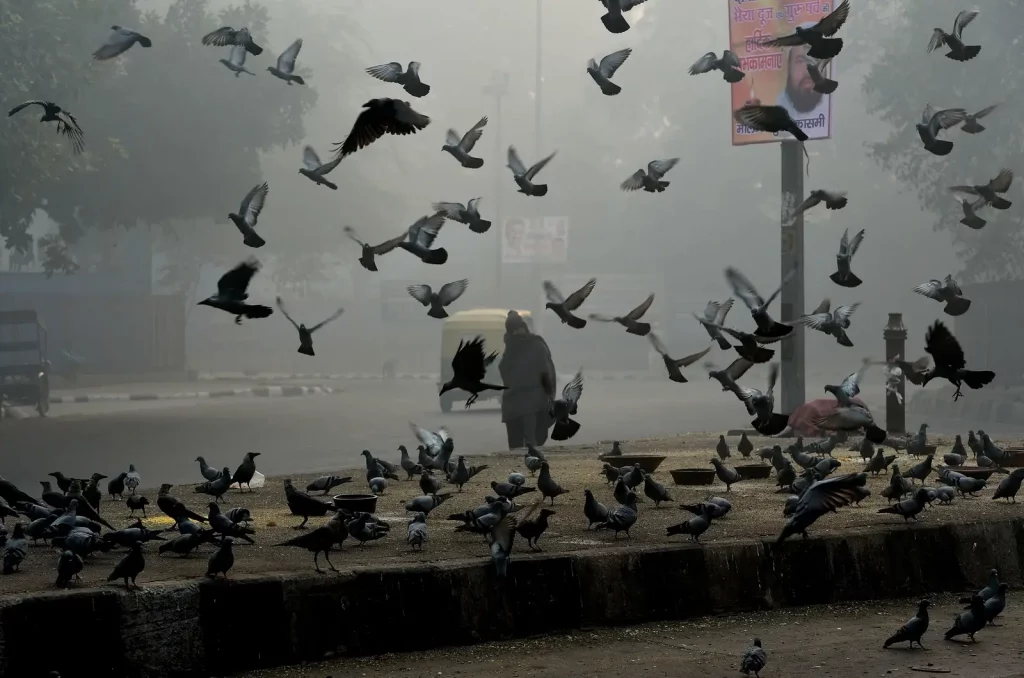
A thick blanket of smog engulfed New Delhi, the Indian capital, following Diwali celebrations over the weekend during which people set off huge quantities of fireworks.
Delhi, which is already considered among the most polluted cities in the world by World Health Organization, has been struggling with bad air quality. In an interview with AFP, Gufran Beig, India’s chief scientist at the System of Air Quality Weather Forecasting and Research, said pollutants in Delhi air rose nearly 10 times above the normal level on Monday. “Almost 60-70% of the smoke came from the firecrackers,” he said.
When one lamp lights another there is more brightness.Today, our team, spent time with senior citizens at an old age home and celebrated the festival of lights- Diwali with them and scattered smiles.
Today is Shanivaar & is the cusp of third & fourth day of Navaratri. The Goddess will be worshipped in the form of Chandraghanta as well as Kushmanda. Have a great navratri as well as a peaceful weekend with your loved ones.
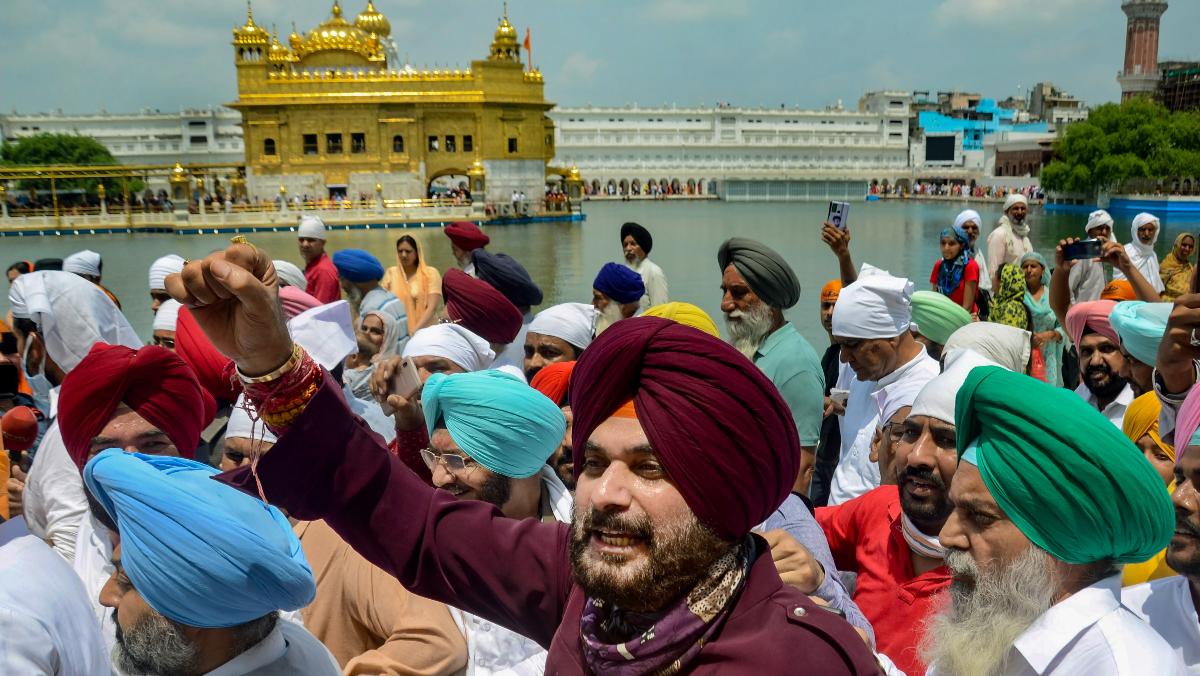
The Congress and AAP MLAs, who accompanied newly appointed Punjab Congress chief Navjot Singh Sidhu during his day-long temple visits on Wednesday, are reportedly on the radar of the state CID.
MLAs who accompanied Navjot Singh Sidhu during his day-long temple visits on Wednesday are reportedly on the radar of the Punjab CID.
The Congress and Aam Aadmi Party MLAs, who accompanied newly appointed Punjab Congress chief Navjot Singh Sidhu during his day-long temple visits on Wednesday, are reportedly on the radar of the Punjab Crime Investigation Department (CID).
The CID officials, who were keeping an eye on the gathering at Sidhu’s Amritsar residence on Wednesday morning, said that only 48 members of the legislative assembly were in attendance, as against the figure of 62 which was given earlier. This includes three former Aam Aadmi Party MLAs who recently joined the Congress.
CID officials were deployed in civil clothes around Navjot Singh Sidhu’s residence. One official introduced himself to India Today’s team and said they were “doing their duty”.
As per sources, some MLAs that accompanied Sidhu on Wednesday as well as their close aides are, at present, facing serious allegations. These members’ direct and indirect involvement in illegal activities like illicit mining and liquor trade has been found in the past, sources claimed.
Sources also stated that Chief Minister Captain Amarinder Singh had informed the three-member panel appointed by the Congress high command about the “rogue elements” within the party. The panel had been formed to find a solution to the discord in the Punjab unit.
One of the MLAs has been accused of being involved in illegal mining in Hoshiarpur area. The mining department in December 2020 had sent a recovery notice amounting to Rs 1.65 crore to him. This Congress MLA has reportedly been asked CM Singh for a waiver and cancellation of the illegal mining notice. The MLA has also filed an appeal against the same.
The Haryana government on Sunday issued orders to extend partial lockdown in the state by another week till July 26.
Factory workers on their way to work in Gurugram, Haryana
The Haryana government on Sunday issued orders to extend partial lockdown in the state by another week till July 26. Night curfew, once again, will be imposed on all days to check the transmission of Covid-19.
The night curfew will be in force from 11 pm to 5 am on all the seven days of a week across the state. Earlier on July 4, the state government had lifted the curfew on weekends.
The decision to extend curbs came despite a decline in the Covid-19 positivity rate and the number of new cases, the Haryana government said in its order.
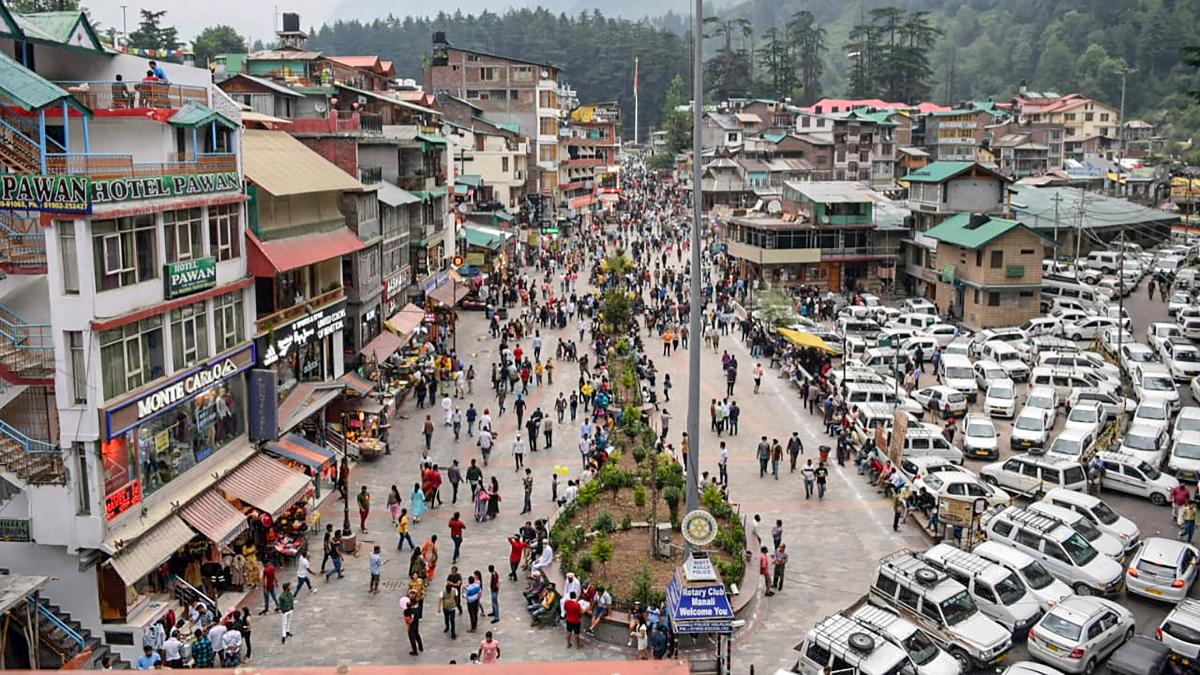
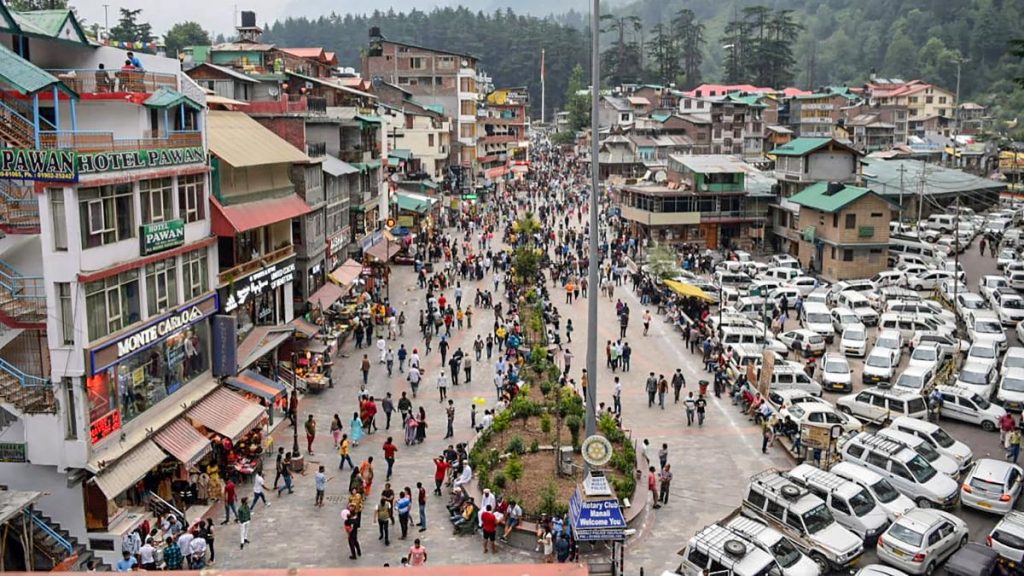
Tourists visit the Mall Road in Manali after relaxation of Covid norms.
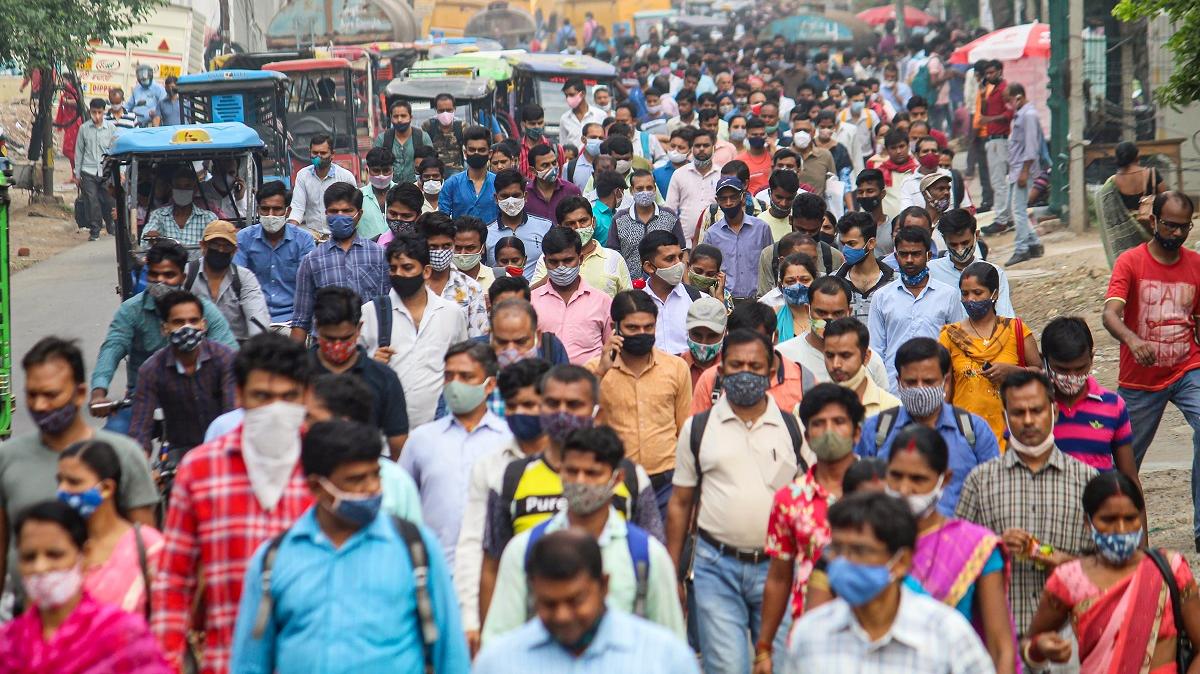
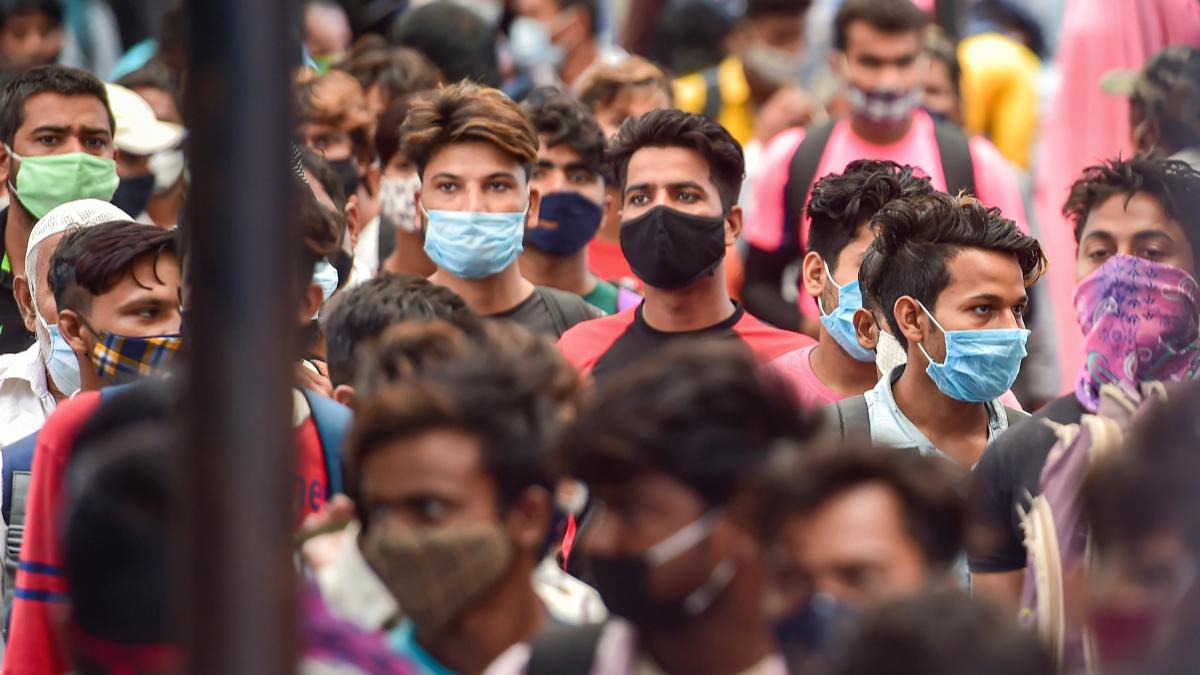
The visuals of people throwing Covid-19 protocol to the wind in popular tourist hubs like Nainital, Mussoorie and Manali have prompted the government to give stern warnings and reminders that the virus is still looming large and any laxity in taking precautions may pave way for a third wave.
During a press conference on Friday over the Covid-19 situation in India, health ministry joint secretary played videos of people forgetting Covid-19 protocol at tourist areas of Uttarakhand and Himachal Pradesh, saying that this is nothing but an “open invitation” for the virus to come and infect.
With Covid curbs being relaxed and restrictions on movement being removed, more and more people are now heading out to tourist destinations like Nainital, Mussoorie, Manali and Shimla to beat the heat of the plains.
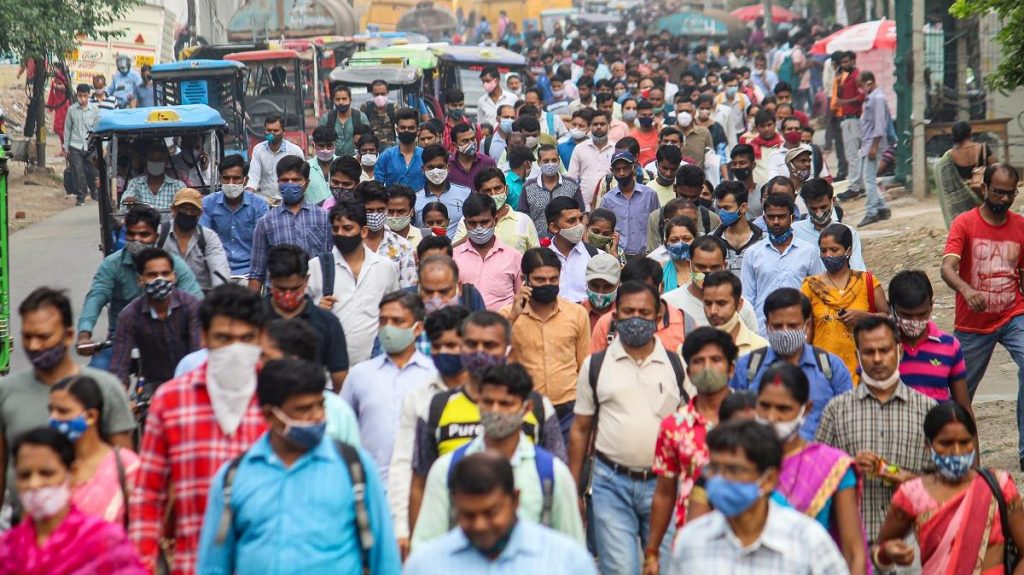
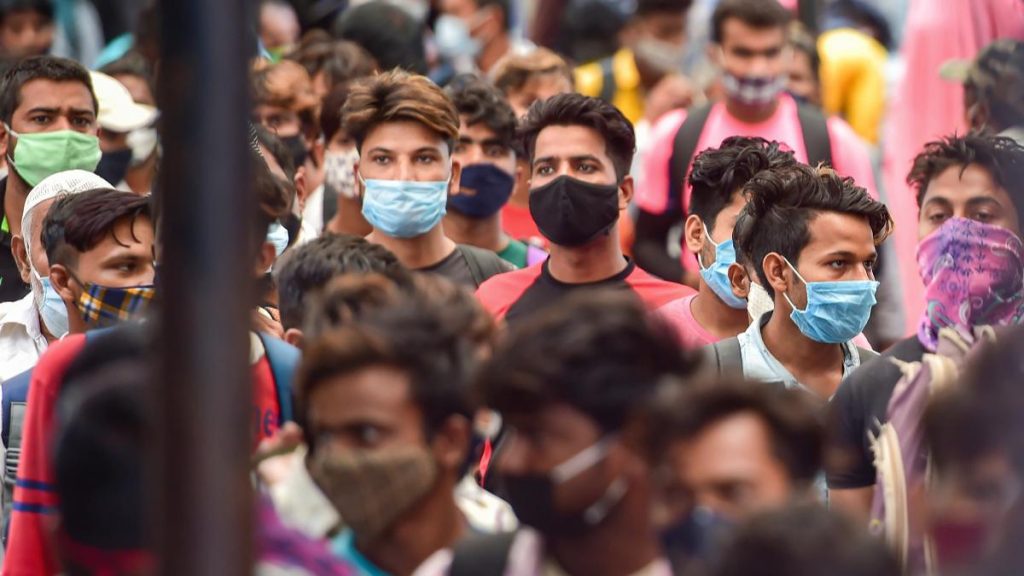
Concerning visuals have surfaced from these places of people overcrowding markets and tourist spots, even as the fear of a possible third wave hitting the country is very much alive.
Giving a word of caution on this, Niti Aayog member, health, Dr VK Paul, during the press conference, said: “We cannot lower our guard. A new risk is being seen at tourist spots where a gathering of crowds being seen, social distancing and mask protocol is not being followed. This is a serious cause of concern”.
“Isn’t this an open invitation for the virus to come and infect us?” health ministry joint secretary Lav Agarwal said during the same press briefing as visuals of tourists flouting norms at Mussoorie’s Kempty Falls played in the background.
“We are still dealing with the second wave of Covid-19. We need to continue the display of Covid-appropriate behaviour,” he added.
Tamil Nadu is gradually unlocking and people are flouting Covid-19 protocols. The government has announced lockdown relaxations and permitted a uniform regulation of crowding across the state. Restaurants, gyms, yoga studios and IT companies have opened with 50 per cent capacity, while intra-district and inter-district public transport has also been allowed with 50 per cent seating capacity.
And a large number of people have again started venturing out. In many places, people were seen not wearing face masks and social distancing rules have gone for a toss.
The Greater Chennai Corporation imposed a fine of Rs 3.18 crore on 5,907 companies and 29,096 individuals for non-compliance of Covid-19 protocols from April 9 to July 6.
The corporation said that 1,426 halls and hotels registered for various functions, including weddings, were inspected, and 31 places were found to be violating rules. Fines of Rs 1,29,000 have been slapped on them as well.
Tamil Nadu, which saw an alarming rise in Covid-19 cases in May, witnessed a peak in the last week of the month. The state is still recovering from the second wave. On July 7, 3,367 cases were reported with 25,06,848 cases logged till date in the state. A total of 33,196 deaths have been registered so far.
State Health Secretary Dr J Radhakrishnan requested people to be careful to check the virus spread.
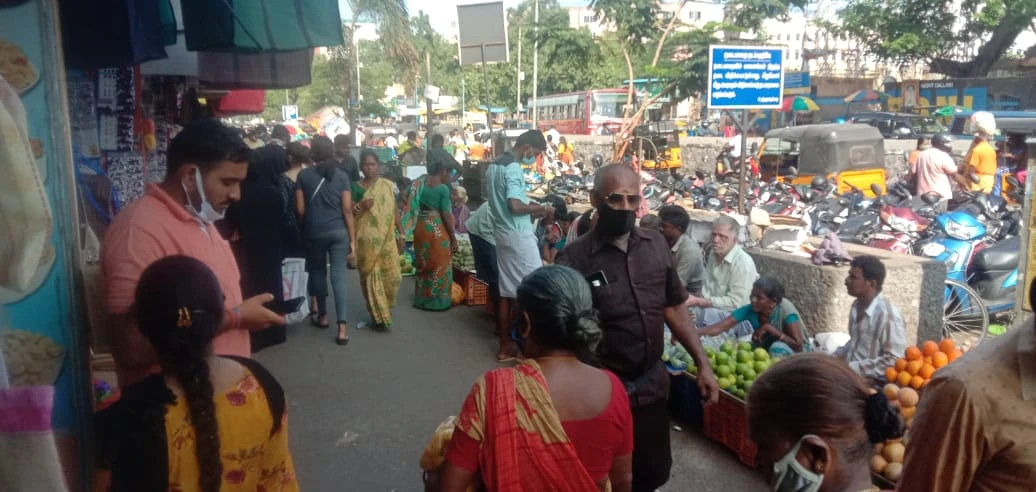
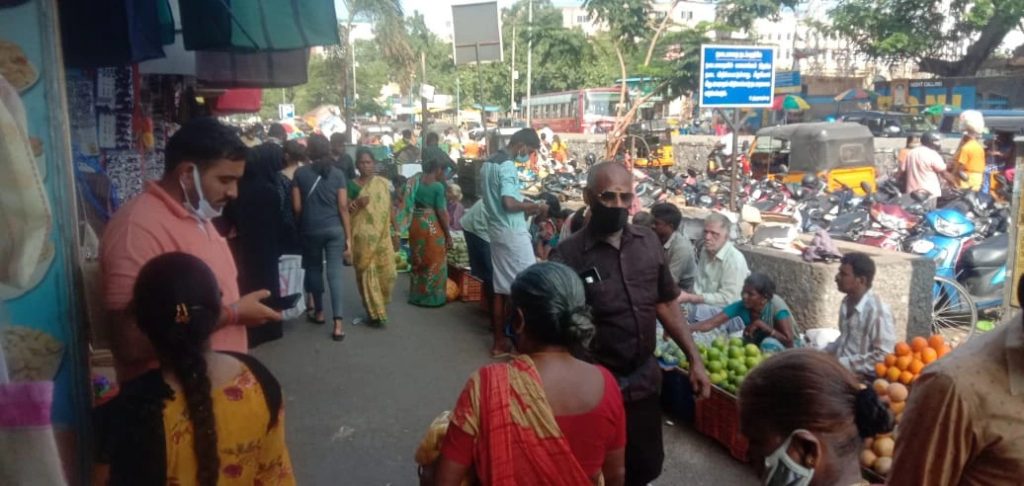
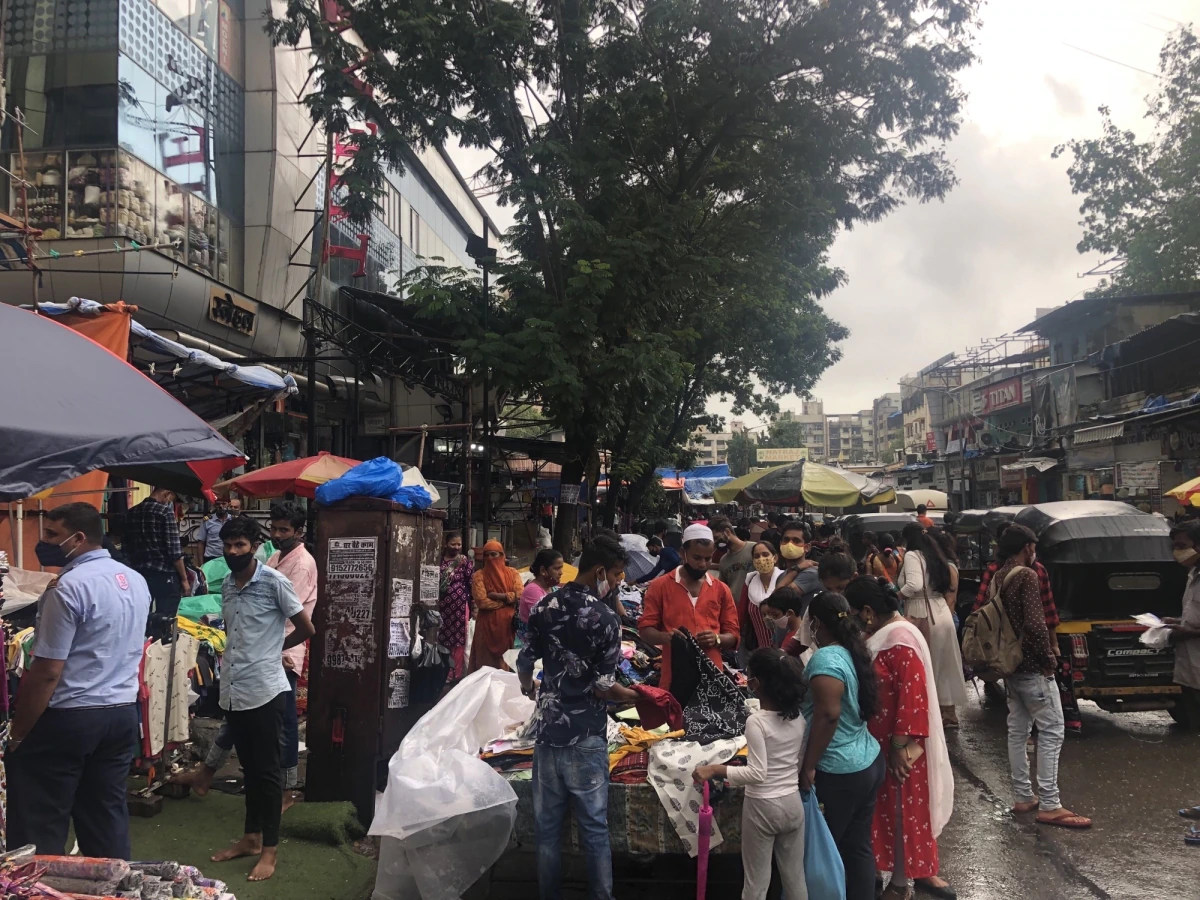
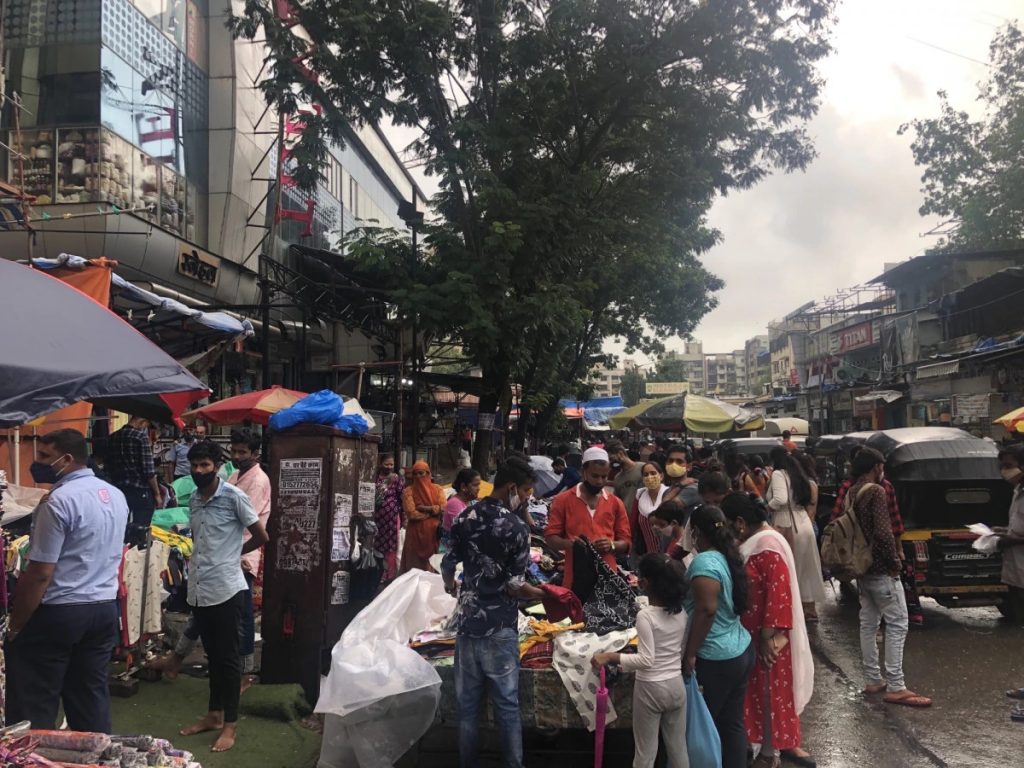
Mumbai is limping back to normal. Though malls and multiplexes are yet to open, markets and public places are crowded once again and many people are seen letting their guard down. Local trains are yet to open as the government fears that they can be super-spreaders of the virus.
Although Mumbai has a recovery rate of 96 per cent and the doubling rate has improved to 844 days, medical experts believe that citizens should not repeat the mistake of getting complacent, with the fear of a third wave looming. On July 7, the city recorded 664 new cases and nine deaths. The active case count is at 7,816.
Brihanmumbai Municipal Corporation (BMC) officials appealed to the people not to let their guard down and follow Covid-appropriate behaviour.
“The state is focusing on vaccination to achieve herd immunity. There is fear of the third wave for which the state is putting in all possible efforts. There is also a scare of the Delta Plus variant. Hence, it is the responsibility of every citizen to follow basic rules like masking and spacing,” an official said.
So far, the BMC, along with the Mumbai Police and the Railways, has collected more than Rs 55 crore as fines from citizens for not wearing masks.
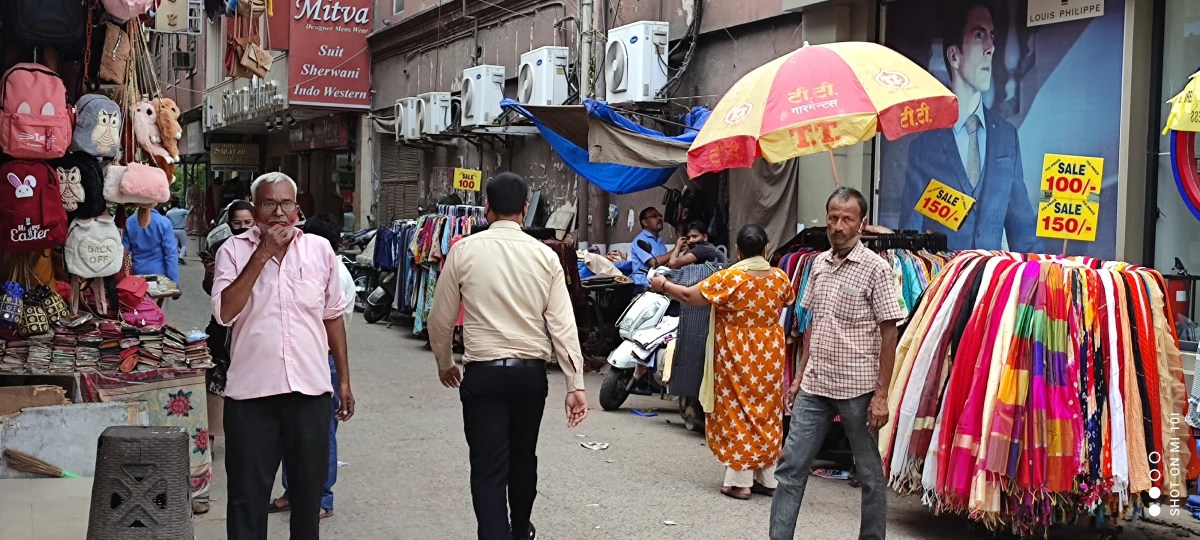
The story is the same in Delhi, which was one of the most affected cities during the second wave. Despite closing markets in Laxmi Nagar, Lajpat Nagar and Nangloi following violations of Covid norms, no one has learnt a lesson. Aaj Tak did a reality check of the crowded markets in the city and found that no shopkeeper or customer was following Covid-appropriate behaviour.
Covid protocols were openly being flouted at Ajmeri Gate, the oldest hardware market in Delhi. Social distancing was not being followed and people were not wearing masks. In Karol Bagh market, from shopkeepers to customers, nobody considered it necessary to wear a mask.
Chawri Bazaar, one of the busiest markets in Delhi, is not showing any seriousness in following Covid-19 protocols.
Aaj Tak found that in areas like Sadar Bazaar, traders were following the rules. They said they are ready to cooperate with the administration in every possible way regarding the compliance of the protocols — be it social distancing or wearing a face mask.
Sadar Bazaar is one of the largest wholesale markets in Asia. Every day, many people visit the market. The cotton market, which was closed a few days ago, has reopened and traders themselves are seen giving masks to the people.
“There is no place for loading and unloading of goods in small lanes, due to which people come to the cotton market and load and unload their goods without wearing masks. As a result, social distancing is not being followed and there is too much crowding,” said a trader.
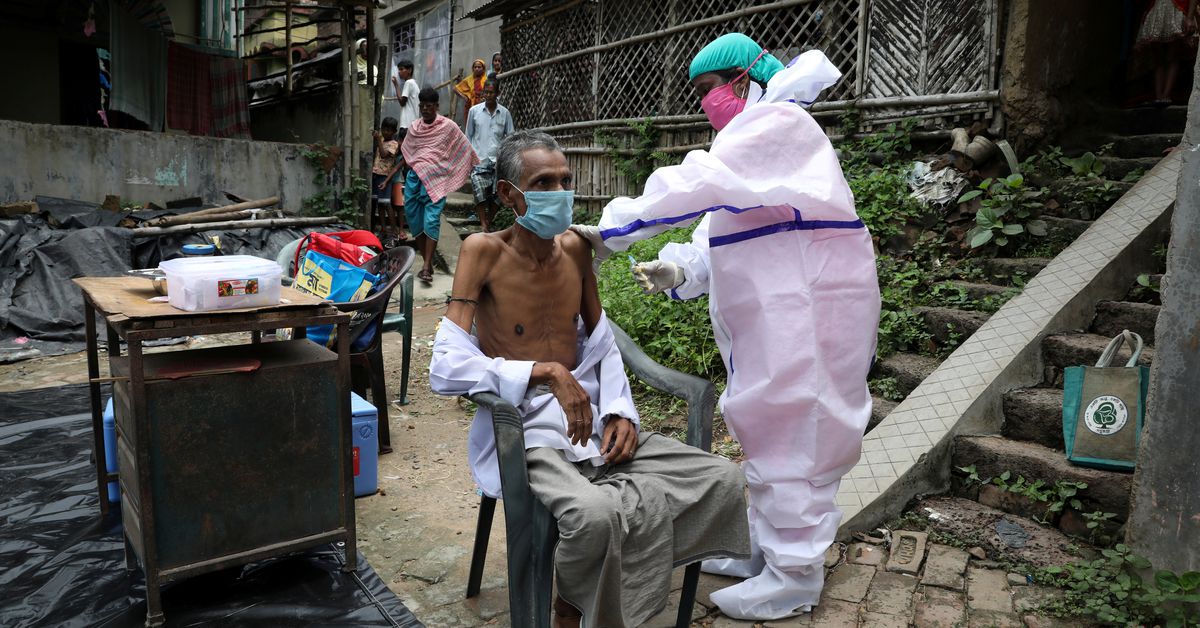
Motiar Rahman, a villager, receives a dose of COVISHIELD vaccine, a coronavirus disease (COVID-19) vaccine manufactured by Serum Institute of India, during a door-to-door vaccination and testing drive at Uttar Batora Island in Howrah district in West Bengal state, India, June 21, 2021.
Rajasthan recorded 55 fresh cases of Covid-19 in the past 24 hours.
As many as 21 out of 33 districts in Rajasthan have registered no new Covid cases in the past 24 hours. These districts include Ajmer, Sikar, Kota and Jaisalmer.
As per the data provided by the state health department, only 55 new Covid19 cases were reported on Monday from the entire state in the past 24 hours. Out of the total fresh cases, 19 were recorded in the capital city Jaipur.
The state saw 140 people recover from the virus in the same period. Total number of active cases in the state has dropped to 1,092.
Three people succumbed to the infection in the past 24 hours, taking the total death toll in the state to 8,941.
Delhi’s Lajpat Nagar Central Market closed for violating Covid-19 protocol; Sadar’s cotton market also shut
In an order issued on July 4, the Lajpat Nagar Market Traders Association has been asked to show cause why action should not be taken against them for violating Covid-19 norms.
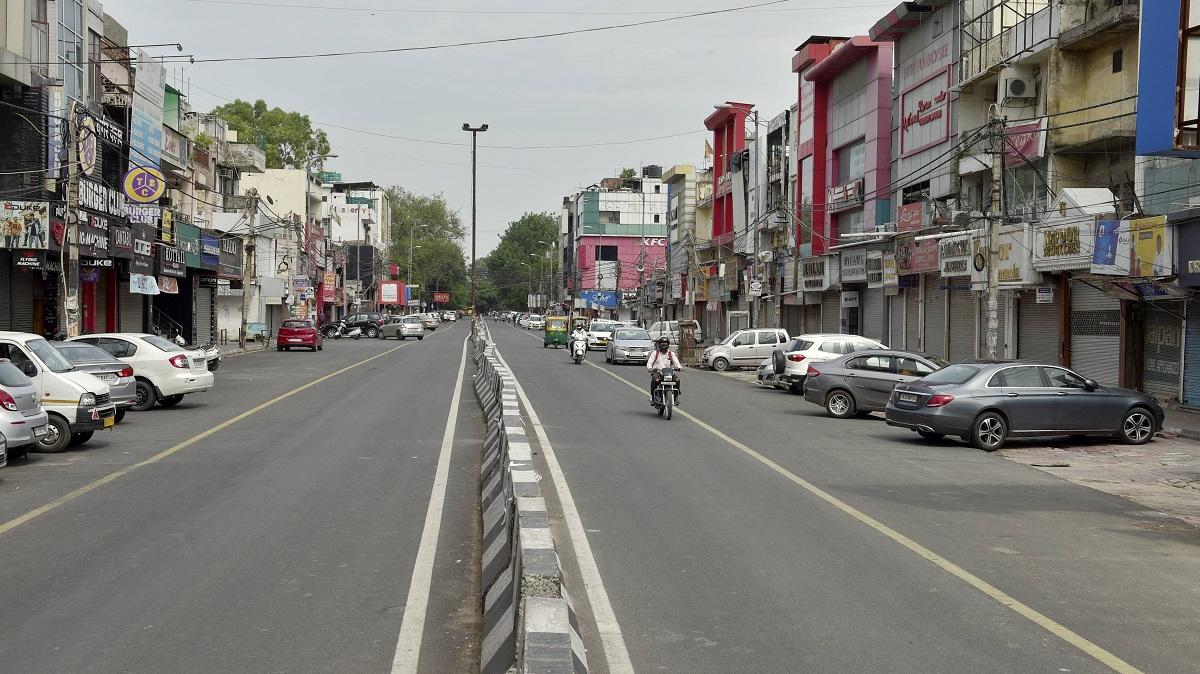
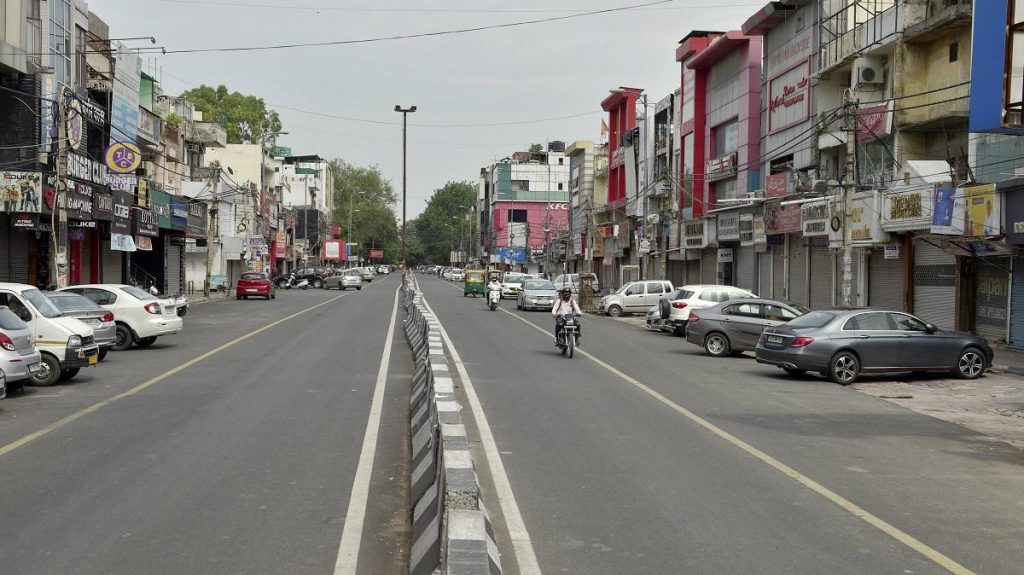
Deserted Central Market in Lajpat Nagar, New Delhi
The popular Central Market in Delhi Lajpat Nagar has been closed down by authorities for violating Covid-19 protocols. The market will remain closed until further orders.
In an order issued on July 4, the Lajpat Nagar Market Traders Association has been asked to show cause why action should not be taken against them for violating Covid-19 norms.
The association has also been directed to ensure that all unlock SOPs in the market are enforced within a day and shopkeepers strictly follow Covid-appropriate behaviour.
The order states that under the supervision of the SDM of the area, the enforcement team inspected the Lajpat Nagar Central Market and found a gross violation of Covid-19 rules, following which the call to shut down the market was taken.
Based on the response filed by the Traders Association and a subsequent review of the on-ground situation, the administration will take a decision on reopening the market.
SADAR BAZAR’S COTTON MARKET CLOSED
The cotton market in Old Delhi’s famous Sadar Bazar will remain closed on July 5-6 for flouting Covid-19 norms.
During inspection, a large crowd was seen thronging the cotton market and vendors and general public were found not following Covid-19 rules. In light of this, the city administration ordered the market’s closure for two days.
The reason why the division of Bengal remains an understudied part of Partition is because, unlike Punjab, the partition saga in Bengal had begun before 1947 and continued till 1971
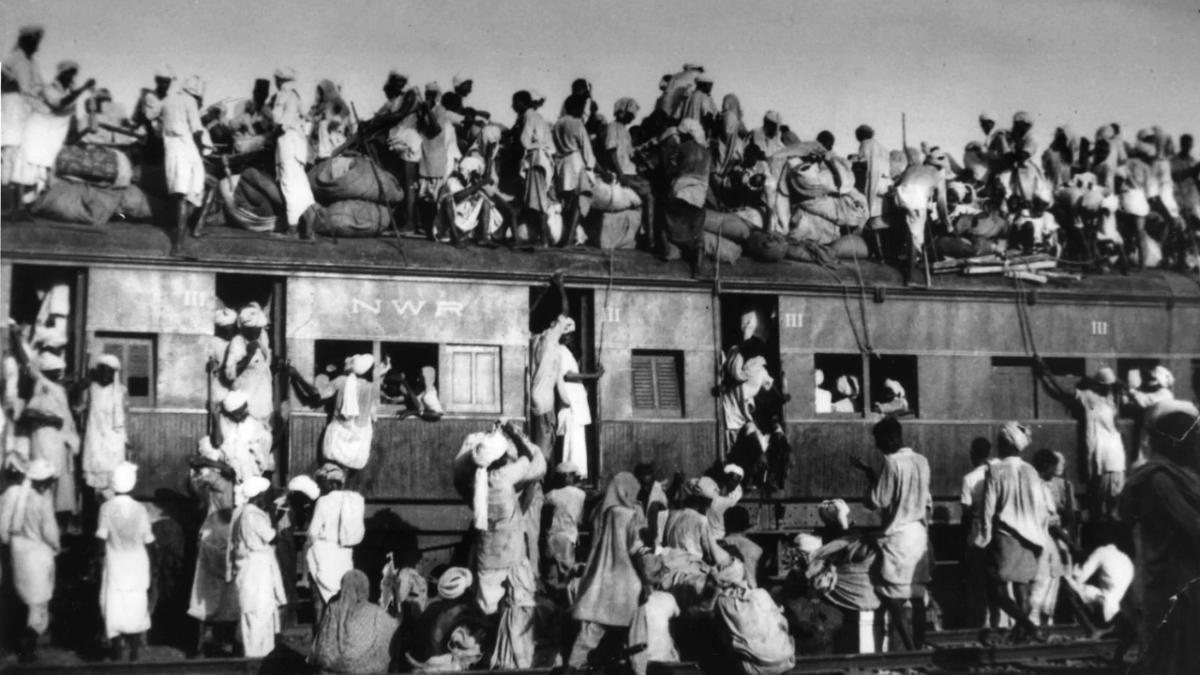
In this September 1947 photo, Muslim refugees clamber aboard an overcrowded train near New Delhi in an attempt to flee India.
Much has been written about India’s Independence and Partition, covering the human aspects and the politics behind it. The human narrative around Partition has been shaped by fiction like Khushwant Singh’s Train to Pakistan, Bhisham Sahni’s Tamas and Saadat Hasan Manto’s short stories, as also by films like M.S. Sathyu’s Garam Hava, Richard Attenborough’s Gandhi and Sabiha Sumar’s Khamosh Pani. All these focus on the partition of Punjab, the human tragedies of millions of refugees moving out of newly created boundaries and the senseless violence and killings that gripped both India and Pakistan. Often ignored is that the partition also divided Bengal into West Bengal and East Pakistan. Bhaswati Mukherjee’s Bengal and its Partition: An Untold Story (Rupa Publications, Rs 595) is an empathetic look into the unique political dynamics in Bengal where Muslims enjoyed a slight majority.
Perhaps the reason that Bengal’s division has remained an understudied part of Partition is because, unlike Punjab, the partition saga in Bengal had begun before 1947 and continued till 1971 when the growing alienation of the Bengali East Pakistanis and the Pakistan army’s brutal crackdown led to the emergence of Bangladesh. On its western border, India’s relations with Pakistan have remained locked in hostility; in the east, relations with Bangladesh developed their own dynamics leading to a close and sometimes difficult, but never adversarial or hostile, relationship.
Mukherjee squarely blames the British rulers for systematically eroding the syncretic culture of Bengal by inserting the communal virus into the body politic. The first partition of Bengal in 1905 along communal lines was reversed in 1911, largely on account of opposition by both the Hindu and Muslim elites, though it also sowed the seeds of the 1947 rupture. Perhaps there is an element of nostalgia in Mukherjee’s evocation of the syncretic culture, no different from what Punjabis from Amritsar feel when they visit Lahore to eat kababs and listen to Sufi qawwalis. However, the author’s Bengali passion is balanced by the historical rigour with which she approaches the subject.
Comparisons between Hindu nationalism and Muslim nationalism are a more sensitive issue. Was the latter more communal than the former? Is that what made Partition inevitable? It is difficult to find a single root cause. The communal fault-line obviously existed for the colonial powers to exploit it and the direction in which Pakistan evolved under Bhutto and Zia has taken Pakistan’s Islam further away from its subcontinental character. Lacking a shared language and culture in 1947, Pakistan sought to fashion its identity in a religion. Bangladesh has tried to define its identity both in terms of Islam and Bengaliness.
Mukherjee holds the Indian leadership responsible for ignoring the wishes of the (Bengali) people and accepting the inevitability of partition. There may be a grain of truth in this, but it is difficult to reconcile it with the growing search for identity nationalism that had gripped the world after World War I. It is a search that still continues, including in India. If seen together with the feudal nature of the landholding elites in pre-1947 India and the fact that the bhadralok that had opposed the 1905 partition found Partition more acceptable in 1947, a more complex picture emerges.
What Mukherjee’s book does is to shine much-needed light into the untold story of Bengal’s two partitions. The next step is for historians, fiction writers and filmmakers in both India and Bangladesh to collaborate and add to the narrative of the 300 million Bengalis living in both countries.
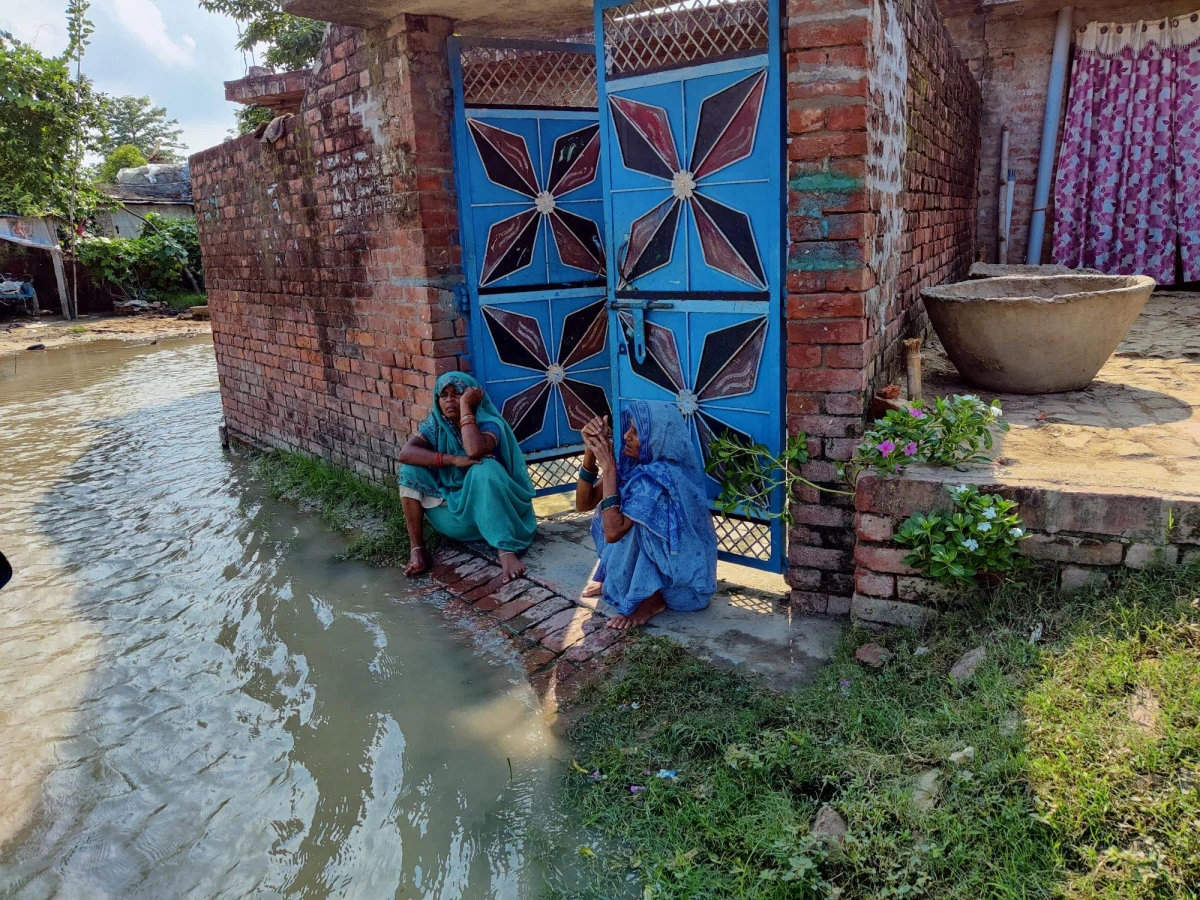
Many flood-hit villages in Uttar Pradesh’s Lakhimpur Kheri are reeling under darkness. As night descends on in the flood-hit areas, the villages become sheets of darkness.
Many huts are damaged in the flooded chaos in villages. Most houses, farmlands, and sources of livelihood in the village were severely damaged.
It all happened after heavy rains in Uttarakhand due to which there was an overflow of water in Sharda river.
Villagers are bound to travel long distances under 4-10 feet of water to buy essentials, vegetables, etc. with no ration being provided by the administration.
DM Lakhimpur Kheri, Dr Arvind Chaurasiya, said, the revenue department is providing ration to the affected people and if some have still not received, they, too, will get. “No need of NDRF or SDRF team so far,” he added.
Villagers sit on an elevated ground as parts of their hut remain submerged.