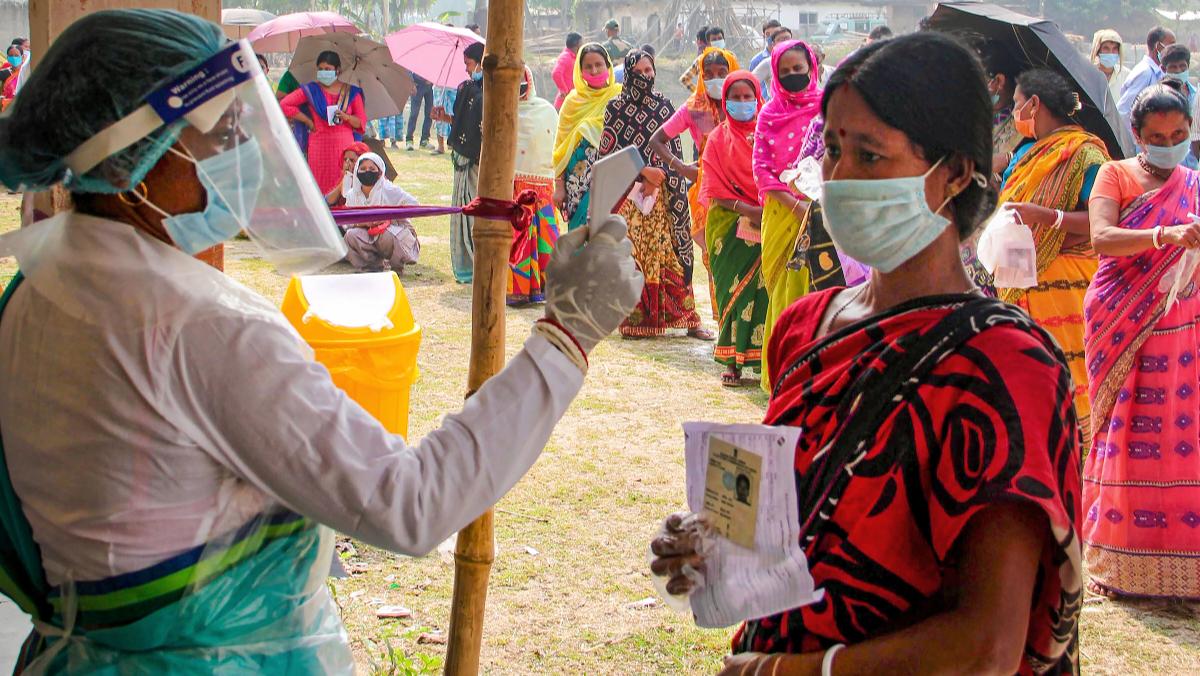
Even as India has reduced its active Covid-19 caseload by over 3.5 lakh over five days (May 12-17), the Northeastern states are showing a clear spike in Covid-19 cases.
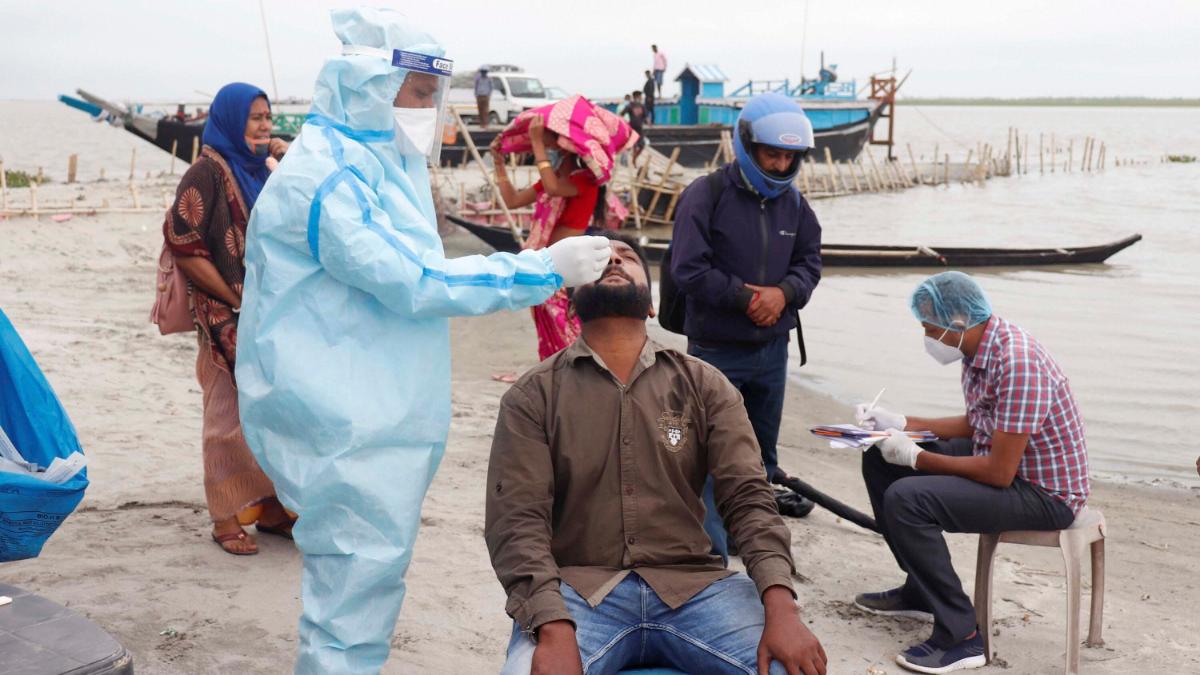
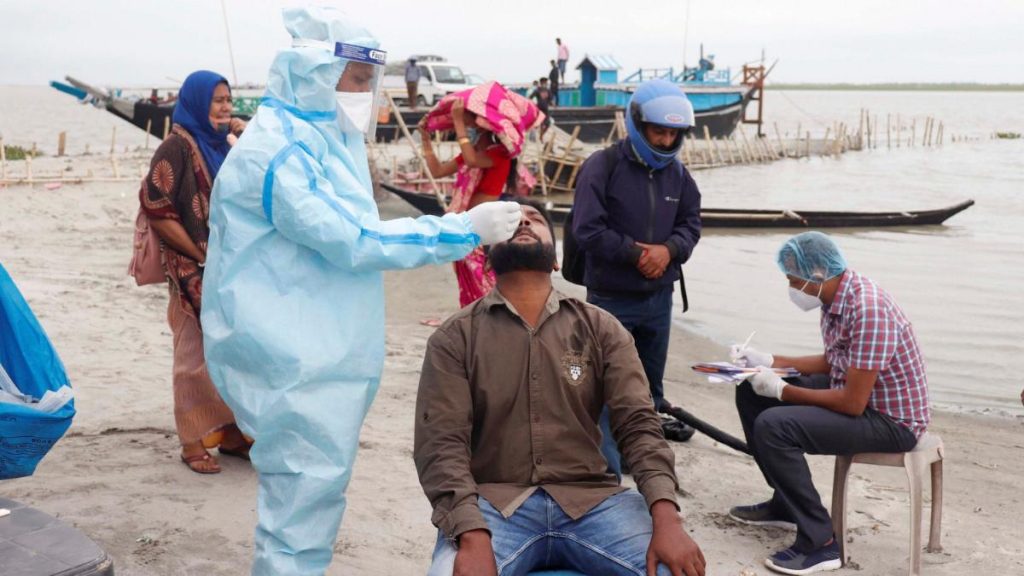
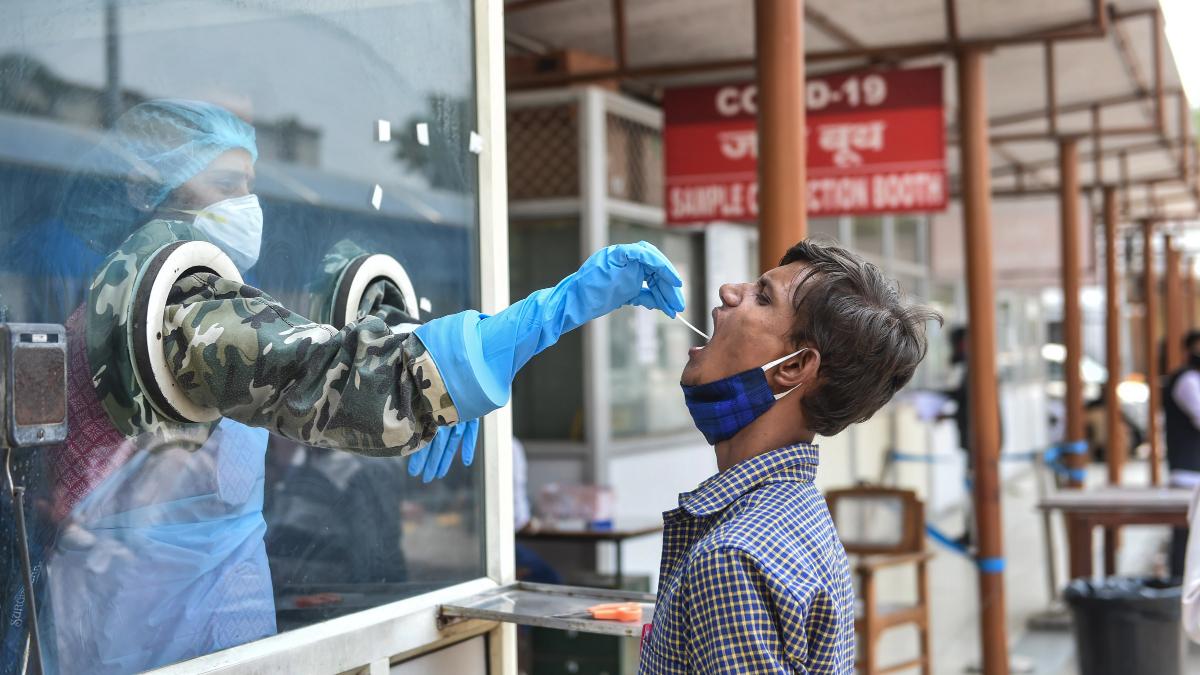
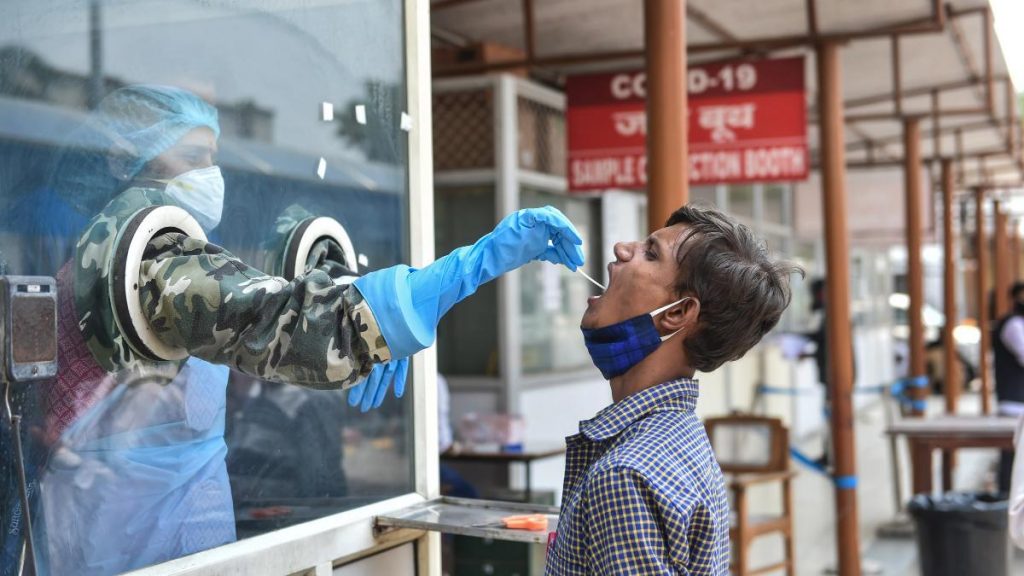
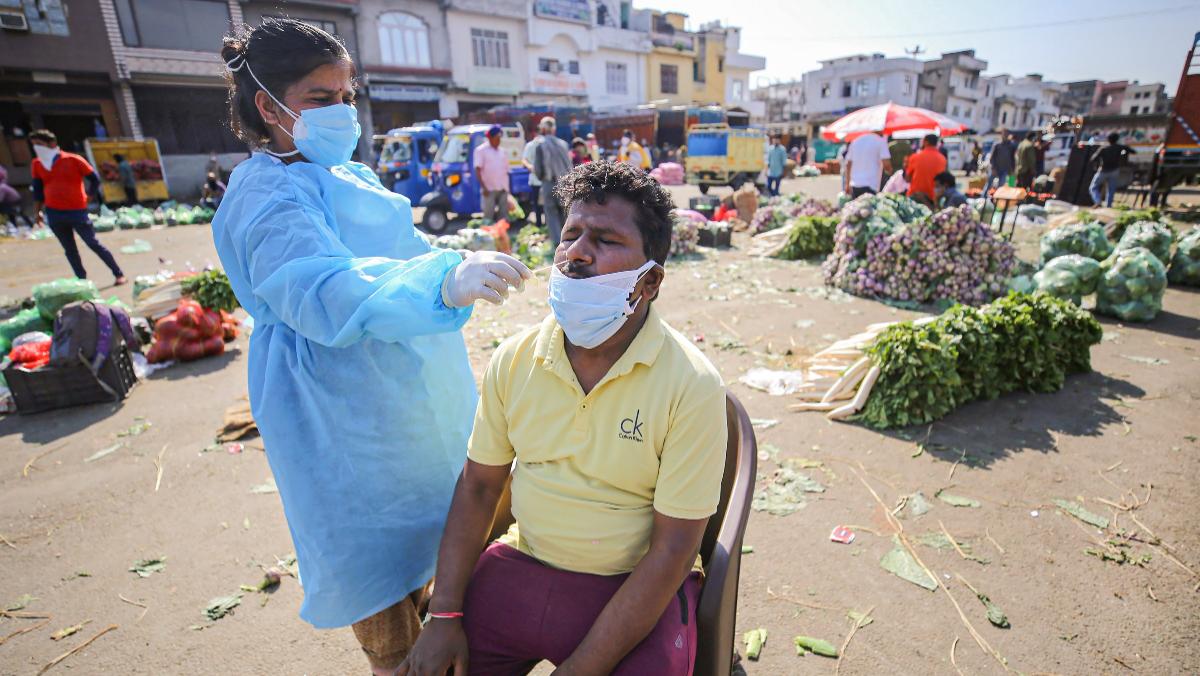
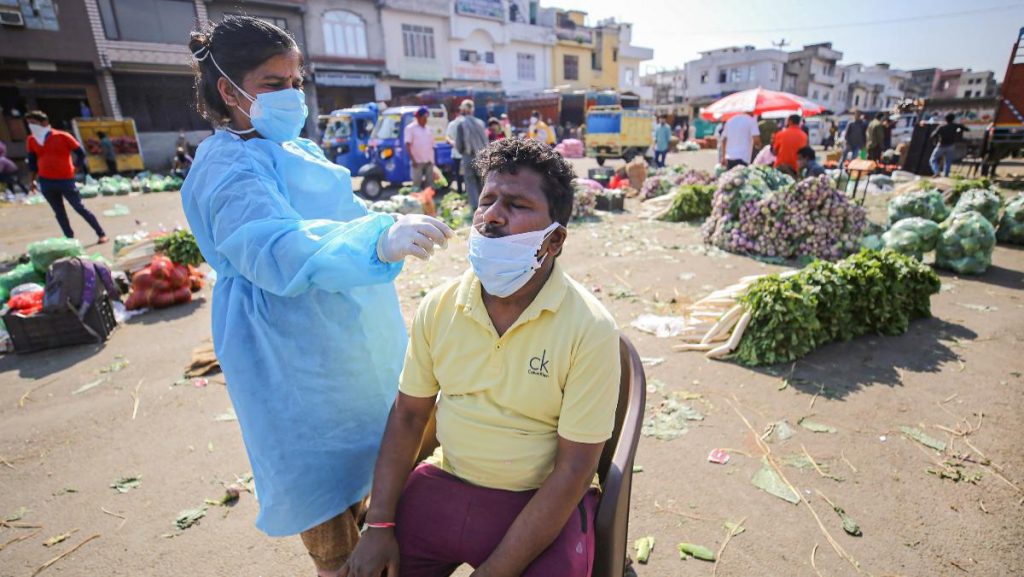
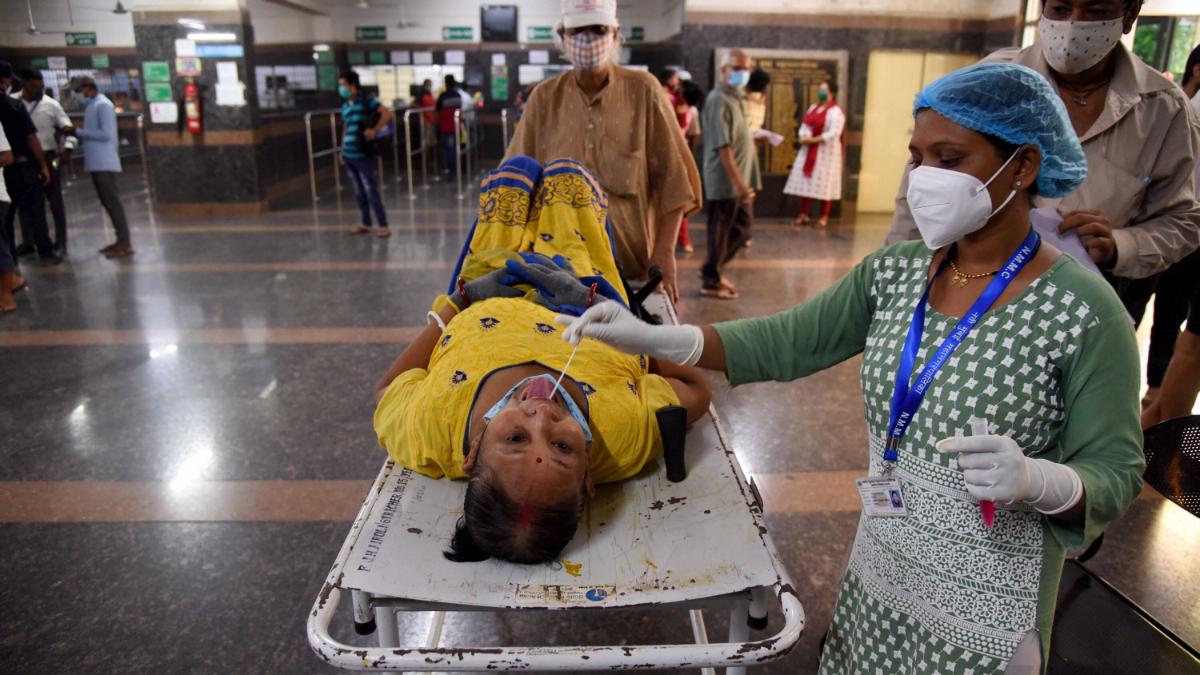
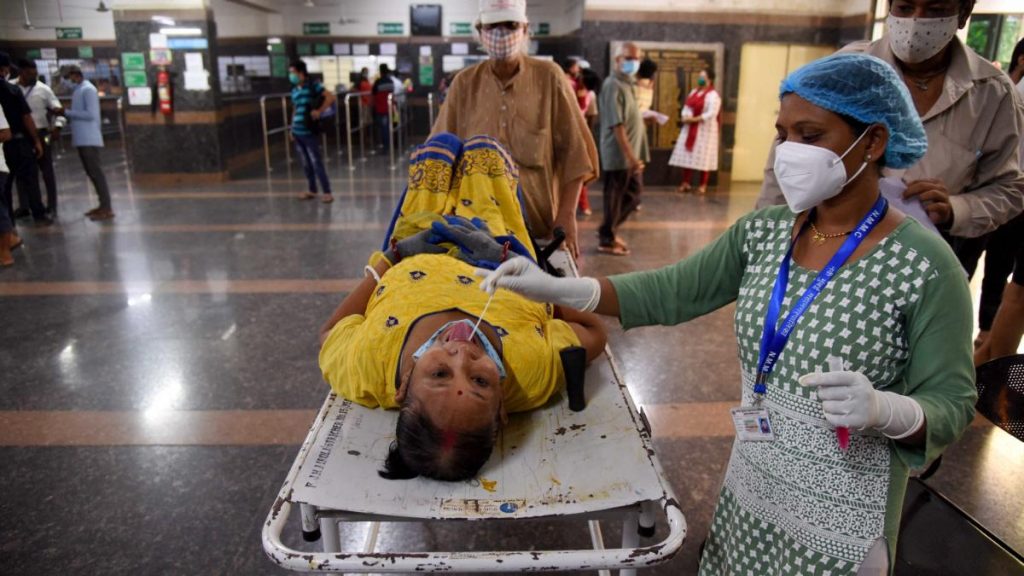
A healthworker takes swab sample of a passenger for Covid-19 test, at Dakhinpat Ghat on the bank of the river Brahmaputra in Majuli district of Assam.
India has reduced its active Covid-19 caseload by over 3.5 lakh over five days (May 12-17). Still, the number of active Covid-19 cases, as of Monday, stood at around 33.5 lakh in India. The test positivity ratio has also declined in the past one week, staying below 20 per cent, which, however, is still precariously high.
Most Covid-19 epicentre states have shown signs of retreat or plateauing of the second wave of coronavirus pandemic. However, the Northeastern states are showing a clear spike in Covid-19 cases. These are small numbers, but the spike is sharp compared to the previous pattern of Covid-19 spread in the region.
A barge carrying 273 personnel was caught in the winds and rain of Cyclone Tauktae on Monday. The barge sank on Tuesday and the Indian Navy managed to rescue 177 so far. However, 96 others remain missing.
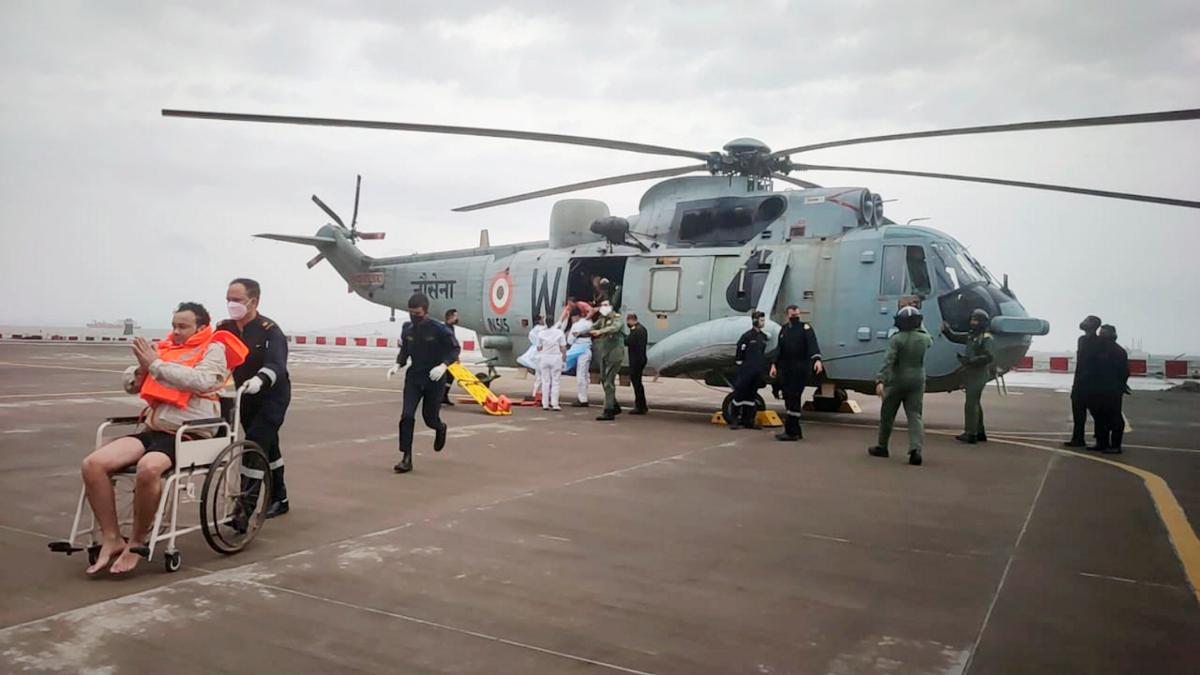
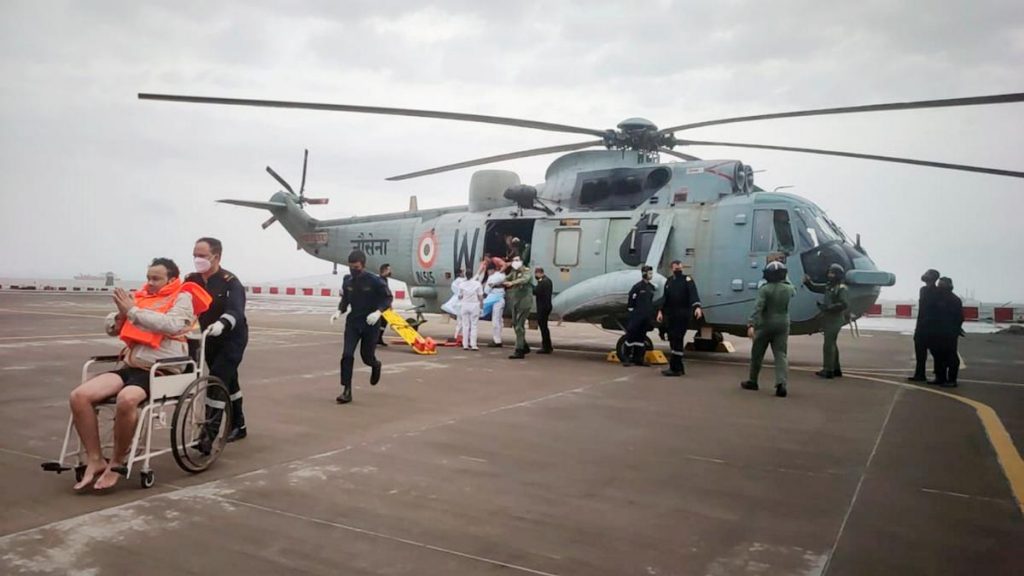
Indian Navy rescues personnel stranded on the barge.
One of the vessels with 273 personnel on board, which was stranded near Bombay High during the impact of Cyclone Tauktae, has sunk. The Indian Navy has managed to rescue 177 people till Tuesday morning while search is on for the others.
Rescue and search operations were intensified on Tuesday, a day after the severe cyclonic storm made landfall in Gujarat and wreaked havoc in Mumbai.
Indian Naval ships Beas, Betwa and Teg joined INS Kochi and Kolkata for undertaking search and rescue (SAR) operations for Barge P-305, which sank 35 nautical miles from Mumbai. SAR has also been augmented by P8I and naval helicopters, who continue to undertake an aerial search in the area.
State-run Oil and Natural Gas Corporation (ONGC) had on Monday said barge P305 with 273 personnel deployed for offshore drilling got de-anchored and began drifting because of the cyclonic storm Tauktae.
NDRF DG SN Pradhan speaks to Rajdeep Sardesai on how the force is battling the twin challenges of Cyclone Tauktae and Covid
NDRF teams have been deployed in Maharashtra, Gujarat in view of Cyclone Tauktae.
Cyclone Tauktae has made its landfall in Gujarat. Six people were killed and eight injured in Maharashtra. There were fears of some medical supplies to Covid patients, and also vaccination drives, being disrupted in both states.
Q: CAN YOU GIVE US A SENSE OF NDRF’S PREPARATIONS TO TACKLE CYCLONE TAUKTAE?
As we speak, 50-odd teams are on the ground. Gujarat is the impact state actually. The storm built up right from Lakshadweep onwards and impacted the coastal areas of Karnataka and Maharashtra.
But the major impact is due to the landfall in southern Gujarat. Fourteen districts are being impacted as we speak. That’s why the forces are lined up along the coast in those districts.
For most of the last two and a half days, they have been involved in the evacuation of those in harm’s way. More than 2 lakh people have been evacuated. The local administration of the districts has to be complimented on the task achieved.
It remains to be seen whether that has been complete and optimal. Sometimes, people aren’t able to leave houses, and unfortunate incidents do happen. But I hope those will be few and far between or none at all. I think the due diligence has been done.
Q: IN SOME AREAS, COVID PATIENTS WERE BEING TREATED IN ICUs. IN THAT SENSE, HAS THIS BEEN A MORE DIFFICULT CHALLENGE FOR THE NDRF?
Vastly more difficult, I would say. The only silver lining, I kept saying through the day, is that we probably had a trial run last year when we had a few cyclones amid Covid. NDRF personnel were infected. But due to the rigour, regimen and discipline, and Covid protocols, we didn’t have casualties.
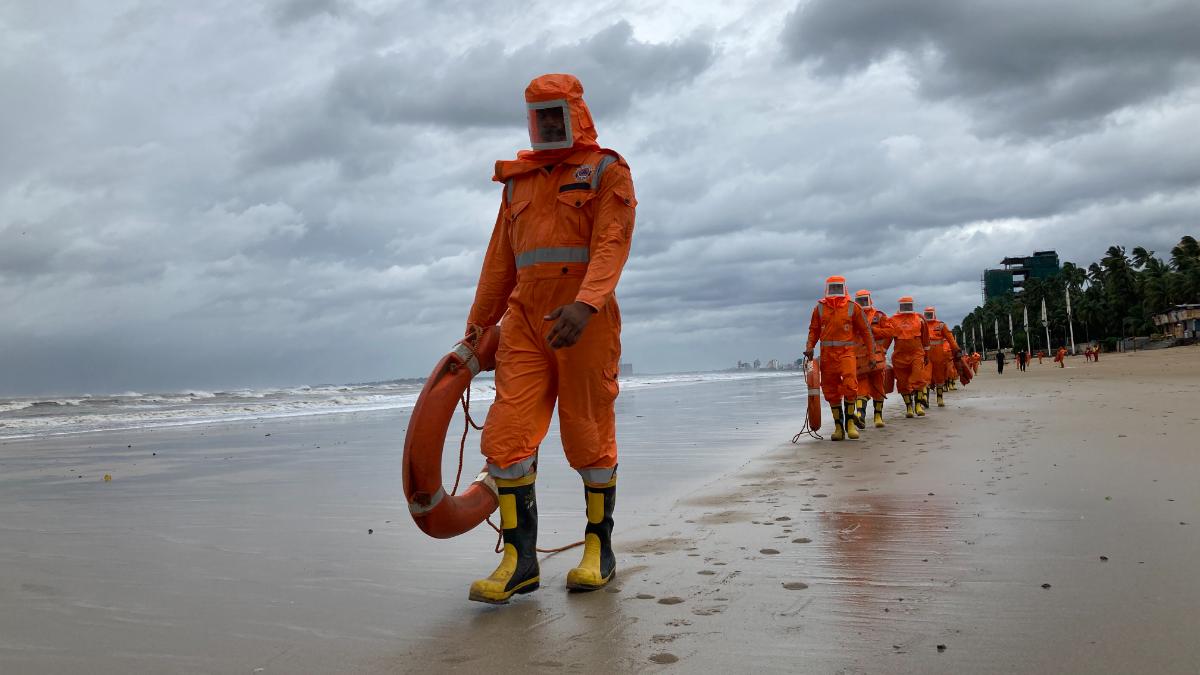
And that has stood us in good stead. This time we doubled down on preparations. We made special suits and ensured that none of our troopers is without the double dose of vaccination.
On the other side, evacuating people and Covid patients was tricky, but I must compliment the Centre and state governments. Over the last two days, the Prime Minister, the Home Minister and the Cabinet Secretary held meetings. There were very clear communication lines on strategy.
The Maharashtra Chief Minister was very clear when he spoke to the Union Home Minister that ‘we will not take a chance and we will evacuate jumbo centres and take Covid patients to safer places.’ Because of this, a lot of other troubles have been avoided. Now it remains to be seen how much on the other side of the storm we are able to protect.
At least six people died in Karnataka and Goa as Cyclone Tauktae intensified into a “very severe” cyclonic storm. Cyclone Tauktae has become “extremely severe”. Gujarat is bracing for the storm’s impact as Cyclone Tauktae is hurtling northwards towards the state expected to cross the coast on Monday evening. On Sunday, gale-force winds, heavy rainfall and high tidal waves swept the coastal belt of Kerala, Karnataka and Goa, damaging hundreds of houses, uprooting electricity poles and trees, and forcing evacuation in low-lying areas. Today, the IMD has issued an orange alert for Mumbai warning of very heavy rains in isolated places with strong winds.
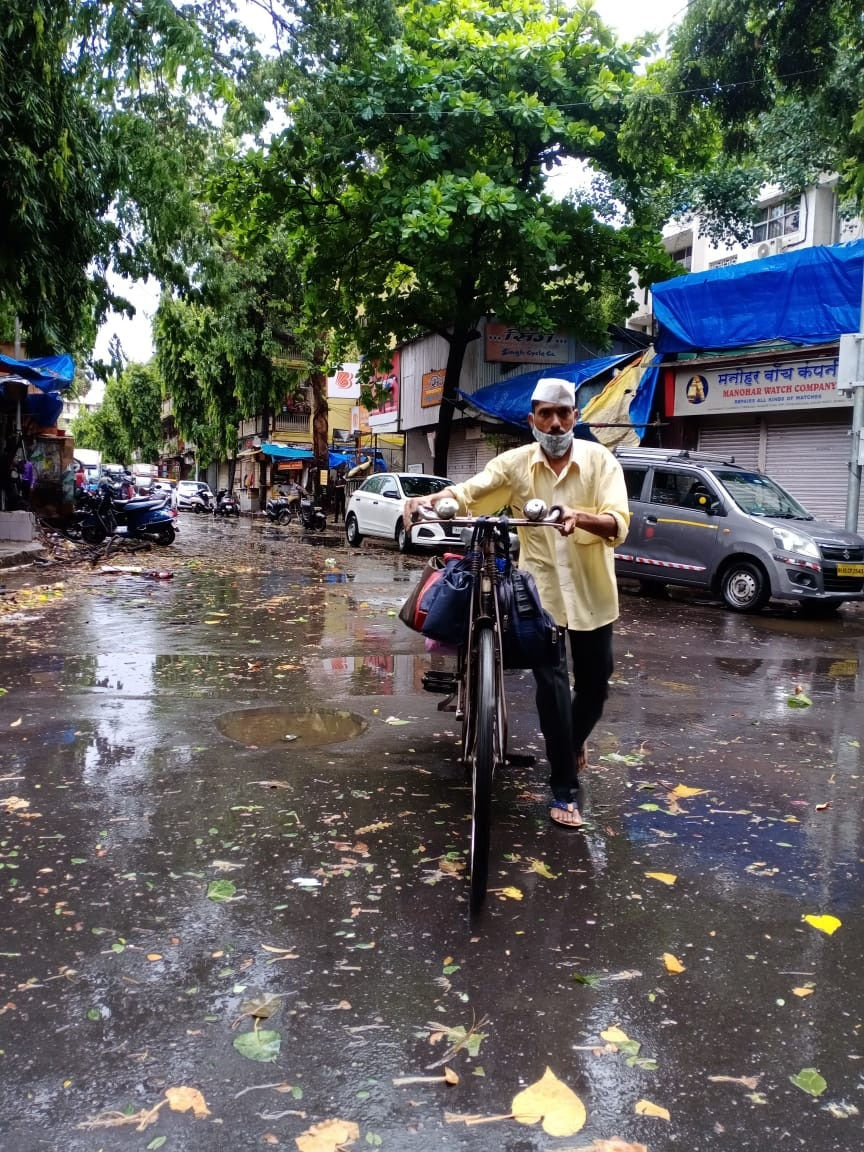
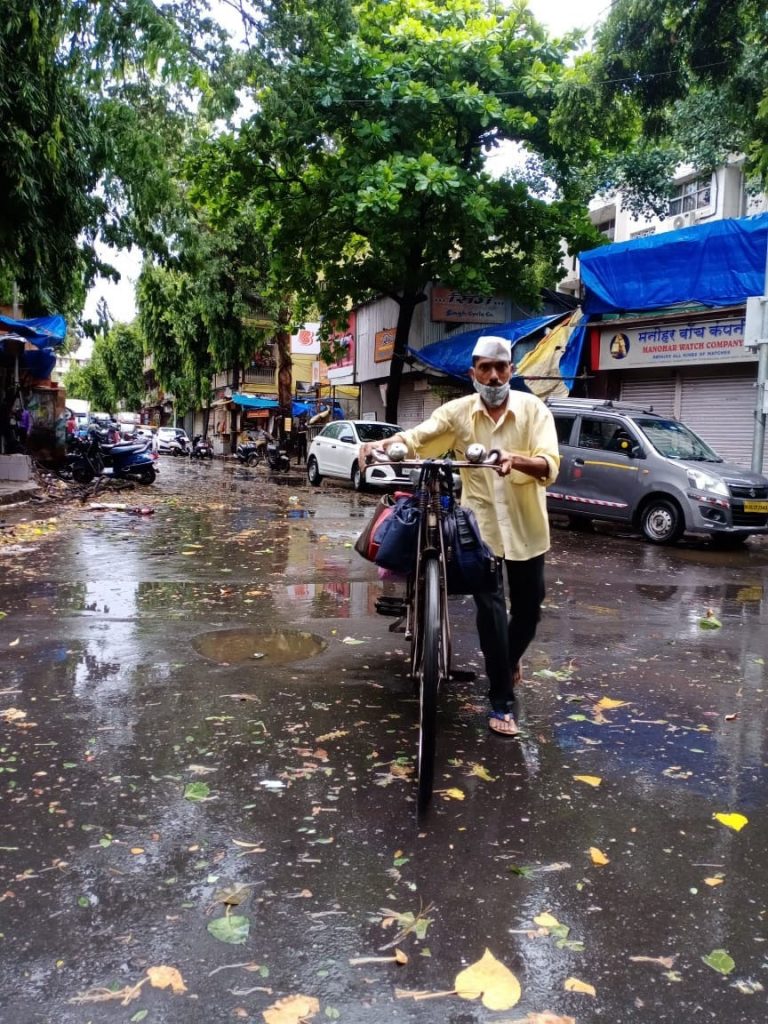
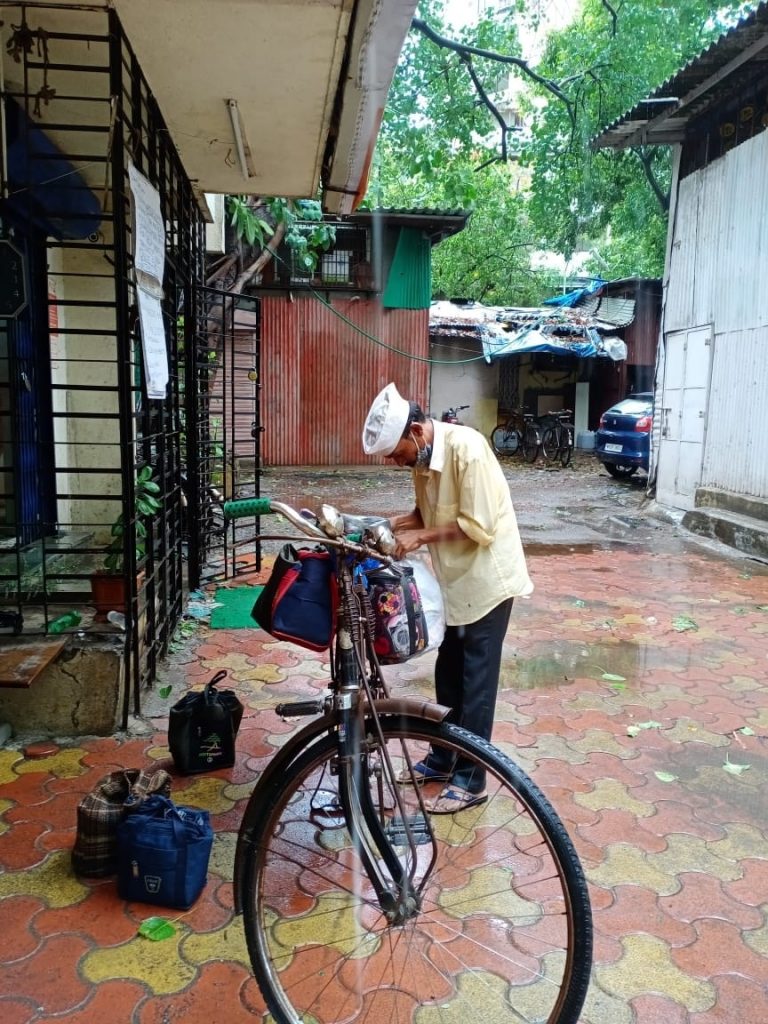
Even as rains batter Mumbai, dabbawalas delivering food to people While the city is being battered by heavy rains triggered by Cyclone Tauktae, the dabbawallas have been delivering food parcels to people across the city. These dabbas are being sent to quarantined people by their families or friends that dabbawalas are helping with.
Rural India is now inundated with the surge in Covid cases with hospitals and facilities overwhelmed. Are the number of weddings flouting Covid norms behind the spike?
Rural India is now adversely affected by the second wave of Covid-19.
The second wave of Covid-19 has now gripped rural India, making inroads into villages and wreaking havoc. Ignorant of Covid-appropriate behaviour and safety protocols, villages are bearing the brunt of the second wave.
Early this month, 8 people had died in Basatpur village of Bihar’s Seetamarhi district. When India Today TV visited the village, locals said half of the village is symptomatic, however, they don’t know if it is Covid-19.
After several deaths were reported here, the health department rushed a team to carry out rapid testing in the village to check on the population.
From 11 am to 2 pm, the health department conducted around 57 tests out of which 8 were found positive with rapid testing. The health department official Satish Kumar said that many others were symptomatic.
The scale of Covid spread could be seen on ground. India Today TV witnessed the number of Covid patients went up from 8 to 10 out of the 60 who were tested. Most of these were aged below 25 years.
More children affected
The health department official confirmed that most of the positive cases in the villages are of people aged less than 25 years. The villagers said that many have died in the last few days. People are even apprehensive about getting themselves tested, said the locals.
Covid has not even spared children below 15 years. A 12-year-old girl was also diagnosed in a random Covid testing drive. A health department official said, “She had been going to wedding ceremonies and that could be a reason behind her infection.”
Villagers also said that the girl had been to wedding ceremonies from where she could have contracted the virus. The girl later left back home after being advised by the health department to isolate herself for 14 days.
Follows Munni to her house, many other girls were found in the village sitting outside their doors in isolation. They were all less than 18 years and Covid positive. None were willing to talk to the media. However, this shows the spread of the virus, which is now taking a toll on children.
Panic prevents many from attending weddings
In rural India, wedding ceremonies have continued unabated and have now turned out to be super spreader events with no checks. While even in tier-2 cities some protocols were followed, in rural areas, no such rules were in place.
Harishankar and Swapali had never imagined that their special day will wear a deserted look. But panic in Varanasi and adjoining areas due to the Covid outbreak has led to guests staying away.
In Sarnath town, most wedding ceremonies were seen abiding by rules. Families and relatives of both grooms and brides were seen wearing masks. Upon arrival of the guests, the groom’s side or the bride’s side checked temperatures with thermal scanners, used hand sanitizers and those without masks were provided with one.
One such bride’s relative, Deendayal Yadav, said, “There is a fear in the minds of people and hence most of the relatives were not even invited. Those who have come are leaving after dinner. We are following rules. This is a huge crisis around us.”
Swapali and Harishankar however are not happy as their wedding ceremony could not be as grand as they expected. Both of them did wear masks for a while, but took them off for photos with relatives on stage.
Small towns have been at receiving end of the second wave with hundreds of Covid cases being detected. Fear is palpable among villagers over the surge.
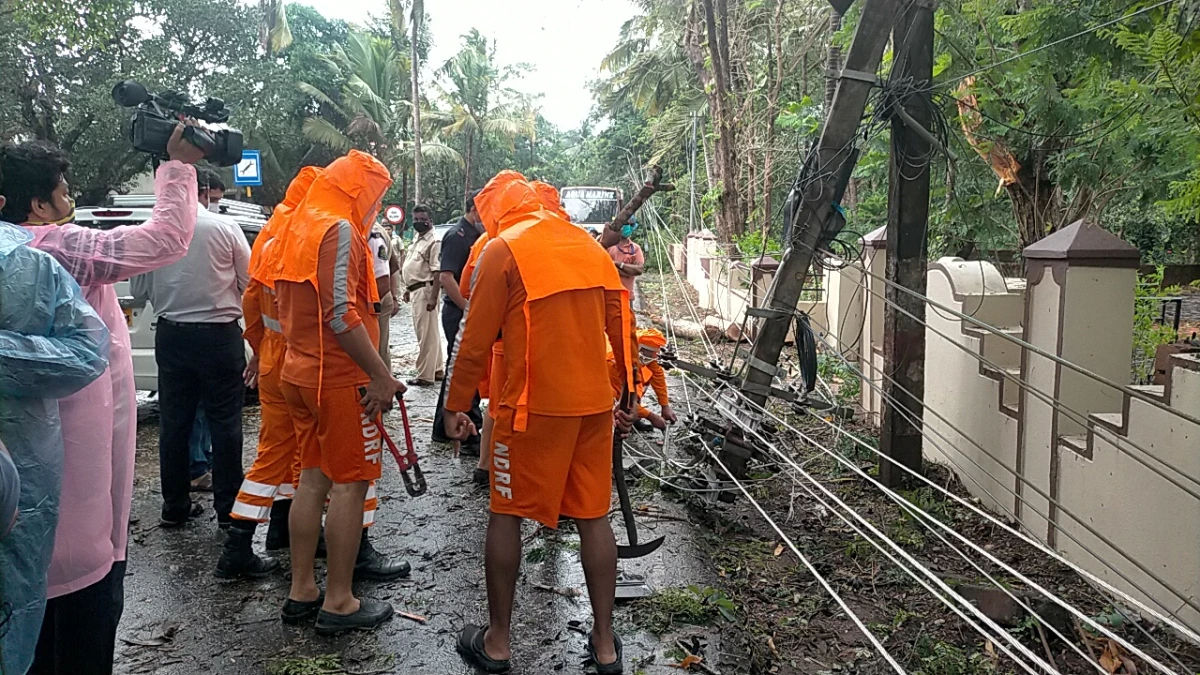
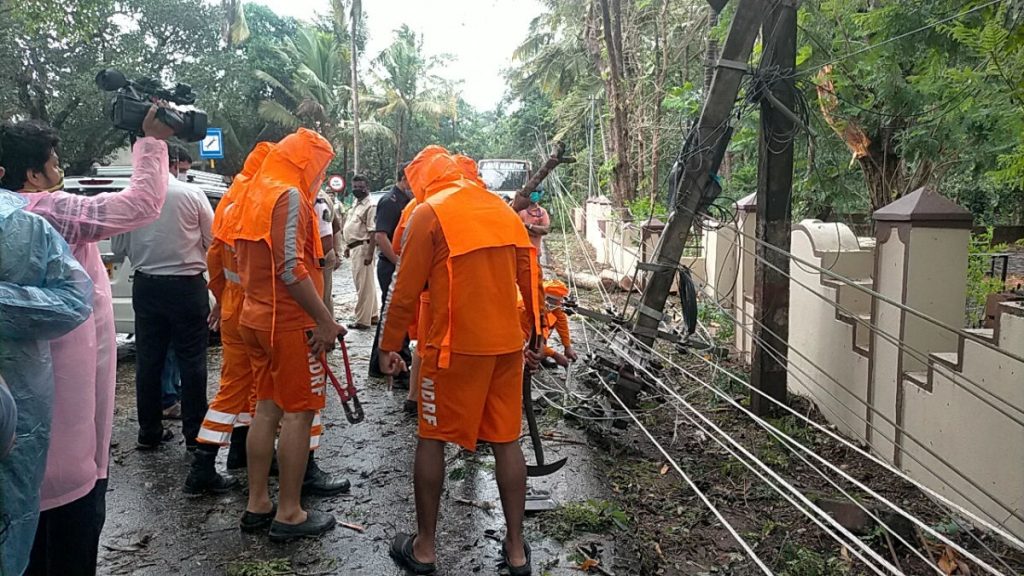
A road leading to TB hospital in Margao was blocked due to fall of two to three heavy trees, cutting off supplies to the hospital. The Goa team is carrying out the road clearance work amid heavy rain.
Cyclonic storm Tauktae has intensified into a “very severe” cyclonic storm, the Indian Meteorological Department (IMD) said on Sunday morning. Cyclone Tauktae is likely to cross the Gujarat coast between Porbandar and Mahuva (Bhavnagar district) around early morning on May 18.
The storm lay centered about 150 km southwest of Panjim-Goa, 490 km south of Mumbai, and 730 km south-southwest of Veraval (Gujarat). Here are all the updates on Cyclone Tauktae.
11:40 am: Power supply cut in Goa’s GMC treating Covid patients
Electricity supply has been affected at Goa medical college due to the impact of cyclone Tauktae. The wards treating Covid-19 patients at GMC are currently working with backup power supply. Due to the storm, several trees have been uprooted in the area, affecting 33KV lines.
Covid-19 patients undergoing treatment at hospitals and requiring oxygen cylinders need un-interrupted supply of oxygen.
11:15 am: Cyclone Tauktae has hit coastal parts of Goa and visuals from Panaji show damage caused by the heavy wind and rain in the state. Huge trees and branches have fallen in the middle of the road, completely blocking the way. Damage to private properties is also being reported with huge trees breaking the compound wall and falling on parked cars.
According to IMD, cyclone Tauktae is very likely to keep moving in north northwest direction. By late afternoon, its centre will be north-northwest of Goa. Gale winds and rainfall will continue for almost the entire day.
10:50 am: According to the Karnataka State Disaster Managagement Authority (KSDMA), four people have lost their lives and 73 villages have been affected by cyclone Tauktae. The four deaths were reported from the following districts – Uttara Kannada, Udupi, Chikkamagaluru and Shivamogga.
The storm has resulted in heavy to extremely heavy rainfall over 6 districts, 3 coastal districts and 3 Malnad districts of Karnataka in the past 24 hours.
10:35 am: “Districts near the Konkan coast have been warned for cyclone. The CM has taken stock of the matter. I’ve informed him about the rehabilitation work. We have given instructions to prepare large shelters in these areas,” Maharashtra Relief & Rehabilitation Minister Vijay Wadettiwar was quoted as saying by news agency ANI.
9:40 am: Congress leader Rahul Gandhi has appealed to his party workers to provide all assistance as cyclone Tauktae intensifies.
9:00 am: The Indian coast guard has issued a warning for the fishermen along the coast of Guajrat and Diu as the sea turns rough under the impact of cyclone Tauktae.
8:50 am: The Brihanmumbai Municipal Corporation (BMC) has shifted 580 patients from Covid care centres in the city as a precautionary measure after IMD warned that Cyclone Tauktae is likely to pass close to Mumbai coast. The officials are also contemplating a possible shut down of the Bandra-Worli Sea Link as a precautionary measure.
The IMD had said cyclone Tauktae is likely to pass the Mumbai coast late Saturday or early Sunday from a distance, so minimal damage is expected. It will, however, cause gusty winds and heavy rain in a few places in Mumbai, Thane and Palghar.
8:30 am: According to the weather department, the impact of the cyclone will be felt in the southeast, east-central and northeast Arabian Sea, Lakshadweep islands, Maldives area, triggering heavy rainfall in Kerala, Karnataka, Goa, Maharashtra, Gujarat and also the coastal and adjoining districts of all these states.
The IMD has issued a yellow alert to the coasts of Gujarat and Diu and has issued an advisory for the fishermen.
The severe cyclonic storm ‘Tauktae’ has intensified into a ‘very severe’ cyclonic storm, triggering heavy rains in various parts of the country. The cyclone is likely to intensify further in the next 24 hours.
CYCLONE TAUKTAE UPDATES:
11:00 pm: On Sunday evening, parts of Madhya Pradesh including Ujjain, Bhopal, Khandwa and others saw heavy rainfall and strong winds. As a result of this, many trees have fallen and tin sheds have flown off.
According to the Indian Meteorological Department, there is a cloud band over a large part of Madhya Pradesh due to the cyclone.
Bhopal Meteorological Department has forecast rain and thundershowers in Satna and Rewa districts of the state apart from Ujjain, Indore, Bhopal, Jabalpur, Sagar, Gwalior and other places.
9:30 pm: Seventy houses, two anganwadis, a primary school and a gram panchayat office have been damaged due to cyclonic winds in Bhorgiri and Bhivegaon villages of Khed tehsil in Pune.
9:25 pm: As per the IMD, Cyclone Tauktae is now about 190 km northwest of Panjim-Goa, 270 km south-southwest of Mumbai, 510 km south-southeast of Veraval (Gujarat).
It is likely to intensify further in the next 24 hours
8:40 pm: Cloud bands are moving towards Mumbai. The city is likely to experience moderate rainfall and winds.
8:10 pm: More than 50 national disaster response force (NDRF) teams are being deployed in Gujarat, said NDRF Director General SN Pradhan.
“Some people have died in Tamil Nadu due to wall collapse and electrocution. Some people have died in Karnataka too. We’re working on evacuation and awareness generation,” he stated.
7:30 pm: As rainfall continues in Kerala, several parts of Alappuzha are experiencing waterlogging. Water has entered houses in the low-lying areas of Mankombu, Thekkekara, Vejpara and Poovam.
7:20 pm: Due to the cyclone, the Covid-19 vaccination drive in Gujarat is on hold for two day on May 17 and 18.
7:15 pm: The IMD has issued an orange alert to Gujarat and Diu coasts on account of the very severe cyclonic storm.
Cyclone Tauktae is very likely to intensify further in the next 24 hours. It is likely to move north- northwestwards and reach the Gujarat coast in the evening hours of May 17. The cyclone will likely cross the Gujarat coast between Porbandar and Mahuva (Bhavnagar district) in the early morning hours of May 18.
6:20 pm: Goa airport has been closed.
6:00 pm: In Goa, two people have died so far due to Cyclone Tauktae. In one incident, a huge tree fell on a person and in the other, an electric pole fell on a biker. The toll may increase, said Chief Minister Pramod Sawant on Sunday.
More than 100 houses have been damaged badly and another 100 have received minor damage. Over 500 trees have fallen down.
At present, most of Goa does not have electricity and many roads are blocked. The CM said it will take two days to restore things. Heavy rains and high winds are expected to continue in the state till May 17.
5:45 pm: According to the IMD, the latest centre position of the cyclonic storm was 16.6N 72.6E, 490 kilometres south-southeast of Diu at 4:30 pm.
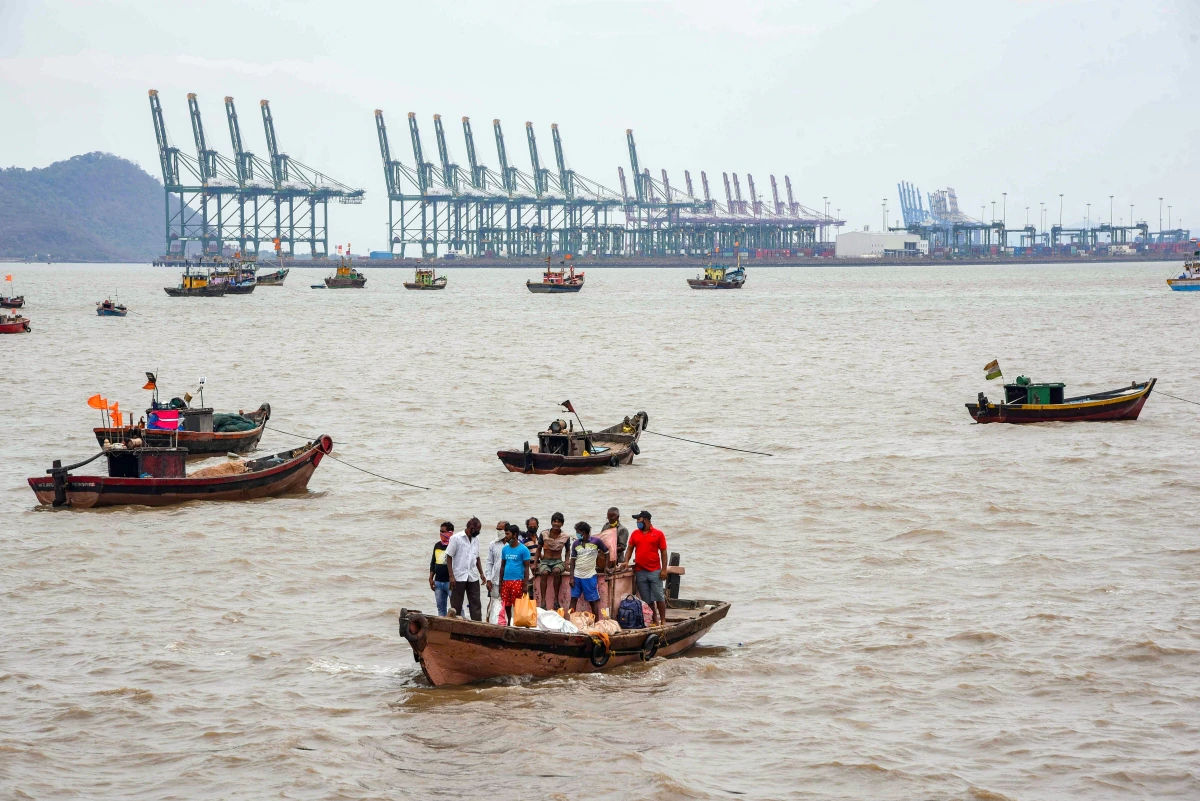
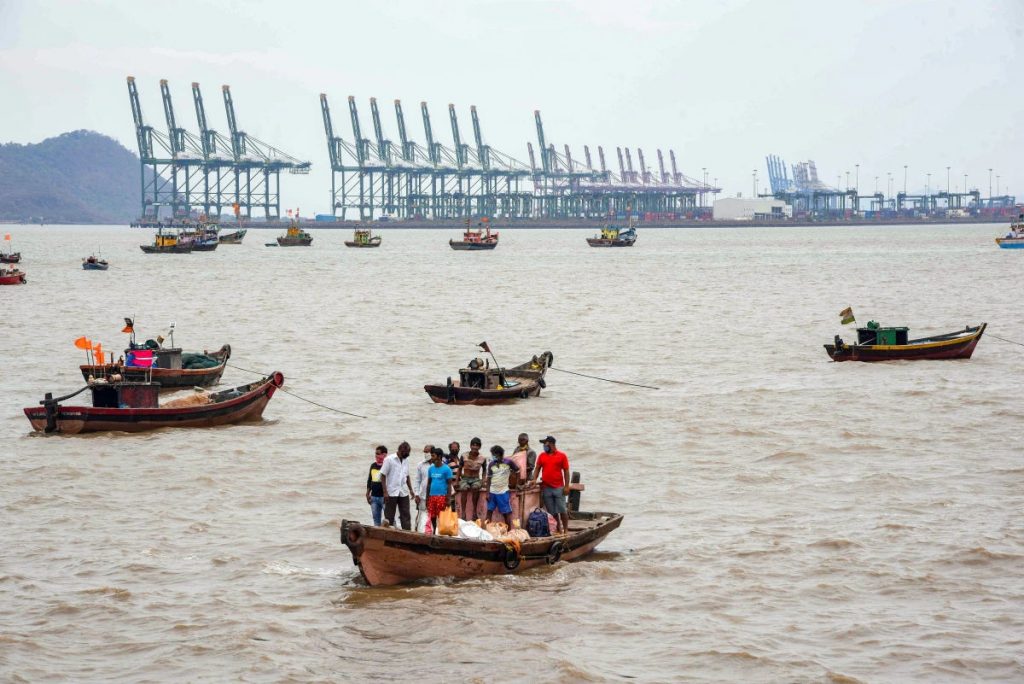
Fishing boats anchored in Mumbai due to cyclone alert.
4:40 pm: Union Home Minister Amit Shah, during his high-level video conference, directed officials of Gujarat, Maharashtra, Daman & Diu and Dadra Nagar Haveli to make adequate power backup arrangements in all Covid hospitals, labs, vaccine cold chain and other medical facilities.
Shah also advised them to ensure adequate stocks of all essential medicines and supplies in hospitals, keeping in view likely disruption of vehicular movement.
He said a 24×7 control room is functioning in the Ministry of Home Affairs, which can be contacted at any time for any assistance by the states. Indian Coast Guard, the Navy, Army and Air Force units have also been put on standby.
4:20 pm: The dialysis unit of Manipal Hospital in Goa has been affected by the cyclone. The hospital has sent an SMS to its patients informing them of the damage. Manipal Hospital will not be able to administer dialysis for the next one week. Patients have been asked to book slots at nearby hospitals and contact Manipal technicians in case of an emergency.
Meanwhile, a disaster management meeting is underway at the collector’s office in Mapusa, Goa.
3:40 pm: All airlines have cancelled their flight operation to and from Goa for today due to the prevalent weather conditions in the state. Goa is witnessing heavy rain and wind as the state reels under the impact of very severe cyclonic storm ‘Tauktae’.
3:15 pm: A road leading to TB hospital in Margao was blocked due to fall of two to three heavy trees, cutting off supplies to the hospital. The Goa team is carrying out the road clearance work amid heavy rain.
2:37 pm: The National Disaster Response Force (NDRF) has deployed 79 teams in states that are likely to be under the impact of cyclone Tauktae. 22 additional teams are also being kept in readiness.
Rescue and relief teams of the Army, Navy and Coast Guard, along with ships and aircrafts have also been deployed to deal with the situation arising out of cyclone Tauktae.
2:00 pm: According to IMD, very severe cyclonic storm ‘Tauktae’ has intensified further in last three hours. The eye of the cyclone is now clearly observed in the INSAT-3D satellite imagery at 11:30 am.
1:06 pm Cyclone Tauktae has intensified into a “very severe cyclonic storm” and is approaching the Gujarat coast, the India Meteorological Department (IMD) said on Sunday. “Very severe cyclonic storm ‘Tauktae’ has intensified further in last 3 hours. The eye of the cyclone is now observed in the INSAT-3D satellite imagery at 11:30 IST. The diameter of eye is roughly 4 km with eye temperature -5.2°C. The wall cloud top temperature is -93°C,” the IMD said.
1:03 pm Home Minister Amit Shah meeting with Maharashtra CM and Gujarat CM ends.
12:40 pm: Union Home Minister Amit Shah chairs a review meeting with the chief ministers of Gujarat, Maharashtra, and Administrator of Daman & Diu, and Dadra and Nagar Haveli, to assess preparedness of states and Union Territories as well as Central ministries and agencies concerned to deal cyclone Tauktae.
12:00 pm: Maharashtra Chief Minister Uddhav Thackeray is in a meeting with Union Home Minister Amit Shah to discuss Maharashtra’s preparedness for cyclone Tauktae.
Covid curfew in Uttar Pradesh extended till May 24; relief measures announced for ration card holders
While announcing a slew of relief measures for ration card holders and daily wage workers, the Uttar Pradesh government on Saturday extended the statewide Covid curfew till May 24.
A healthcare worker collecting a swab sample for Covid-19 testing at RML hospital in Lucknow
Restrictions aimed at breaking the chain of Covid-19 transmission in Uttar Pradesh have been extended till May 24. The decision was taken during a meeting of the state cabinet chaired by CM Yogi Adityanath on Saturday.
A press statement said the UP government has been making arrangements for Covid testing and treatment free of cost. The vaccination drive being carried out at the state’s expense is also underway, adds the statement.
Uttar Pradesh reported 12,547 new confirmed cases of infection on May 15, along with another 28,404 recoveries. A total of 2.56 lakh samples were tested for infection in the state in the last 24 hours. UP now has 1,77,643 active cases.
A total of 2.56 lakh samples were tested for infection in the state in the last 24 hours.
Apart from basic education, all educational institutions in the state have been asked to conduct online classes till May 20.
In addition, all healthcare workers in the state will be provided life insurance cover of Rs 2 lakh and health insurance of Rs 5 lakh.
Financial aid, ration for ration card holders
The state government on Saturday decided to give away 3 kg of wheat and 2 kg of rice each month to ration card holders for the next three months. Officials say this initiative will benefit as many as 15 crore people, who hold ration cards of Antodaya and eligible household category.
Daily wage workers, street vendors, e-rickshaw drivers, washer men/women, barbers, cobblers and other such workers will be given Rs 1,000 as financial aid by the UP government. This, say officials, will benefit another 1 crore people living in Uttar Pradesh.
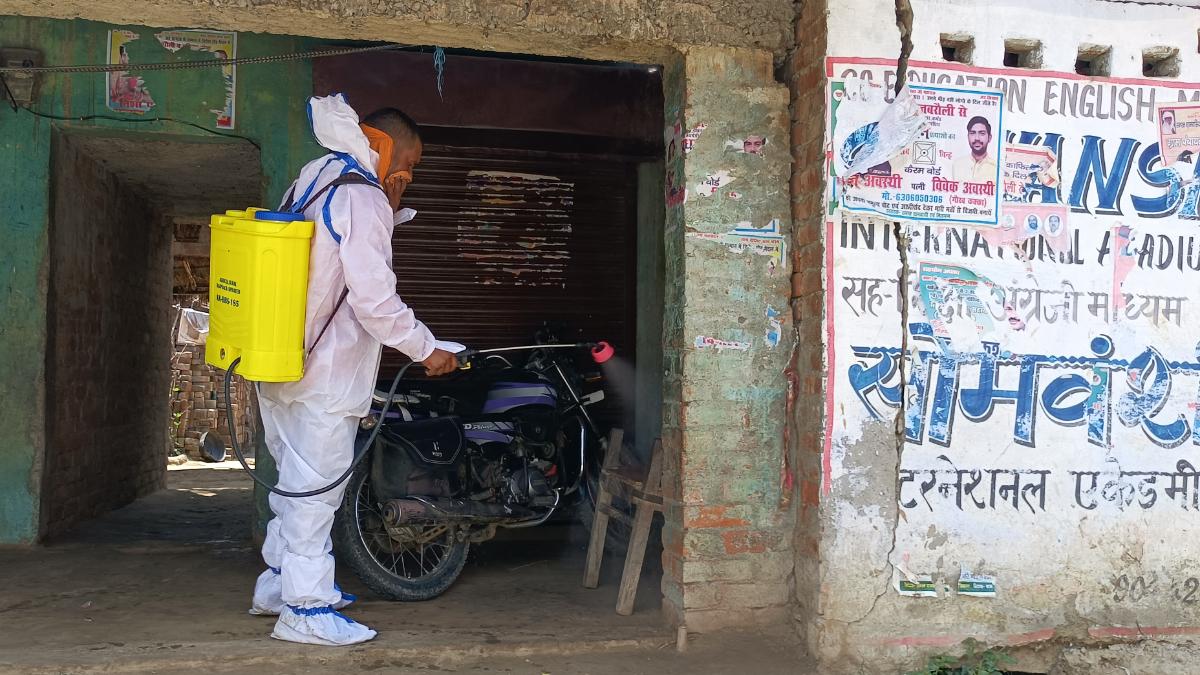
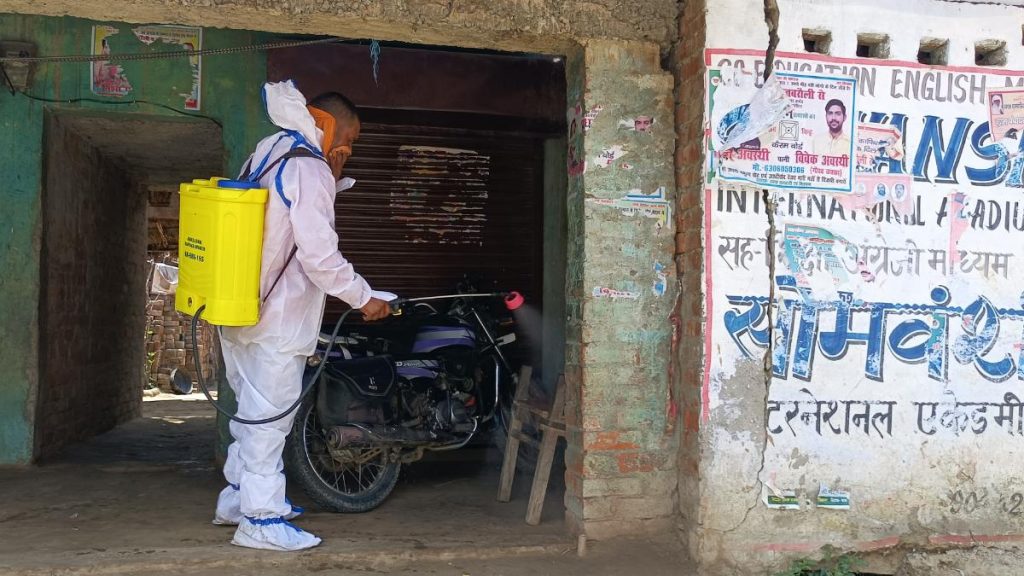
The Uttar Pradesh government has claimed that a sanitisation programme has been launched in villages to tackle the spread of Covid in rural areas.
The UP govt has claimed that its representatives have visited over three crore houses at block levels in districts and tested over 2.5 lakh people in rural areas in a week.
As Uttar Pradesh grapples with the second wave of coronavirus pandemic, with the Covid-19 infection spreading to rural areas, the UP government has started a sanitisation drive in rural areas to tackle the spread of coronavirus.
The UP government has claimed that its representatives have visited over three crore houses at block levels in districts and tested over 2.5 lakh people in rural areas in a week.
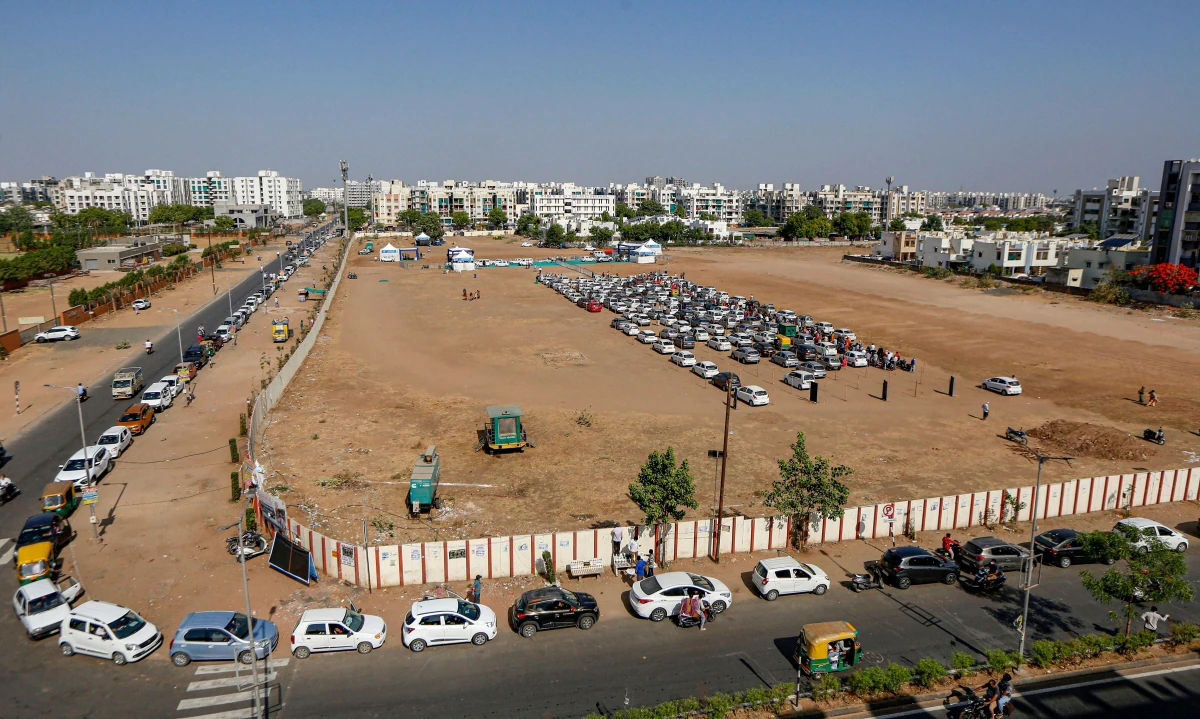
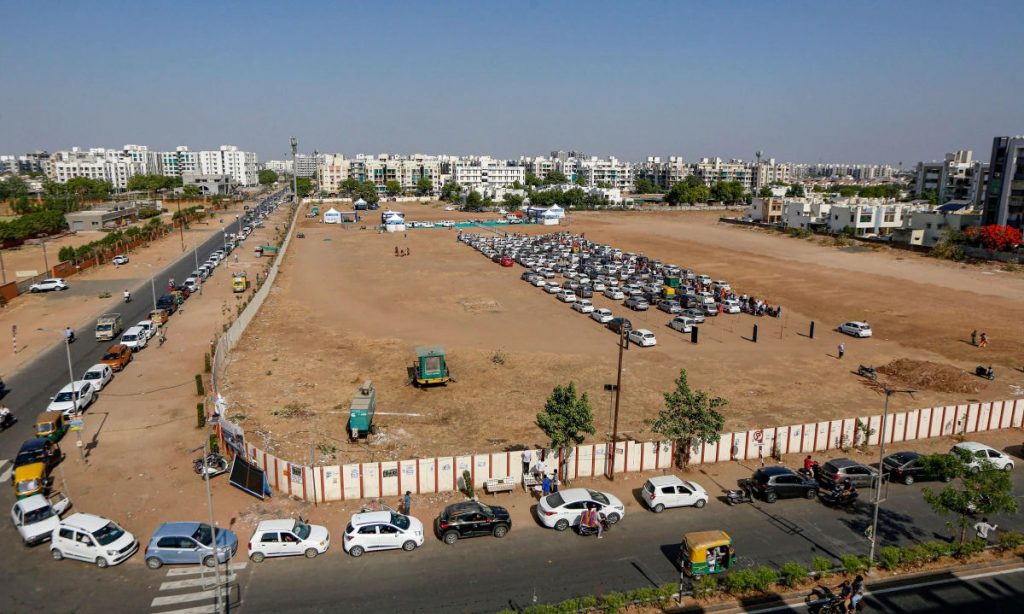
Cars waiting in queue at the site of a drive-through Covid-19 vaccination drive in Ahmedabad on Wednesday
Chairman of India’s Technical Advisory Group on Covid-19 vaccination, Dr NK Arora, has defended the Centre’s decision to increase the gap between both doses of Covishield to 12-16 weeks from the earlier norm of 6-8 weeks. The Health Ministry accepted the recommendation on Thursday.
It was the National Technical Advisory Group on immunisation headed by Dr Arora that had recommended extending the gap between two doses of the Covid-19 vaccine. Covishield, developed by the University of Oxford and AstraZeneca, is being produced by Pune-based Serum Institute of India (SII).
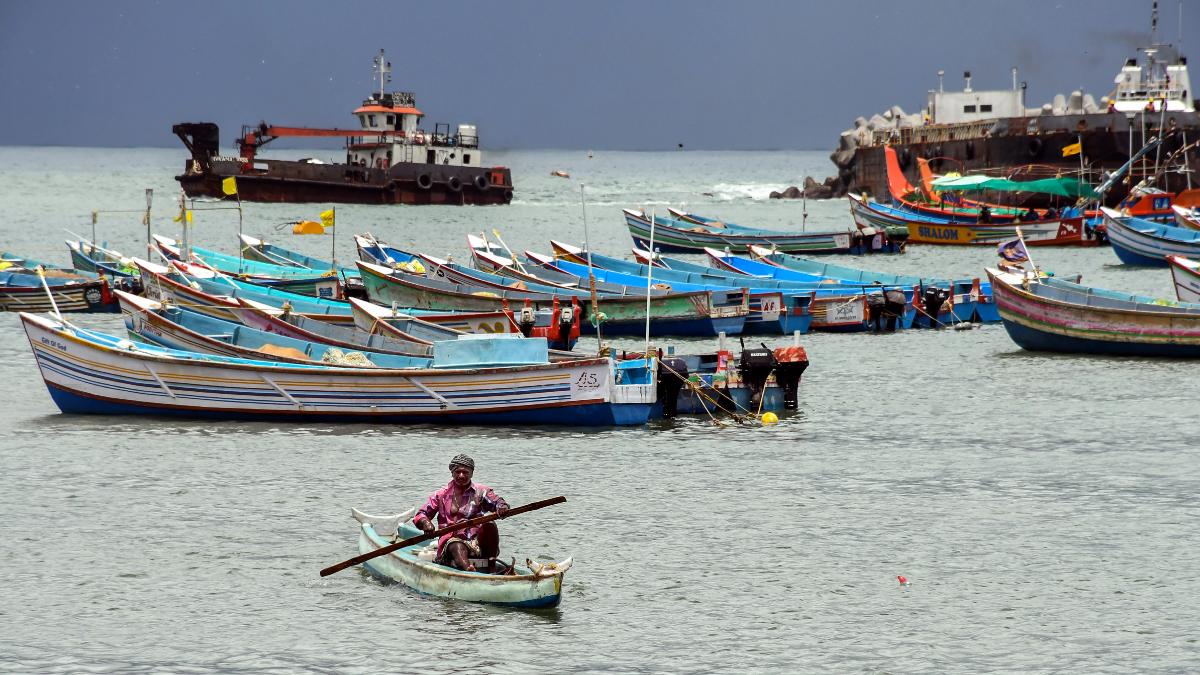
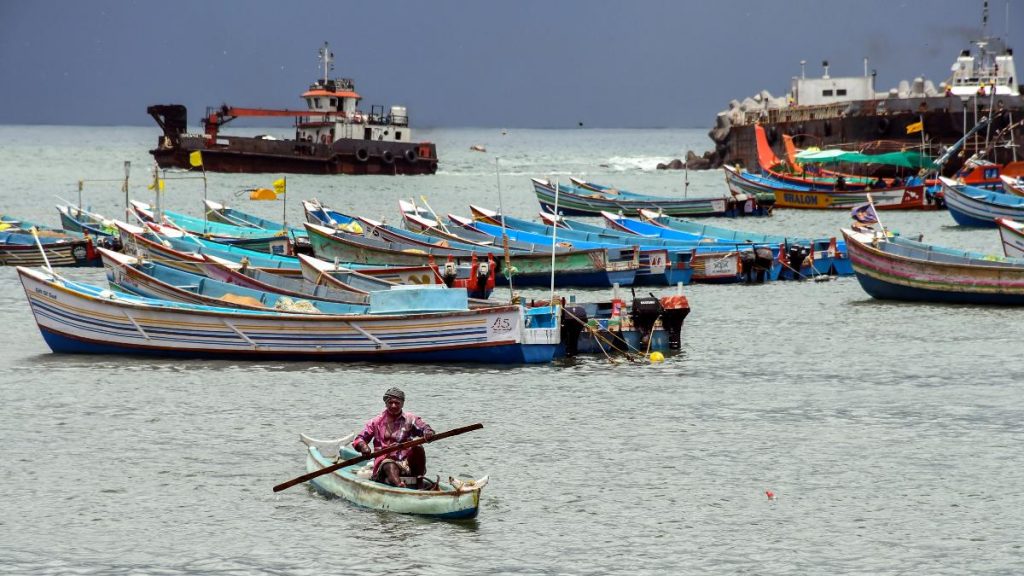
Fishing boats anchored at Vizhinjam coast in Kerala following a cyclone alert on Thursday
Alow pressure area formed over the Arabian Sea is likely to intensify into a cyclonic storm by May 16, said the India Meteorological Department. This could lead to heavy rainfall in some places in Goa and the south Konkan region. Sindhudurg and Ratnagiri districts in Maharashtra constitute the south Konkan region.
In an advisory, the IMD added that the low pressure area will concentrate into a depression over the Arabian Sea by Saturday morning before intensifying into a cyclonic storm during the subsequent 24 hours.
“A low pressure area has formed over the southeast Arabian Sea and adjoining Lakshadweep area today. It is very likely to become well marked over the Lakshadweep area by Friday morning,” the IMD said on Thursday.
This cyclonic storm is likely to intensify further and move north-northwestwards to Gujarat and the adjoining Pakistan coasts. Estimates suggest it will reach the Gujarat coast around the evening of May 18.
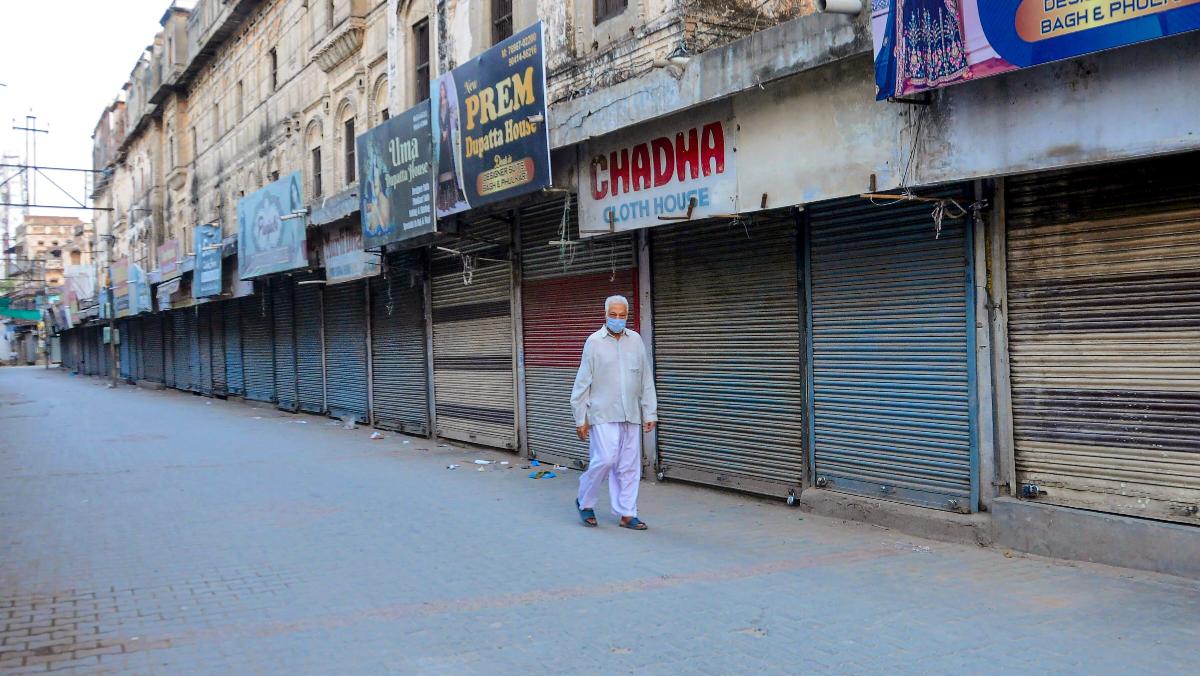
Delhi’s Connaught Place wears a deserted look during the ongoing Covid-19 lockdown on Tuesday
Second wave of Covid-19 infections can imperil India’s economic recovery, says American credit rating agency S&P. A sharp surge in new cases has prompted lockdown-like restrictions across the country since April of this year.
In its assessment, S&P said, “In a moderate scenario in which the pandemic peaks later this month, GDP for the full fiscal year could drop by another 1.2 per cent.”
The drop in GDP (gross domestic product) would deepen to 2.8 per cent in a ‘severe’ scenario, the credit rating agency added.
S&P also said that current lockdowns have not been as broad compared to those enforced in India last year since people and firms are now familiar with restricted mobility.
Active Covid-19 cases dip, 18 states show decline but 90% districts are now hotspots
In over two months, India reported the first reduction in active Covid-19 cases on Monday, and followed the trend on Tuesday. However, about 90 per cent of districts in India are showing a positivity rate of over 10 per cent.
In over two months, India reported the first reduction in active Covid-19 cases on Monday, and followed the trend on Tuesday. However, about 90 per cent of districts in India are showing a Covid-19 positivity rate of over 10 per cent.
In over two months, India reported the first reduction in active Covid-19 cases on Monday, and followed the trend on Tuesday. Given that India is still reporting over 3 lakh Covid-19 cases a day, the volume of recoveries is remarkable, but it only fits the pandemic arithmetic. More people had caught the virus over two weeks ago.
The Union health ministry data shows that as many as 18 states are showing signs of a decline in the second wave of Covid-19 pandemic. These states include the worst-hit ones including Maharashtra, Delhi, Uttar Pradesh, Rajasthan, Madhya Pradesh, Chhattisgarh, Telangana and Bihar.
Major uptick states are in the Northeast, West Bengal, Odisha, Tamil Nadu, Kerala — which has remained a major epicentre since 2020, Karnataka, Goa, Punjab, Haryana, Himachal Pradesh and Uttarakhand.
No toilets and doctors missing, UP villages bank on faith to battle Covid
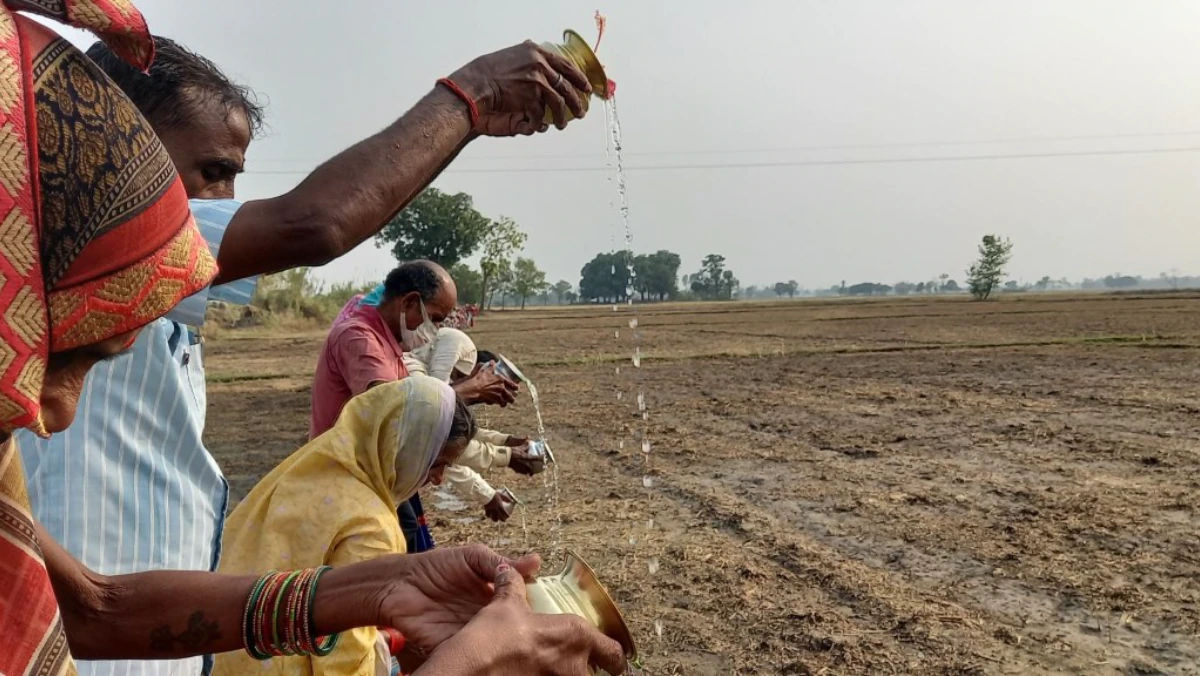
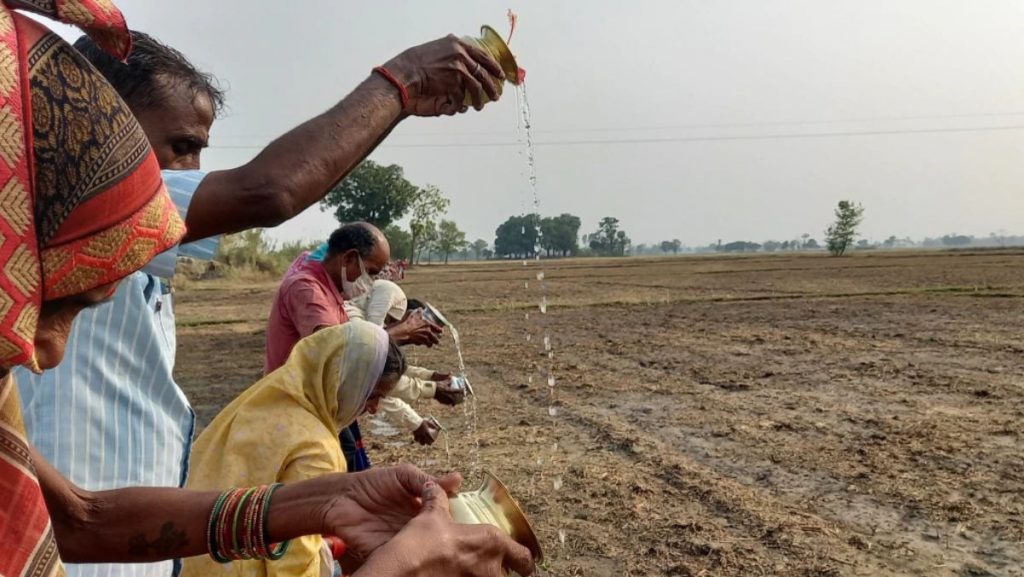
With Covid-19 reaching rural pockets of Uttar Pradesh, the fragile rural healthcare system is crumbling under pressure. The people are now turning to religion for protection instead.
With hospitals few and far apart and a negligible testing capacity, the healthcare system of rural Uttar Pradesh is not able to cope and the people have now begun to turn to religious rituals for protection.
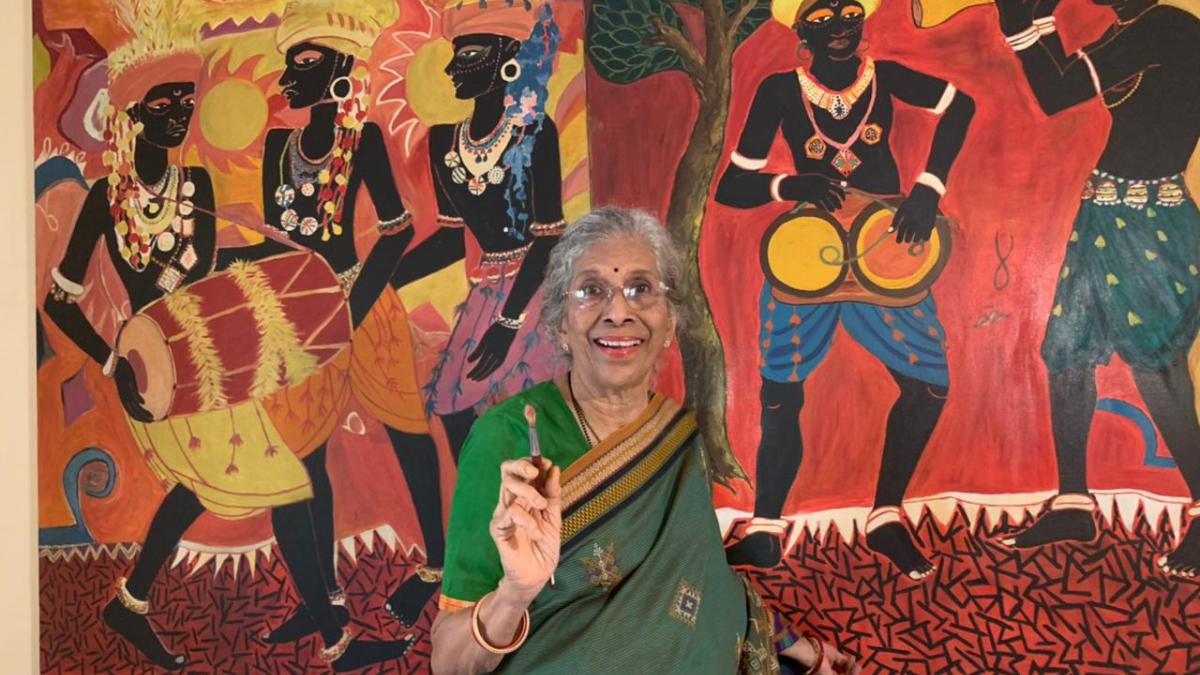
Lata Chaudhry, who suffers from advanced-stage Alzheimer’s and dementia paints to heal her rising anxiety during the pandemic
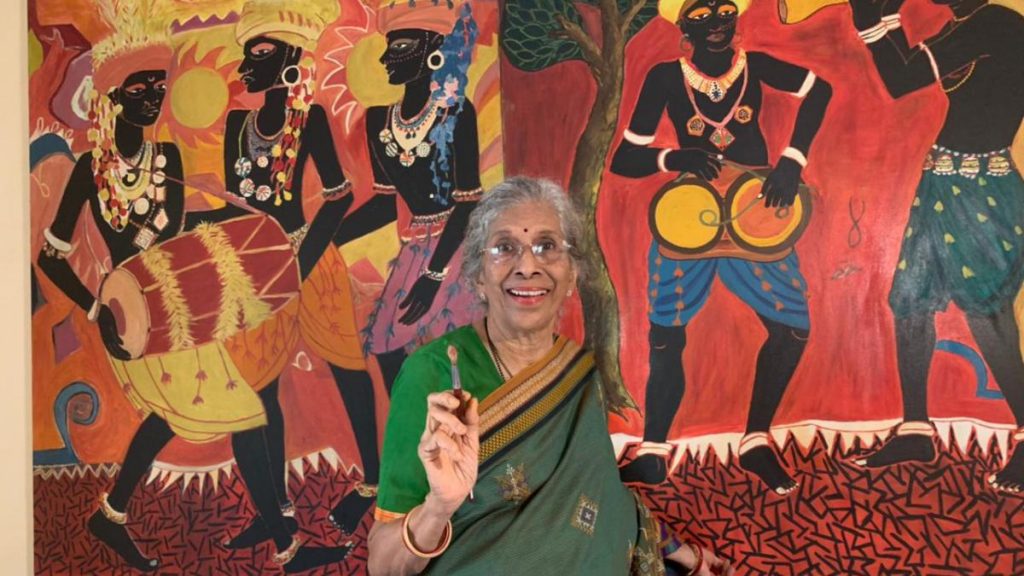
Paints, canvasses and brushes have replaced the dull sight of forlorn roads and anxiety-inducing news reports in Lata Chaudhry’s daily routine. The 84-year-old Bandra resident, who suffers from advanced-stage Alzheimer’s and dementia, spends long hours painting village scenes and figures. Her focus is now fixed on depicting the Warli tribe that lives in the mountains along the Maharashtra-Gujarat border. This activity is the only proverbial silver lining in the day of the octogenarian who was getting adversely impacted by news of disease, suffering and death and the soundless lanes during the lockdown. In a bid to add a dash of hope and colour into her life, her son Paresh brought in a set of canvasses and paints a few months ago and urged Chaudhry to rekindle her long lost love for painting. Her family claims that ever since she picked up her paint brushes, “there has been no looking back”.
Like Chaudhry, several people are finding solace in different forms of art that help relieve anxiety. From painting and embroidery to knitting and origami, activities that requires concentration and give the doer a feeling of having created something new, are being used to help soothe frayed nerves. “When you are creating art, you are completely one with yourself. There is a feeling of fulfilment because you are creating something from scratch and to watch your creation come to life is very therapeutic,” says Akshita Gandhi, artist and founder of the Dua Foundation.
As the number of infections and deaths soar dangerously, an increasing number of people are discovering how sketch pens, crayons, pencils and water colours can alleviate anxiety. Even as she anxiously awaited updates from the hospital on the health of her Covid-infected husband and parents, Aisha Dhuru, 38, ordered knitting needles and wool, and “furiously knitted all day”. “It requires total attention and focus and that helped me block negative thoughts which were leading to severe anxiety and sleeplessness,” she says.
Art has, for long, been used by alternative healing practitioners to work with patients working through mental health issues. And just as sketching can help people pour their feelings and emotions on paper, colours have the ability to evoke emotions. “If you are going through some kind of physical pain, surround yourself with a lot of green colour. It is believed that you start to heal faster as green symbolises life and nurturing,” says Gandhi. The concept relates to the colours of the energy fields in the body that are believed to play a role on mental and physical health.
With the pandemic raging across the country and people losing both loved ones and livelihoods, anxiety levels are bound to be on the rise, which, if left unchecked, can lead to severe mental ailments. “Breathlessness, sleeplessness, cold sweat, depression or palpitations are all a part of what we are experiencing around us today. That’s where art can step in. Spending even 30 minutes every day on creating something can alleviate stress and help combat anxiety because it distracts you from the negativity and immerses you in a happy feeling,” says Roohi Jain, a counsellor who uses art and music for healing patients.
Noting this demand for a creative activity, several brands have launched art kits that provide the necessary tools and activity sheets for people to revisit art classes from their school days. But as Jain explains, art as a healing tool does not need you to create picture-perfect paintings. Scribbling, doodling, sketching or abstract strokes of paint on canvas or paper can still be therapeutic.
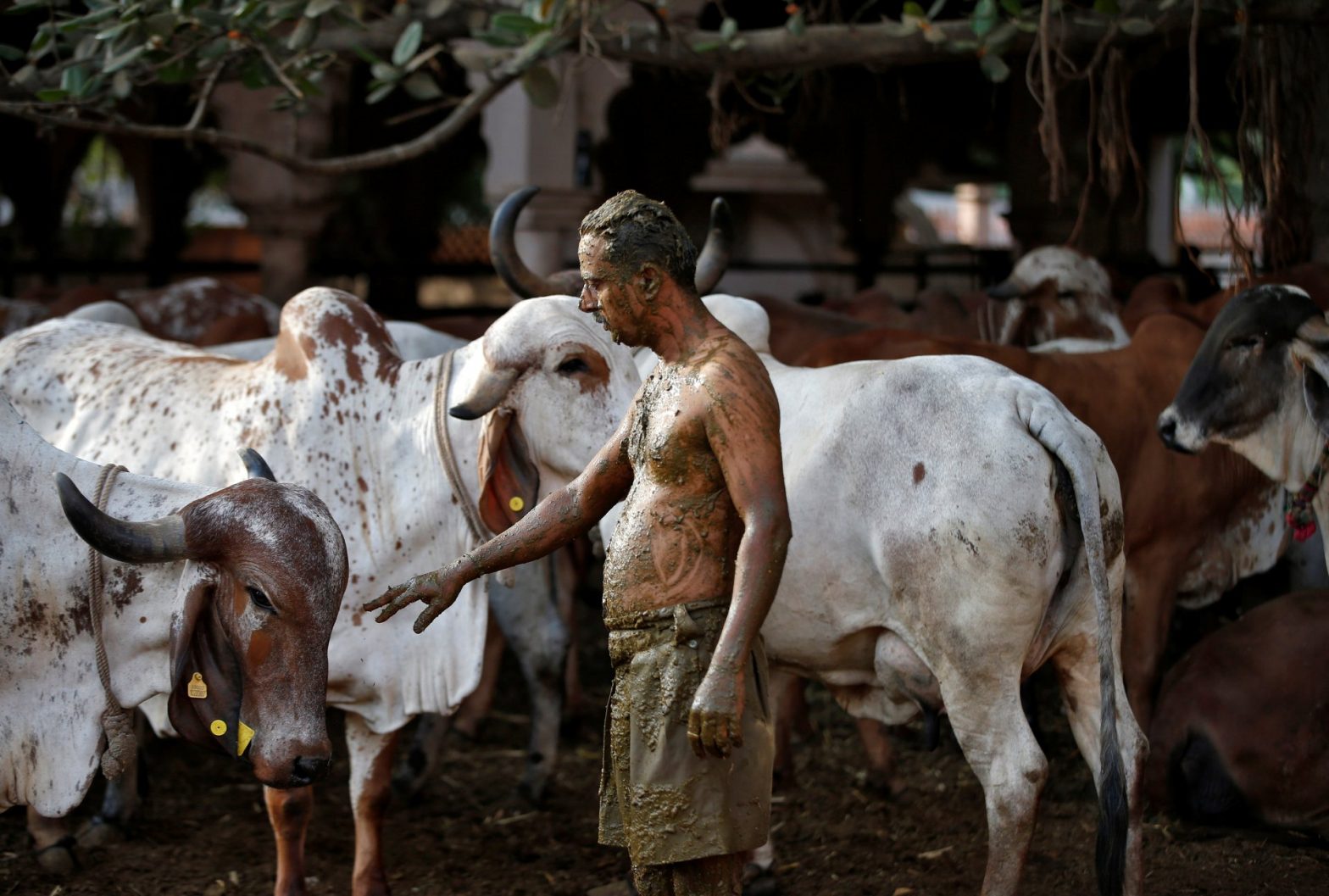
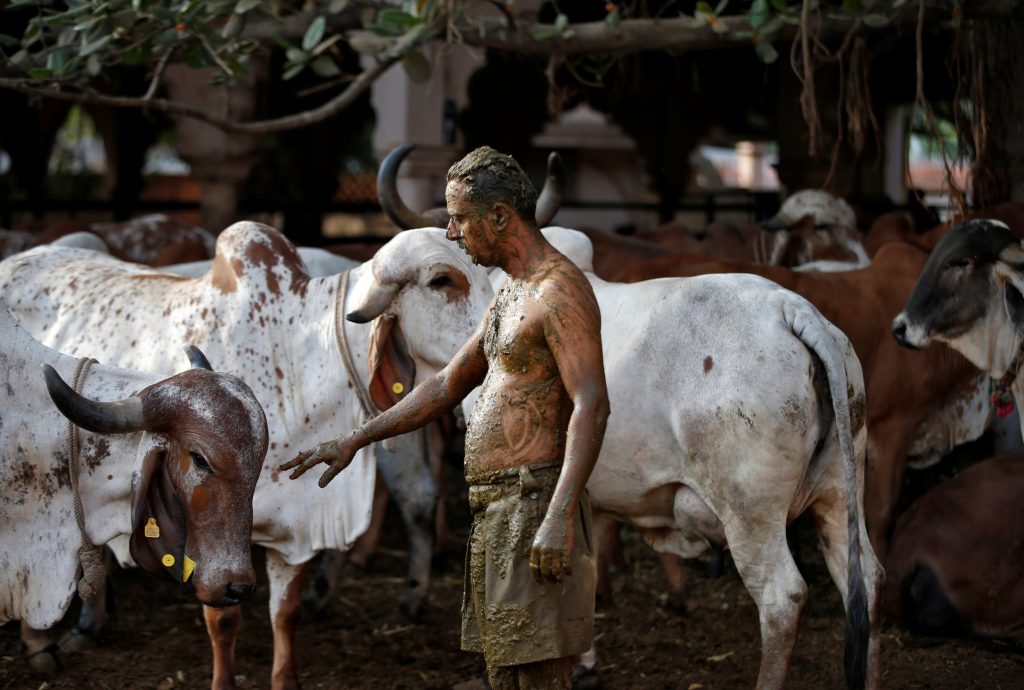
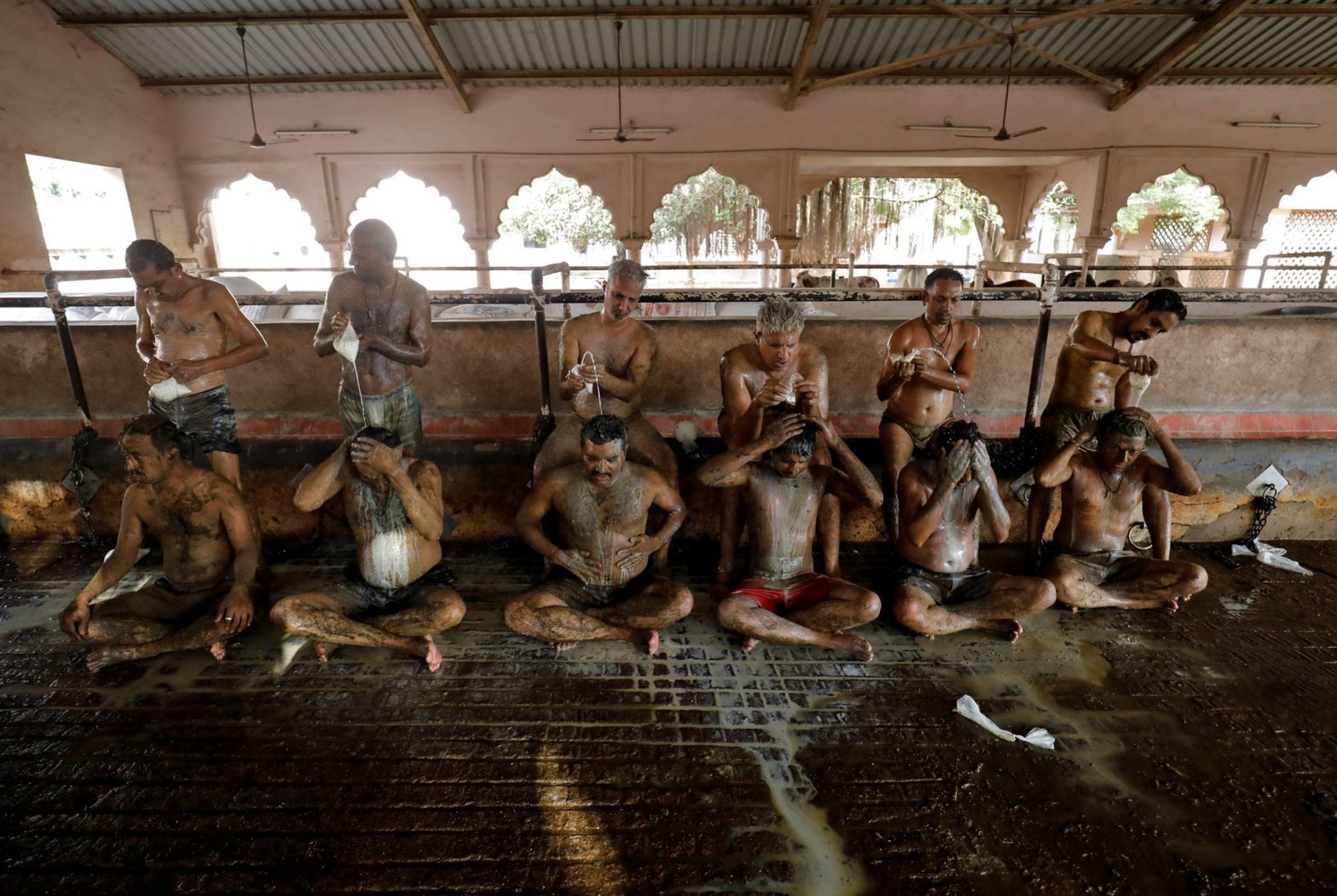
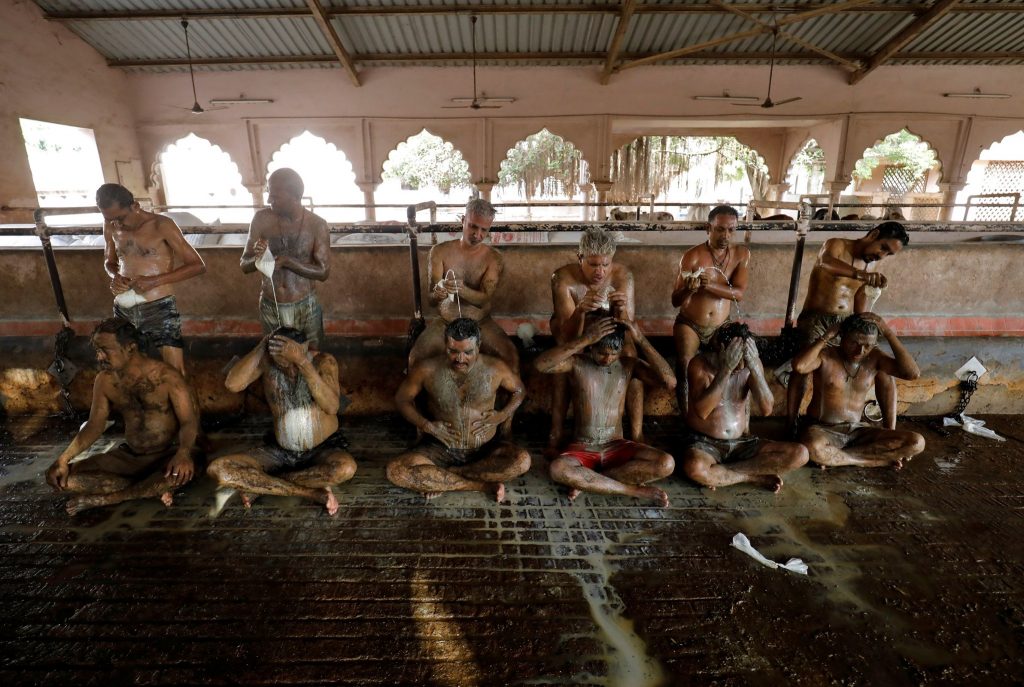
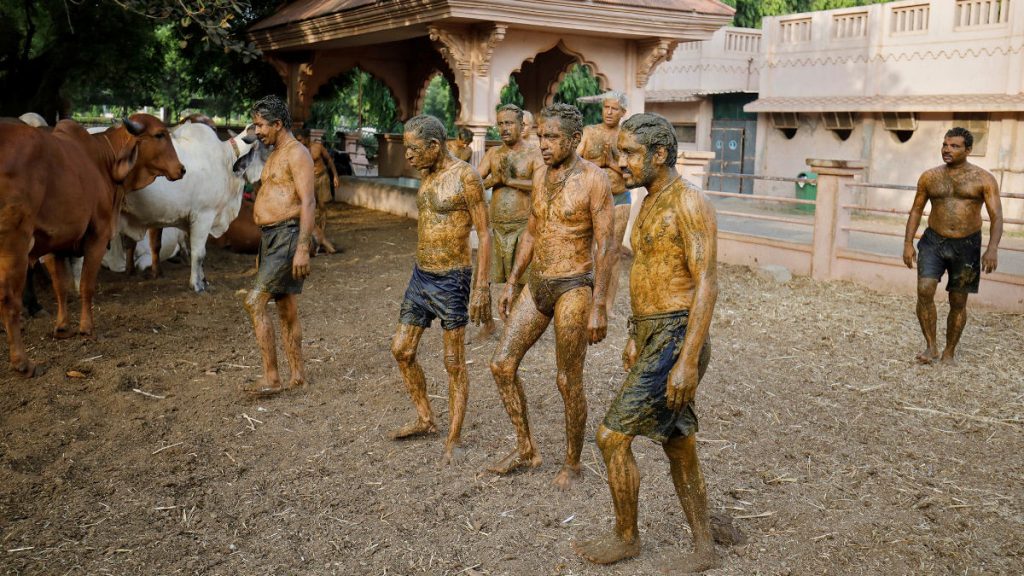
People apply cow dung in the belief it will ward off covid at a cow shelter in Ahmedabad
People at the Shree Swaminarayan Gurukul Vishwavidya Pratishthanam Gaushala in Ahmedabad after undergoing ‘cow dung therapy’, which they believe will boost their immunity and protect them from Covid-19.
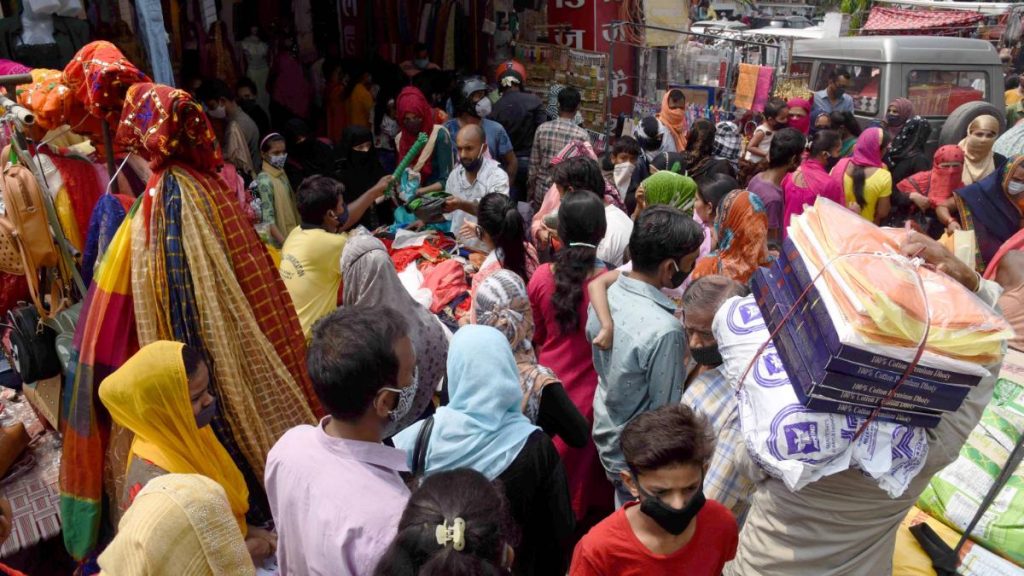
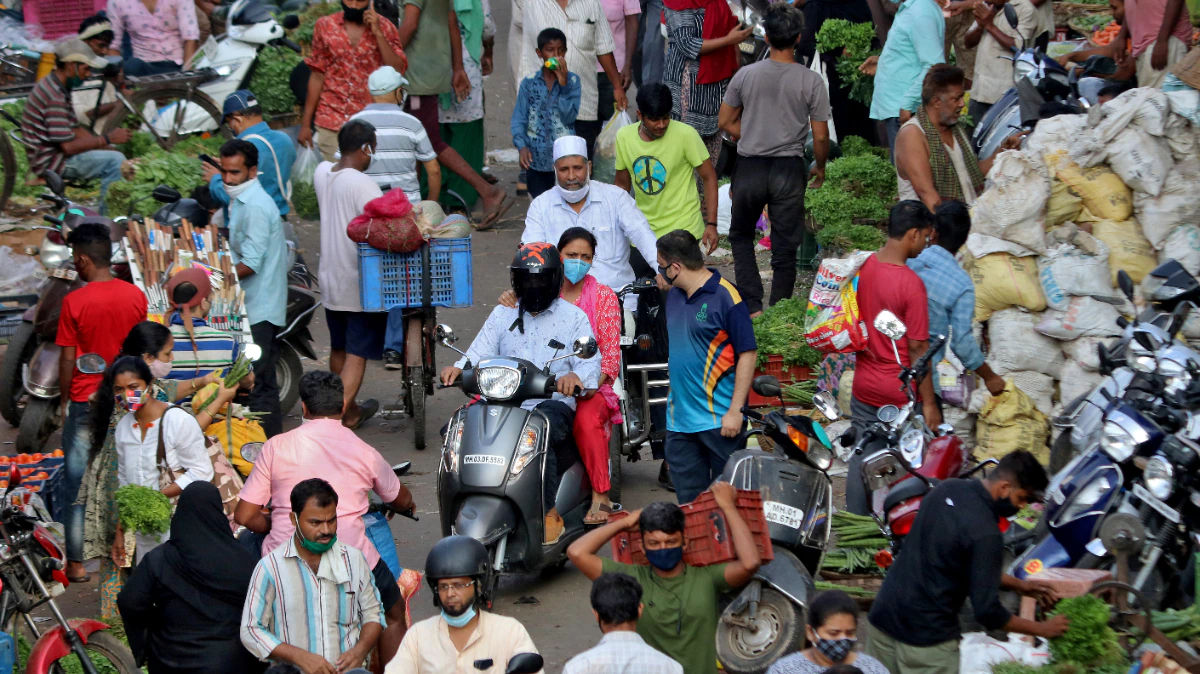
People shop at a crowded vegetable market amidst the spread of the coronavirus disease (Covid-19) in Mumbai, May 11.
Based on the experience of over 100 days of vaccination, experts say India is in for a long haul. In case the pace of vaccination against coronavirus doesn’t shoot up drastically and more vaccine candidates are not included, India could take another 3.5 years to inoculate 70 per cent of its population.
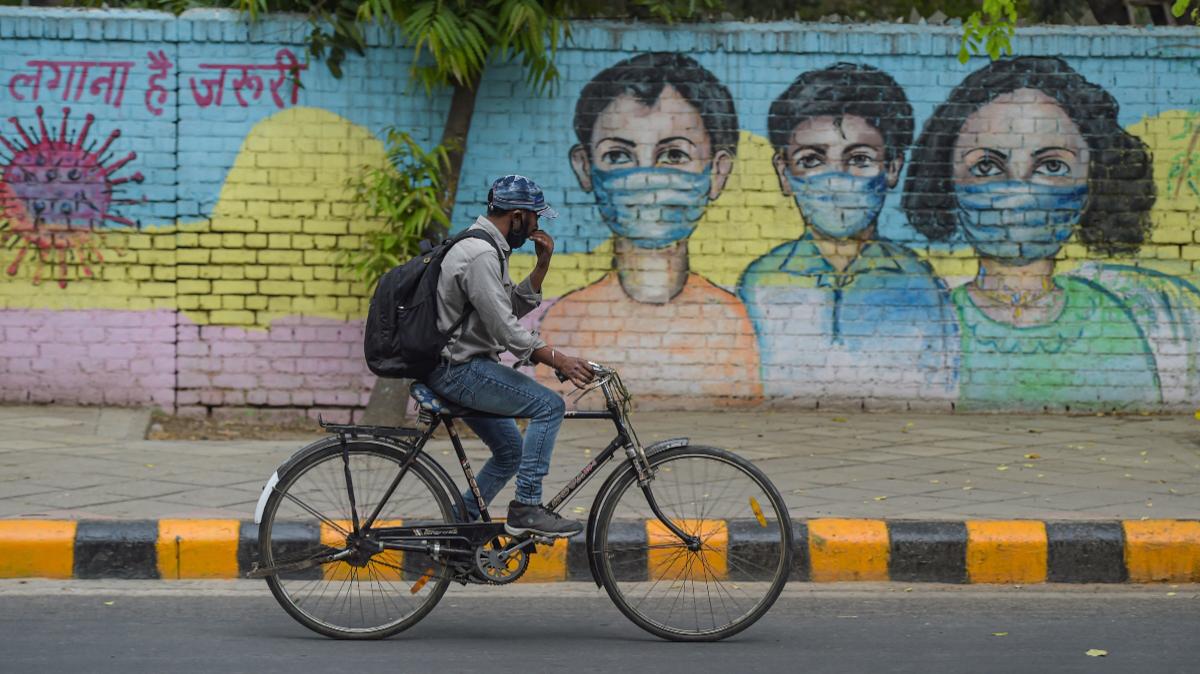
A woman walks past a graffiti, on a street, amidst the spread of the coronavirus disease (COVID-19) in Mumbai.
India has seen an unprecedented rise in Covid-19 cases over the last three weeks with some states reporting over 50,000 daily coronavirus infections.
The states, which were reporting the highest number of Covid-19 cases till now, have started to show a sliding curve, and in some cases the coronavirus wave is showing signs of plateauing, the Union health ministry said in a press briefing on Tuesday.
The government is far from reaching its target of vaccinating (double dosing) the priority group of 27 crore senior citizens, 2 crore frontline workers and 1 crore healthcare workers. Of the 30 crore Indians in the priority group, which were to get both shots against Covid-19, less than 10 percent have been covered.
The government seems to be losing the momentum in the Covid management in the state because of inconsistent policy
A medic takes swab sample of a patient for Covid test, at NMMC Hospital Vashi, Navi Mumbai, May 8.
Even as the Supreme Court lauded Mumbai for its management of limited oxygen supply and urged other cities to follow its example, Maharashtra seems to be losing its momentum in Covid-19 management in terms of testing and isolating suspected patients. A flip-flop in policy is said to be behind this slowing of tempo.
From just one test lab in March 2020, Maharashtra increased their number to 609 by April 21, helping the state to drastically improve the daily number of tests. A large number of asymptomatic cases, however, saw testing decline between November 2020 and February 2021. An average of 50,000 tests were conducted every day between November 2020 and February 2021. The state has conducted 28.9 million tests between March 9, 2020 and May 7, 2021, of which 17.27 per cent samples tested positive.
Health minister Rajesh Tope claims that the state has been conducting an average of 225,000 tests every day. “There is no shortage of kits and laboratories,” he says. The problem is the delay in results. In big cities like Mumbai, Thane and Pune, results are available in 30-40 hours. In other parts of the state, there is a wait of 48-72 hours. Tope says he has asked the laboratories to make all effort to make test results available in 24 hours. “As more and more people are opting for tests, the laboratories are feeling the pressure. We have asked them to collect only that many samples as they can test in time.”
Almost 25 per cent of the daily testing is being conducted in capital Mumbai where the daily average in April was 44,000. Leader of the opposition Devendra Fadnavis says the less number of testing is projecting a false picture. “There is no need to create paranoia but give a real picture,” he demanded in a letter to chief minister Uddhav Thackeray on April 30.
The Aam Aadmi Party has claimed that it received great public support in the Uttar Pradesh panchayat polls held in April. The Congress, too, said it has done well and is ready for the state assembly election in 2022.
The Aam Aadmi Party and Congress have claimed they performed well in the Uttar Pradesh panchayat polls held in April.
In the Uttar Pradesh panchayat election held in April, the Aam Aadmi Party (AAP) and Congress have claimed that they have done very well. The result trends showed the Samajwadi Party on top, leaving the ruling Bharatiya Janata Party’s think tank with a lot of work.
For parties like AAP and Congress, these elections were an opportunity to seal their spots in Uttar Pradesh’s politics ahead of the state assembly election in 2022.
AAP has claimed that it received huge public support and has performed much better than the Congress in the panchayat polls. On the other hand, the Congress said it has done well under the leadership of Priyanka Gandhi Vadra.
As Covid-19 cases surge, the Manipur government on Friday announced a 24-hour curfew in seven districts of the state from May 8 to May 17.
On Friday, Manipur announced a 24-hour curfew in 7 districts of the state from May 8 to May 17 amid a surge in Covid-19 cases.
The Manipur government on Friday decided to impose 24-hour curfew in seven districts for nine days starting on Saturday to check the spread of the virus. The curfew will be in force in those districts from May 8 till May 17.
For rest of the state, night curfew from 7 pm to 5 am shall remain in place.
The Home Department order issued by Chief Secretary MH Khan said that “increasing trend in the spread of infection has become even steeper and has spread to other parts of the state necessitating additional restrictions and also in additional areas in the interest of the public health.”
Curfew will come into force in the districts of Imphal West, Imphal East, Bishnupur, Thoubal, Kakching, Churachandpur and Ukhrul.
However, the government has allowed “permitted activities” which includes healthcare, essential services and goods vehicles. Imphal airport shall also remain open.
District magistrates have been informed to issue necessary orders as well.
The government’s principal scientific advisor said it is possible for India to avoid the third wave of Covid-19 if we take strong measures and implement them well.
India is currently reeling under the second wave of coronavirus infections and has been reporting over 3 lakh new cases every day for nearly two weeks.
It’s possible that India may not see a third wave of coronavirus infections, but for that to happen, we will have to take strong measures and implement them effectively on ground, the government said on Friday.
Addressing a press briefing of the Union health ministry, Dr K VijayRaghavan, government’s principal scientific advisor said, “If we take strong measures, the third wave may not happen in all the places or indeed anywhere at all. It depends much on how effectively the guidelines are implemented at the local level, in the states, in districts and in the cities everywhere.”
India is battling a sudden surge in Covid-19 cases, which is called the second wave.
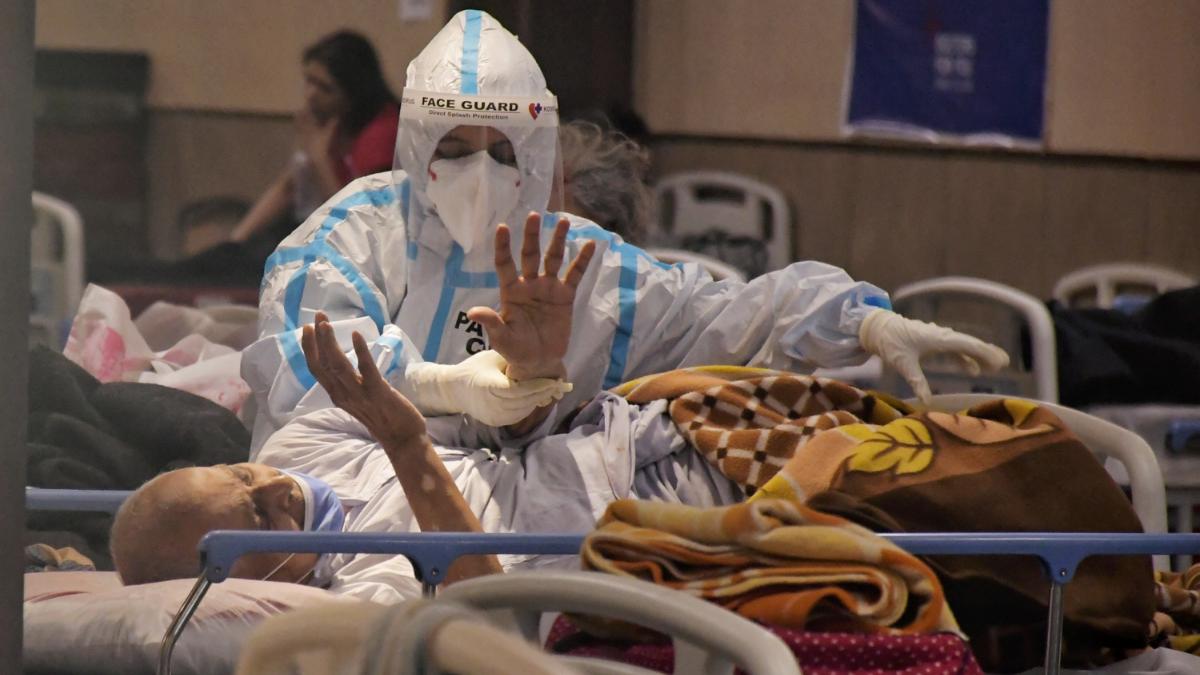
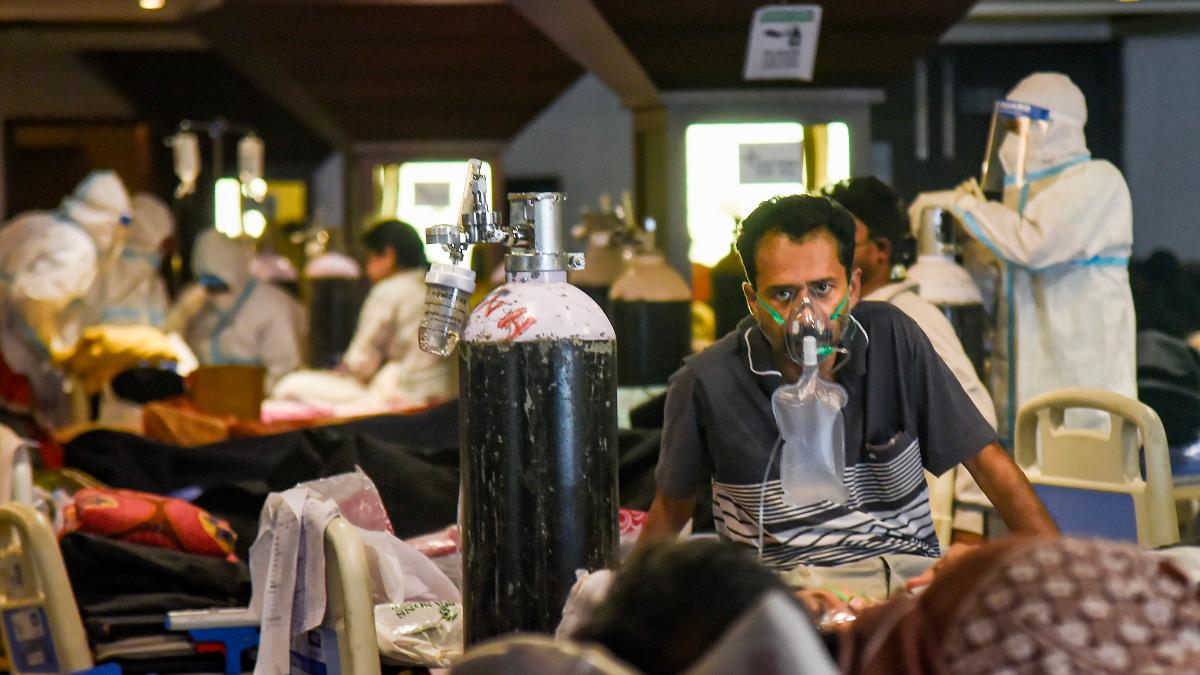
A Covid-19 patient receives treatment inside a banquet hall, which has been turned into a Covid-19 isolation Centre.
“The entire world is facing the challenge of Covid-19 disease. Coronavirus has suddenly erupted again in India, and it’s causing a major challenge. A lot of infection and a lot of deaths are happening because of Coronavirus,” said Dr Bhalotra.
Covid second wave: The cost of lockdowns. The curfews, lockdowns and voluntary shutdowns of factories have already triggered a fresh exodus of migrant workers from the big industrial centres
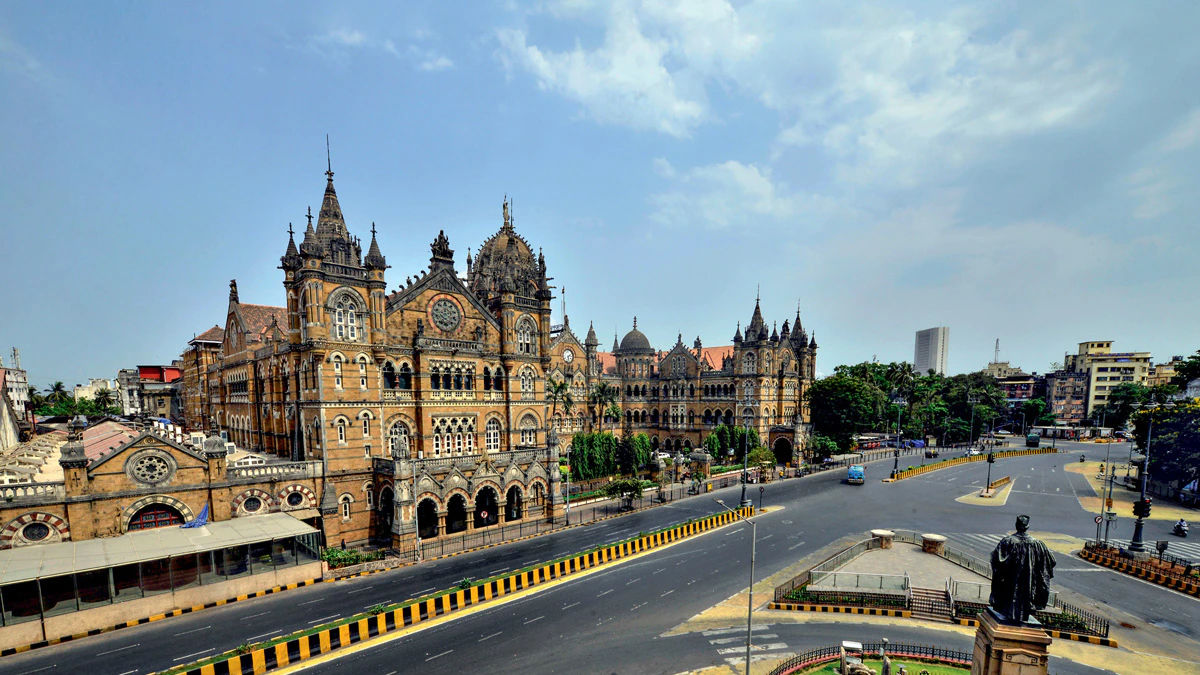
MUMBAI HALTS: The road outside Chhatrapati Shivaji Maharaj Terminus during the ongoing lockdown
In his address to the nation on April 20, Prime Minister Narendra Modi urged states to think of lockdowns as a means of last resort. Within a week, though, faced with a runaway spiral in Covid cases, Maharashtra, Delhi, Gujarat and Karnataka were forced to do just that, while Punjab, Chhattisgarh, Rajasthan and Haryana had to impose night and weekend curfews.
Already reeling from the after-effects of the nationwide lockdown last year, Maharashtra was forced to announce an extension of its calibrated lockdown till May 15. It’s the largest state in terms of GSDP (gross state domestic product) and contributes 14.2 per cent of the national GVA (gross value added). In FY21, the state’s economy contracted 8 per cent in real terms and 5.6 per cent in nominal terms. Soumya Kanti Ghosh, chief economic advisor at State Bank of India (SBI), estimates in a report that the ongoing lockdown will wipe out over Rs 80,000 crore, or 2.7 per cent of the state’s GSDP. Maharashtra’s fiscal deficit was 3.3 per cent of GSDP in FY21—a 15-year high—and the current lockdown is grim news for its industry and services sectors, both of which witnessed a contraction of over 11 per cent last year.
Karnataka, which announced a two-week lockdown starting April 27, stands to lose around Rs 22,000 crore during the period. In the last fiscal, Karnataka’s economy contracted 2.6 per cent. The state’s borrowings in FY22 are estimated to be Rs 71,332 crore—around 33 per cent higher than the pre-pandemic estimate. The additional borrowings were necessitated by the 11 per cent dip in revenue receipts in FY21—Rs 1.6 lakh crore against the projected collection of Rs 1.8 lakh crore—and have nudged up the fiscal deficit from a manageable 2.55 per cent of GSDP to 3.23 per cent.
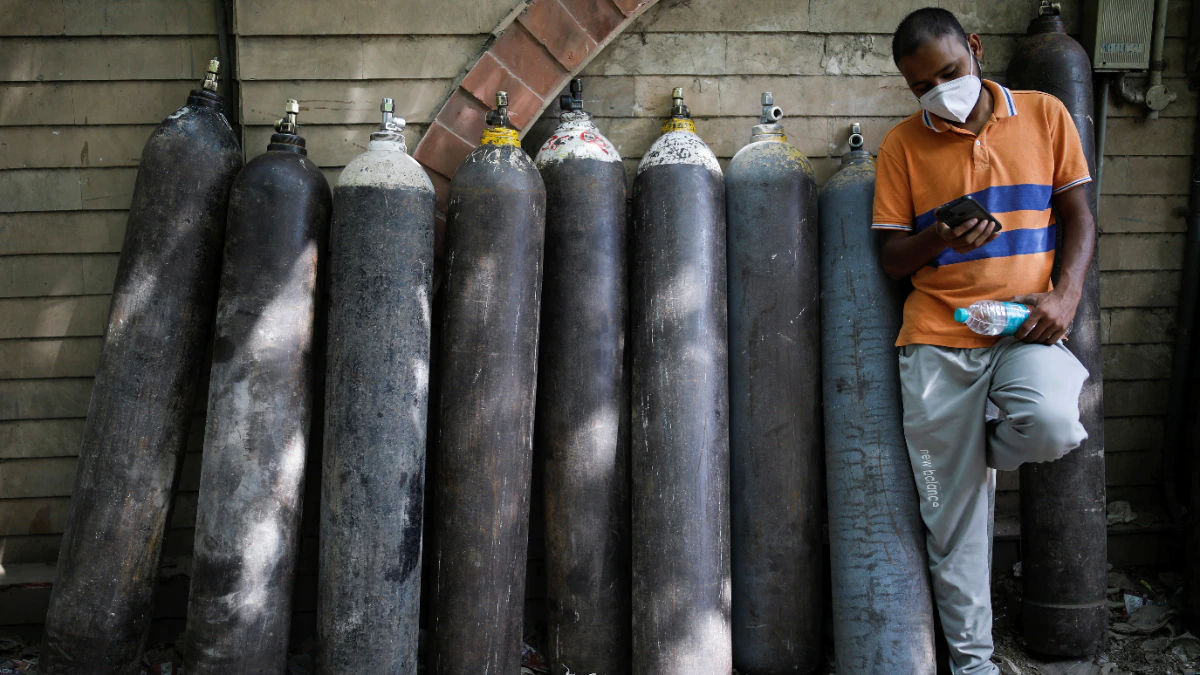
A family member of a Covid-19 patient waits to refill an oxygen cylinder
The Supreme Court on Friday refused to stay the Karnataka High Court order asking the Centre to reconsider its daily liquid medical oxygen (LMO) allocation to the state.
The Centre moved the top court on Thursday against an order of the Karnataka High Court asking it to increase daily oxygen allocation for the state from 965 MT to 1200 MT for treating Covid-19 patients.
“We don’t want to leave the citizens of Karnataka in the lurch. The order of the High Court is a careful, calibrated and judicial exercise of power. We see no reason to entertain the SLP,” said a bench headed by Justice D Y Chandrachud.
Solicitor General Tushar Mehta argued before the Supreme Court that high courts in the country should not pass orders for “immediate supply” of oxygen in their respective states.
“Oxygen as a resource is not unlimited. We are trying our best to solve the problem. If every High Court starts to pass orders, then it will lead to a complete breakdown of pandemic management,” Tushar Mehta said.
To this, the bench said, “We must understand that judges are also humans. The HC has seen deaths in Chamarajanagar and Kalburgi. They are looking at the human aspect.”
Earlier this week, 24 Covid-19 patients died in Chamarajanagar district hospital allegedly due to oxygen shortage. Seven more patients died in Kalaburagi and Belagavi also.
The apex court also noted that the High Court had passed the order based on the number of cases and projected increase. The court also noted that according to the Karnataka government projections, the per day requirement of oxygen in the state was close to 1800MT, with a “minimum requirement of 1100 MT”.
Justice MR Shah, who is also part of the bench, said, “In this order, the court has gone into all aspects. The court has gone into your norms for oxygen requirement. If there is a problem with supply, you consider it.”
The Supreme Court, however, said it would “direct the setting up of a committee to relook at oxygen allocation”. “There will be a time gap between the orders and the report of the committee,” the court observed.
The bench also raised the question of the allocation of oxygen from distant areas. The Karnataka government had informed the High Court that 30MT of oxygen was allocated from a port where it was unable to pick up the supply.
Taking note of this statement, the SC bench asked the Centre why it was allocating oxygen from distant areas. “We are asking you. What’s the point of allocating quota which will take 48 hours to reach? Are you considering the mapping issues while allotting,” asked Justice Shah.
While daily infections and active cases in Karnataka are rising alarmingly, the fatalities are also mounting.
On Thursday, there were 346 deaths, taking the total deaths so far to 16,884. Bengaluru was the main contributor of Covid-19 cases in Karnataka with 23,106 infections and 161 fatalities on a single day, taking the total infections and deaths to 8,63,380 and 7,006 cumulatively. The city had 3.13 lakh active cases as on Wednesday.
After affecting India’s big cities, the second wave of the Covid-19 pandemic is now spreading fast in rural areas.
After affecting India’s urban areas, the second wave of Covid-19 is now spreading fast in rural areas. India Today tracked some rural areas in the states of Maharashtra, Uttar Pradesh, Gujarat and Haryana to find out what the ground reality is.
Maharashtra
The pandemic has taken firm root in rural Maharashtra. For example, the rural areas of Amravati district are now reporting higher number of cases than urban areas.
According to District Collector Shelesh Nawal, Amravati city on Tuesday registered 249 new Covid-19 cases while the rural areas of Amravati registered 947 fresh cases.
Since January, Amravati city has recorded 504 Covid-related deaths while the rural areas of the district have seen 521 deaths.
The new hotspots of Covid in Amravati are Warud, Achalpur, Morshi, Anjangaon Surji and Tiwasa. The district administration is planning to establish Covid care units in these places.
Similarly, Nagpur district is also witnessing a surge in Covid cases in rural areas. On May 5, there were 36,648 active cases in Nagpur city and 29,568 active cases in Nagpur’s rural areas.
According to health officials, in the 14 tehsils that come under Nagpur distric, there are 112 Covid testing centres. This includes Gramin Hospitals and private labs.
The positivity rate in the rural parts of Nagpur is 18.06 per cent at present. However, after strict measures were taken by the administration, the positivity rate is beginning to decline.
Haryana
Titoli village, situated barely 10 kilometers from Haryana’s Rohtak city, is in a state of panic after 40 people reportedly died due to Covid-19 in ten days.
After Sarpanch Suresh Kumar broke the news, representatives of the district administration and health department rushed to the village. The family members of the deceased are now being tested for the virus.
The villagers have claimed that the real death toll is double what the sarpanch has claimed.
Rohtak sub-divisional magistrate Rakesh Saini said, “People are scared after the deaths in the village. We are encouraging them to get tested for Covid. It will then be clearer whether the deceased were Covid-positive or not.”
Uttar Pradesh
In the large industrial town of Kanpur, there has been a massive spike in Covid-19 cases. On May 5, the city registered a record 67 Covid deaths in 24 hours. However, there are no records from the rural areas. Officials denied access to data from the Kanpur Rural area.
Gujarat
The Gujarat government has imposed night curfew in 36 cities. While the administration is trying to break the chain of transmission in cities, the situation in the villages is terrifying.
There is a severe shortage of doctors and medical personnel in the rural areas of Gujarat.
In the last 20 days, 90 people have allegedly died of Covid-19 in Chogath, a village in Bhavnagar district. This is according to Girjashankar, a retired teacher who performs last rites at the crematorium in the village.
In this village, there is a lack of awareness about Covid-19. Health facilities too are inadequate to deal with the pandemic.
India is currently reeling under the second wave of coronavirus infections that has hit the country hard with cases and deaths mounting every day.
After the second wave of coronavirus infections, it is “inevitable” that India will also see a third wave, said Prof K Vijay Raghavan, the principal scientific advisor to the central government.
Addressing a press briefing on India’s Covid-19 situation, Prof Raghavan said while the third Covid-19 wave is inevitable in India, the time when it will occur and its scale is not certain at present.
In the wake of the changing nature of variants, we must be ready for the third wave, he said. “We can’t predict the timing, but it seems inevitable. We must prepare ourselves and be ready for it.”
Prof Raghavan said while vaccines are effective against variants, but the scientific community needs to keep working on vaccines and make changes accordingly.
“Why should we care about SARS-CoV-2 (the virus causing Covid-19) when we can potentially upgrade vaccines? It is only sometimes that variants can erode immunity so rapidly. We need to make a map of all possible changes that can happen in the virus Scientists are working to anticipate variants,” he said.
In the last couple of weeks, Karnataka has seen a surge in Covid-19 cases and deaths. (Representational image)
The Covid-19 situation in Karnataka continues to worsen with the state recording over 50,000 new Covid-19 cases in the last 24 hours.
As per the state’s latest Covid-19 bulletin, Karnataka has recorded 50,112 new cases, the highest ever single-day count for the state. Of these 50,112 cases, 23,106 were reported in the state capital Bengaluru.
The state also recorded 346 coronavirus-related deaths in the last 24 hours.
Karnataka’s daily test positivity rate has climbed to 32 per cent. In other words, every third person whose sample was tested, was found to have contracted the viral disease.
Senior citizens wait outside a vaccination Centre in Mumbai.
Maharashtra recorded 920 Covid deaths and 57,640 fresh cases on Wednesday.
While 57,006 patients were discharged on Wednesday, the total discharged figure as of May 5 stands at 41,64,098. Mumbai on the other hand recorded 3,879 new cases and 77 deaths.
At present, the recovery rate in the state stands at 85.32% and the case fatality rate is 1.49%. As of Wednesday, the state has 6,41,569 active cases.
Out of 2,83,84,582 laboratory samples tested so far, 48,80,542 have been tested positive (17.19%) for Covid-19.
As on May 5, 38,52,501 people are in home quarantine and 32,174 people are in institutional quarantine.
A beneficiary receiving the first dose of Covid-19 vaccine in Delhi on Monday
Mass vaccination is our only hope to flatten the Covid-19 curve. However, more than three months since the programme’s rollout, India seems to have barely scratched the surface, data shows.
An elderly patient arrives at a hospital with oxygen cylinder for admission. India has been battling an unprecedented surge in Covid-19 cases over the last few weeks
There have been numerous complaints about Covid patients duped by the “Covid SOS Scammers”
Covid, crisis and frauds: How oxygen scammers are duping desperate patients
There have been a number of people in and around Delhi who have been duped by the “Covid SOS Scammers” targeting thousands of people who are using social media posts to seek help in these desperate times. Here’s a story of a few of them.
Mayank Jain, a Gurugram-based IT professional had been searching for oxygen cylinders for his Covid-19 positive friend who has been admitted to a local hospital. Mayank Jain has been working from his hometown Jaipur in Rajasthan since the onset of the second wave of the coronavirus pandemic.
In order to find leads on oxygen resources for his friend, he joined a WhatsApp group where his friends had been sharing leads to help him in this crisis.
He had received a quote of Rs 27,500 for a 50 kg cylinder from one of the oxygen suppliers. He had received his contact details on the WhatsApp group. Mayank Jain contacted the supplier who refused to entertain his request if he wasn’t paid in advance.
“I told him that I would pay the cash on delivery because I sensed a possible fraud,” Mayank Jain told India Today TV.
However, on Friday, things changed when he was told that his friend’s Oxygen Saturation (SpO2) had dropped down to 80, and the temporary oxygen arranged by the local hospital was about to finish. He had no other option but to take the risk. He made an advanced payment of Rs 5,000 and requested the suppliers to process his order.
Mayank Jain was told that due to high demand [for the oxygen cylinders], he must pay at least half the price in advance, in order to initiate the order.
“Then I transferred another 9,000 rupees to the account provided by them and asked them to send the cylinder right away,” he said. The vendor then asked Mayank Jain to send details of the patient such as his name, address, Aadhaar details, attendant’s contact and his Aadhaar details, which were immediately provided by him.
A few minutes later, Mayank was informed by the vendor that they had only one cylinder left and, to get it for his friend, he must make the full payment. Sensing an imminent fraud, Mayank disconnected the call but relented later.
“I sensed the risk but transferred the rest of the amount (Rs 13,500) thinking that my friend might have a shot at receiving the help and pleaded with them to not compromise my friend’s life for money and they asked me to trust them,” he explained.
After some time, when he enquired to check the status of the oxygen cylinder delivery, Mayank was told to pay an additional Rs 15,000. Sure that it was a scam, Mayank asked them to refund the money immediately, but all his attempts went in vain. He contacted the Delhi Police cyber helpline number but later had to register a complaint with the Rajasthan Police due to jurisdiction issues.
SITUATION AS OF 8.30 PM WEST BENGAL: Of the 292 seats that went to the polls in West Bengal, the TMC had either won or led on 215 seats, while the number for the BJP was 76.
In her first exclusive interview, TMC chief and West Bengal CM Mamata Banerjee slammed the Election Commission of India, saying the poll panel worked like the “BJP’s spokesperson” during the election.
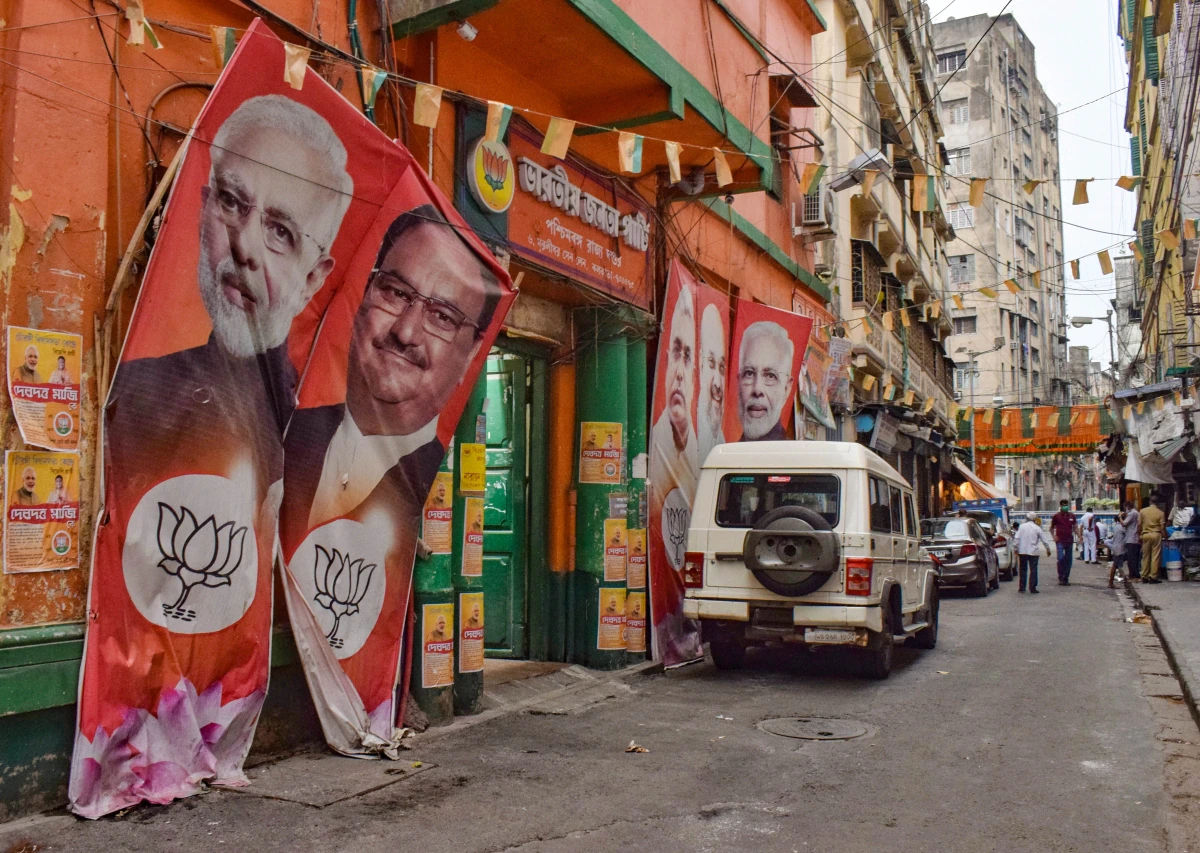
BJP office in Kolkata wears a deserted look on Sunday
Speaking to India Today TV, Mamata Banerjee said the BJP’s tally would not have crossed even 50 without help from the Election Commission.
Meanwhile, in a tweet, Prime Minister Narendra Modi congratulated Mamata Banerjee and said the Centre will continue to extend all possible support to the West Bengal government.
The Supreme Court of India on Sunday advised the central and state governments to consider a lockdown to break the chain of Covid transmission. The country’s top court passed an order in this regard after hearing from officials over measures being taken to counter the second wave of the pandemic.
“In light of the continuing surge of infections in the second wave of the pandemic, we direct the Central Government and State Governments to put on record the efforts taken to curb the spread of the virus and the measures that they plan on taking in the near future,” said the Supreme Court.
The order went on to say, “At the same time, we would seriously urge the Central and State Governments to consider imposing a ban on mass gatherings and super spreader events. They may also consider imposing a lockdown to curb the virus in the second wave in the interest of public welfare.”
India’s Apex Court also said that arrangements must be made to protect vulnerable sections during a lockdown.
“We are cognizant of the socio-economic impact of a lockdown, specifically, on the marginalized communities. Thus, in case the measure of a lockdown is imposed, arrangements must be made beforehand to cater to the needs of these communities,” said the Supreme Court order.
West Bengal has asked the Centre to supply at least 3 crore doses of Covid-19 vaccines for state-run and private hospitals to continue with the vaccination drive and also open up jabs for the 18+ group.
West Bengal has said 2 crore vaccine doses would be required to inoculate about 1 crore people in the 18-45 age bracket through government medical facilities, and the rest for vaccinating 50 lakh beneficiaries who would visit private hospitals.